

Synergy
Under no circumstances have I heard the JT7 pick up some noise from any device, even when the cables are placed close to the DAPs or phone. And I find the JT7 not sensitive enough to make me hear the noise floor of the sources I used in this review.
On paper, the JT7’s 18Ω load impedance seems easy to drive. However, in practice, I find it challenging to drive, especially with dongles and medium-powered battery-operated portable DAC amplifiers.
This results in sound that is not as good as it should be, even though they can drive the JT7 to reasonably loud volume levels. This forced me to use my most powerful DAP for the sound evaluation and comparison.
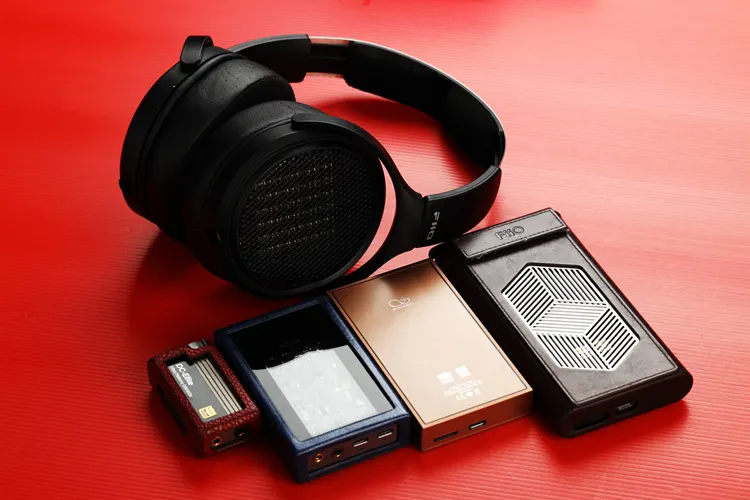
Pairings
I didn’t like the sound when paired with the iBasso DC-Elite. Although the DC-Elite has no problem driving most IEMs and some headphones, I find it struggles more with the JT7.
It can go reasonably loud at MAX volume, but it can’t go any louder. I find the bass lacking in impact and energy, and the highs are not as detailed as they should be.
When paired with the MUSE HiFi M5 Ultra, in its transistor mode, the JT7 can go louder and has better sound than the DC-Elite.
However, the sound is still lacking, as I didn’t find it to sound as good as it should; there is still a lack of bass impact, and the treble isn’t as smooth as it should be, indicating a non-ideal pairing.
In vacuum tube mode, it is even worse. I hit the upper limit of the driving capability much sooner than in transistor mode. The onset of audible clipping distortion occurs much earlier and at a lower volume than in the transistor mode of the M5 Ultra.
With the Shanling M3 Plus, I notice improvements in dynamic headroom, bass control, and treble details. I can hear the inherent tightness in the bass rendition of the M3 Plus. However, I find the overall tonality is on the lean side.
Only when I switch up to the FiiO M15s DAP, with its powerful output, do I experience the best sound from the JT7. The bass sounds powerful and full, the midrange is very detailed and lush, and the treble is smooth yet energetic, thorough, and airy.
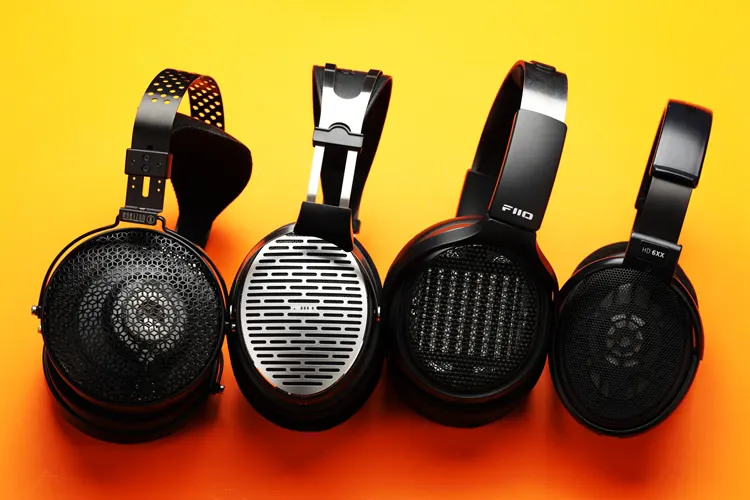
Select Comparisons
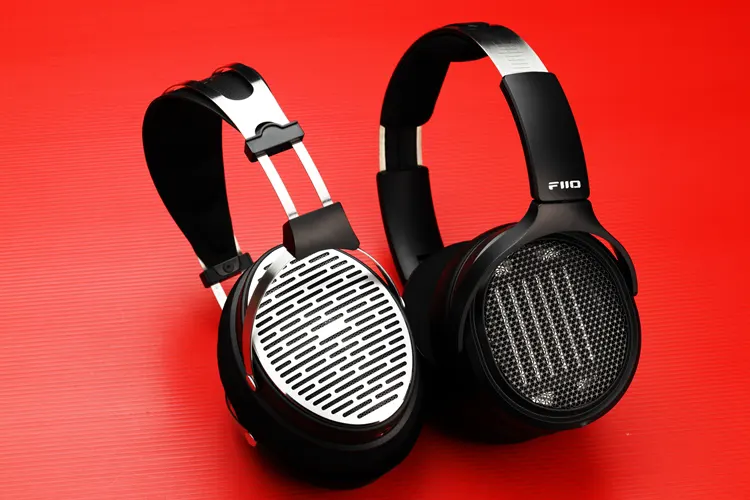
FiiO JT3
Technical
The FiiO JT3 features a 50 mm PEK+PU composite polymer diaphragm dynamic driver with a lightweight voice coil assembly and a powerful N52 magnetic system, which is the strongest magnet in the headphone industry.
The JT3 has an impedance of 80Ω, which is higher than usual, and a sensitivity of 97dB.
The JT3’s sharp and handsome aesthetics, with shiny metallic parts contrasting with black leather and plastic, make it look more expensive than its price would suggest.
The headband is mainly made of a stainless steel-like bent metal connected to the metal yokes with plastic parts.
Performance
The JT3 is more V-shaped in sound signature compared to the more neutral JT7. I find the JT7 to have a wider soundstage, but its shape is less spherical than JT3’s smaller, more rounded stage.
Although JT7’s imaging is more defined, its images appear to come from a flatter plane, whereas JT3’s images are projected more three-dimensionally.
Even though JT7 has less bass, I feel it sounds more dynamic compared to JT3, as the faster transients with JT7 are more apparent to my hearing. But overall, they are not far apart in terms of dynamics, and both are equally musically engaging.
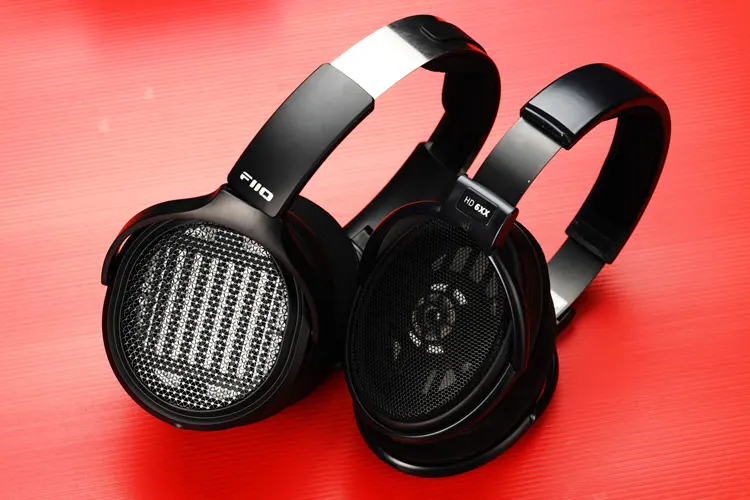
Sennheiser HD 6XX
Technical
The Sennheiser HD 6XX utilizes a 38mm dynamic driver in an open-back acoustic design. It has a sensitivity of 109dB, an impedance of 300Ω, and a weight of 260 grams.
The HD 6XX is primarily made of plastic, except for the grill and the clamp on the headband. The design is utilitarian and uninspiring; it includes a detachable 6-foot-long cable, 3.5 mm TRS with a 1/4″ adapter.
Performance
While both the HD 6XX and the JT7 have different impedance and are difficult to drive, I find the JT7 to be the worst of the two when driven with less powerful sources, as sources struggle more with the JT7 than the HD 6XX.
Using the FiiO M15s, they have about equal amounts of bass, but the JT7 sounds punchier due to its more elevated midrange and treble compared to the HD 6XX.
That said, the JT7 provides a more forward sound presentation, while the HD 6XX is more laid-back.
In terms of soundstage, the JT7 is much wider but less deep; the HD 6XX, though less wide, offers a more rounded staging, with width, height, and depth.
In terms of imaging, I find the JT7 more laterally spread out, while the HD 6XX is less spread out, but more holographic in presentation due to better front-to-back layering.
I find the brighter and more forward presentation of the JT7 to be more dynamic and livelier-sounding than the laid-back and relaxed presentation of the HD 6XX.
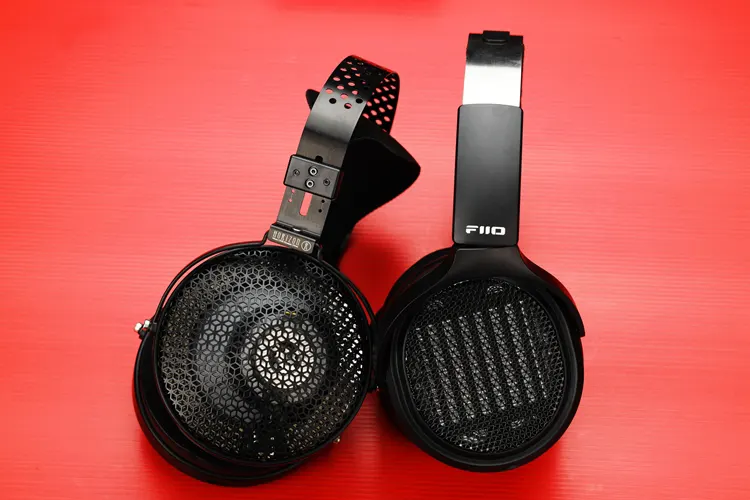
MOONDROP Horizon
Technical
The MOONDROP Horizon features a 50mm UHE Dynamic Driver with an angled driver arrangement and an open back acoustic design. It has an impedance of 32Ω, a sensitivity of 109 dB, and weighs 351 grams.
The Horizon has a classy yet science fiction look and is quite fashionable in a mature way. It has large earcups with soft earpads, and the grills feature a unique perforation pattern.
It includes a very nice 1.5-meter-long cable with a replaceable plug, which accommodates 3.5mm and 4.4mm plugs. The cable has two 3.5mm connectors at the headphone end.
Performance
The Horizon sounds warmer and has a U-shaped sound signature, with elevated bass and upper treble, while the JT7 is brighter, with a more forward midrange and treble.
The JT7 has a wider but shallower soundstage, while the Horizon has a narrower but deeper soundstage, making the imaging more layered and holographic than JT7’s.
In terms of dynamics, I find the JT7 more dynamic with its more forward presentation, while the Horizon sounds more relaxed by comparison.
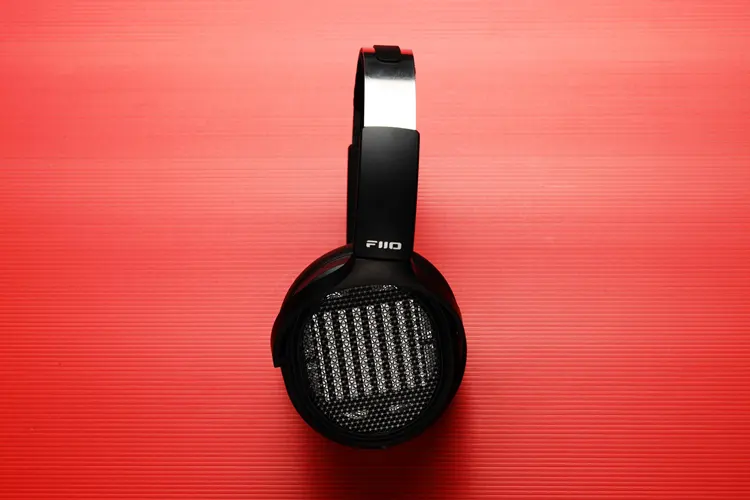
My Verdict
The FiiO JT7 didn’t disappoint and has met my expectations for resolution and detail from an open-back planar headphone at this price point.
It has the sound characteristics for which planar headphones are known, including fast and clean transients, good resolution, and low distortion. I like the near-neutral tonality with the lush midrange. I also like its transparency and low sound coloration.
I appreciate its comfort and ergonomic design. Despite being made mostly of plastic, it feels solid and does not produce a creaky sound when articulating the ear cups.
What I don’t like about the JT7 is its pickiness regarding source pairing. It sounds pretty bad with the wrong pairing and requires higher quality or more powerful sources to sound right.
The FiiO JadeAudio JT7 offers legitimate planar sound quality at an entry-level price, and I would recommend it to friends, provided they have a powerful and high-quality source or amplifier to fully appreciate its capability.
FiiO JT7 Technical Specifications
- Driver setup: Diameter 95x86mm planar driver 3um PET silver-plated aluminum alloy voice coil diaphragm
- Frequency response: 7Hz~40kHz
- Sensitivity: 92dB/mW@1kHz, 109dB/Vrms@1kHz
- Impedance: 18 ohms (measured)
- Earphone connector: Dual 3.5mm (TS)
- Cable: Dual 3.5mm (TS) to 3.5mm single-ended and Dual 3.5mm (TS) to 4.4mm balanced
- Cable length: approx. 1.5 m
- Weight: approx. 318 g (without cable)
