

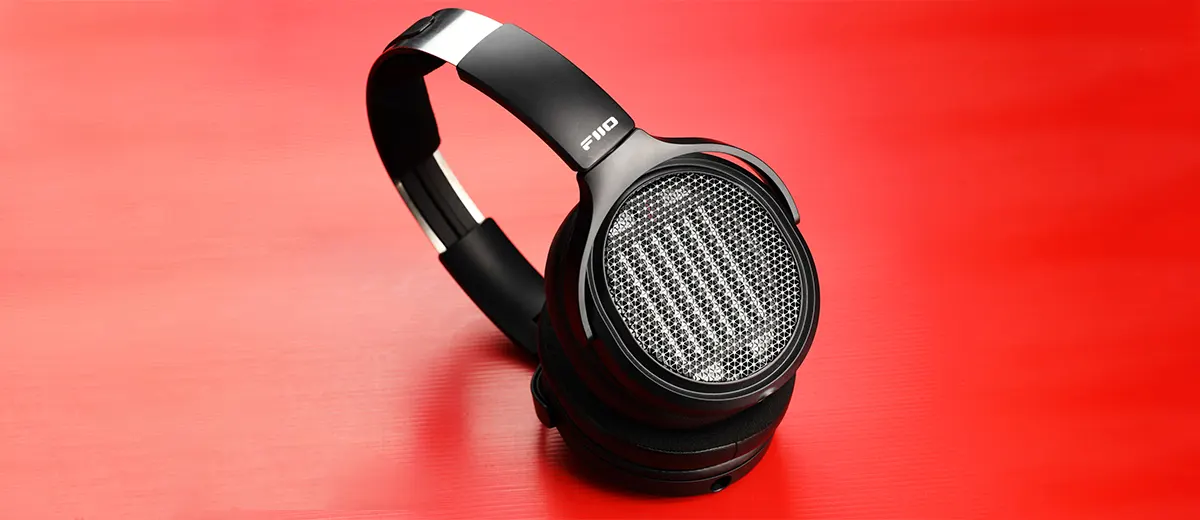
Marcelo reviews the FiiO JT7, a new set of affordable open-back proprietary 95x86mm planar magnetic driver headphones with a foldable design. They are currently priced from $109.99.
Disclaimer: I received this sample in exchange for my honest opinion. Headfonics is an independent website with no affiliate links or services. I want to thank FiiO for their support.
You can click here to learn more about the FiiO audio products previously reviewed on Headfonics.
This post follows our current scoring guidelines, which you can read in more detail here.
Fast on the heels of my JT3 review, FiiO sent me their neat-looking entry-level planar headphones, the FiiO JT7, which sells at around $109.99 upwards at selected retailers.
Many FiiO and JadeAudio headphones have been reviewed here at Headfonics before, from the high-end FT7 to the more budget-friendly JT1, among others. However, this is my first time reviewing a planar headphone from FiiO.
Planar headphones are known for their highly resolving and detailed sound quality, which made me wonder how the FiiO JadeAudio JT7 sounds, especially when compared to price-sensitive competitors such as the MOONDROP Horizon and its more affordable sibling, the FiiO JT3. Let’s find out.
Features
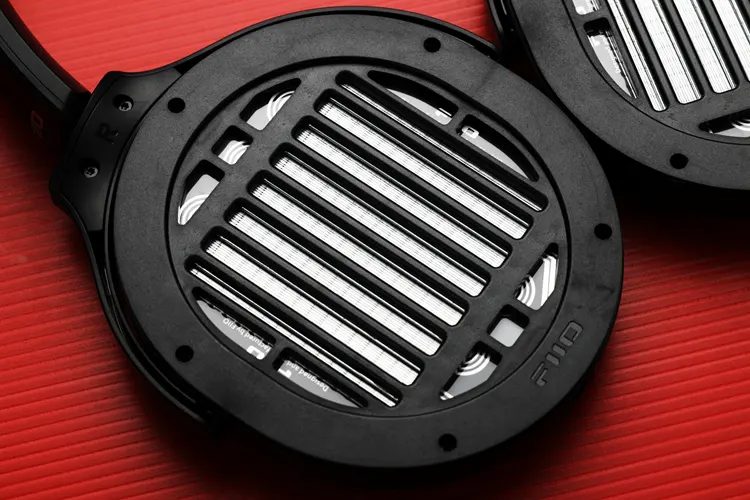
The JT7 is a set of open-back planar driver headphones. They feature a proprietary 95 x 86 mm planar driver with a 3-micrometer ultra-thin diaphragm. It has an impedance of 18Ω and a sensitivity of 92 dB.
The JT7’s planar diaphragm has an elastic suspension, which FiiO calls F.E.S. or FiiO Elastic System.
This refers to a process of embossing folds on the diaphragm to add flexibility, allowing greater displacement and amplitude. The result is enhanced bass dynamics and depth, as well as improved responsiveness at lower frequencies.
The JT7 has a dual-sided magnet array, receiving a symmetrical driving force on the diaphragm in both forward and backward directions, resulting in stronger, more linear motion. The magnets combine high-energy neodymium-iron-boron with lightweight ferrite.
Lightweight design, multi-axis rotation, foldable design. The yokes can swivel and fold for comfort and a smaller storage footprint.
I like the quality of the mechanism because it is silent, with no creaky noise when moving the earcups. The headband cushion is easily removable, fastened only by a Velcro strip, for easy replacement or cleaning.
Design
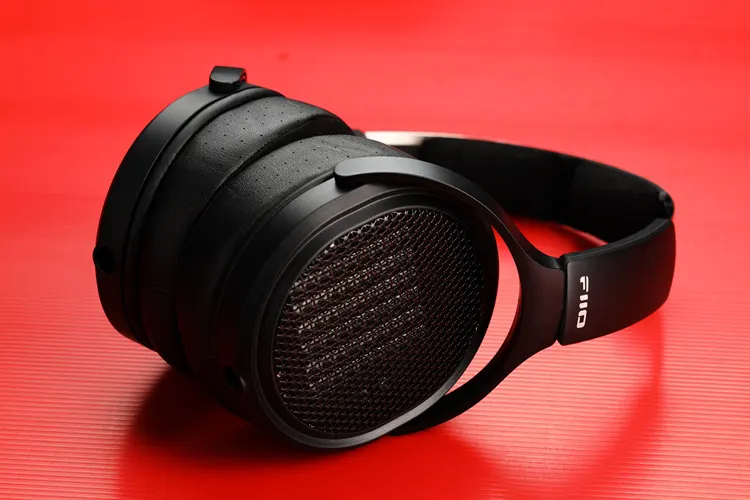
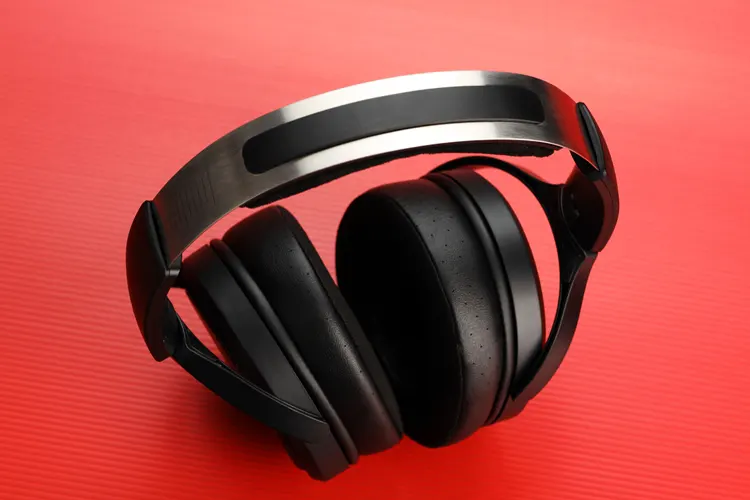
I like the mix of professional, utilitarian, and no-nonsense, straight-to-business design of the JT7.
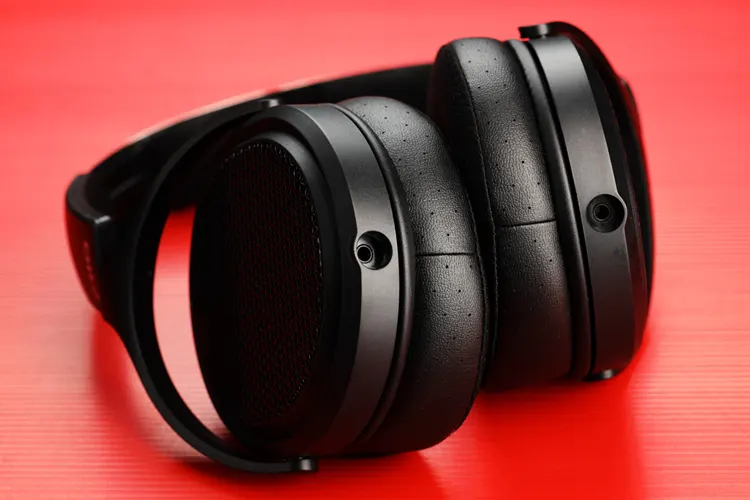
The design can be used at home or at a professional recording studio. I also like how the shiny planar diaphragm gleams through the magnet array and perforated screen in the earcups.
Except for the earpads and headband cushion, the JT7 is primarily made of plastic, with the only metal parts being the screen at the back of the driver and the headband.
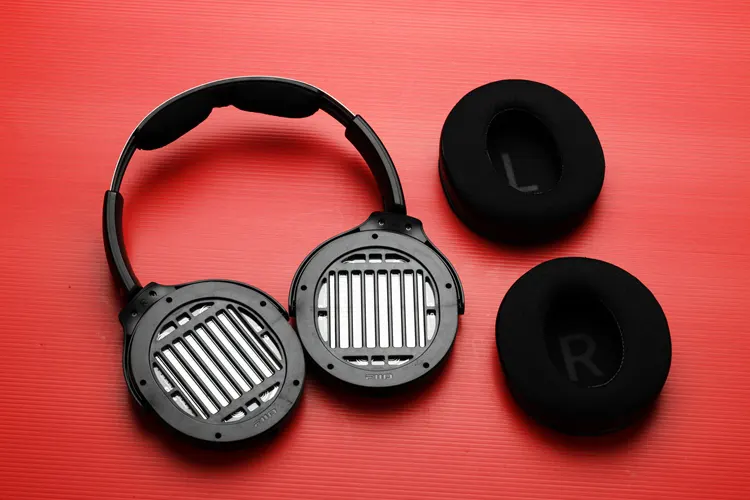
The earpads are removable, and they feature the traditional style of earpad mounting, where a leather-like material from the earpads inserts into the slit around the circumference of the earcups. I find it easy to remove but difficult to put back.
The good news is that the memory foam ear pads are soft; they are velour ear pads with synthetic leather side walls.
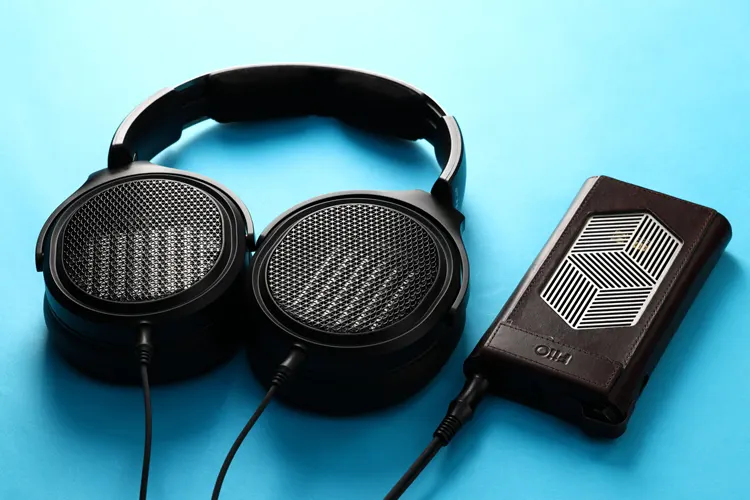
Stock Cable
My JT7 review sample came with a 1.5-meter dual 3.5mm (TS) to 3.5mm single-ended. The black cable looks like silicone-covered due to its softness.
However, I received a review reference document about the JT7, which states that the retail version comes standard with two headphone cables — a 3.5mm single-ended cable and a 4.4mm balanced cable.
Comfort
I listened to the JT7 last night for over an hour, and it feels really comfortable. The clamping force is just right.
Combined with the soft headband cushion, moderate weight, and velvety soft memory foam earpads, the JT7 allows me to enjoy the music and easily forget about it.
The clamping force is just enough for my head, neither too tight that it might shift with a sudden head movement, but not too loose that it loses the seal around my ears.
I can easily imagine that even with longer listening sessions, it would remain comfortable. I feel a distributed and comfortable pressure, thanks to its swiveling ear cups.
Packaging & Accessories
I wasn’t able to take photos of the packaging and accessories because my review sample didn’t come with the official box; instead, it was inside a box with other review samples. The only thing that’s included for the JT7 is the cable.
However, according to the review reference document I received, the package comes standard with the headphones, a cloth storage pouch, a dual 3.5mm (TS) to 3.5mm single-ended headphone cable, a dual 3.5mm (TS) to 4.4mm balanced headphone cable, a 3.5mm to 6.35mm adapter, and a quick start guide.
Sound Impressions
The FiiO JT7 has an SPL of 92 dB/mW, so it is not the most efficient headphone. I used various sources with different capabilities to test which source can drive the JT7 properly.
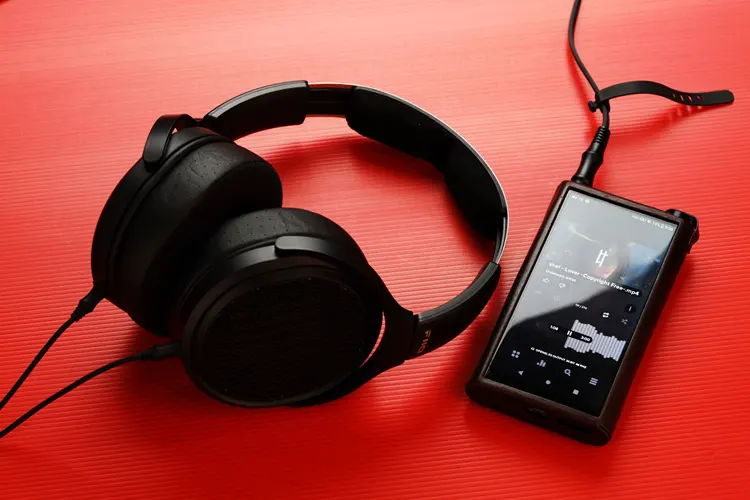
The sources I used include the iBasso DC-Elite, MUSE HiFi M5 Ultra, Shanling M3 Plus, and FiiO’s M15S.
However, for the sound evaluation and comparisons, I exclusively used the FiiO M15S for the reasons I will discuss in the synergy and pairing section.
Please note that the JT7 only includes a 3.5mm cable, which means I am limited to less than half the power output potential of the sources. If the cable were 4.4mm balanced, I could get much higher power output from the sources.
Summary
To ensure the drivers had settled, I spent approximately 35 hours on a burn-in period, letting it play with a spare DAP for about two days before I began seriously listening to the JT7.
That said, the JT7 has a neutral sound presentation with a linear bass response, slightly elevated midrange, and energetic treble. This gives me a somewhat mid-centric sound signature that is delightfully detailed, airy, fast, clean, and musically communicative.
The bass is generally neutral-sounding with just a mild midbass boost, making the sound fast, clean, articulate, and impactful. However, there is not much subbass extension, still, it is not totally devoid of subbass, and the overall sound is not lean but never thick either.
The midrange has this slight elevation, not just in the upper midrange, but throughout the entire midrange, including the lower, middle, and upper, making it sound lush, detailed, and complete.
This gives me the impression that I’m not missing anything, as all the sounds and details are presented in an insightful and balanced manner. Needless to say. The instrument note-weight is neither thick nor thin, it’s just right.
Thanks to the use of a planar driver, the treble is very good and open-sounding. It has a very extended and airy sound, capable of a lot of macro and micro detail.
It delivers the transient with cleanliness, crispness, and speed, yet sounds gentle when needed. A well-implemented planar driver never fails to amaze me in this regard.
Coloration
I’ve heard many headphones, ranging from cheap to ultra-expensive, and I have never encountered one without sound coloration, though some are quite transparent.
Luckily, gone are the days when entry-level headphones can sound cuppy, nasal, or harsh. Entry-level headphones of today, particularly those from original Chinese brands, have good transparency and low coloration.
That said, the only thing I noticed about the JT7’s sound is the mild elevation in the whole midrange, which becomes somewhat normal-sounding in less than a minute as our hearing adjusts and normalizes it.
Staging
Thanks to the JT7’s planar driver, open-back design, and open-sounding treble, the soundstage is very wide, and the height is very good.
The depth is not so deep, though, giving me the illusion that I’m in a rock concert near the stage, where the speakers are placed on the far left and right relative to my position.
The depth isn’t bad, as I enjoyed the wide, high, and open soundstage rendition, which is excellent for some genres of music like rock, metal, or live concert music, to name a few.
However, I do wish that there were more depth to give me a more holographic presentation, which I also enjoy a lot.
Imaging & Dynamics
Due to its well-implemented planar driver and the clarity in sound, the JT7’s imaging is good; it has good definition, and the center vocals have a strong presence.
There is a good definition of the images and lateral separation. I especially like that some images emanate from the extreme left or right.
There is good lateral panning of the images, and the photos don’t diffuse much during the panning, remaining defined.
However, due to the shallower soundstage, the front-to-back panning and layering suffer, resulting in imaging that is not as holographic as the best in this regard.
The JT7 is dynamic-sounding, responding well to dynamic swings and having very fast transients. It sounds energetic in the bass, midrange, and treble, and it never sounds dull. The JT7 is musically engaging to listen to.
Click on page 2 below for my recommended pairings and selected comparisons.
