

Marcelo reviews the FiiO JT3, a highly affordable set of open-back 50mm dynamic driver headphones with a V-shaped, engaging sound. It is currently priced at $69.99.
Disclaimer: I received this sample in exchange for my honest opinion. Headfonics is an independent website with no affiliate links or services. I want to thank FiiO for their support.
You can click here to learn more about the FiiO audio products previously reviewed on Headfonics.
This post follows our current scoring guidelines, which you can read in more detail here.

FiiO has been releasing exciting products one after another lately, and it seems there’s no end in sight. This time, they sent me the handsome-looking entry-level dynamic headphones, the FiiO JadeAudio FT3, which sells for $69.99.
While many FiiO JadeAudio headphones have been reviewed here at Headfonics before, including the higher-end FiiO FT7, down to the more affordable FT1, JT1, and the SNOWSKY Wind, among others, this is my first time reviewing a FiiO headphone.
Aside from its handsome looks, what is special about the JT3? And how does it compare to other headphones, such as the MOONDROP Horizon, Sennheiser’s HD 6XX, and new FiiO JadeAudio JT7? Let’s find out.
Features
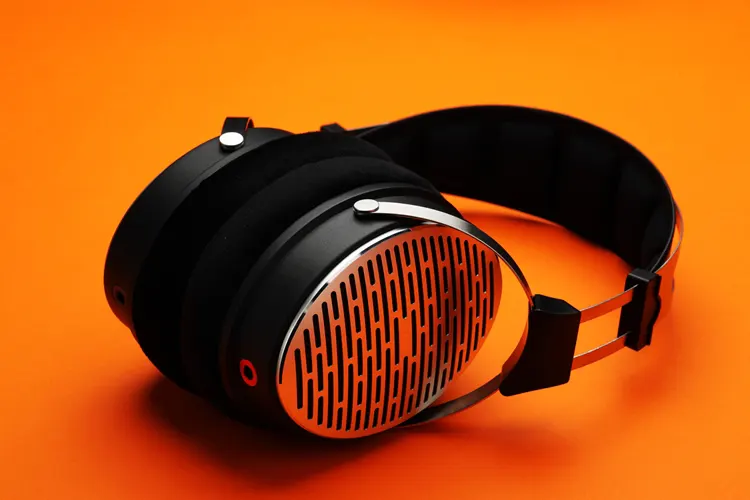
The FiiO JT3 features a 50 mm PEK+PU composite polymer diaphragm dynamic driver with a lightweight voice coil assembly and a powerful N52 magnetic system, which is the strongest magnet in the headphone industry.
The acoustic design is open back, which minimizes back wave reflections from returning to the listener’s ears, making the sound cleaner and the soundstage larger than a closed back design. However, this comes at the expense of some bass response, sound isolation, and power handling.
Another key feature is the angled driver placement: the drivers are positioned slightly forward and angled slightly backward. This arrangement was used to simulate how sound waves naturally hit our ears when listening to speakers or live musical performances.
The JT3 has an impedance of 80 ohms, which is higher than usual, and a sensitivity of 97dB.
Design
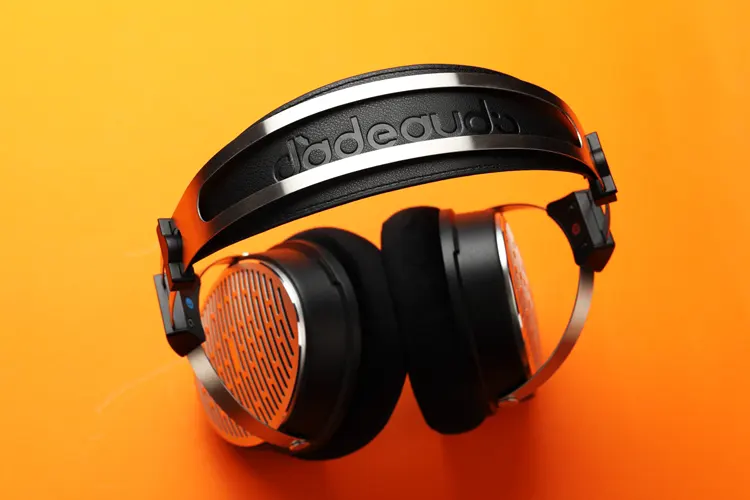
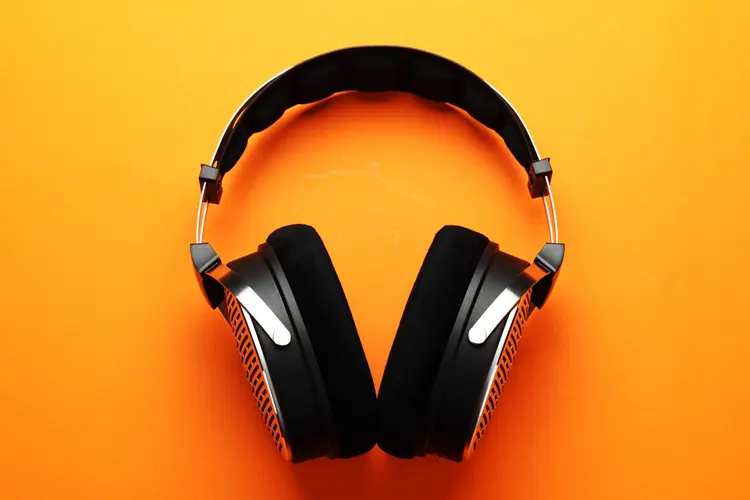
I like the sharp and handsome aesthetics, with shiny metallic parts contrasting with black leather and plastic, making it look more expensive than its price would suggest.
The headband is mainly made of a stainless steel-like bent metal connected to the metal yokes with plastic parts.
The headband adjuster, which touches the top of the head, is made with a leather-like material lined with memory foam pieces. There is also a JadeAudio logo print at the top of the headband adjuster.
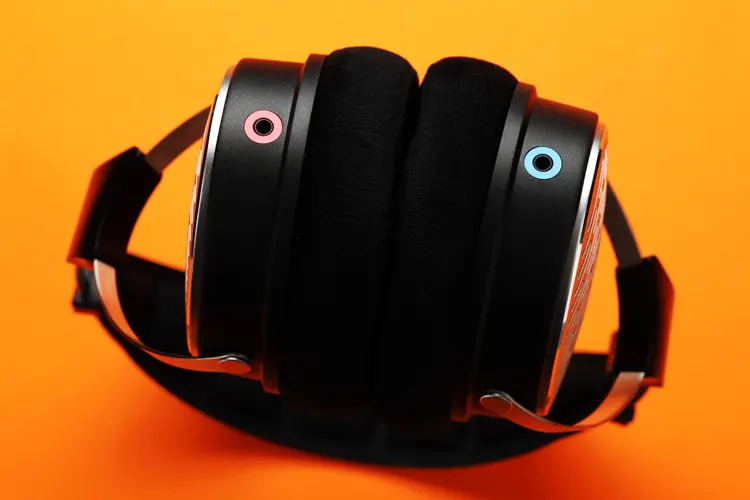
The earcups are oblong-shaped, made of plastic, and have 3.5mm input jacks on the underside of each. The back cover, though, is a nicely designed metal grill which seems to be made of aluminum alloy.
Please note that the earcups don’t swivel or bend in a way that reduces the storage size. Not a deal breaker for me, though.
Ear pads
I like the pair of soft, high-quality, removable, and washable ear pads, made of smooth velvet cloth filled with memory foam, which are pre-installed from the factory.
However, there are no extra ear pads included. This is understandable at this price range.
I didn’t like that the earpads are difficult to remove. I tried to remove them following the instructions in the manual, but I was already exerting a considerable amount of force, and I might tear apart the earpads. Still, the clips wouldn’t let go, so I never removed the earpads.
Stock Cable
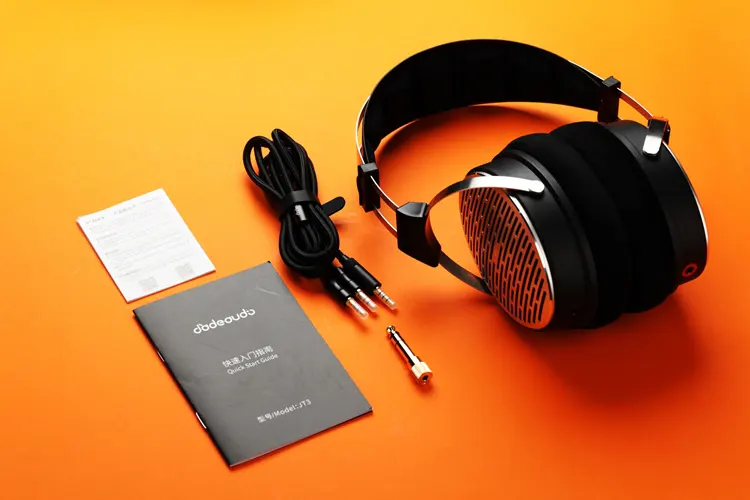
I like the 1.5-meter sleeved cable, which looks and feels like a third-party upgrade cable and doesn’t require any upgrades.
It features a 3.5mm plug in the input and two color-indicated 3.5mm plugs on the output side. This cable configuration is one of the most popular, if not the most popular, today.
The cable features a microphone near the right earcup, which allows you to play games and answer calls. It has a button to answer or decline a call.
Comfort
I listened to it last night for about an hour, and it feels very comfy. The clamping force, the softness of the headband bridge, and the velvety soft memory foam earpads allow me to enjoy the music and easily forget about the headphones; it is that comfortable.
The clamping force is just enough for my head, neither too tight that it might shift with a sudden head movement, but not too loose that it loses the seal around my ears.
I can easily imagine that even with longer listening sessions, it would remain comfortable. Though I wish the earcups could swivel just a little, as I feel more pressure at the front of my ears than the back.
Packaging & Accessories
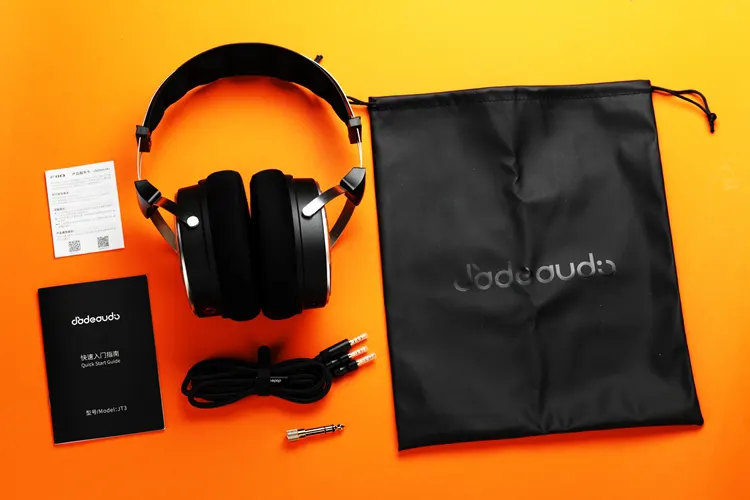
The packaging is simple, and the unboxing experience is ordinary. It is just a simple box that includes the headphone with the earpads installed, a cable, a carrying pouch, a 6.35 to 3.25 plug adapter, and user manuals. That’s it, it couldn’t get any simpler.
Sound Impressions
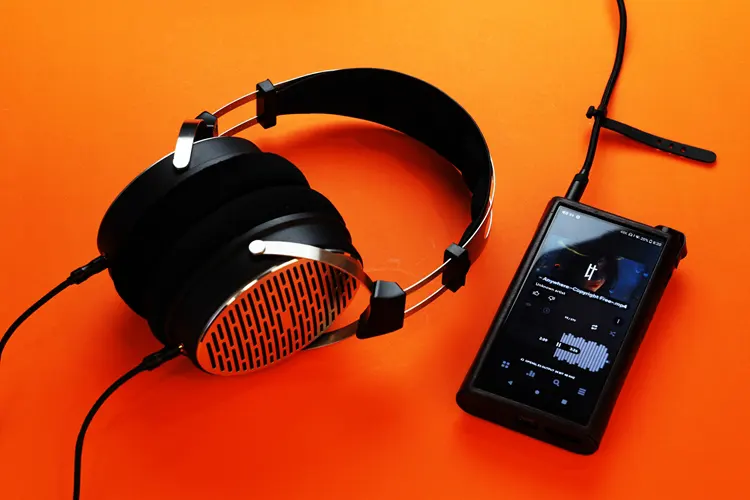
Since it has a slightly high input impedance of 80 ohms, I used various sources with different output power capabilities to test whether the JT3 is fussy with sources and how the sound changes as I switch sources.
The sources I used include the iBasso DC-Elite, MUSE HiFi M5 Ultra, the Shanling M3 Plus, and FiiO’s M15S. However, for the sound evaluation and comparisons, I exclusively used the FiiO M15S for the reasons I will discuss in the synergy and pairing section.
Please note that JT3 only includes a 3.5mm cable, which means I am limited to less than half the power output potential of the sources. If the cable were 4.4mm balanced, we could get much higher power output from the sources.
Summary
To ensure the drivers have settled, I spent approximately 24 hours on a burn-in period, letting it play with a spare DAP for about two days before I began seriously listening to the JT3.
That said, the JT3 gives me this warm, bassy, and mildly V-shaped sound signature. Characterized by a small bump in the bass response and some peaks in the treble, resulting in a lively and engaging musicality on all songs.
The bass does not extend much into the subbass, but the response bump in the lower midbass creates the illusion of full-sounding bass. I hear a tight and articulate bass with good punchiness, yet it is not devoid of ultra lows, as sometimes I can feel the sub-bass shaking the earcups.
Midrange isn’t recessed or buried by the bass and treble; it has good presence in the lower and upper midrange, giving it a balanced midrange presentation that renders the instrument note weight neither too thick nor too thin.
Aside from the slight elevation in the treble response, I can hear some peakiness that adds excitement to the sound. I hear mild sharpness on a few occasions, but the overall sound is not fatiguing or piercing.
I also hear some air and micro details, but the JT3 is not the most resolving headphone I’ve listened to.
Coloration
When listening to the JT3 for the first few minutes, the mild peaks in the treble are apparent, but they quickly become less evident as the hearing adjusts to the sound.
Still, if listened to carefully, the peaks are there; however, I’m happy to report that JT3 doesn’t have the plasticky, nasal, or cuppy sound coloration that plagues most entry-level headphones I’ve heard decades ago.
Staging, Imaging, & Dynamics
Thanks to its open-back design, the JT3’s soundstage is above average, offering a good balance of height, width, and depth.
The shape is almost spherical, providing a reasonable amount of surround sound sensation, and there is a nice space between the listener and the instruments.
However, it is not the biggest soundstage I’ve heard. I feel that the slight peaks in the perceived treble response make the background less pristine than it should be, preventing the JT3 from producing the best soundstage.
Imaging is pretty good, and although the images don’t have the most defined edges, all the instruments and vocals are separated, allowing one to enjoy isolating some instrument to some degree.
But not too much that the listening experience becomes analytical; in fact, the overall sound of the JT3 is more towards the analog side.
The holography of the images is good, with nice side-to-side separation and front-to-back layering. I find that most of the instruments are projected at the front instead of the sides, like with other headphones. I suspect the angled driver arrangement is the one to thank here.
The JT3 is dynamic-sounding; it responds well to dynamic swings. The bass has good punch, the mids are snappy, and the highs have fast transients, making the JT3 an engaging and fun-sounding headphone to listen to.
Click on page 2 below for my recommended pairings and selected comparisons.
