

Synergy
THIEAUDIO Valhalla
The Valhalla features a whopping 19 balanced armature drivers per side. It has a U-shaped signature with a slight boost in the low end and some lift in the treble region.
The bass is mid-bass focused, while the midrange stays very natural with a slightly neutral tilt. The upper frequencies are fairly detailed without ever sounding harsh or spicy.
Like most THIEAUDIO IEMs, it responds well to cable rolling, and I see Valhalla’s stock cable as a bottleneck to its performance.
Since Valhalla has a prominent mid-bass, I was sceptical that the cable might thicken it and make it less enjoyable, but I was wrong.
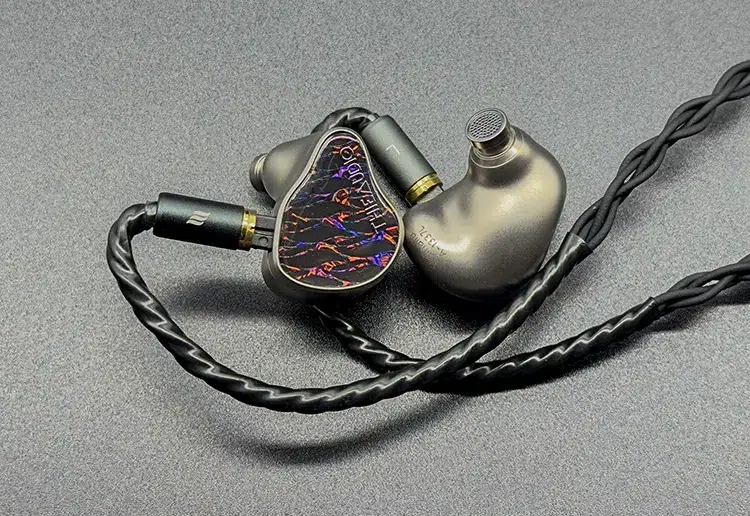
With DIONYSUS, the bass has better control, and the mid-bass boundary is more defined. Valhalla has a weak sub-bass, and I hear a little more rumble and depth in that region now. The bass becomes more balanced, more refined, and more detailed, which is something the stock clearly fails to deliver.
As mentioned earlier, the cable brings good changes to the midrange, and the level of warmth is not overdone. The tweaks are favorable, making the midrange a bit more musical and full-bodied.
Both female and male vocals are more nuanced. Notes feel taller and more detailed, and the presentation sits a touch more upfront. It doesn’t push the midrange forward; it adds a nice density and body. The upper midrange is nicely extended, and the expressiveness remains intact.
I still hear a slightly boosted treble, meaning the energy up top is not negatively impacted, which is one of the beauties of this cable. It doesn’t cut down the existing strengths. Treble notes feel more detailed and better spread out, with more air and space around them.
LETSHOUER Cadenza 12 2024
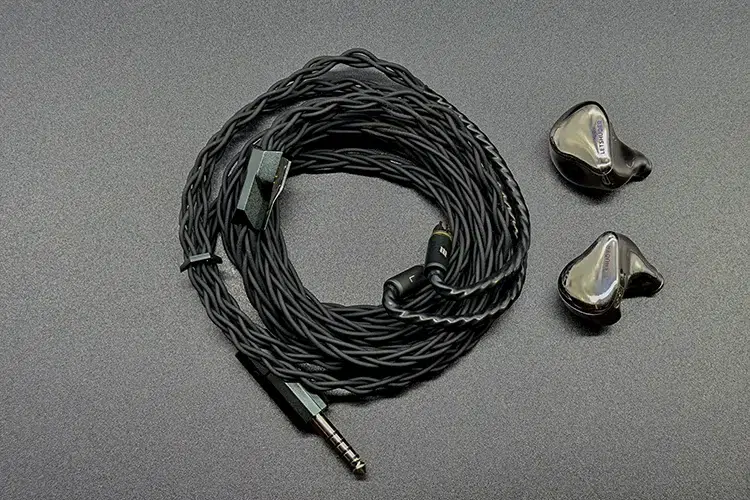
LETSHUOER Cadenza 12 2024 is a universal in-ear monitor with a 12-driver setup: 1 dynamic driver and 11 balanced armatures, a mix of Sonion and Knowles, running a 6-way crossover.
Its sound signature is balanced with a good emphasis up top. The tuning is neutral, highly resolving, razor-sharp, and clear, which makes it an ideal candidate for cable rolling.
To be fair, the stock cable on Cadenza 12 is no slouch and does its job well, but DIONYSUS brings better performance. The first noticeable change is in the stage, which grows taller and deeper. The treble is next to show a few tweaks.
Cadenza 12 has a highly energetic treble that can feel a bit crunchy in the lower treble. DIONYSUS tames that region slightly and evens it out with the higher frequencies. The energy gets redistributed for more consistency, while air and sparkle are as good, maybe a touch better.
The bass shelf gets a gentle bump in the sub-bass, and together with a bit more detailed mid-bass, the bass digs deeper and gains better overall body.
Cadenza 12 already has very accurate bass with just the right quantity, and DIONYSUS makes it feel even more confident. The bass comes down with more authority, more thud, and heavier hits.
The midrange picks up a hint of warmth, which is a positive change since the stock can be fairly neutral and a bit dry. Vocals sound more lifelike, and instruments get a musical massage across the range.
The upper midrange is slightly toned down and feels more coherent with the now more uniform treble. Another thing that I notice is how well the micro-details are rendered. You can easily pick up very minute details with ease.
BGVP Solomon
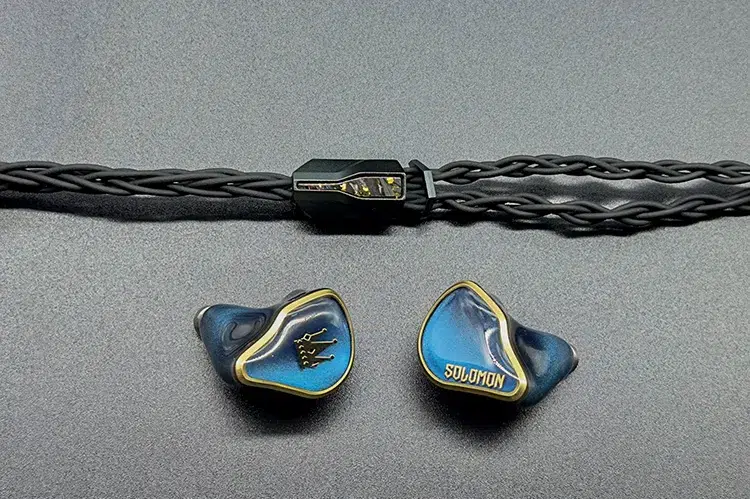
The Solomon features a mix of nine drivers: two dynamic drivers, three Sonion balanced armatures, two Sonion electrostatic drivers, and two Sonion bone conduction drivers. It carries a neutral sound profile that reacts well to cable changes.
Notably, Solomon ships with the Temple cable, a more premium option along with the stock cable, and genuinely a strong performer. You can check more about this cable in Solomon’s review.
Solomon sees a massive change when paired with DIONYSUS. Massive because the lean bass on Solomon undergoes a complete transformation.
Out of the box, the low end is polite; with DIONYSUS, it gains real authority. Both the sub-bass and mid-bass pick up more impact, making the low end very enjoyable. The bass now fills the whole stage and adds real depth to the presentation.
The midrange gets a nice touch too, while keeping resolution intact. It is warmer and more musical, with more body and weight to the notes.
The energy is dialled back a little without sacrificing detail. The upper midrange loses its clinical glare and feels more nuanced and expressive, especially with female vocals, which show off a more natural tone.
Solomon’s native top end is brilliant but peaky with a few exaggerated peaks here and there. The cable smooths and evens the treble while still delivering the same level of detail, so the top end feels less spiky yet still lively. It’s a bit more relaxed and more enjoyable with the DIONYSUS.
The soundstage gains height and depth. Imaging is a bit relaxed, not as razor sharp as with Solomon’s stock or the Temple cable, but still accurate and stable.
With DIONYSUS, Solomon stops sounding like a reference monitor and starts sounding like a musical one. Honestly, it has become my favorite pairing so far.
Selected Comparisons
Effect Audio Eros S II
Technical
Eros S II is the only hybrid cable released originally with the first set of Signature Series II cables. It is an 8-wire, 26 AWG configuration crafted from ultra-pure OCC silver and copper Litz wires.
It uses a proprietary Tri-Element SynCompound design, incorporating a central pure silver core and six multi-sized core bundles of a silver-copper alloy and pure copper. This 1+6 internal structure is similar to the other cables from the series.
Design
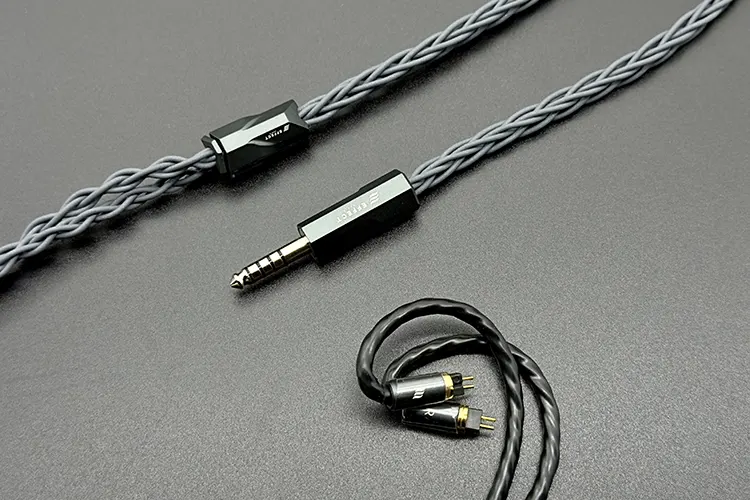
The Eros S II has a very similar look and feel to the DIONYSUS. It has a dark grey tone, and the sleeve is non-transparent with a matte finish.
Along with DIONYSUS, the Eros S II has a non-transparent sleeve; the other cables from the Signature Series let you peep through to see the internal wires.
The Eros S II has a similar weight and braiding structure. It takes up a bit of space when you roll it up. The hardware elements, such as the termination adapter and the 2-pin connection, all remain the same.
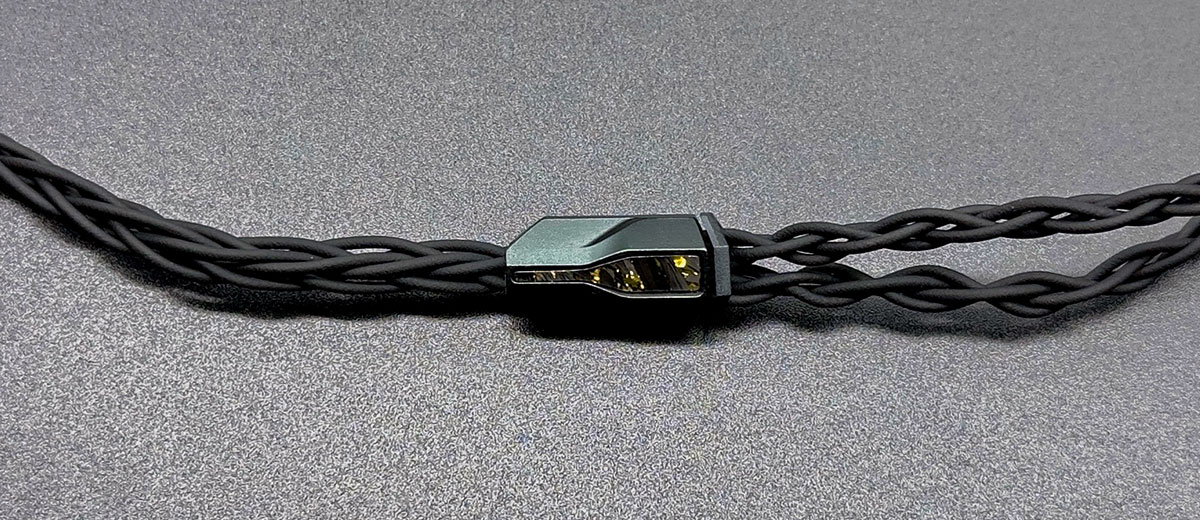
The Y-split on DIONYSUS has golden flakes that are more visible and distinct. In short, the theme remains the same, but the internals and externals differ in many aspects.

Performance
Eros S II combines the benefits of both copper and silver and brings changes across multiple areas. The underlying signature is a transparent one with a hint of extra sparkle and air. Eros S II is more incisive and precise in its presentation, which is pretty much the opposite flavor from DIONYSUS.
In the low end, Eros S II adds a bit of tightness and control but does not elevate the bass experience. DIONYSUS brings more changes here, imparting a more authoritative and impactful bass. The sub-bass has greater depth on DIONYSUS, while it feels a bit subdued on Eros S II.
The midrange on Eros S II doesn’t really warm up; it just focuses on clarity and resolution. Detail retrieval is more noticeable with it. The notes are sharper and cleaner without killing the musicality, but DIONYSUS has a more favorable impact in this region.
With Eros S II, the midrange can come across as a touch sharper and more energetic. DIONYSUS smooths that region out, keeps it better extended, and avoids any unwanted edge and energy.
On some IEMs, the upper midrange can get a bit spicy with Eros S II, while the region stays well in control with DIONYSUS.
In the treble, Eros S II adds sharpness to notes with a layer of shimmer and sparkle and some extra bite. Sometimes, with Eros S II, notes may feel a bit extra crisp and thin. DIONYSUS mostly leaves the treble character intact but fattens the notes slightly.
Eros S II is slightly ahead in imaging precision, which feels a bit more exact and pinpoint. In comparison, DIONYSUS works its magic in instruments’ layering.
The soundstage gains depth and height on DIONYSUS, giving a more holographic presentation. Eros S II can feel a bit wider but less immersive.
Effect Audio Ares S II X Cadmus II AxC
Technical
This Ares S II X Cadmus II AxC was released before the DIONYSUS and stands as the fourth release from the Signature Series II cables. The AxC cable borrows its material and configuration from the Ares S II and the Cadmus II cables.
The Ares S II features a 26AWG configuration, blending two distinct types of copper in unique bundles, while the Cadmus II features a 26AWG silver-plated copper configuration.
The AXC cable shares a similar internal structure, using a central core surrounded by six multi-sized bundles.
Design
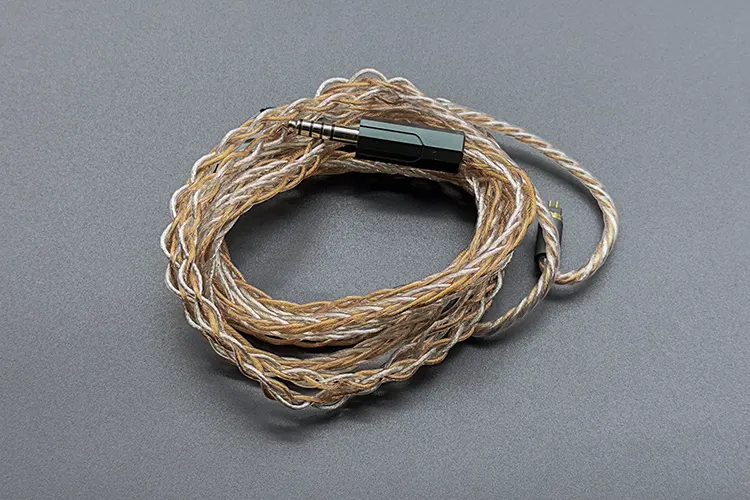
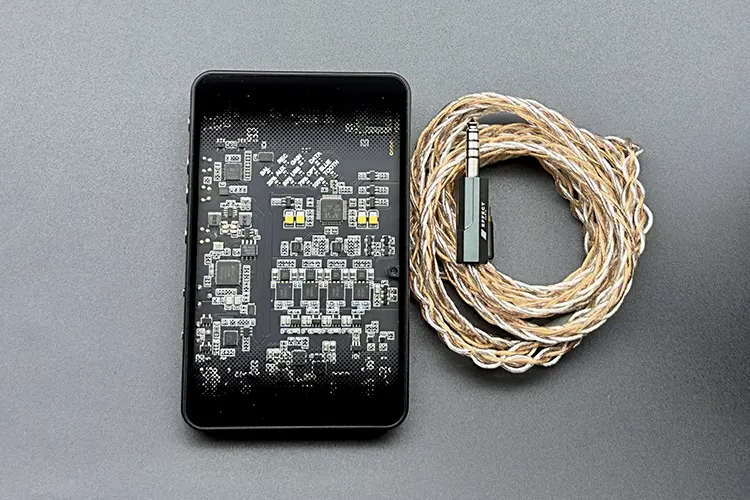
The blend of two cables, Ares S II and Cadmus II, brings together strands of copper and silver; with their contrasts, they make the AxC a visually appealing cable. DIONYSUS feels more premium to me, but from afar, AxC takes the top spot.
The AxC carries elements similar to its siblings, such as the termination adapter and the 2-pin connectors. The Y-split is also built in forged carbon fiber with touches of silver and copper, hinting at the blend of the two cables.
It adopts the same EA Ultra Flexi™ Insulation for flexibility and protection. The hardware elements, such as the termination adapter and 2-pin connectors, are the same on both cables.
Performance
Before DIONYSUS showed up, A×C was my go-to in the Signature Series II. It gives you a slightly richer, warmer sound and adds a bit of weight to the bass, still not losing its focus from clarity.
All of this holds true for DIONYSUS, but it does it better, at least a few levels above what A×C does. The low end feels stronger and deeper, and it fills more space without getting bloated. It adds more warmth and lushness to the mix without overwhelming.
In the midrange, the changes lean more musical with DIONYSUS, making notes a bit denser and meatier. A×C relies on a cleaner timbre, bringing out clarity without adding crispness, almost like peeling off a layer.
In the upper midrange, both cables have a fairly relaxed presentation, aiming for better extension rather than extra bite or clarity.
In the treble, A×C pushes more sparkle than DIONYSUS. It can feel a bit more detailed between the two, since DIONYSUS does not add much to that region.
Notably, the air and impact remain intact with DIONYSUS, meaning it does not affect the treble negatively. Notes feel taller and a touch more detailed with DIONYSUS, while A×C gives a crisper edge to treble notes.
The soundstage gets a gentle lift with A×C, so beyond a little more openness over stock, I do not see much change. Stage expansion is more obvious on DIONYSUS, with a noticeably taller and deeper field. Instrument layering and spacing are portrayed better with DIONYSUS.

ddHiFi Nyx Net
Technical
The ddHiFi Nyx Net is a high-purity single-crystal copper cable with a wire gauge of 25.4 AWG. The core structure features a 1:8 ratio, with seven larger-diameter single-crystal copper conductors arranged in a circular array.
Nyx Net incorporates two insulation layers along with a shielding layer. The first inner layer is made of High-Density Polyethylene (HDPE) foam, and the second layer consists of a high-transparency SoftFlex PVC material.
This shielding structure of Nyx Net enhances signal transmission speed through single-crystal copper materials.
Design
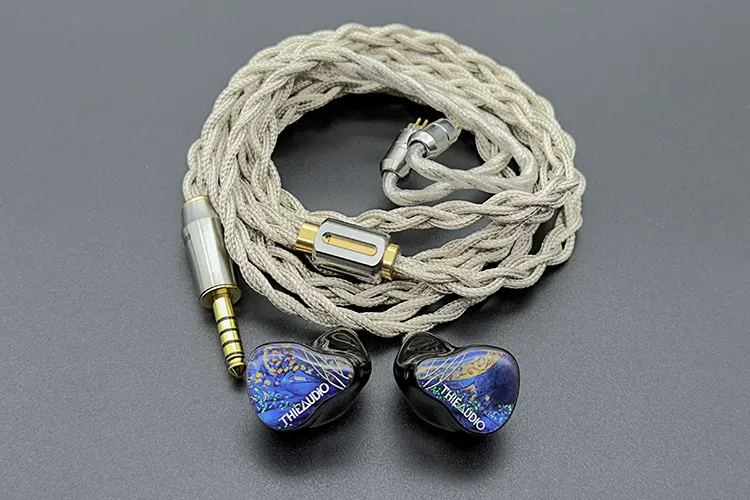
The Nyx Net cable is configured in a 4-wire setup. The outer sleeve is made of fiber mesh, and the braiding is nicely done without any visible gaps. The sleeve feels premium and has a smooth touch. Both IEMs have a premium appeal in their own way.
The Nyx Net includes an interchangeable pin system with a wide variety of 0.78 mm pins and ships with MMCX pins along with the standard 2-pin. In the package, you also get a small carry case, making the overall package a bit more thoughtful than DIONYSUS.
The Nyx Net cable is soft, lightweight, and very easy to handle. It is very submissive and does not uncoil when you roll it up. The ear hook has a slightly firm shape that holds well when worn, though it makes its presence felt every now and then.
In terms of handling, both cables are good. There is more cable noise, or microphonics, on the Nyx Net cable.
Performance
The Nyx Net cable is tuned to give you a tighter, punchier low end and a dash of extra sparkle up top; it keeps the overall picture crisp and neutral. The DIONYSUS low-end treatment is a bit different.
Instead of just the refinements Nyx Net brings, DIONYSUS steps things up further by delivering a bigger, bolder bass, something that feels immediate and noticeable, yet it never turns woolly.
Along with that added weight in the low end, you get a gentle blanket of warmth that makes the whole track feel more musical. Nyx Net keeps things tidy and crisp in the midrange. It maintains a neutral presentation with good extension and adds just a pinch of warmth.
DIONYSUS gives more body and lushness to the notes, helping them pull a little more space from the stage without disturbing spatial positioning or breathiness.
On Nyx Net, the upper midrange has some added energy, which can come across a bit sharp with certain IEMs. The upper midrange on DIONYSUS does not add energy; it smooths things out, giving a relaxed, more extended delivery.
In the treble, Nyx Net gives you more crunch in the lower treble, which adds excitement. Thankfully, the energy does not feel overly elevated, so the treble stays enjoyable. It is a bit airier and a touch more detailed, as notes pop out better.
DIONYSUS smooths things out, trimming the sharper edges and handing off a relaxed yet detailed treble.
Both Nyx Net and DIONYSUS bring positive changes to stage depth, while neither of the two does its magic in the width.
It is the DIONYSUS that expands the stage more in the vertical direction, giving a more immersive stage presentation. Instruments are better layered, and DIONYSUS handles heavier musical passages with more ease.
My Verdict
The Effect Audio DIONYSUS is the late-arriving cousin that walks into the Signature Series II family photo and instantly steals the spotlight.
I have had chances to try both generations of the Signature Series and the recently launched A×C cable. All of them deliver on what they promise and bring favorable changes while keeping their own character.
Compared to the last release in the series, A×C, the new DIONYSUS pushes the luxury dial up a couple more clicks and gives extra premium treatment to IEMs. The way it opens up the bass and midrange is something special. It feels confident, refined, and immediately musical.
Across all the IEMs I tried, the cable fared really well. I tossed it at bass-monster sets, bright-analytical sets, and everything in between; each time the cable simply “fixed” the balance, which is what a cable should ideally do. The treble stays tidy, the midrange gains body, and the low end picks up authority without bloat.
You get polish without losing energy, and that balance is the real win here. It can be a do-it-all cable for people who want a premium sound without the premium invoice, and there is a reason why Effect Audio is calling it a mini flagship of the Signature Series II cables.
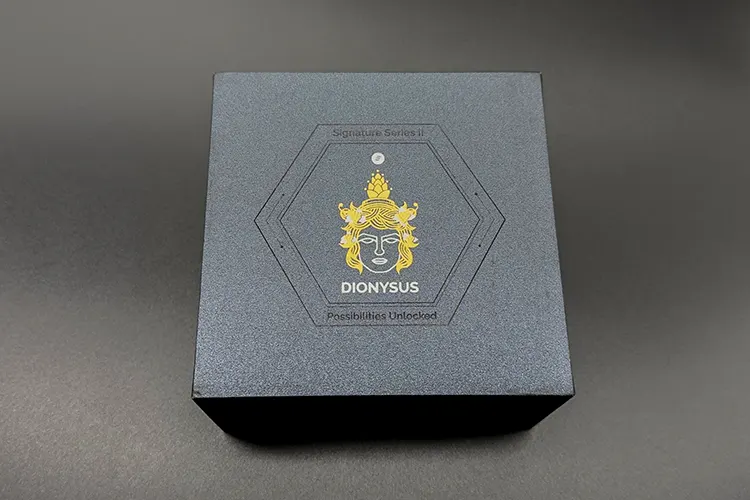
The only shrug comes when you open the box. They basically did not give this cable any premium treatment. Maybe that’s on purpose: let the sound, not the unboxing, deliver the wow.
For the price tag, I think the performance is totally up there. The cable gets a recommendation from me, and if you want one cable that plays nice with every IEM in your drawer, this one should definitely be on your list.
Effect Audio DIONYSUS Technical Specifications
- Spec: 26 AWG 8 Wires
- Materials:
- Gold-Plated Silver Litz
- Silver and Copper Alloy with Central Solid Core
- Silver Litz
- Copper Litz
- Sleeve: EA UltraFlexi™ Insulation
- Plug: 4.4mm Balance, EA Standard Rhodium-Plated Brass Straight Type
- Connector: ConX – 2-pin (Default)
