

Synergy
IEM Pairings
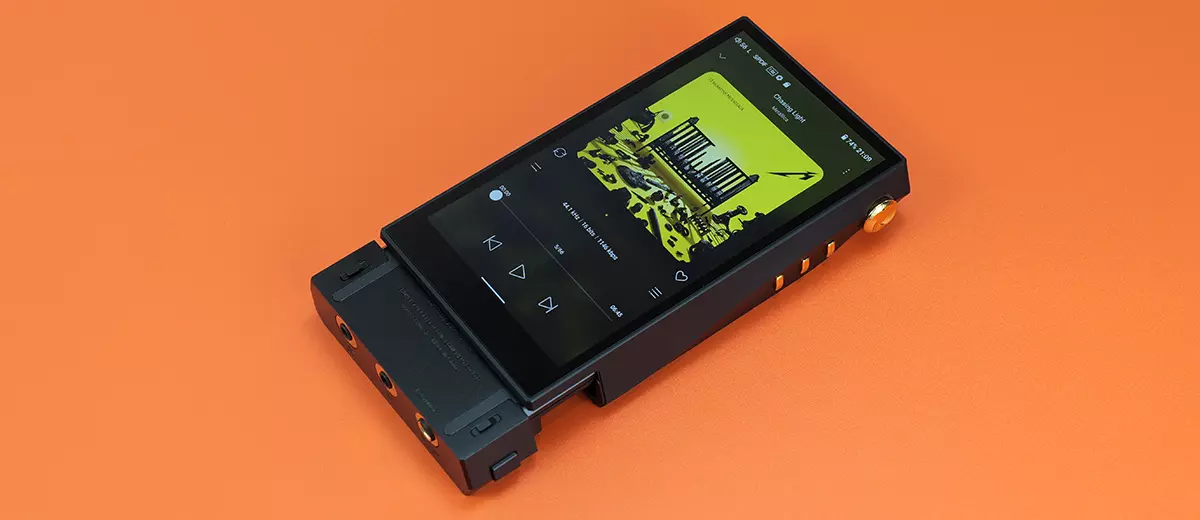
I tested the Cayin T201/N6iii with a broad spread of IEMs, including the PMG Audio Apx OG & ME, the Volk Audio ÉTOILE, TANGZU’s Monkey King, and the UM Multiverse Mentor.
Modern Tube Preferences
Overall, I leaned to the T201 Modern Tube mode more often than not because of the stronger mids and highs influence. On darker or warmer IEMs or those with strong bass dynamics, I felt Modern Tube mode countered that nicely, so you got the best of both worlds.
For example, the Apx ME and the Monkey King have a strong low-end presence, with the ME sounding more rounded and relaxed in the highs and the Monkey King a little thin in the mids and highs in comparison.
Classic Tube mode exaggerated the ME’s stock tonal curve, whereas Modern Tube mode balanced it out with a slightly reduced low-end and fleshier mids with a sweet sparkling overtone. You can immediately pick up on the enhanced air from the Modern Tube mode with this IEM.
It was a similar scenario with the Monkey King. Both tube modes create a smoother, meatier midrange and coherent highs, but the Modern Tube mode brought this region further forward with more air, which I prefer.
The Mentor suited Modern Tube mode more than Classic due to its dipped mids tuning. It’s a spacious sound, but if you like vocal performances, you want the MM mids to sound clear, which Modern Tube mode does better.
Classic Tube Preferences
The ÉTOILE is the opposite courtesy of its lifted vocal presence, which suited the T201 Classic Mode for me.
Modern Tube mode retains a strong vocal performance with greater contrast, but the odd-time higher-pitched vocals and percussion notes from the ÉTOILE sounded slightly ‘squeezed’, whereas Classic Tube mode kept the contrast in check and relaxed the vocal imaging.
I also felt the original Apx suited Classic Mode more. It has a brighter treble tuning, which Modern Tube mode might emphasize, whereas Classic Mode delivers smoother performance.
I largely ignored solid-state mode for my pairings. In all instances, it sounded a little bit flat compared to the tube alternatives, but might be an option for those looking for a cleaner, drier sound from darker IEMs.

Headphone Pairings
I tested the ZMF Headphones BOKEH Open, the Austrian Audio Composer, and Dan Clark Audio’s NOIRE XO: one high impedance headphone, one low impedance headphone, and one planar headphone.
I had mixed opinions on the headphone’s performance because of a mix of timbral matching and, in the case of the NOIRE Xo, a question mark on adequate power.
For the BOKEH Open, I couldn’t decide if Modern or Classic Tube was the better option.
Classic provided more depth and presence in the lows, but the mids hollowed out a little with a more ambient presence that suited the large staging quality of these headphones. Vocals, however, were laid-back and a little diffuse-sounding.
Modern Tube Mode was better at teasing out vocal presence with improved midrange fill, but at the cost of some bass depth and bloom. Both modes do very well in terms of sibilance control with a very smooth sound, so this felt more about the staging shape.
The Austrian Audio had a similar dilemma with Classic, more ambient, wider, and deeper, but more diffuse in the mids. Modern was a little brighter but firmer in the mids and highs. I could take either mode depending on the genre of music.
The NOIRE XO sounded best with Classic, which maximized its staging space, creating a more liquid-like treble and clamping down on contrast levels more than Modern. My problem with the XO is the level of dynamic range; it felt slightly underpowered using the T201.
Selected Comparisons
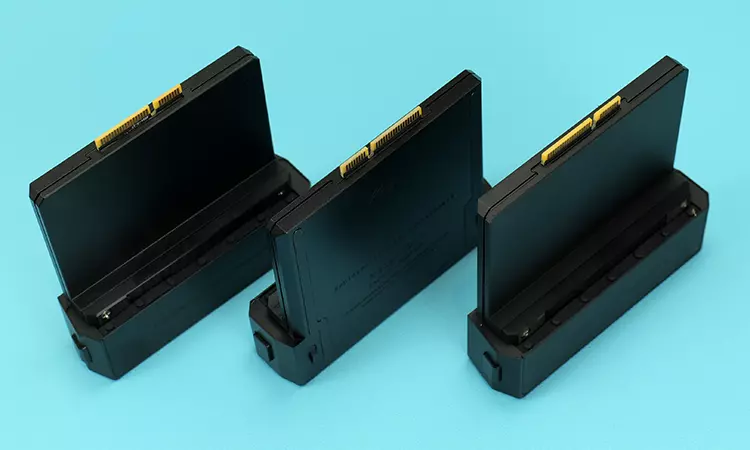
The following selected comparisons to the Cayin T201 were completed using a mix of the PMG Audio Apx, Volk Audio’s ÉTOILE, and the TANGZU Monkey King.
Cayin R202
The Cayin R202 was launched late last year and could be considered the flagship card given its higher price point. It is currently priced at $559.00.
Technical
Both cards have a distinct analog focus; however, the R202’s unique features are in its decoding options, whereas the T201 emphasizes its amplification modes.
The R202 uses a dual-circuit implementation with two different DACs, 1-bit and R2R, whereas the T201 uses a single AK4497S delta-sigma DAC.
The R-2R PCM DAC is built with 192 high-precision 0.1% thin-film resistors in a balanced 24-bit DAC configuration. It primarily handles digital PCM streams and supports native PCM decoding up to 384kHz.
The second is a discrete 1-bit DSD DAC built with 128 pieces of 0.1% high-precision thin-film resistors in a balanced 1-bit DAC architecture, supporting up to native DSD256 decoding.
The T201’s decoding ceiling is superior at DSD512 and PCM 32-bit/768kHz compared to the R202’s PCM 32-bit/3384kHz and DSD512.
Both cards use a quad dual-channel INA1620 op-amp architecture for a fully balanced output. However, the R202 lacks line-out capability, either fixed or variable, a key advantage for the T201 if you need a system-type interface.
The raw power numbers are very similar at 250 mW SE and 550 mW balanced for the R202 compared to the T201’s 252 mW and 543 mW on 32Ω loads.
The magic of the T201 lies behind the opamps, with its multiple-timbre output allowing the user to switch between 3 modes: solid-state and the dual JAN6418-tube Modern and Classic Tube modes.
Performance
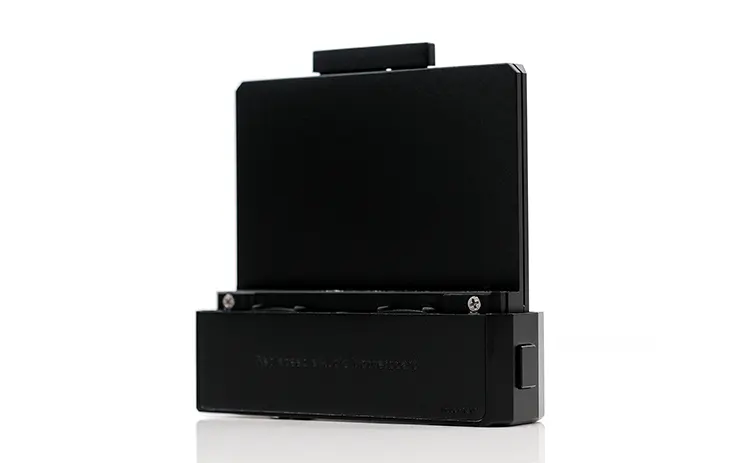
Both cards deliver a natural, smooth, and analog overtone, save for the T201’s solid-state option, which has a bit more treble emphasis and tighter bass control on monitors with stronger upper-mids presence.
The R202’s R2R mode is the closest companion to the T201’s Modern Tube mode, with both offering a stronger focus on the mids (and the highs for the T201) imaging and impact, and a slightly flatter sub-bass presence.
However, the R2R’s delivery is not quite as sweet-sounding with slightly shorter decay. It is still very analog in tone but denser in weight, with vocals more prominent.
The T201 Modern Tube mode is more extended, airier, and slightly more ethereal in its delivery. However, like the R202 R2R mode, it mutes sibilance to the point of negligible presence, making both modes ideal for slightly brighter IEMs.
The Classic Tube Mode and the R202’s 1-bit mode are at opposite ends of what you would define as an analog-sounding presentation.
The 1-bit mode is expansive, similar to the T201’s Classic mode, but it’s not as weighty or rich-sounding as Classic Mode, which has a slower pace, more bass bloom, and a relaxed midrange.
It is debatable which has the more spacious soundstage. I find the T201 Classic Tube mode perhaps more macro-spacious, with more power and depth, while the R202 1-bit mode is more precise and resolving, creating a more detailed sound.
The T201’s solid-state mode is the outlier. It’s natural-to-neutral, with more bass control, tighter decay levels, and no real obvious FR emphasis.
It does exaggerate sibilance a bit more than the analog modes from both cards, but it is hardly surprising given tubes and R2R are so rich and lush in their delivery.
Cayin E203
The $359 Cayin E203 motherboard was launched in early 2025, shortly after the N6iii debuted in late 2024, with our review coming out around the same time.
Technical
Both cards use delta-sigma DACs and have different amplification modes.
The E203 uses an ES9039SPRO, which has the same competitive native DSD512 and PCM 32-bit/768kHz decoding rates as the AK4497S inside the T201.
The E203 features a dual operational mode that can switch between Class A and Class AB solid-state amplification, including a hyper mode that maximizes current-output performance, using a hybrid op-amp/discrete-BJT topology.
Whereas the T201 offers solid-state and dual JAN6418 Classic/modern tube timbre modes, with line and PRE output capability.
Output power levels are fixed on the T201 for single-ended and balanced operation at 252 mW and 543 mW, respectively; however, for the E203, the maximum rating depends on the operational mode.
With hyper mode turned off, you get 700 mW into a 32Ω balanced load down to 300 mW single-ended. If it is turned on, it jumps to 900 mW balanced and 400 mW SE on the same load.
So it is more powerful than the T201, but that comes at the cost of some battery life: a maximum of 11 hours without Hyper Mode, down to as low as 6.5 hours with Hyper Mode and a balanced output connection. That is less than half the N6iii battery’s potential lifespan with the T201.
Performance
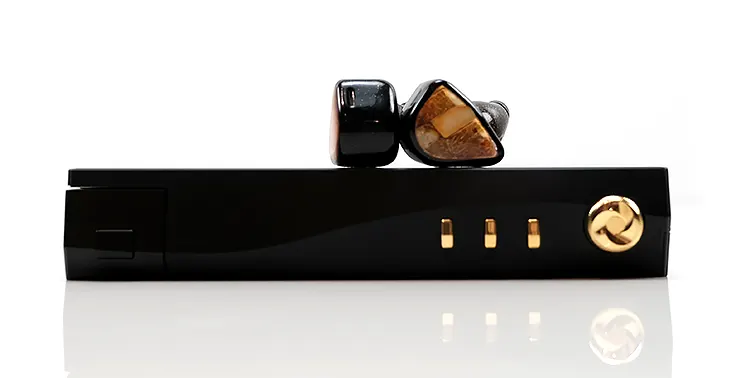
If you need the most aggressive sound signature, the E203’s hyper mode is the pick of the bunch, as the T201 has nothing like this in its arsenal. It’s deeper, more impactful, and has a tasteful mix of solid-state energy and Class A even-harmonic influence.
It’s not as laid-back as the E203’s Class A, though, so it can fatigue at times with brighter IEMs such as the Noble Audio Ragnar or PMG Audio Apx, sounding more forceful in the upper-mids and highs.
I found the T201’s modern tube mode a bit closer to the E203’s Class A mode. It’s got a slightly brighter tone and more midrange and treble emphasis over the Classic Mode, but it does not have the same drive and weight as the E203’s bass response.
What it can offer, similar to the Classic Mode, is a lusher-sounding vocal timbre than the E203’s Class A mode’s tuning.
The E203 has a nice balance to its timbre in Class A, but you can tell which one is tubes and which is solid-state quite easily, with a little more sibilance emphasis creeping into the E203 vocal performances.
Classic Mode has a similar weight on the lows to the E203’s Class A mode, but has a slower decay and is not quite as ‘driven’ or punchy. It has a grander staging quality than Class A and is not quite as intimate with a lusher tonal balance.
I have to go with the E203’s Class AB over the T201’s solid-state timbre. The T201 presentation sounds punchy but not as well-extended, with a slightly lighter, less involving presentation than the deeper, more holographic E203.
Cayin C201
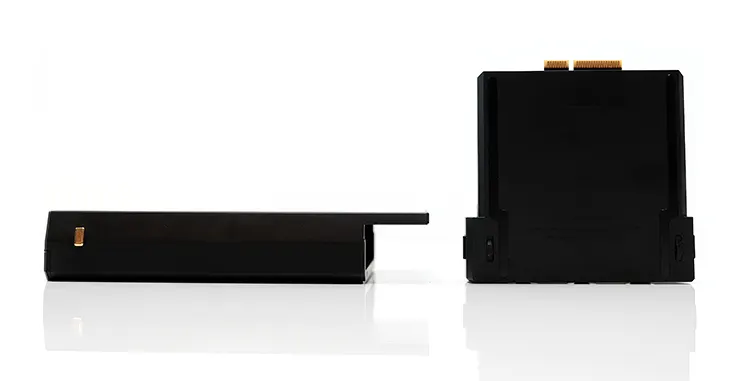
The Cayin C201 was launched alongside the N6iii and is the stock or default motherboard for the player. It is currently priced from $359.
Technical
In all this rush for new motherboards, I think people sometimes forget how competitive the stock C201 card actually is.
Both cards are delta-sigma, with the C201 using no fewer than 8 CS43198 DAC chipsets in a parallel full-differential implementation, combined with a quad OPA1622 balanced-amplification design, offering 4.4mm and 3.5mm balanced and single-ended PO and LO options.
I would rate the AK4497S inside the T201 a higher grade DAC, but it’s one rather than dual or even 8. Its quad INA OPA1620 amplification topology is capable, but at 252 mW SE and 543 mW balanced, it’s just a little behind the C201’s 260 mW SE and 700 mW balanced capability.
The first key differentiator, however, is the T201’s triple-timbral output, achieved through a mix of solid-state and dual-NOS JAN6412 tube signal paths. The C201 is pretty much a fixed, solid-state sound in that regard.
Both cards have a 3-stage lineout system ranging from 1-1.5-2 Vrms for SE and 1.5, 3, and 4 Vrms for its balanced LO.
The second key differentiator is the T201 PRE output capability, which can deliver 4Vrms SE and 8Vrms balanced, making it a better choice for power amp integration.
Decoding rates are similar: both can decode up to 32-bit/768kHz PCM and native DSD512. However, the final differentiator in this comparison is the C201’s SPDIF output capability, which adds a digital output dimension, albeit at slightly lower 24-bit/196kHz rates.
Performance
TLDR: pick the C201 for the solid-state sound as it is superior to the T201’s solid-state performance, but go with the T201 tube modes if you want a smoother, more intoxicating tonal coloration or you own brighter IEMs and headphones.
I might add an addendum to that: power. The C201 sounds more dynamic than the T201’s solid-state mode at lower volumes with more demanding gear. I hear the C201’s solid-state tuning as more ‘driven’ with a faster tempo suited to high BPM music that the T201 cannot really match.
On the flip side, the C201 can sound a little dry and thin in the mids and highs. It has a nice fundamental frequency, but as you go further up, it thins out with more treble influence coming into the midrange.
The C201 is a fairly balanced, natural-to neutral-sounding motherboard with a nice set of punchy lows and plenty of air and width. It doesn’t convey the same level of bloom and lush tonal quality as the T201 tube modes, especially classic mode.
Vocals and percussion are more to the fore using the Modern Tube mode. Though the T201 Modern Tube mode does not have the same bass impact as the C201, it clearly fleshes out more vocal weight than the default motherboard tuning.
Classic Mode has a slower pace with more bass bloom than the C201; vocals are similarly set back a bit from the listener, but have a richer, more liquid-like tonal quality.
The C201 definitely shows a turn of pace that the T201 tube modes do not offer and superior dynamic range to the T201’s solid-state mode.
However, it lacks the T201’s rich, smooth delivery in the mids and highs and might sound less distinctive or less inviting for vocal performances.

My Verdict
The Cayin T201 is a fitting finale to the N6iii’s audio motherboard series and fills a gap I had hoped the company would address for the last year.
For the longest time, the middle-child DAP in the Cayin range lacked tubes; the N3 got them with the PRO and ULTRA Editions, and the N8 series always had them. So boxes have now been ticked.
For existing N6iii owners, the T201 is a must-buy alongside the R202 unless you hate the sound of tubes. It’s a flexible motherboard for pairing with a wide range of IEMs and plenty of efficient headphones, allowing you to choose between rich and smooth, sweet and airy, or linear and punchy.
The battery performance is also strong, much more so than the E203, so I would not worry too much about a rapidly depleting battery life or getting too hot, despite having tubes.
It is a pity that the new tube-vented fitted case is an optional extra you have to buy. It makes sense that packaged T201/N6iii units came with the new case by default, as the tube glow from the back of the N6iii is an attractive sight and will improve ventilation.
Otherwise, the N6iii ecosystem looks very healthy with lots of DAC and amplification options, making it one of the most versatile portable players out there right now.
Cayin T201 Technical Specifications
- Military-grade NOS JAN 6418 vacuum tubes ×2
- Triple Timbre design: Tube Classic / Tube Modern / Solid-State
- AK4497S DAC with 4 × INA1620 headphone amplifier
- Dual analog outputs: Pre-Out & Line-Out
- Headphone outputs: 3.5mm SE & 4.4mm Balanced
- Audio Motherboard designed exclusively for Cayin N6iii
- Easy installation within the N6iii modular system
