

Synergy
Efficiency
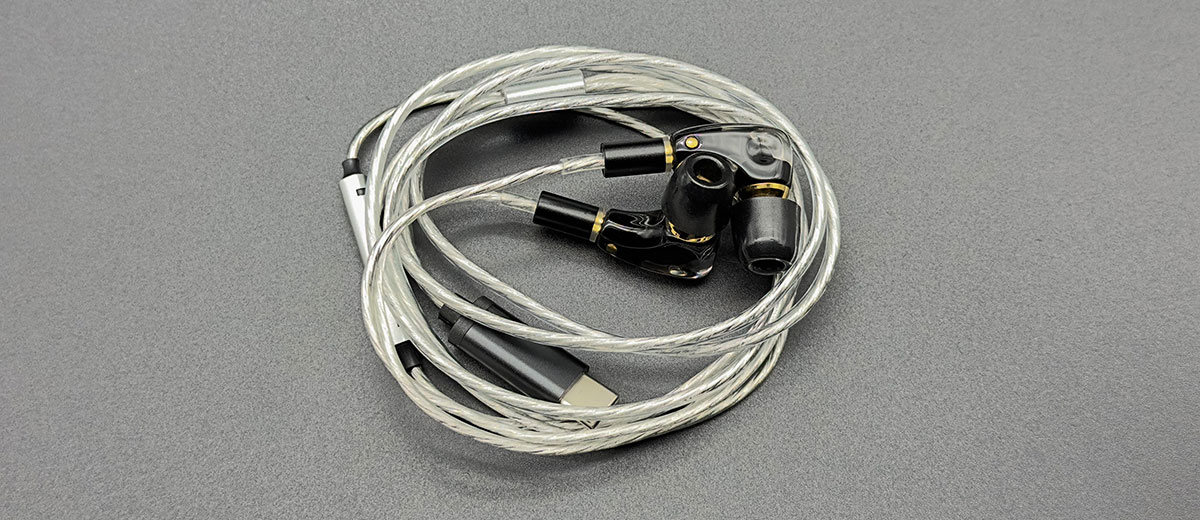
The Axion has an impedance of 15.3 Ω at 1 kHz and needs 124.1 mVrms to hit Campfire’s usual benchmark of 94 dB.
The specs suggest that stronger sources, such as desktop amps, powerful DAPs, or laptops with higher voltage swings, can drive it more fully and richly.
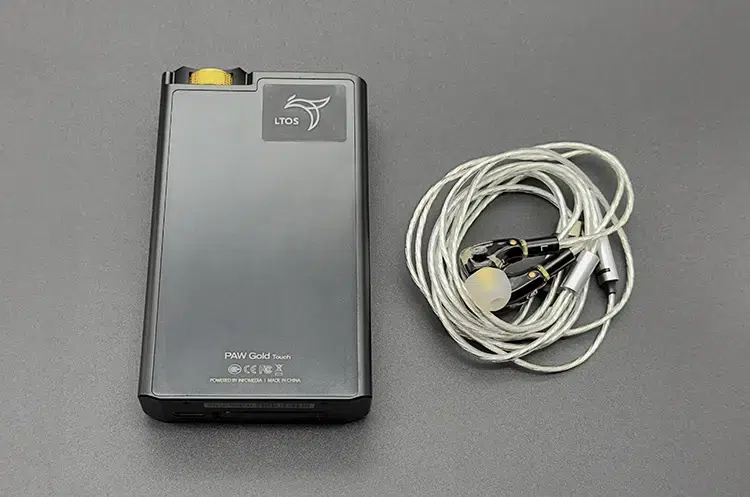
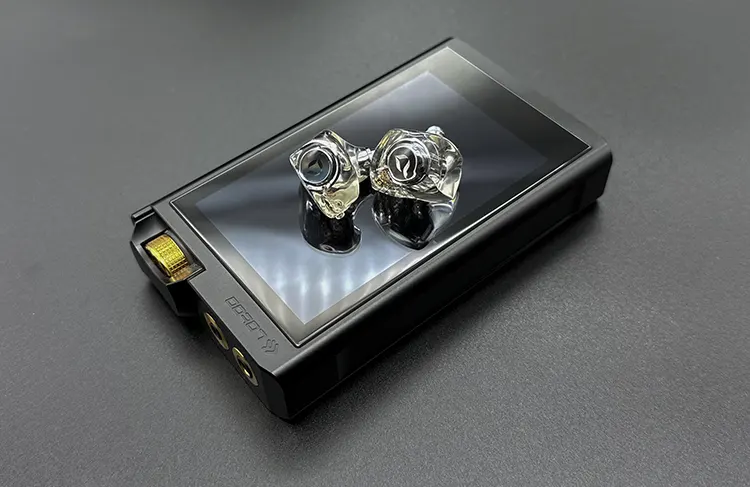
When paired with the Lotoo PAW Gold Touch, I didn’t enjoy the Axion as much. It took nearly a volume level of 50 and still didn’t sound as rich as it did on my MacBook.
The power demand is significant, and portable sources or dongles may struggle a bit here. On my Apple iPad and MacBook, however, the IEM was comfortable to drive and sounded full and rich.
Source Pairings
With the LPGT, at lower volume levels, the Axion sounds a bit cleaner and more resolving than on other sources I tried. The bass gains clarity and texture compared to smartphones and similar devices.
The midrange benefits from improved tonality and presents a clearer picture, revealing more nuances and details. Notes feel taller, and the overall musicality is enhanced.
The upper midrange exhibits better energy and extension, and vocals gain texture along with added fullness. Overall, the midrange feels richer and cleaner.
However, at higher volumes on the LPGT, the bass can sound bloated and loose. I notice a slight distortion in the bass or lower mids, making it a less-than-ideal pairing.
Interestingly, the sound from a laptop or smartphone isn’t far behind; it remains quite refined and detailed. The LPGT adds a level of refinement at best. Axion might pair better with lower-spec devices, such as smartphones and laptops, than with dedicated DAPs.
Select Comparisons
Softears Volume S
Technical
The Volume S is a hybrid IEM that incorporates a dynamic driver, one acting as a primary driver and a passive radiator assisting in passive mode.
This dynamic driver features a titanium dome and a large silicone suspension design. Additionally, the IEM features two full-range, self-developed balanced armature drivers.
Volume S has two impedance modes. In low-impedance mode, the Volume S has an impedance of 9.8 Ω @ 1 kHz and a sensitivity rating of 124 dB/Vrms.
In high-impedance mode, the impedance increases to 31.2 Ω @ 1 kHz with a sensitivity rating of 114 dB/Vrms. In both modes, the IEM does not require much power, and the volume levels are lower than what I have on Axion.
In low-impedance mode, Volume S reaches a comfortable listening level at around 30 on my LPGT, whereas the high-impedance mode requires a volume level closer to 40.
Design
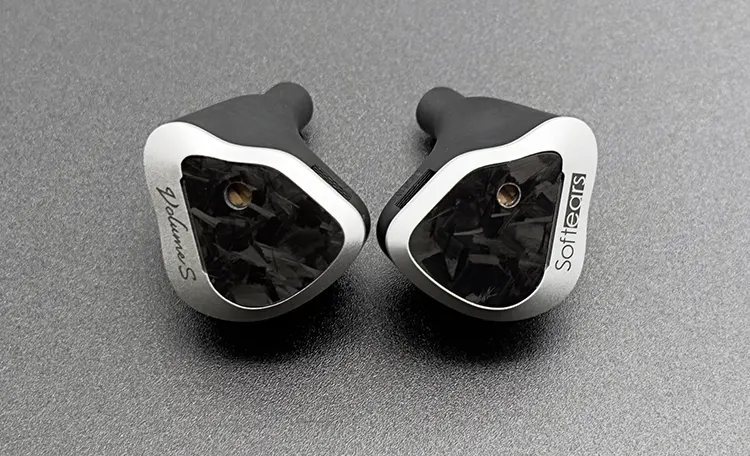
The Softears Volume S features robustly built medical-grade black resin shells with a soft matte texture. The faceplate is made of an aluminum frame with a forged carbon fiber center.
The center of the faceplate has an abstract design with a unique texture that creates a bright, shimmering effect when exposed to light.
Compared to this, the Axion chooses a very minimal design and a smaller size, which gives an easy and comfortable fit. The Volume S also has a comfortable fit owing to its ergonomic shape and light weight.
The stock cable on the Volume S features high-purity, oxygen-free copper wire at its core. The cable maintains an all-black look and has a very soft paracord braiding.
The cable features a modular system, allowing you to switch between 4.4mm and 3.5mm plugs depending on your device. Axion’s cable has a thin build, but it is quite functional.
Both IEMs have a very satisfying unboxing experience. You get a generous number of accessories with both of them.
Performance
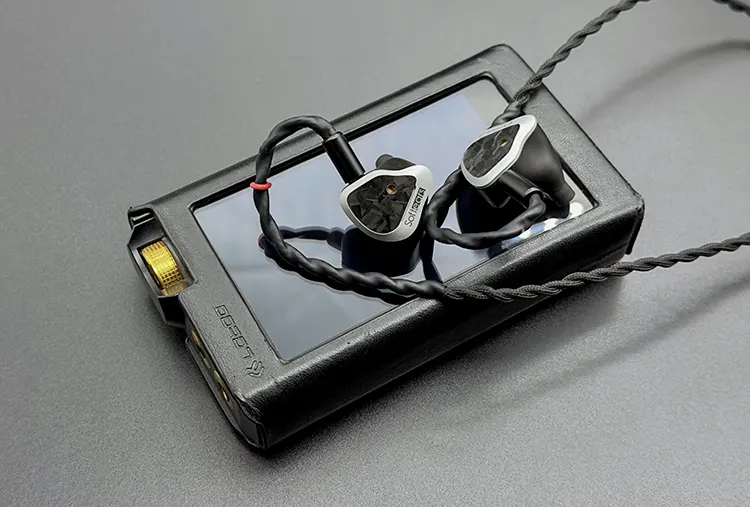
The Axion leans toward a warmer, fuller sound with deeper bass and smoother treble, delivering the more “musical” presentation of the two.
The bass on the Axion is bolder and thicker. It has more elevation overall, especially in the sub-bass, giving it a deeper, more weighted low end.
The Volume S has a drier bass with quicker decay and faster speed. Axion’s bass is slower but carries more dynamic characteristics. For someone who prefers warm, analog-like bass, the Axion is the better choice.
The lower midrange on the Axion feels more authentic, with added body supported by the bass shelf. Volume S has a cleaner midrange with more forward upper mids.
One complaint I have with the Volume S midrange is the lack of emotional depth in vocals and instruments. While not highly detailed, the Axion’s midrange sounds more musical, and vocals feel more nuanced and extended.
The upper mids on Volume S carry more energy and vocal clarity, but sometimes sound thin or shouty. Axion feels more coherent, with a smoother transition from lower mids to treble.
Volume S carries more energy in the treble region. Axion exhibits a pronounced peak around 8–9 kHz, adding sparkle, air, and transient clarity, which enhances perceived detail. Volume S rolls off in the upper treble, thus lacking the final touch of air and detail. Notes feel thinner in comparison.
Both IEMs have similar stage dimensions, though Axion offers slightly more depth. The sense of space and immersion is a bit better on the Axion, while Volume S feels flatter at times.
Volume S has sharper notes, which improve imaging accuracy. Instrument spacing remains similar on both. In complex passages, both handle layering well. Volume S is slightly more resolving, though its notes can feel thinner and less rich at times.
Meze Audio ALBA
Technical
The ALBA is a single dynamic driver IEM with a driver size of 10.8mm. ALBA has an impedance of 32Ω and a frequency response of 15Hz-25kHz.
The internal chamber is designed to house the driver for optimal venting and distortion control while still maintaining a compact shell size.
The 32Ω @1kHz impedance level combined with a sensitivity rating of 109 dB/Vrms means the ALBA is fairly efficient to drive. The Axion is harder to drive in comparison and takes nearly 10 more clicks on LPGT.
Design
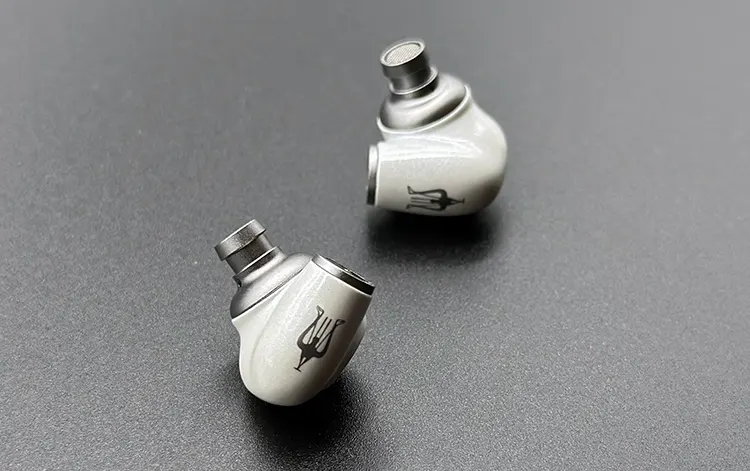
The ALBA resembles its older sibling, the Advar, quite closely. The shell is small in size, with a styling that combines a soft, glossy, pearl-like look with elements of anodized aluminum.
The internals are built with lightweight zinc alloy. The shells have a glossy appearance with an opalescent color finish, giving ALBA a shiny texture.
At the center of the shells is a circular metal insignia with the brand’s name engraved on it. Like the Axion, it is quite comfortable to wear.
The ALBA uses a 2-pin system to connect to the cable. It comes packed with two sets of cables, featuring 3.5mm and 4.4mm terminations. Additionally, we get a 3.5mm to USB-C adapter DAC for connecting to smartphones and tablets.

Performance
The Axion leans toward a warm, smooth, and musical tuning with deeper bass and softer upper mids, better for relaxed, immersive listening. The ALBA offers a vibrant and energetic sound with greater upper-mid and treble presence, fitting those who prefer a brighter, more analytical tuning.
Axion has more sub-bass and overall low-end weight, delivering a deeper and warmer bass response.
The ALBA lags in the mid-bass region, showing a lower level of impact. It has a flatter bass region in comparison, with less rumble, leaning toward a more neutral and clean bass presentation. On Axion, the lower mids are gently elevated, lending warmth and fullness to vocals and instruments.
In short, Axion’s midrange is warm and musical, while ALBA is clear and energetic. The Meze ALBA has a more forward and energetic upper midrange, which makes vocals, particularly female vocals, sound more vivid and articulate, though it can sometimes push vocals into sounding a bit thin or shouty.
Axion offers a smoother, more laid-back midrange. It maintains a smoother, slightly less aggressive upper midrange, likely giving a more relaxed and natural tone.
On the Axion, the transition from bass to mids to the treble region is more seamless, giving it a coherent and organic feel. The Axion is smoother in the treble region, though there is enough sparkle and air present. The ALBA is more resolving and detailed, thus sounding crisper and livelier.
Both the ALBA and Axion have similar levels of stage presentation with nearly equal width but slightly better depth on the Axion. Imaging is more precise on the ALBA owing to its incisive tuning.
The ALBA also exhibits better resolution, but the notes are not very accurate at times. I would rather opt for the more musical presentation of Axion, which balances resolution and note accuracy.
DITA Audio Project M
Technical
The Project M is a hybrid IEM from DITA Audio that features DITA’s in-house customized PM1+ 9.8mm dynamic driver and a Knowles balanced armature driver.
The dynamic and BA drivers are housed in highly optimized stainless-steel chambers, enabling a rigid structure for a better tone and resonance.
It has a rated impedance of 32Ω @ 1kHz and a sensitivity rating of 107 dB/Vrms. The IEM can be driven well by most sources; however, it can take a good amount of power to scale well.
On lower-spec devices such as smartphones and tablets, the Project M may sound thin and lifeless, whereas the Axion has excellent synergy with such devices.
Design
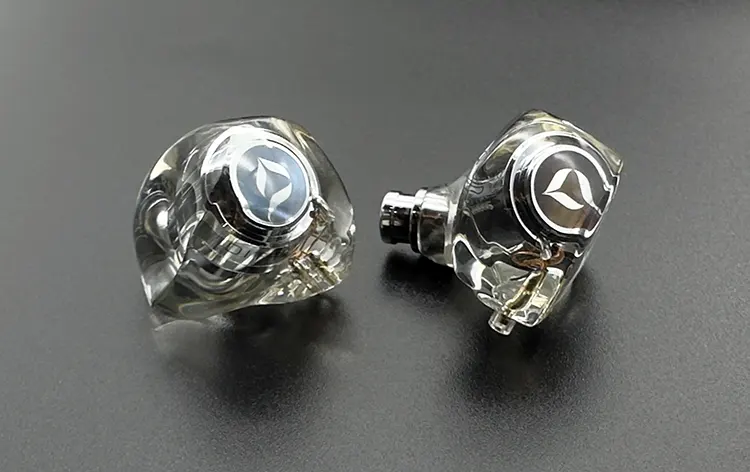
The shells of Project M are crafted from transparent 3D-printed resin, showcasing a solid and sturdy structure with a crystal-clear prism-like design that suggests durability and strength.
The Axion opts for a very minimal design that is more focused on regular usage. Project M has big shells, but the ergonomic shape helps in a good fit. Axion’s small shells and lightweight design make the fit too easy, as if they disappear in the ears.
The Project M uses 0.78mm 2-pin connectors to connect to cables. The accessories bundled with Project M are quite impressive; however, I feel the Axion accessory lineup goes the extra mile.
Performance
In a nutshell, the Axion leans warm, smooth, and musical with a coherent and full-bodied tuning, while Project M is more analytical, crisp, and resolving, with an emphasis on clarity and treble sparkle, often at the cost of low-end presence.
Axion features a more prominent bass, particularly in the sub-bass, resulting in a deeper, warmer, and thicker low end. Project M’s bass rolls off sooner and is less pronounced throughout the entire region, coming off leaner, more neutral, and less impactful in bass response.
The bass range on the Axion gently elevates the lower midrange, adding fullness and warmth to vocals and instruments. Project M is more restrained in this region, offering a thinner midrange that sounds less rich and emotional.
The midrange on Project M lacks warmth and is more neutral by comparison. Towards the upper midrange, Project M can veer into a harsh region at times. So, even with fine extension, there’s occasionally some thinness and overemphasis.
In the treble region, the Axion is smooth and more controlled, offering sparkle and air without overemphasis. This contributes to a more relaxed and natural listening experience.
The Project M has a more energetic and spiked treble presentation, with instances of emphasized ranges. While it does impart a crisper, airier, and more detailed treble, it does so at the cost of smoothness.
The stage on Project M has slightly more width, but Axion’s depth makes up for it. Both IEMs exhibit a satisfying sense of openness and spaciousness.
Imaging is more accurate on Project M, though the sharper images can feel overwhelming at times. Both IEMs offer a similar level of instrument separation and layering capabilities.
My Verdict
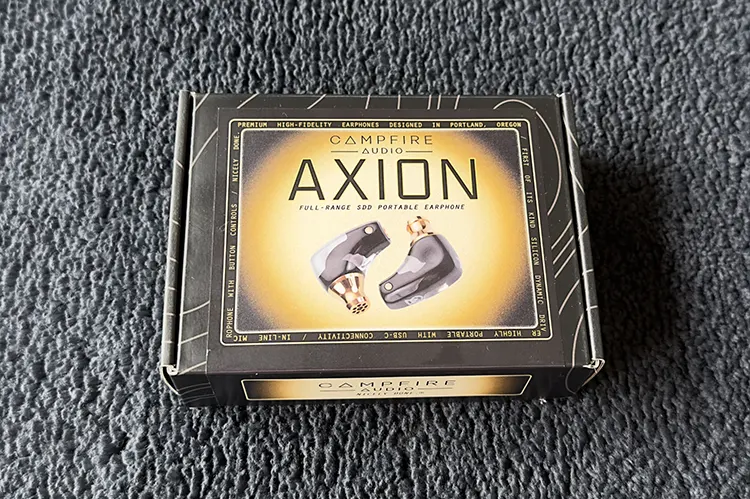
The Campfire Audio Axion is a unique IEM, deviating slightly from the usual audiophile-grade offerings from the brand.
It offers everyday convenience with a tuning that is balanced across the frequencies. The bass has a satisfying level of punch, the midrange is natural, and the treble is delicately extended. The Axion delivers an immersive sound, which I think is the real win.
Design-wise, Axion is modern and minimal, with that signature Campfire flair still shining through. The included built-in DAC and USB-C plug give a real edge for convenience, making it one of the easiest IEMs to pick up and enjoy. Whether you’re on your phone, tablet, or laptop, just plug in and go.
The Axion may not be their flashiest release from Campfire Audio, but it’s one of the most accessible and easiest to recommend, especially for listeners who value convenience in day-to-day life.
Campfire Audio Axion Specifications
- Driver Configuration: Full-Range Silicon Dynamic Driver
- Impedance: 15.3Ω @ 1 kHz
- Sensitivity: 124 mVrms
- Frequency Response: 5 Hz – 20 kHz
- Cable: USB-C Cable with DAC and microphone
