

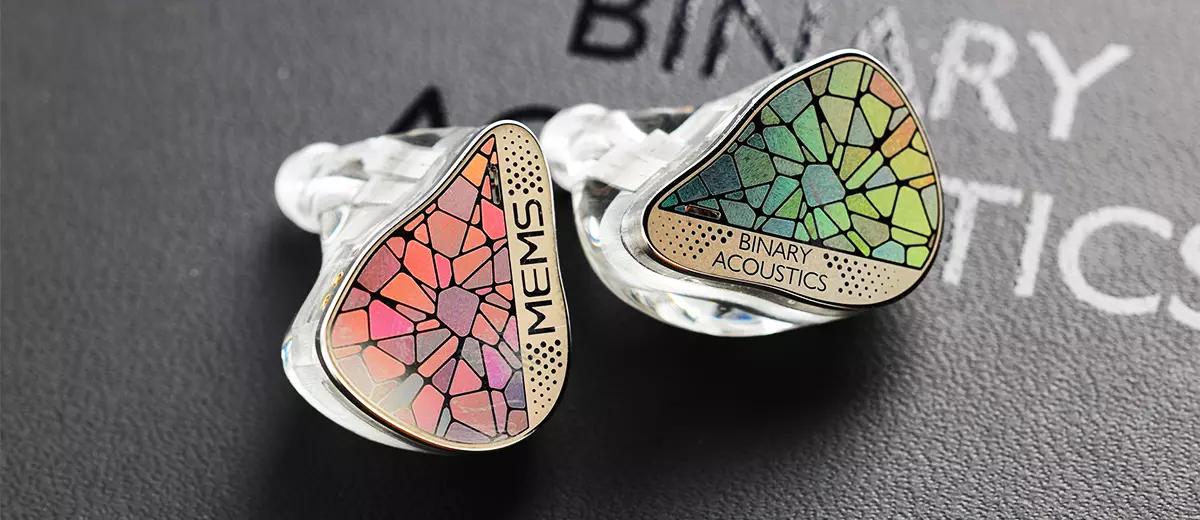
Synergy
On my days listening to the EP321 MEMS, during walking exercise, or at home, I’m happy to say it never caused any noise across the sources I paired it with.
The cable never picked up any radio-frequency interference and is not sensitive enough to detect the sources’ noise floor. It should not have any difficulty with most dongles and DAPs.
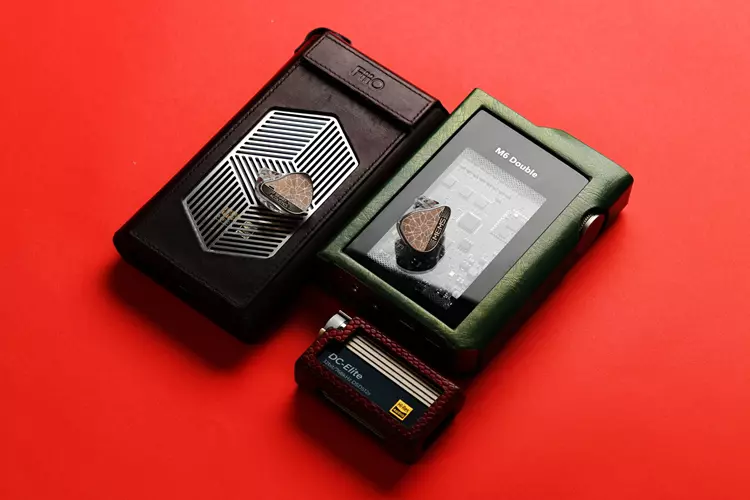
Pairings
Even though EP321 MEMS sounds very detailed, I find that it doesn’t reveal the subtle differences between the sources.
Though I wouldn’t say it is forgiving, either, as it could sound too treble-heavy to some people, I would say that, for me, the EP321 MEMS pairs very well with all my sources.
That said, it wouldn’t matter whether I use the tight bass FiiO M15S, the very detailed iBasso DC-Elite, or the sweet tube sound with extended treble of the MUSE HIFI M6 Double; the sound of that pairing will always reflect the EP321 MEMS’ sound characteristics.
The subtle differences between the sources seem to be masked by the EP321 MEMS sound signature. I attribute this to the EP321 MEMS’s distinct bass reproduction and forward treble tuning, and to the MEMS driver’s distinct rendering of the upper treble.
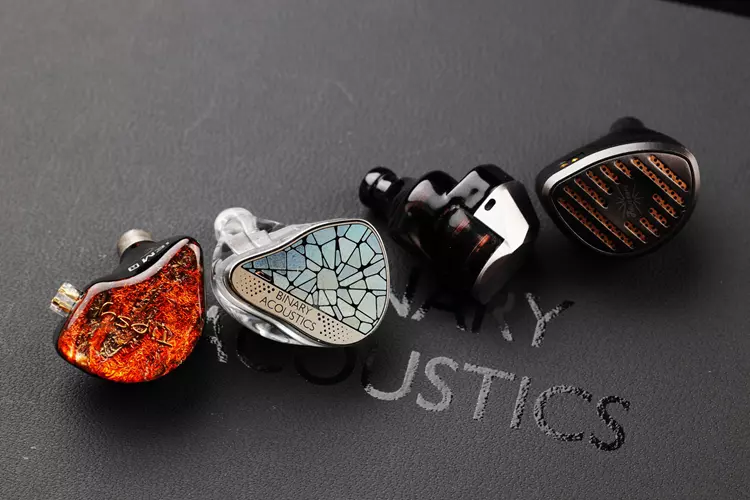
Selected Comparisons
I used the iBasso DC-Elite, MUSE HiFi M6 Double, and FiiO M15s for this comparison, often switching between them. Still, I used the iBasso DC-Elite mostly because I can discern differences more easily with its detailed sound.
Tipsy M5
The Tipsy M5 is a recently released IEM, having been released in November 2025. Instead of a MEMS driver for the ultra-high frequencies, the M5 uses a small planar driver.
Technical & Design
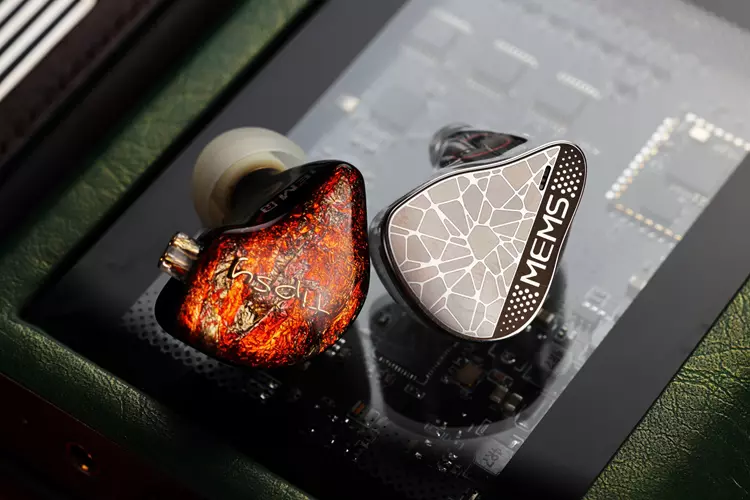
The M5 is a quad-brid set featuring an ultra-low-frequency bone-conduction driver, an 8mm low-mid dynamic driver, a pair of high-frequency balanced armature drivers, and an ultra-high-frequency planar driver. The M5 has an impedance of 20Ω and a sensitivity of 109 dB.
The M5 is made of a 3D-printed black resin shell and a very nice-looking amber-colored faceplate with a seemingly random pattern. But for an extra $70, you can customize the faceplate with over thirty colors and the shells with ten colors, as shown on Tipsy’s website.
I reviewed an early sample of the M5, and it didn’t include the official packaging and cable. I only received a 3.5mm cable; however, in the official release, the M5 features a single-crystal copper silver-plated cable with a modular plug system, including 3.5, 4.4, and 6.35mm adapters.
Performance
The M5 has a reference neutral sound signature, while the EP321 MEMS has a bright, mild V-shaped sound signature.
Comparing them, it is apparent that the M5 is much more neutral, with neutral bass and midrange, slightly relaxed upper midrange, neutral treble, and a very extended upper treble. At the same time, the EP321 MEMS has apparently warmer bass and much more forward treble.
They are about the same in terms of staging. I find the M5’s soundstage deeper, and the EP321 MEMS’ wider, but overall, they are about equal.
However, the EP321 MEMS wins because it offers better imaging performance and holography. I also find the EP321 MEMS resolution higher than that of the M5.
Dynamically, both are lively and engaging-sounding. However, the EP321 MEMS is ahead due to its enhanced bass and treble.
Kiwi Ears Septet
Technical & Design
The Kiwi Ears Septet is another recent release from Kiwi Ears, having been released in mid 2025. It has a unique set of features, including the use of both micro-planar and PZT drivers and an open-back acoustic design, and is rated at 15Ω impedance and 95 dB sensitivity.
The Septet is a seven-driver quad-brid set with a 5-way crossover featuring a 10mm dynamic driver for the lows, four balanced armature drivers for the mid-hi, a Micro Planar Transducer, and a Piezoelectric (PZT) Driver for the upper treble.
The Septet features a nice-looking full-metal shell with a slotted vent on the faceplate to let the driver’s back pressure and sound escape, making the Septet an open-back IEM. The Septet includes a modular 2-pin cable with ultra-high-purity copper wires and 3.5- and 4.4-mm plugs.
Performance
The Septet has a near-neutral reference tuning, with a flat bass and midrange and slightly elevated treble.
In contrast, the EP321 MEMS has moderately boosted bass, neutral mids, and boosted treble, giving it a more contrasty sound than the Septet. I also find the EP321 MEMS resolution to be higher than that of the Septet.
Both offer a large soundstage, but the EP321 MEMS appears to have a more spacious, wider, and deeper soundstage than the Septet’s wide but not-so-deep presentation.
And when it comes to imaging, I find the EP321 MEMS has more defined images with more accurate placement, separation, laying, and holography.
Dynamically speaking, both are lively and engaging, but the mild V-shape sound of the EP321 MEMS gives it a more contrasty, more dynamic sound than the Septet.
MOONDROP Harmon
Technical & Design
The MOONDROP Harmon was released in mid-2025 with a unique feature set, including a glass-dome composite driver for the midrange and high frequencies.
The Harmon is a three-driver set featuring a 10mm dynamic driver with a glass-dome composite diaphragm and a dual 10mm paper-cone composite-diaphragm bass dynamic driver. The Harmon has an impedance of 19Ω and a sensitivity of 114 dB.
The Harmon has a unique look and a very compact shell that resembles a bullet-type IEM, yet it houses three 10mm dynamic drivers thanks to its elaborate internal structure. The 3D printed shell is combined with a metal faceplate.
The Harmon includes a 2-pin sleeved cable with a modular plug system featuring 3.5 mm and 4.4 mm plugs.
Performance
While both the EP321 MEMS and the Harmon have about the same amount of bass. The treble in the EP321 MEMS is much more elevated, giving the Harmon a warm tonality and the EP321 MEMS a bright, mild V-shape sound. I find the EP321 MEMS’s resolution to be higher than Harmon’s.
The EP321 MEMS is more spacious-sounding, while the Harmon, due to its warm, slightly dark treble, has a smaller, more intimate soundstage. Regarding imaging, the EP321 MEMS has better definition, separation, layering, and holography.
Both are dynamic-sounding, but the Harmon is dynamic only in the bass, while its midrange and treble are neutral. The EP321 MEMS is dynamic across the frequency range and sounds more contrasty, thanks to its bright, mild V-shaped tuning.
My Verdict
Does the directly driven MEMS driver in the EP321 MEMS improve sound quality? Yes, I think so, because I can hear not just spacious air in the music but also fine microdetails and microdynamics in the upper treble, more so than the competition in this review.
I also like that the soundstage is wide, spacious, and open. In combination with it, good imaging performance made me like the EP321 MEMS even more, because I don’t often hear IEMs that perform well in both staging and imaging at the same time; most sacrifice one for the other.
What I didn’t like, though, which kept me from scoring the EP321 MEMS higher, is the audible peak at 8 kHz that accentuates the timbre of some higher-pitched metallic instruments and adds more treble presence overall, making the sound bright on some songs.
I don’t attribute this to the MEMS driver’s characteristics, but rather to the tuning of the balanced armature drivers.
I hope Binary further refines the treble in the next IEM with a MEMS driver, as I really like what the MEMS driver does in the upper treble. I also hope that directly driven MEMS drivers become more widely used in the IEM industry.
Overall, the Binary EP321 MEMS offers a real improvement in sound performance due to the MEMS driver and deserves consideration if you are looking for something new and an airy, detailed, and highly resolving IEM.
Binary EP321 MEMS Technical Specifications
- Driver Setup: 10mm DD+ 6mm Passive Diaphragm+3BA+1 MEMS.
- Style: In-Ear
- Sensitivity: 122dB
- Impedance: 13Ω
- Distortion: <1%
- Frequency Response: 8Hz~40kHz.
- Cable Length: 1.25m
- Connectors: 3.5mm unbalanced or 4.4mm balanced fixed
- Weight: 7.5 grams each
- Nozzle diameter: 6.4 mm
