

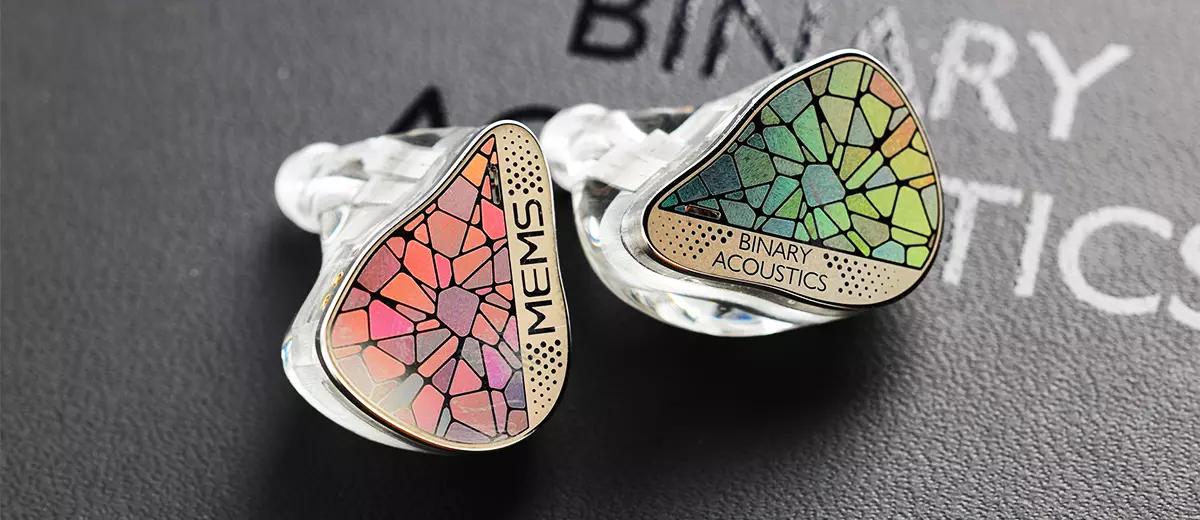
Marcelo reviews the Binary EP321 MEMS, a dual-dynamic, triple-BA, and Direct Drive MEMS driver hybrid universal IEM, currently priced at $309.99.
Disclaimer: This sample was sent to me in return for my honest opinion. Headfonics is an independent website with no affiliate links or services. I thank HiFiGO and Binary Audio for their support.
You can click here to learn more about the HiFiGO gear previously reviewed on Headfonics.
This post follows our scoring guidelines, which you can read in more detail here.
I have always been excited about something new, especially when it is a new IEM driver technology.
Even though IEMs with MEMS drivers have been around since 2023, they require a dedicated amplifier because MEMS drivers have much higher voltage requirements than the usual dynamic, balanced armature, and planar drivers.
Not so with the $309.99 Binary EP321 MEMS. This is the first IEM with a MEMS driver I have known of that does not require a dedicated amplifier and can be used with standard headphone amplifiers.
What added to my excitement upon learning that I would be reviewing the EP321 MEMS is that it’s from Binary, which I hold in high regard. I was awed by their bassy, dynamic IEM, the Binary Acoustics Dynaquattro, which I had the pleasure of enjoying and reviewing before.
But new technology does not always guarantee improved sound quality. How does the EP321 MEMS compare to more conventional multi-driver sets, including the MOONDROP Harmon and the Kiwi Ears Septet?
Let’s find out in my full review with comparisons below.
Features
The EP321 MEMS is a six-driver-per-channel tribrid setup featuring a 10mm actively driven dynamic, a 6mm passive dynamic driver, three balanced armature drivers, and one Direct Drive MEMS Driver Unit.
Upon further searching, it turns out that the EP321 MEMS is the world’s first IEM to use Direct Drive MEMS drivers.
The reason why the MEMS driver in the EP321 MEMS didn’t need a separate amplifier is that Binary implemented it with a built-in energizer, which I speculate is a step-up transformer to move the MEMS driver.
All these drivers are frequency-divided by a three-way electrical crossover. The EP321 MEMS has an impedance of 13Ω and a sensitivity of 122 dB/Vrms.
Additionally, the EP321 MEMS features an effective pressure-release system that prevents pressure buildup in the ear canal, which can cause headache, nausea, and ear pain during walking and running.
Design
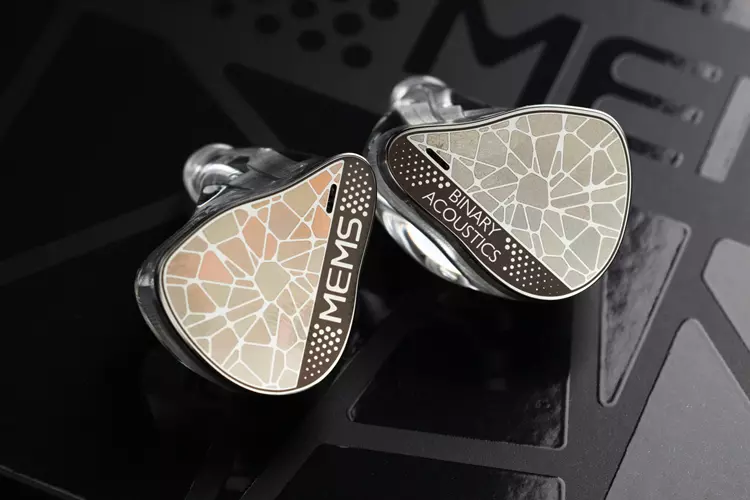
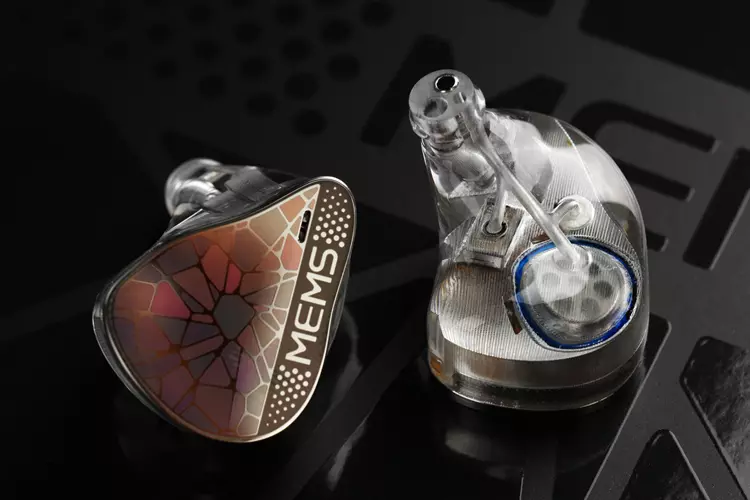
One of my favorite designs for IEMs is the cear, 3D-printed shells and a metal or opaque faceplate.
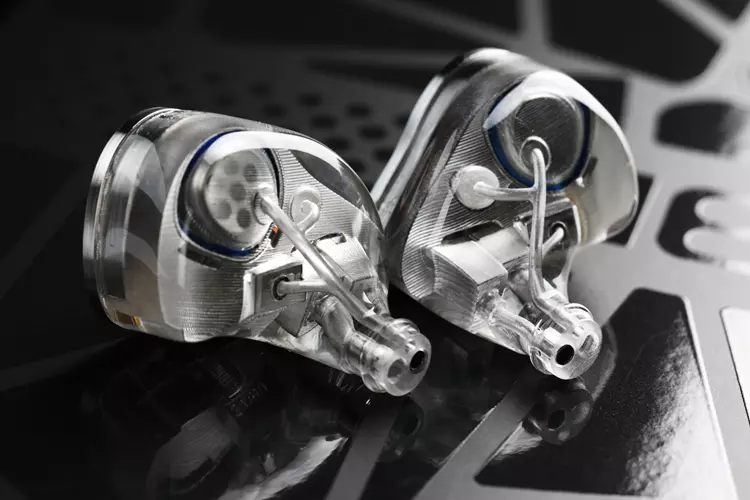
Especially when the IEM is a hybrid with many drivers. I like how I can look closely at the EP321 MEMS shells and see all those drivers and the sound tube that guides the sound to the ear canals.
I also like the way the CNC-machined stainless-steel faceplate is finished, where, depending on the angle of light, the iridescent colors change.
The EP321 MEMS features a resin nozzle with three sound holes, each equipped with a balanced-armature tuning filter. All the venting is done on the small slot in the faceplate. The 2-pin connectors are slightly recessed.
Stock Cable
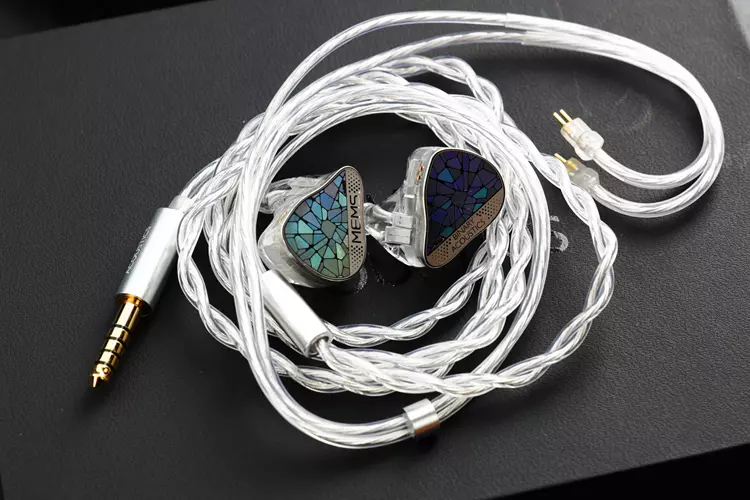
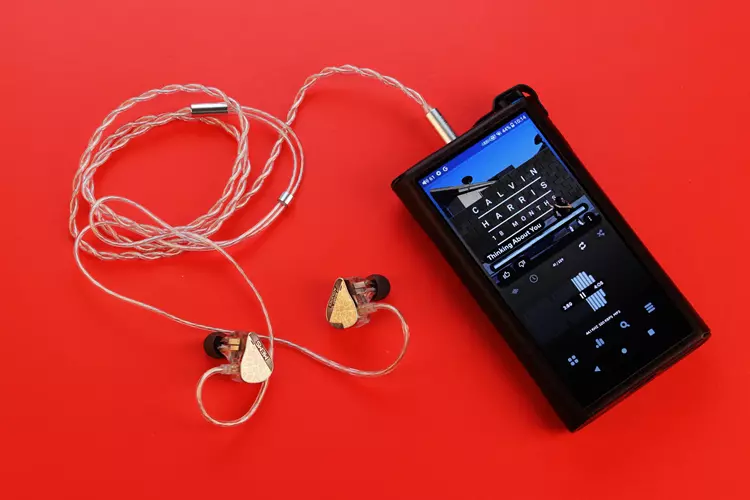
The EP321 MEMS comes with a detachable 0.78 mm 2-pin 2-core silver-plated oxygen-free copper cable with a fixed 4.4mm plug, which is also available in a 3.5mm version.
I like that the cable is light yet thick enough not to be tangly. Still, I don’t like that the 2-pin plugs are made of plastic, which cheapens the set’s look.
However, I can see that Binary must cut some corners to implement and feature the MEMS driver. They did it with the cable, and I’m totally fine with it, as they are easy to replace. The rest of the cable parts are made of metal.
Comfort & Isolation
Weight and size are very important for comfort, and I can confirm Binary’s claim of 7.5 grams per channel; in my measurements, it weighs 7.4 grams, excluding the ear tips and cable.
The EP321 MEMS is average in weight among the IEMs I measured, which range from about 4.5 to 15 grams.
However, the 6.4 mm nozzle diameter is on the large side, which might cause problems for some people, whereas the 5.8 mm nozzle diameter is the average.
In practice, I usually use medium or large ear tips, but this time, the smallest included ear tips circumvent this issue for me. Making the EP321 MEMS very comfortable to use.
The EP321 MEMS sound isolation is average, which, to me, is a good thing, as I still want to hear the ambient sounds when not playing music during walking exercises.
Packaging & Accessories
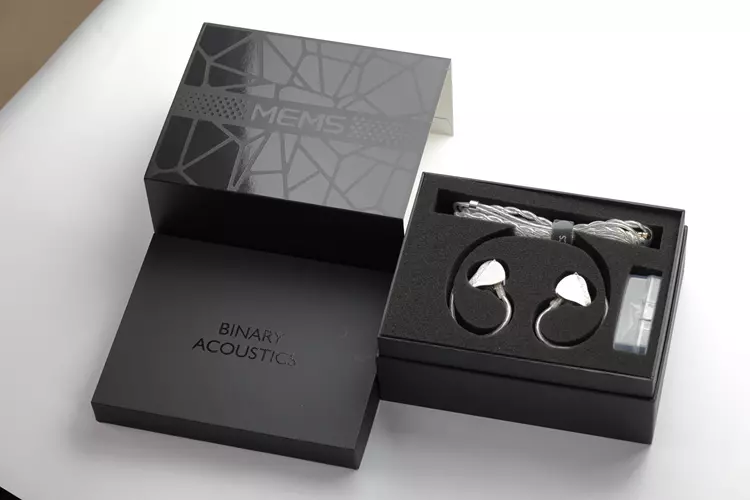
The packaging is simple with a black logo-printed sleeve on the box, which measures 179 x 130 x 75mm.
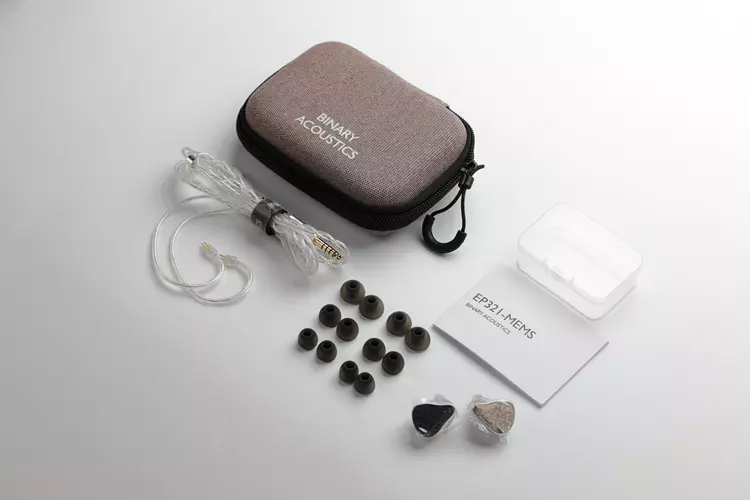
There is a top cover that is easy to pull out of the main part of the box. Inside are a pair of EP321 MEMS IEMS with the cable already installed, a plastic case containing the six pairs of ear tips, the user’s manual, and a semi-rigid carrying case.
Sound Impressions
I did about 50 hours of burn-in, which is longer than my standard 24-hour burn-in, to ensure the MEMS driver has fully settled. I also don’t know how the MEMS driver would respond to burn-in, as this is my first IEM with one.
I noticed tighter, better bass detail and cleaner background decay with longer reverb in the midrange and treble after burn-in.
For the sources, I used my iBasso DC-Elite and MUSE HiFi M6 Double DAC amplifiers, with my OnePlus 13 Android phone and Sony DAP as the music source, and the FiiO M15s DAP, using either UAPP or PowerAmp music player Apps.
Unfortunately, the EP321 MEMS includes only one ear tip type: black silicone. I don’t want to use ear tips other than those in the package, as I want to experience the EP321 MEMS as buyers receive it, so I am stuck with only one type of ear tips this time.
Measurements
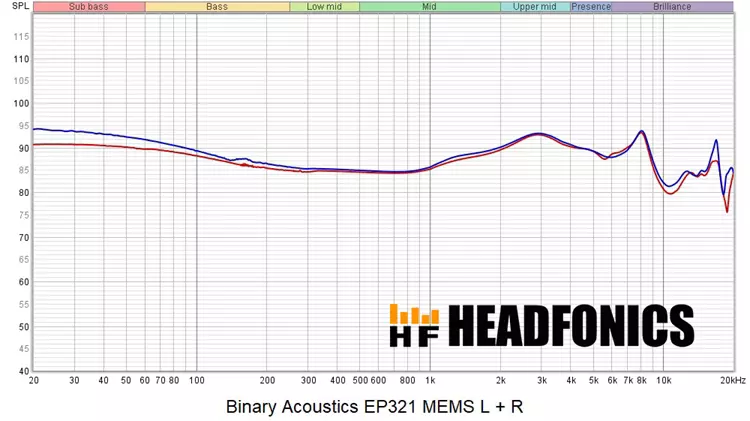
The measured graph shows a minor channel imbalance in the bass, with a 1 dB deviation at 100 Hz, rising to 3 dB at 20 Hz.
This imbalance is inaudible in real-life listening and could vary from unit to unit. From what I’ve gathered, this minor imbalance is considered within normal tolerance in the IEM industry.
The reduction in the bass’s total output due to the imbalance, however, could be noticeable with critical listening when compared to a perfectly balanced EP321 MEMS set.
I like seeing the pinna gain at 3 kHz moderately elevated, enough to give the EP321 MEMS good imaging but not enough to make the upper midrange shouty.
Most IEMs, when measured, show a narrow measurement artifact peak at around 8 kHz that is not audible, but sometimes, like in this case, the peak is broader and audible in actual listening.
The peaks above 10 kHz are benign and add air to the sound.
Summary
Right from the start, I’ve noticed there is something different with the way the upper treble is rendered in the EP321 MEMS.
I noticed the upper treble’s gentleness, like a good planar IEM, such as the Hidizs MP145, yet it has the presence and speed of a good balanced-armature super-tweeter.
The resolution in the upper treble is apparent. I like the way the MEMS driver renders the micro details in the upper treble.
However, I find the 8 kHz peak, which I suspect is due to the balanced armature’s tuning, to be a little bright on some songs but fine on others, making the treble inconsistent with my music library.
Another thing I noticed was the sub-bass, mid-bass, and lower midrange; they sound so cohesive, textured, and detailed, with good warmth and thickness that prevent the music from sounding thin.
There is something different and nice about the way the lower frequencies are rendered, thanks to the passive radiator.
I find the bass has similarities to that of IEMs with bone-conduction drivers, yet it is not the same sound. Overall, the bass sounds a little boosted, nicely textured, engaging, warm, and deep.
The midrange is neutral, and I especially like its upper-midrange tuning. I like that it is not too relaxed, does not sacrifice imaging performance or vocal presence, and is not so elevated that the midrange sounds shouty and fatiguing.
Coloration
The EP321 MEMS has a mild V-shaped sound signature with mildly boosted subbass and mid-bass, a neutral midrange, and elevated treble.
That elevation in the treble, plus the peak at 8 kHz, makes the sound on some songs brighter than my taste, and I also hear some timbre accentuation on metallic instruments like small bells and xylophones, and even on acoustic guitars.
This treble brightness sounds pleasant on some songs, adding extra detail and clarity; however, on others, it brightens the overall tonality and introduces the coloration I discussed above.
I also noticed the coloration added by the passive radiator in the lower midrange and mid-bass.
Though this is much less apparent than the treble peak, this coloration adds thickness and warmth, making the bass sound pleasant and fun to listen to, and I’m not complaining.
Staging & Dynamics
Staging and imaging are very important to me, and I’m happy to report that the EP321 MEMS has a spacious soundstage.
The stage is big, wide open, and has good height and depth. There is a sensation that the sound is coming from outside, in a big space, rather than from inside the head between the ears.
I compared the EP321 MEMS’s staging to some of my headphones, and it rivals and beats theirs.
The soundstage is slightly wider than it is deep and nearly spherical, with a good surround effect on some songs. The reverb is long, and the background decay is clean.
The EP321 MEMS is one of the better IEMs for imaging, with good staging. It has a well-defined image at all positions on the stage. I hear a good panning performance that remains defined throughout the stage.
There is a good center definition and good placement of the instrument with its own spaces, not clumped together in the background. I hear good instrument separation and layering in the soundstage.
Dynamics
The passive bass radiator and the MEMS driver add another layer of dynamics in the music, from subbass to lower midrange. I hear this thickened yet quick and detailed sound, energetic and engaging. I noticed this right away during my initial listening.
And aside from the energetic midrange and treble, the upper treble has good, audible micro dynamics, where I can hear subtle differences in how hard the drummer hits the hi-hat ride, for example, unlike most IEMs, where this kind of subtlety is not readily audible.
The EP321 MEMS can take a lot of power and go very loud without distorting. I must say, it never lacks in dynamics.
Click on page 2 below for my recommended pairings and selected comparisons.
