

Selected Comparisons
Noble Audio Van Gogh
Technical
Noble Audio released the Van Gogh earlier this year. The IEM features a humble four-driver setup, with one dynamic driver and three balanced armature drivers on each side.
Specifically, it uses an 8 mm dynamic driver with a magnesium-aluminum diaphragm and a dual magnetic circuit for the low end, two Sonion E Series balanced armature drivers for the midrange, and a Knowles RAD Series balanced armature driver handling the ultra-highs.
Astrum also uses a Knowles RAD Series driver for its lower treble frequency region.
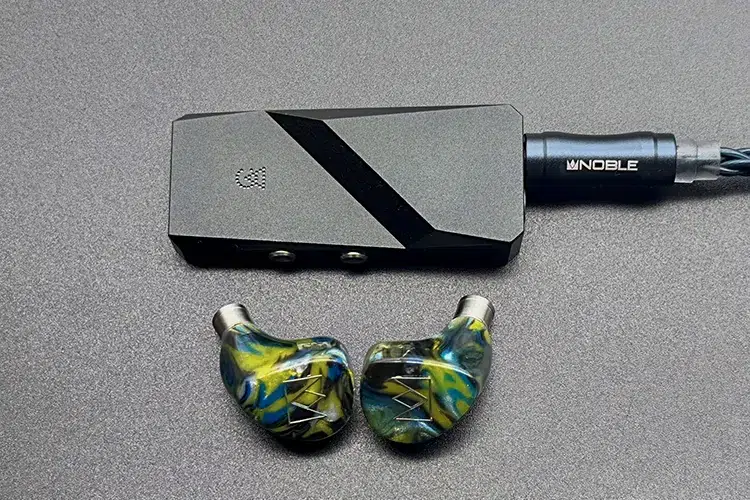
With a sensitivity of 107 dB and an impedance of 29Ω, the Van Gogh is easily powered by most portable sources. Like the Astrum, I find it fairly stable with additional power, and it can take a couple of extra volume clicks to hit with a full swing.
Design
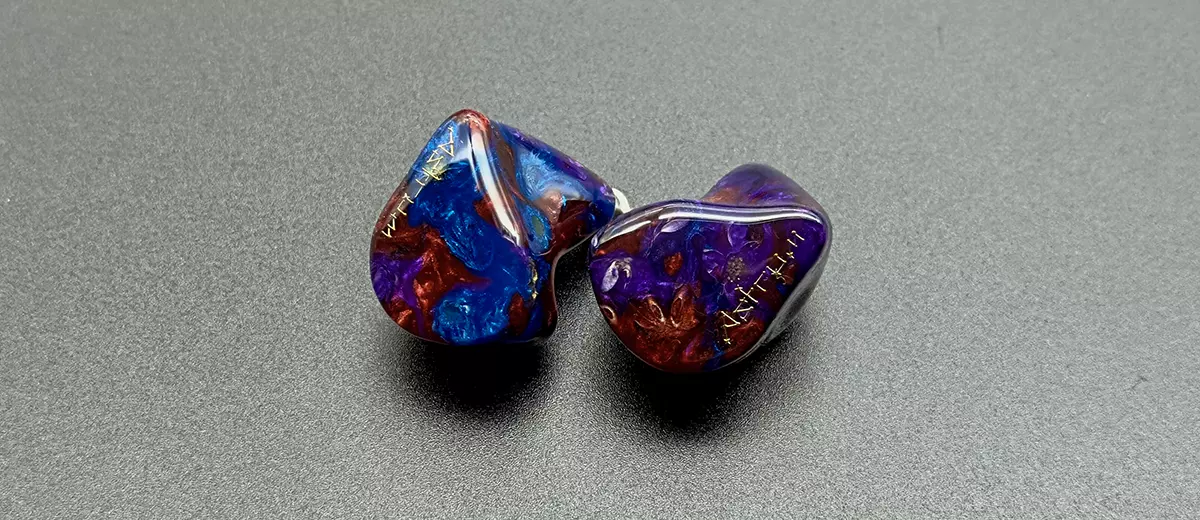
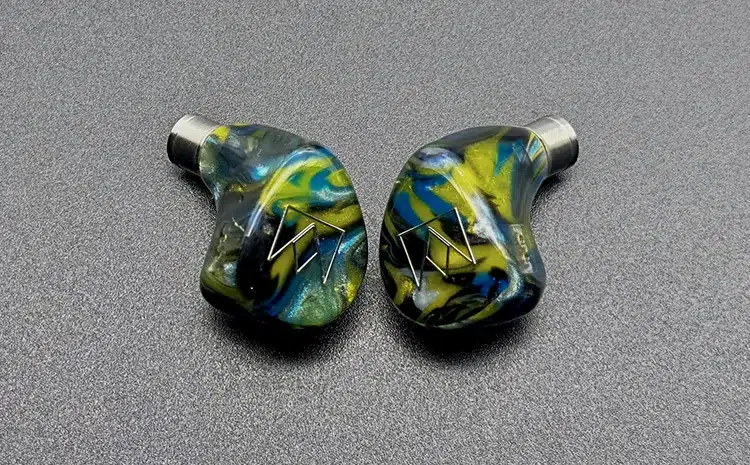
Van Gogh borrows its entire mood board from the famous painting “The Starry Night.” The swirling bursts of blue and yellow and the way the paint seems to twist and mix into each other feel close to Astrum’s design. Astrum, with its own celestial-themed abstract shells, has the same spirit.
Both carry that dreamy, night sky vibe, just expressed differently. Van Gogh goes for a smaller canvas, literally.
The shells are tiny, one of the smallest I have come across in a long time. They almost disappear once you put them inside the ear. For people with small ear canals who struggle with bulky IEMs, Van Gogh is nothing less than a blessing.
Both use metal nozzles, covered with a metallic grille on the top. Both the IEMs stick to standard 0.78 mm 2-pin connectors. These stock cables come only in 4.4 mm termination, and while they are nice enough on the Van Gogh, the Astrum cable feels more thought-out and matches the shells and design scheme better.
Same story with the packaging. Van Gogh keeps it simple, maybe too simple for this price. No carry case, fewer ear tips, and the whole thing feels bare next to the grand, almost over-the-top unboxing of Astrum.
Performance
Van Gogh hits harder in the low end, no question. It arrives with more volume and weight, with proper body in both sub-bass and mid-bass.
Astrum feels polite in comparison, though the impact does not fall that far behind. It still kicks, just with more restraint.
If you lean into basshead territory, Van Gogh is the one you will admire. The good part is that this big low-end does not blow up into the rest of the tuning.
In the midrange, Van Gogh steps back a touch. Vocals and instruments sit a couple of rows behind, with better resolution and a cleaner delivery. You hear separation and clarity first.
Astrum feels closer and more emotional. Notes carry more sweetness, especially female vocals, which have a lovely stretch in their upper reach. Van Gogh has a bit more energy in the upper mids but manages to stay just short of sharp, while Astrum keeps that region smoother and easier.
Treble on both the IEMs is on the smoother side, nothing harsh or splashy. Van Gogh, however, pulls out more detail. There is a tiny lift that gives it a bit of extra edge and energy, so small accents and cymbal hits pop more. It is not ultra-airy or super sparkly, but it definitely feels livelier.
Astrum stays more polite and relaxed, keeping the whole response more even and coherent from top to bottom.
Technically, Van Gogh stretches the stage wider and feels more open around the head. Imaging is very similar between the two, though Van Gogh has a slight edge in pinpointing positions.
Astrum counters with slightly better instrument separation, keeping busy passages nicely sorted even with its softer bass. Macro dynamics, those big swings and punches, come across stronger on Van Gogh.
Softears RSV MKII
Technical
The RSV MKII is the new iteration of Softears’ widely acclaimed IEM, the RSV, which was originally launched in early 2021.
The IEM houses five balanced armature drivers, all sourced from Knowles. For the low end, it uses two Knowles CI series drivers.
The midrange is handled by a Knowles ED driver, while the high frequencies rely on a composite Knowles SWFK driver. It features an upgraded 4-way crossover with four independent acoustic tubes.
The RSV MKII is easier to drive and is fairly sensitive at 7Ω and 122 dB @ 1 kHz SPL. On my LPGT, the RSV MKII reaches a comfortable level around volume 30, and just a few extra clicks can make it too loud.
The Astrum, on the other hand, does not get loud as quickly and needs a few more clicks than 30 to sound full.
Design
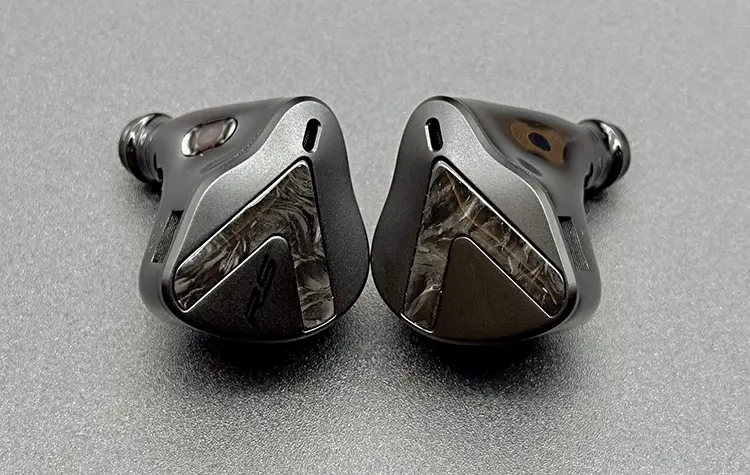
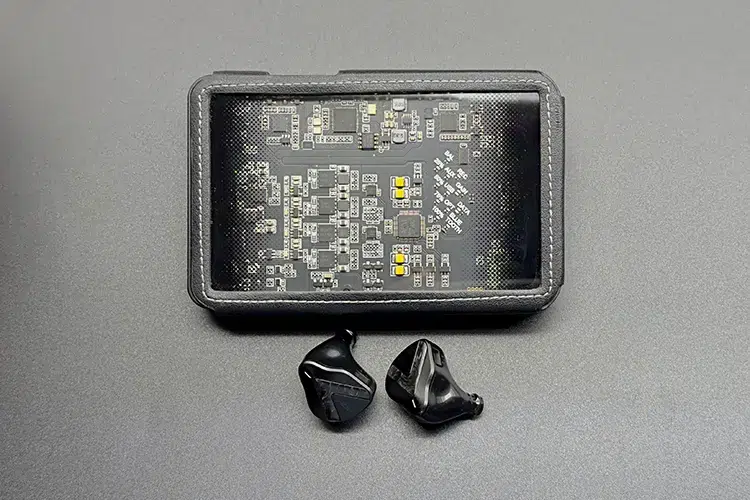
The RSV MKII is built in a simple, all-black finish, with no additional colors. The body is built from medical-grade resin, and the faceplate is matte anodized aluminum shaped neatly through CNC machining.
That’s a very neat and straightforward look without any gloss or flashy elements, typical of Softears. I prefer a more colorful shell, so I pick the Astrum for that. That said, the minimal look of the RSV MKII is not bad, and the solid build gives it a premium touch as well.
The RSV-MKII has larger shells with a wider body, but the ergonomics make sure the fit stays snug. Fit-wise, I don’t see issues with either of these IEMs, though for smaller ears, both may raise a few eyebrows.
Softears packs the RSV MKII in a compact, clean package that feels thoughtful. It includes nearly everything you would expect in terms of accessories, but Astrum’s packaging really does not have any competition.
Both IEMs use a standard 2-pin connection system. Both stock cables are functional, so that part ends in a tie.
Performance
The RSV-MKII and Astrum sit in a similar ballpark tonally, but they do not behave the same once the music starts rolling. RSV-MKII carries more mid-bass weight. At low to moderate volumes, it feels big and satisfying without spilling over.
When you crank it, that same mid-bass can start nudging into the rest of the mix. Sub-bass is where the RSV-MKII feels a bit shy. You get the hit, not always the lowest rumble.
Astrum comes across tidier and keeps the same bass-heavy songs better under control, letting the rumble sit in the background instead of wrapping around everything.
In the midrange, RSV-MKII aims for a clean, almost studio-like balance once the low end settles. On bass-light tracks, its midrange feels more accurate, with a very natural sense of detail and presence.
The RSV-MKII also sounds warmer and smoother through this region, a touch more relaxed, and pushes out more emotions. The upper midrange is crisper and carries more energy on the RSV-MKII. The last bits of tiny details are subdued on both.
In the treble region, RSV-MKII feels smoother and more polite. Astrum leans a little more toward shimmer and air. There is a touch more shine on top, and it feels a bit livelier and more energetic.
Astrum offers a bit more sparkle and perceived extension, giving you more air around the instruments and a better sense of openness.
The Astrum throws a slightly wider and more spacious stage. RSV-MKII can feel more closed in, yet it keeps complex passages in check.
Resolution feels better on the RSV-MKII. Macro-dynamics go to the RSV-MKII that hits harder and rides big swings in volume with more authority, largely thanks to that bold mid-bass. Astrum plays it a bit safer, focusing on control and balance rather than sheer slam.
THIEAUDIO Oracle MKIII
Technical
THIEAUDIO’s Oracle series is well regarded as an affordable tribrid studio IEM line. The Oracle MKIIITHIEAUDIO Oracle MKIII Review was released last year with a 2DD + 2BA + 2EST configuration.
The Oracle MKIII uses two ultra-high-frequency drivers, one high-frequency driver, one mid-frequency driver, and two low-frequency drivers, with a 4-way crossover system.
The MKIII also utilizes IMPACT2 technology for its low end, which appears in many of the brand’s premium releases.
The Oracle MKIII has an impedance of 13Ω at 1 kHz and a sensitivity of 99 dB/Vrms. It can be driven comfortably by lower-power sources such as dongles and smartphones, but it shines best with some additional power.
On my LPGT, it takes a few more volume clicks than the Astrum. Astrum does not ask for a lot of extra juice.
Design
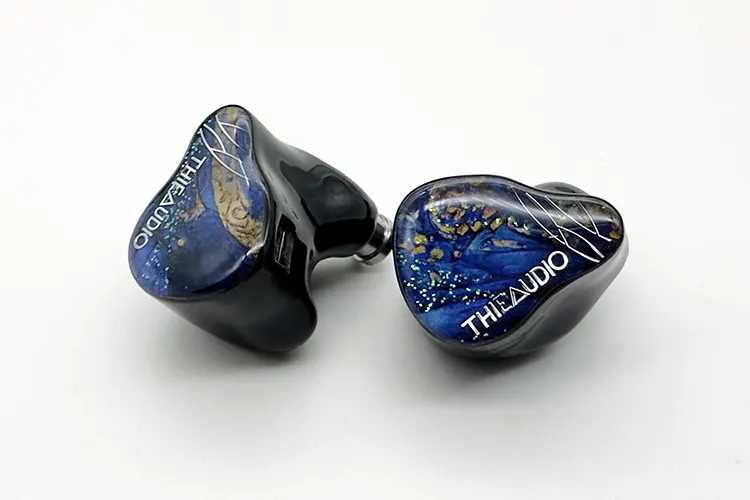
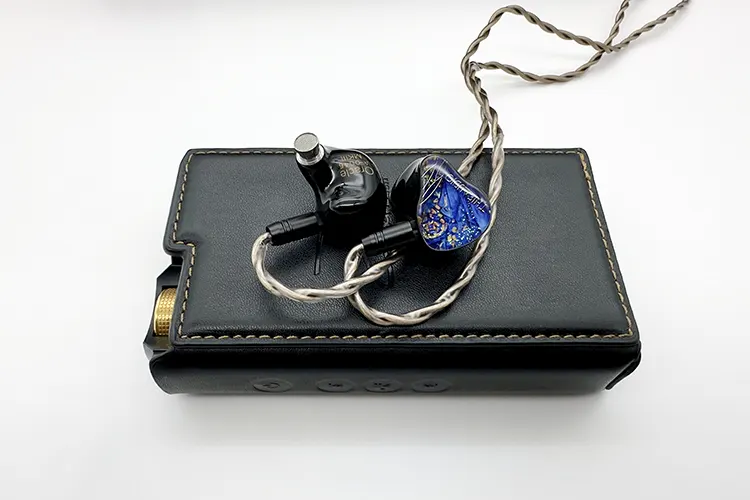
The Oracle MKIII features resin shells with a sleek, all-black look. The faceplate stands out with an intricate yet minimalist design, showing a deep blue base accented by light brown patterns.
The abstract paint all over Astrum’s body makes it more special in terms of design. The Oracle MKIII also features a metal nozzle, though it is a bit smaller in size. Size-wise, both IEMs are nearly the same.
Both IEMs connect via a recessed 0.78 mm 2-pin socket. The Oracle MKIII includes a high-grade silver-plated OCC modular cable that lets you choose between 4.4 mm, 3.5 mm, and 2.5 mm plugs. I prefer the stock cable of the Astrum, though it misses modularity.
THIEAUDIO packs the Oracle MKIII in a very minimal box, which really does not ask for any comparison with the grandness that the Astrum arrives in.
Performance
Oracle MKIII runs leaner in the low end. Its bass is tight, quick, and a bit more clinical, with less warmth and thickness. It gives you a clean outline of the notes rather than a big shove of weight.
Astrum feels fuller down low, especially in the deepest hits, where the rumble is easier to notice. Its mid-bass is softer and not as dense, so the impact is more relaxed, but the low reach feels more satisfying.
In the mids, Oracle MKIII plays the straighter, more neutral role. It keeps warmth in check and chases clarity first, which can make instruments and voices sound cleaner but also a bit drier.
The lower mids do not carry a lot of body, so male vocals and guitars can feel light. Astrum, in comparison, is smoother and lusher. It has a more natural flow, with a little extra flesh on notes that gives voices a friendlier, more human tone.
Treble on Oracle MKIII is crisp and more forward. There is extra crunch on cymbals and high notes, with sharper edges and a stronger sense of bite. On some tracks, this energy wakes things up; on others, it can skate close to sharpness.
Astrum keeps the top end calmer and smoother. It still has sparkle and detail, but the edges are softer, making longer sessions easier on the ears.
The Oracle MKIII has cleaner separation, sharper imaging, and a stage that opens a bit wider and is more organized. Small details come through with more focus, which suits listeners who chase resolution and precise notes.
The Astrum trades some of that polish for ease. It sounds more relaxed and balanced, handles everyday listening better, and gives you a laid-back session without feeling dull or overly smoothed out.

My Verdict
BGVP’s last release, Solomon, caught me off guard in the best way and has stayed in my rotation ever since.
So, when BGVP announced Astrum, with that 2+2+2 driver configuration and all the early photos floating around on forums, curiosity went through the roof. After spending some decent time with it, I can say it pretty much delivers on that promise.
Astrum is one of those sets that does not shout for attention, yet slowly grows on you.
The tuning is relaxed without turning dull and balanced without feeling clinical. Nothing leaps out or pokes the ear. Everything flows as one continuous, seamless musical ribbon rather than three separate frequency bands stapled together.
Bass gives you enough punch and rumble to keep things fun, but never takes over the stage and stays well in control. The midrange is the real charm. It’s sweet and natural with a believable timbre that works beautifully for vocals and acoustic instruments.
Up top, the treble stays silky, serving micro-detail with the lights dimmed – no glare, no fatigue, even when the playlist stretches past midnight.
If you need microscope-level resolution or a huge holographic bubble, Astrum will leave you wanting. BGVP plainly aimed for “easy chair” rather than “analytical scalpel.”
For a wind-down session after work, it is becoming my default reach: drop them in and let the day peel off. Factor in the lights-in-the-box unboxing and the pocket-relic carry case, and the whole thing starts to feel like a small art installation rather than just another IEM.
Taken as a complete experience with sound, visuals, and theater, the Astrum gets an easy, enthusiastic recommendation.
BGVP Astrum Technical Specifications
- Driver Configuration: 2 dynamic driver + 2 Knowles balanced armature drivers + 2 Sonion electrostatic drivers
- Impedance: 12Ω @ 1 kHz
- Sensitivity: 111 dB
- Frequency Response: 20 Hz–40 kHz
- Cable: 8-strand graphene copper cable, 4.4mm termination
