

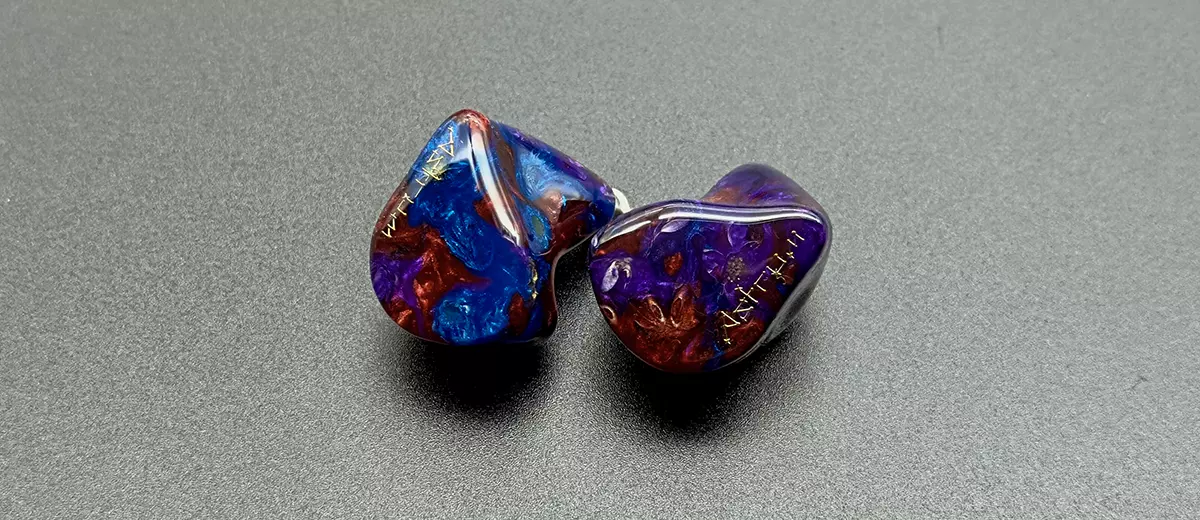
Sound Impressions
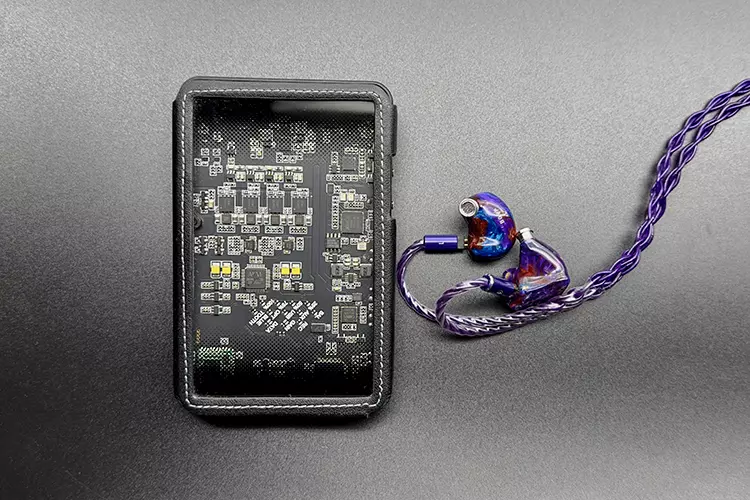
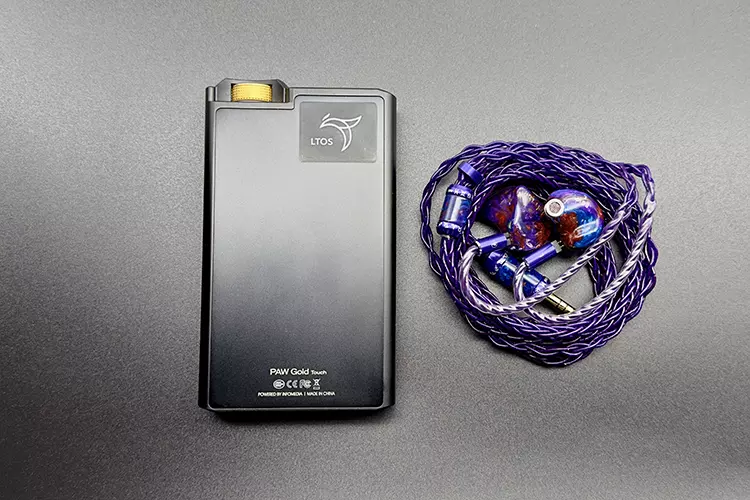
The following sound impressions of the BGVP Astrum were completed using a mixture of my main source, the Lotoo Paw Gold Touch, the Questyle CMA18P, and the Campfire Audio Relay dongle Dac/Amp.
For the review, I paired the IEMs with the stock cable and stock vocal silicon ear tips, size L.
Summary
Astrum strikes one as a relaxed, musical IEM rather than something built to impress with raw power or crazy detail. It does not let any frequency jump out or scream, keeps everything a bit toned down, and favors the midrange for a smooth delivery.
The low end feels honest and a bit polite. It fills out and massages the sound instead of trying to steal the show with punches. Midrange owns the marquee, and the middle band is where Astrum feels most at home.
Up top, the treble stays smooth and controlled. No hiss, no sting, no sharp edges jumping out. You can listen for hours without feeling an itch to remove the monitors.
Astrum is more about comfort than analysis or critique. The stage is reasonably open, and separation is good, but it does not throw a massive 3-D image or dig out every tiny noise.
It is a coherent, calm signature built for long, lights-down sessions rather than track and field analysis.
Bass
Bass on Astrum feels like it’s tuned to favor those who enjoy the low end but do not want it to take over the whole show. It is not a heavy hitter, yet the sub-bass has a very welcome presence.
When a track reaches deep, you do get a proper sense of weight under the music. It hums along in a satisfying way, more like a steady engine than a wild subwoofer.
The mid-bass sits a bit more relaxed. So you get warmth and thickness, but not that gut punch that makes your brain shake.
On hip hop or electronic with strong bass lines, Astrum answers the call and adds a nice bit of fun. On more easy-going songs, the low end just does its job quietly and steps aside.
What stands out is how clean the bass stays. Basslines do not smear into each other, and they do not spill much into the midrange.
Bass guitars can be followed note by note without turning into a dull roar, and kick drums keep their shape even in faster passages. Also, the note texture is pretty good.
The trade-off is attack. Sometimes the bass feels a bit calm on the leading edge, so it does not hit with big dynamic swings. It could be tighter and a bit more aggressive in the mid-bass region.
For bass-heavy genres, this can actually be a blessing, since the rest of the mix does not get buried under a wall of low end. For rock, acoustic, or older recordings where you want a bit more punch, you might find yourself wishing BGVP had turned the knob a few clicks higher.
Midrange
The midrange on Astrum feels very balanced in terms of position. It is neither the intimate whisper-in-your-ear type nor the withdrawn, hallway-distant sort.
Vocals appear at a natural handshake distance, level with the band, never begging for extra credit. The midrange overall holds a gentle warmth that keeps instruments sounding natural rather than analytical.
Down low, the lower midrange keeps to a light diet, which means things like male vocals, lower piano notes, and thicker rhythm guitars show up in slim-fit shirts rather than thick warm winter coats.
If you are used to a dense and weighty midrange, you might notice that missing bit of meat. At the same time, this keeps the sound free from muddiness and gives the overall presentation a cleaner tone. It is one of those trade-offs that will click differently for different ears.
The upper mids are where Astrum really settles into a sweet spot. Female vocals come through smooth and expressive, with enough shine to carry emotion without tipping into shout or glare.
Female vocals glow, and violins and flutes sing, and yet the moment a note threatens to spice up the eardrums, it politely backs off.
The presentation is not the cleanest, yet there is hardly anything it fails to convey. Details are there, but they are not thrown at you with surgical precision.
Small breaths between vocal lines or subtle guitar slides are present, just slightly behind the bigger picture. The well-mannered bass leaves the stage uncluttered, giving vocal lines a good breezy space.
Timbre stays on the organic side of real: music sounds like it should, nothing rendered with clinical chalk outlines. It is an easy, forgiving midrange that invites long listening sessions rather than constant analysis.
Treble
Treble on Astrum follows the same idea as the rest of the tuning. It is smooth, relaxed, and carefully controlled. There is no hint of sibilance, no extra edge on vocals or instruments unless the recording itself is harsh.
Cymbal hits land softly, with a natural shimmer that says “I am here” without stabbing your ears. Treble notes carry enough energy, and they never dominate the mix or drag your focus away from the vocals. It is one of those trebles that lets you crank the volume a bit without worrying about fatigue.
The extension feels decent enough for everyday listening. There is air and a sense of openness, but the very last bits of sparkle do not jump out. Instead of sharp edges, you get a softer, more diffused glow around treble details.
Treble notes register clearly, then fade away gently instead of leaving a laser-etched afterimage. The upside is that the overall tone stays coherent and relaxed. The treble rises naturally out of the midrange, with no weird spicy spots where something suddenly sounds too bright.
This treble fits BGVP’s own idea of a calm and captivating tuning that lets vocals and midrange instruments carry the emotional weight.
If you are chasing fireworks and hard-hitting treble that highlights every little tick and sparkle, Astrum might feel a bit too laid back.
If you want something you can wear for hours while the top end quietly does its job and keeps the sound lively without ever biting, this approach makes a lot of sense.
Staging & Dynamics
Technically, Astrum is built for long, lazy evenings, not for the “wow, look what I can do” flex. The soundstage is not a massive one, but honestly, it is not cramped either.
Width is impressive; do not expect it to be an out-of-head stretching stage. There is a fair sense of depth, so instruments do not sit in a flat row. Height is more average.
Vocals usually occupy the center of the stage, a couple of steps forward to the ears, with the rest of the band fanning out in a believable arc. It does not create that big, holographic bubble some flagship sets chase; it’s just an easy, breathable room.
Imaging is decent, with left-to-right placement that is easy to follow. You can point to where the main guitar, backing vocals, and snare sit, even if the very far back details do not always pop with laser-sharp edges.
Layering does its job. On busy tracks with lots of overlapping parts, the IEM does not collapse into a mess. Each instrument keeps its own lane well enough that you can focus on whichever one you want with just a little bit of attention.
Dynamics lean toward the softer side. Big hits and drops do not explode out of nowhere; they roll in more gently. Piano notes and drum hits could have more authority and jump, so if you love that sudden punch, Astrum may feel a bit polite.
Micro details are there, but not showcased. You will not get that microscope feeling where every tiny noise is highlighted.
Instead, you get a smoother, more blended picture that favors flow and musicality. In short, the technical performance is solid and competent, just tuned in a way that keeps you relaxed rather than on high alert.
Synergy
Efficiency
The Astrum has an impedance of 12Ω and a sensitivity of 111 dB/Vrms. It can be driven comfortably by most sources, from small dongles to smartphones and compact DAPs.
It may not ask for a powerful source, but a couple of extra volume clicks can bring the sound into full swing. A stronger, more capable source adds a bit more to the dynamics and sense of openness, but none of these are really missing on regular sources.
Even on weaker sources, the delivery feels smooth without any hint of thinness or harshness. On my Lotoo Paw Gold Touch, it takes more than 30 volume steps to reach a comfortable level, and a few extra volume clicks do not make it too loud.
Pair-wise, I find the Astrum works well with every type of source, whether bright or neutral. A warm-leaning source can add more warmth to the presentation, but nothing that would be off-putting.
Source Pairings
With the Relay dongle, the Astrum leans a little more into its analog-like side. The tonality gets warmer, in a syrupy way, so it’s certainly not the clearest delivery.
It is just a touch more relaxed and musical. Sub-bass gets a small but noticeable push, digging a bit deeper and sounding tighter. It adds some fun that the Astrum sometimes holds back on.
The midrange keeps its detail; nothing feels blurred or softened, but there is a mild warmth that seeps in and fills the notes.
Female vocals come slightly closer, with more body and emotional weight. Treble is not the star here, yet it supports the overall tuning well. Air and sparkle feel balanced, present but relaxed.
Switching to the Lotoo Paw Gold Touch shifts the focus. The Astrum feels more resolved and clearer, as if someone wiped a thin layer off the sound. Details are vivid, though not plentiful, and still delivered in Astrum’s relaxed manner.
Stage depth improves, layering feels better organized, and imaging, while still not pinpoint, becomes cleaner.
Bass texture improves, but the overall impact stays calmer. Midrange warmth is more controlled, giving a more accurate and smooth tone. Treble is smooth but resolves better, keeping detail intact.
On the CMA18P, the Astrum opens up even more. The extra power brings a more dynamic, spacious sound. Resolution may not reach LPGT levels, but nothing feels missing.
Treble gets a slight lift, making the presentation a bit more energetic. The stage expands a little with cleaner separation.
There is a faint static noise in the background, something the device tends to have with many IEMs, but the overall pairing is lively and engaging.
