

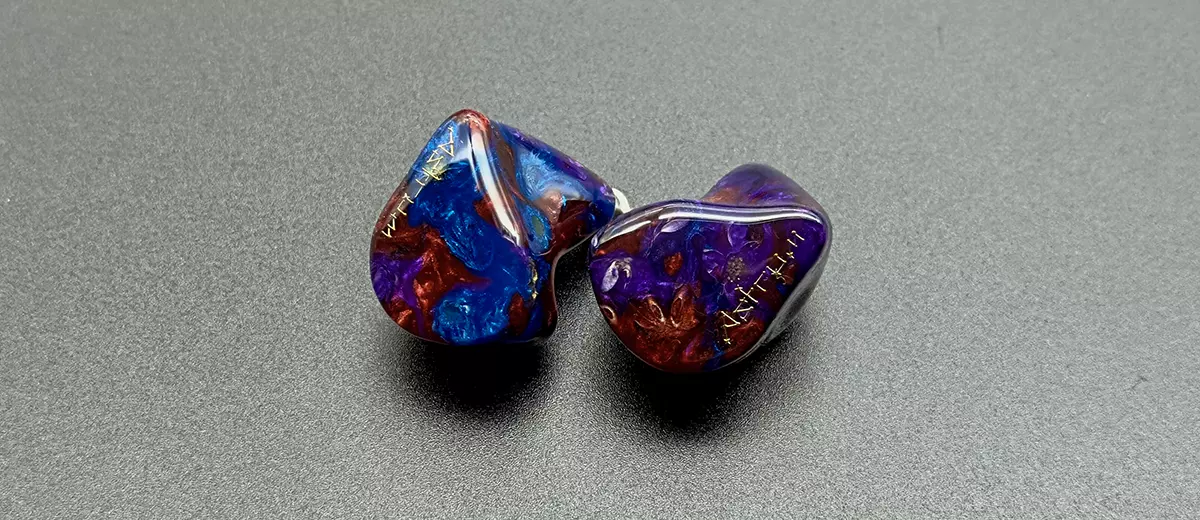
Nihal reviews the BGVP Astrum, a new hybrid universal in-ear monitor featuring dual 8mm dynamic, dual BA, and dual 3rd-gen Sonion EST drivers. It is currently priced at $699.00.
Disclaimer: This sample was sent to me in return for my honest opinion. Headfonics is an independent website with no affiliate links. I thank BGVP for their support.
You can click here to learn more about the BGVP products we have previously reviewed on Headfonics.
This article follows our current scoring guidelines, which you can read in more detail here.
BGVP has been quietly gaining more attention lately. Outside China, the brand was still not as widely recognized, but the last few releases have definitely pushed its name around.
BGVP is not a new player either. The brand has been at it for close to a decade, slowly building a catalog but mostly in the budget to mid-fi segment.
Releases like Phantom and Solomon helped a lot. A few months back, I spent time with the Solomon and liked not just the tuning but also the whole experience around it.
The packaging, the accessories, the way it is presented when you open the box – it all leaves a strong first impression. Since then, I have been much more curious about what BGVP is doing.
Their latest release, Astrum, lands in the mid-tier territory with another stacked driver setup and a design and unboxing that have impressed a lot already. It’s time to see if there is more to it than just looks.
In this review, I will assess how the Astrum performs and competes in the crowded mid-fi segment that includes the likes of the Noble Audio Van Gogh, Softears RSV MKII, and the THIEAUDIO Oracle MKIII.
Features
The Astrum uses a tribrid driver configuration, which consists of two dynamic drivers, two Knowles balanced armature drivers, and two Sonion 3rd-gen electrostatic drivers.
The foundation is a “double bass DD combo”: two 8 mm dynamic drivers sitting coaxially. Diaphragms use a PU and LCP mix, tuned to act like one big, controlled woofer rather than two separate drivers fighting each other. This is what should give Astrum that deep, rounded bass.
Above that, BGVP leans on Knowles balanced armatures for the midrange and treble. The ED series BAs handle the midrange and upper midrange regions. The RAD series takes over the higher treble, sharpening edges, and adding bite when recordings call for it.
Right at the top, Astrum brings in a third-generation Sonion EST unit. That is the super tweeter, there for the last bit of air and shimmer.
Design
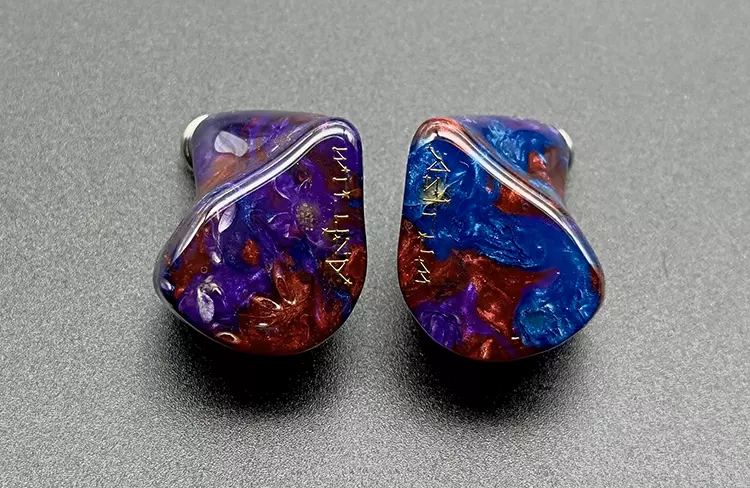
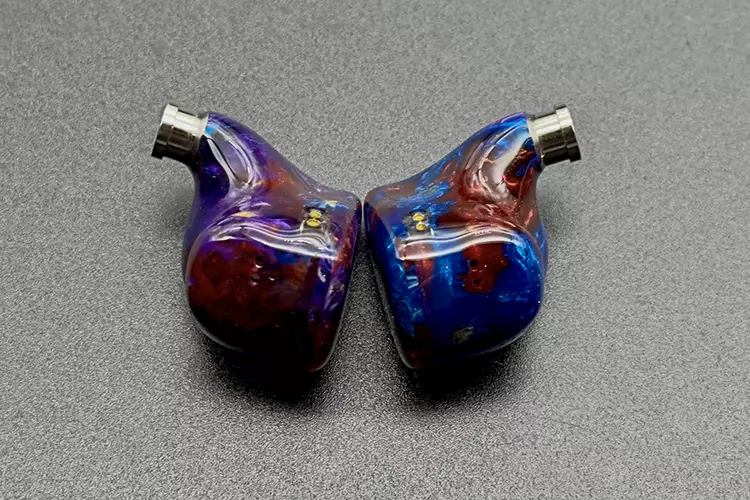
Astrum looks as if someone cracked open a galaxy jar and poured the contents straight into a shell. The design fits the whole “celestial” theme really well. The shells use a hand-painted abstract swirl of blue, red, and purple.
Looking closely, you can feel a nice depth to this random mix. It does not look like a printed pattern at all, more like someone mixed pigments in resin and let them flow on their own. The random patterns on the shells also mean each set is literally one of a kind.
The gloss coat is glass-smooth, amplifying the nebula-bright hues. Size is moderate, so the shells do not feel like one of those chunky ones. In hand, the resin is feather-light, a lot lighter than the photos suggest.
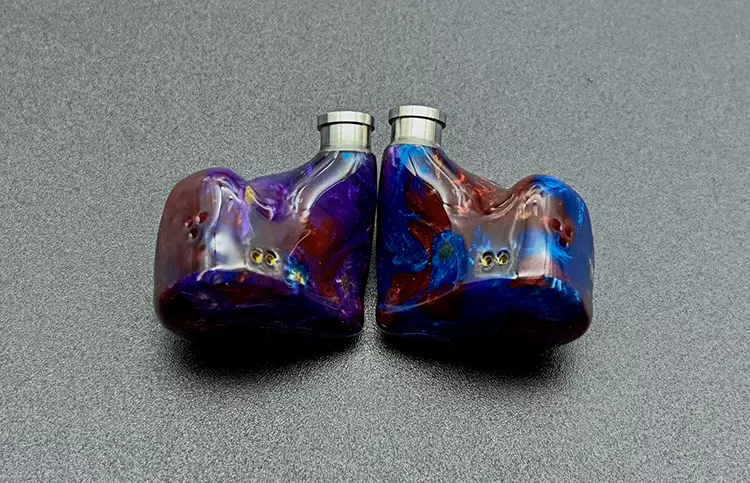
At the front, you get a stainless metallic nozzle with a mesh grille to keep dust and earwax out. The nozzles feel sturdy and well finished.
On the lower side of the shells, there are three visible vents. Overall, Astrum combines a bold, cosmic look with a very practical and easy-wearing shell. The IEM uses standard 0.78mm 2-pin connectors.
Comfort & Isolation
Comfort on the Astrum feels very dialled in, almost like BGVP already knew what ear shapes they were designing for. The shells are not large at all, and that instantly helps with the fit.
Pair that with the lightweight resin build, and you basically forget they are hanging in your ears after a few minutes. They sit flush enough to avoid that chunky, protruding feel some mid-fi hybrids tend to have.
The nozzle size is pretty normal, not too thick and not too long, so once you settle on the right ear tips, the seal comes in naturally.
With a good pair of tips, the fit feels locked in without needing constant micro adjustments. You can walk around, tilt your head, lie sideways for a moment, or even do a quick jog to the door, and the shells just stay put.
The shape of the shell helps a lot. The curves follow the concha in a way that feels organic and ergonomic. There are no awkward pressure points, no sharp edges, or pinching after long sessions. It fills the ear just enough to stabilize itself without stuffing your ear cavity.
Isolation is above average. Every day murmurs like a fan, traffic far away, and someone talking in another room fade out easily once the music starts.
With the vented design, there is no driver flex and no pressure buildup either. The ear never feels plugged or pressurized, which makes longer listening sessions very comfortable. Overall, Astrum hits a sweet spot between comfort, security, and isolation.

Ear Tips
The Astrum comes with a surprisingly generous spread of ear tips, and it feels like BGVP wanted to cover as many preferences as possible.
You get four distinct types in total, packed in the same clear plastic case that shipped with the Solomon, with the addition of one extra pack of foam tips.
The silicone sets include the vocal tips, bass tips, and liquid silicone tips, each available in small, medium, and large sizes. You also get an extra pair of ear tips, not from the regular ones, already mounted on the IEMs.
The bass tips are the smallest of the bunch. They have short stems and wide bores, which usually give a bit more openness and physicality in the low end.
The vocal tips have slightly longer stems and narrower bores, and they tend to tighten the sound a little. These are my go-to ear tips. They feel the most balanced to me, so the midrange steps forward, the bass reins itself in, and the treble stays polite.
The liquid silicone ones are extremely soft and slightly tacky. Not my personal favorite texture, but a lot of people swear by this type because they grip well and create a strong seal. I do not use foams often, but their inclusion still makes the package feel more complete.
Outside the stock tips, I tried a few aftermarket options. Divinus Velvet paired particularly well with Astrum in terms of comfort and tuning balance. Overall, the included tip selection is practical, versatile, and genuinely useful.
Stock Cable
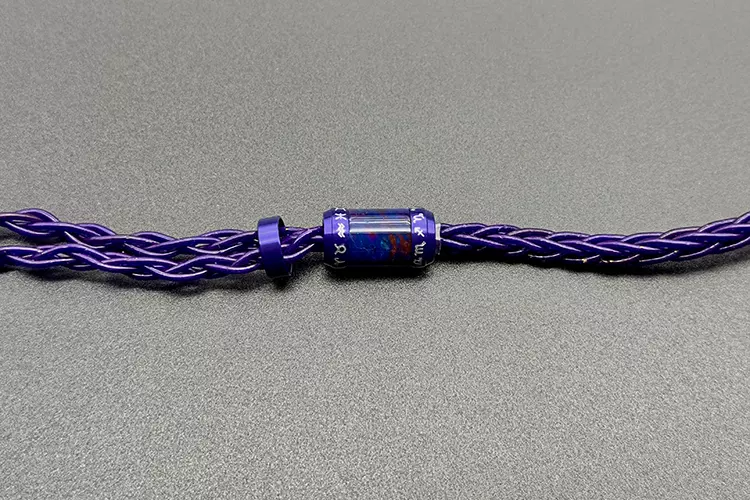
The cable that ships with Astrum is not an afterthought; it is the second chapter of the same cosmic scenery. Its loud, brightly lacquered purple jacket catches the eye first.
The jacket has a rich, glossy tone. If you look closely under good light, you can spot tiny shimmers running through it. They are very subtle, not glittery, just enough to give the cable a bit of depth.
The hardware ties everything together. Both the termination plug and the Y-split carry the same abstract pattern you see on the IEM shells, so the whole setup feels consistent.
The Y-split also has tiny zodiac glyphs circling the barrel around the ends. It’s a nice touch you only notice when you look closely, but it’s impossible to forget once you have seen it.
The cable itself is an 8-strand graphene copper mix, braided in a clean and flexible weave. I would have preferred a more rugged build, but given its lightweight, the handling is easy.
Flex is good, memory is low, and the cable falls naturally without twisting itself into knots. It wraps up neatly when you store it and does not fight you when you uncoil it. The ear hooks are soft and shape themselves gently around the ear without any stiffness.
The cable also comes with a small leather strap with a snap button, which can come in handy when you’re storing the cable.

Packaging & Accessories
The team at BGVP let their imagination run wild, and they clearly forgot they were boxing an IEM.
The Astrum’s packaging feels like fine jewellery, which, for the price, feels overstated. The outer box is wrapped in blue leather with a soft matte sheen. The top of it has tiny star-like dots that form a swirling galaxy. It already feels special before you even open it.
Then the magic happens. When you lift the lid, two tiny spotlights snap on, shining directly onto the IEM display tray like a showcase in a boutique.
The inside of the lid has a mirror-framed window filled with floating silver grains. Tilt the lid up and down, and they drift slowly, like an hourglass turned sideways. It is strangely calming and completely unexpected.
The packaging unfolds in tiers. First is the IEM tray, lit dramatically by the spotlights. The tier underneath it contains a heavy metal carry case sitting in its own cutout bed.
The case has a vintage feel and paintwork, like old silverware. Under the carry case, we have four ear tip packs spread neatly, each in its own labelled box. And tucked underneath everything is a small card hiding a pair of batteries you insert to power the lights.
Every layer rests on plush blue suede padding, soft to the touch from top to bottom. This is not the kind of box you put away. It is the kind you sit with for a minute, appreciating how over-the-top and thoughtful it is.
You cannot help wondering what the BGVP team was thinking when they decided to go all in like this. Other brands should honestly take notes.
Carry Case
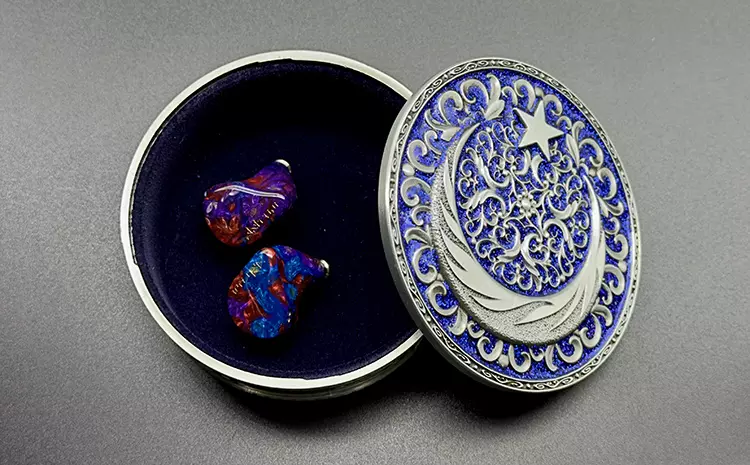
The carry case is a large, thick-walled, solid-metal drum and quite heavy for its size. From afar, one would hardly tell it’s meant for carrying audio gear.
When you pick it up, you instantly get a “grandmother’s silver trinket” vibe of a case that sits on a shelf and collects stories. It feels solid, almost overbuilt, so you do not really want to drop it on a glass table or on your feet. Carrying this case is more like carrying a small trinket box than a regular IEM case.
On the lid, you get this big crescent moon and star, surrounded by tight curls and patterns, all sitting over a deep blue background with some shimmers that shine when you look closely.
The blue has a slightly speckled look, so in certain light it has a faint glossy sparkle. It fits the whole cosmic vibe without shouting about it. The case is coated in an antique-looking silver finish.
Opening it is an easy affair, as you just need to give the lid a short twist, and it easily pops off with a dull yet authoritative click. The floor and underside of the lid are lined with the same inky-blue suede.
This treatment feels plush and protective enough to muffle any rattle. There is enough room inside to store the IEMs along with the cable. Nothing rattles much once the lid is on.
It is not really a pocket case. Put this in a bag or a backpack, as it cannot fit in your jeans. It adds some weight to the whole Astrum packaging.
Click on page 2 below for my sound impressions and recommended pairings.
