

Sound Impressions
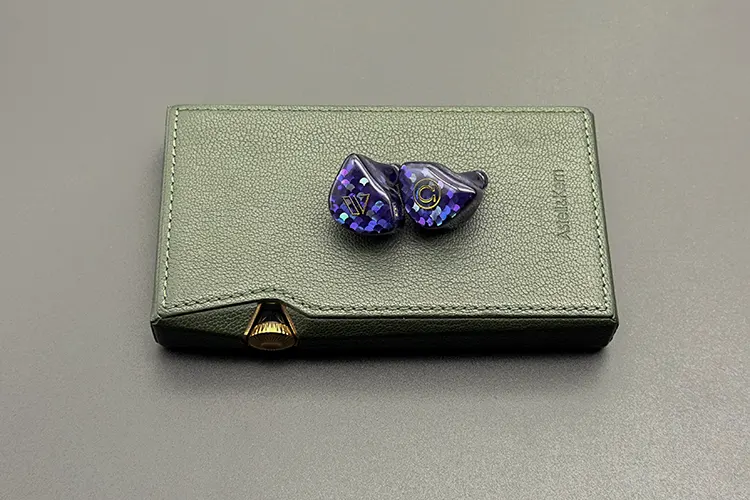
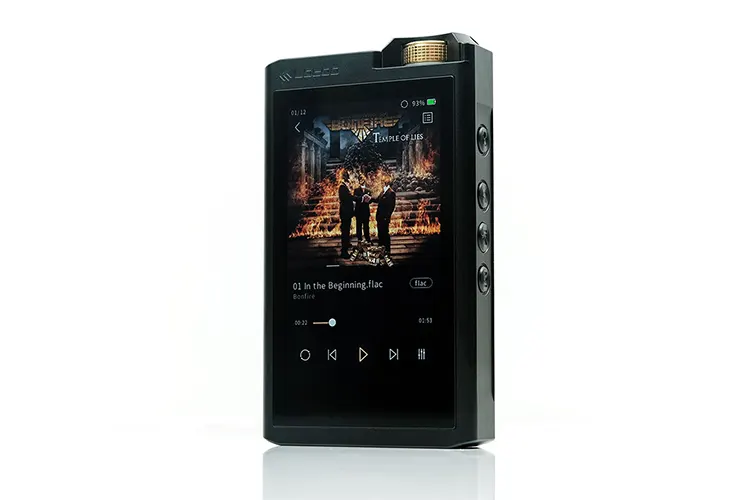
The following sound impressions of the Alpha Omega Omega were completed using a mixture of my sources: Astell&Kern SP3000 and Lotoo’s Paw Gold Touch.
For the review, I paired the IEMs with the stock cable and Eletech Baroque ear tips, size M. For most of this review, I am using the DDD tuning unless stated.
Summary
If someone has spent some time with the Ra, they know how well-tuned the IEM is. For me, the Ra offers a glimpse of the potential the brand possesses. Omega is probably one of the most exciting and well-accomplished IEMs I have ever tried in this price range.
The IEM has a wide holographic soundstage and a sound that balances the frequency spectrum without pushing any particular band to the front. You are offered a clean and realistic tonality, ensuring every nuance and micro-detail in the music is honestly presented.
There is almost minimal to no coloration in the sound, with just a subtle hint of warmth to prevent it from becoming too clinical. The bass is among the finest, and it feels so refreshing to hear bass of this quality, with accurate layering and texture that can rival some of the summit-fi IEMs.
The midrange and treble have enough energy to keep things engaging and lively. The Omega has excellent highs, thanks to those well-tuned EST drivers, which maintain naturalness while pushing the boundaries in terms of extension and sense of space.
Bass
The bass on Omega is deep, with plenty of sub-bass and a good balance of mid-bass, making the punch and impact very pronounced.
The sub-bass has a solid rumble and extends impressively deep, giving a physical sensation to the bass body without ever going overboard. It carries a lingering effect and sense of reverberation, which adds a generous depth to the low end.
You can feel a natural, trailing decay with a touch of softness and a definite edge to the lowest bass notes. The texture of a bass guitar string, the impact of a drum, and even the slightest resonance and vibrations in the sub-bass are presented accurately.
The mid-bass has a strong, authoritative presence that imparts the necessary drive. The notes are tight and well-defined, never sounding loose or bloomy, so each hit strikes with definition and precision.
The bass layering is presented exceptionally well; you can easily distinguish the bass production from different sources. Even with multiple bass lines in the music, the separation is clear and well-defined. The layering ensures there are clear distinctions and sharply defined boundaries among the bass notes.
There is a bit of warmth and slight sluggishness in the bass, hinting at the characteristics of a dynamic driver. The dynamics allow the bass to adjust well to different types of bass, so across various genres, it shifts gears smoothly. The bass handles transitions from softer tones to heavier ones, and vice versa, with ease.
Overall, I find the bass resolution to be remarkably good, lending a refreshing character to the music.
Midrange
Omega’s midrange shows a slight recession in the lower midrange and a gentle and gradual rise into the upper midrange. There is a touch of warmth that adds an emotive factor in the midrange.
The mild slump in the lower midrange prevents it from being muddy or excessively warm; however, it is enough to give the instruments as acoustic guitar, piano, and male vocals, a good level of definition and body.
This region stays clean and well separated from the bass shelf. It is more evident in the busier and more complex tracks, where notes from each of these instruments are accurate and intact.
Female vocals are a touch more forward, and the boost in the upper midrange gives both male and female vocals a sense of air and liveliness.
There’s a focus on resolution and a clean timbre, so instruments sound crisp without missing nuances and micro-details. The notes are tall and carry generous details, feeling very accurate, meaning neither too thin nor too full.
The gentle boost in the upper midrange gives the Omega its engaging and resolving sound. The extension toward the upper midrange to the higher frequencies is smooth yet pushes boundaries, thus presenting details without any sort of fatigue or harshness.
This smoothness adds coherency to the sound. The rich midrange ensures Omega works beautifully across genres.
Treble
The treble on Omega is smooth and non-fatiguing. Yes, you get plenty of details and subtle sparkles, but they do not slap you in the face or feel forced. It avoids any overemphasized areas, thus avoiding excessive brightness or harshness.
The vocals feel more accurate owing to the extension in the region. Sounds from cymbals, hi-hats, and snare overtones feel very natural. The attacks never feel splashy or piercing.
I do wish the notes were a bit crisper, but that’s a nitpick, as any more sharpness in the region would break the balance. Omega favors a musical and smooth approach that someone can enjoy for a long time.
The upper treble is gently rolled off and avoids excessive brightness. The region still adds a lot to the sense of air and space. Overall, I feel this is the right kind of treble you can listen to for hours without experiencing any harshness.
Staging & Dynamics
Omega has an impressively wide and deep soundstage. It presents a very expansive holographic stage with instruments well separated. The layering makes sure the musical pictures are stacked accurately.
Imaging aspects are solid on Omega. The placement of instruments and vocals on the stage is precise. Each of these elements occupies distinct space without overlapping or blurring into one another.
Even in complex and busy tracks, the stage never feels congested. You can pick individual elements and follow them in the mix.
There’s always enough space around each note and instrument, allowing micro-details to come to the front without feeling forced. Even in complex passages or speedy metal songs, the finer details are easily noticeable.
The dynamic range on Omega is wide, handling the thunderous impacts to the faintest decays effortlessly. When paired with a powerful source or amplifier, the soundstage opens up even further. The bass is tighter, and the dynamics are handled even better.
Tuning Switches
There are a total of 8 different flavors you can get using the three tuning switches. Apart from the stock DDD setting, these are the ones that I feel are worth mentioning.
UDD
The bass in this setting is bumped up a bit, but not by too much. You can notice some additional rumbles in the sub-bass and a bit more body and punch in the mid-bass region.
It’s not a night and day difference, but a bit of extra bass can help satisfy the cravings if you have any. The midrange and treble regions remain nearly the same as the default DDD setting. You can expect slightly less energy in the higher frequency regions, but it’s minimal.
DDU
If you want to make the Omega a bit more technical, this is the setting for you. The bass impact more or less remains the same; however, there is a bit more airiness in the upper frequencies.
The details in the treble region are a bit more pronounced. You can expect some additional brilliance and crisper treble notes on this setting.
UDU
This setting gives the flavor of an enhanced bass response with some extra energy in the upper midrange to treble region. I feel the sound becomes a bit grander, and the soundstage feels taller in this setting. Personally, other than the DDD setting, I spend a lot of time on this one.
Synergy
Efficiency & Sensitivity
Alpha Omega has kept the Omega tech specs fairly minimal to the public eye, so my thoughts here are fairly subjective. I find the IEM fairly stable with most of the sources that I tried, but it does take some extra amount of power, but it is efficient to drive even with low-specification devices such as dongles.
For the Omega to show its full potential, I would suggest pairing it with some decent power-rated sources. On my LPGT, the Omega takes a volume level near 35, while with the Astell&Kern SP3000, it takes nearly 50 volume levels.
I find Omega handles powerful sources well, and such sources improve the dynamics and help it with a more open and richer sound. It does not have any static noise issues with powerful sources.
Omega pairs better with neutral and clean sources, as any excessive warmth can overwhelm the sound. A bright, leaning source can make the sound a bit clinical and less emotional.
Source Pairings
Starting with the Lotoo Paw Gold Touch, I find the synergy quite good, especially on the DDD setting. The LPGT adds a bit of warmth to the bass region, so with the default setting, it does not feel too warm or thick.
If you switch on the bass mode, it may appear a bit overwhelming in the bass to lower midrange region. The midrange on this pairing feels rich and full of emotion.
In the treble region, we get a bit of extra energy and a satisfying sense of openness. The stage depth is commendable on the LPGT; however, I feel the width could be better.
With the Astell&Kern SP3000, the pairing is even better, as the stage opens up a lot and the low end exhibits better texture and details.
The bass attack is more precise and feels more controlled. The sub-bass goes deeper than what I find on the LPGT. The midrange here has less warmth, which I prefer, as the LPGT adds a bit of unwanted warmth. The SP3000 stays highly detailed, and the micro-details are more vivid.
In the treble region, the Omega is smooth yet highly detailed and feels more cohesive. SP3000 adds more air and brilliance in the region, making it more resolving. It never veers into too much sharpness, thus it remains enjoyable even during longer sessions.
