

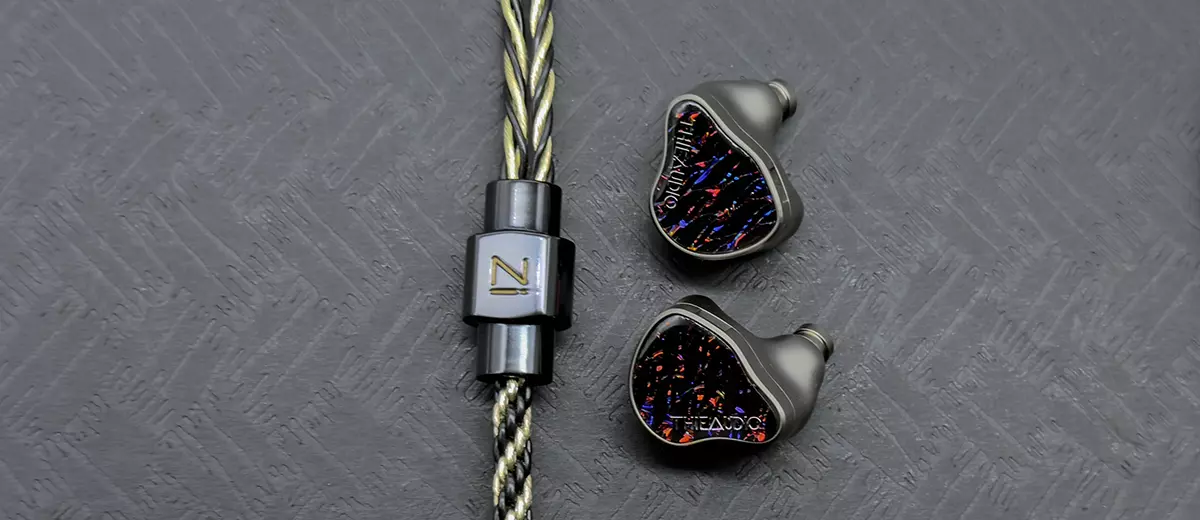
Nihal reviews the Zikman Arno Elegance, a new flagship aftermarket hybrid 7N OCC Copper and Gold-Plated Silver audio cable priced at €1899.00.
Disclaimer: This sample was sent to me on loan for my honest opinion. Headfonics is an independent website with no affiliate links or services. I thank Zikman Audio for their support.
You can click here to learn more about other Audio Cables previously reviewed on Headfonics.
This article follows our latest scoring guidelines, which you can read in more detail here.
Zikman is a small boutique from Austria, a relatively new name. Andre Zikman, who is the name behind the brand, has a generational know-how of audio engineering.
While working with headphones, IEMs, and hi-fi systems, he saw a gap in mobile audio and set out to bring European design sensibility, which gave birth to the brand Zikman.
The brand leans heavily into a more European identity, with design rooted in Austria, components made in Germany, and hand assembly done in Lithuania.
That whole process gives it a very boutique feel. Not just another cable brand trying to blend in.
At its core, Zikman seems focused on premium materials, careful finishing, and a more artisanal approach to portable audio.
The brand offers a fairly wide cable lineup, starting from mid-fi and going up to the premium end. Across the range, there is a shared design philosophy, and the cables carry a familiar look and feel.
In this review, I will go through what the Zikman flagship, Arno Elegance, brings to the table, how it pairs with a few high-end IEMs, and how it stacks up against the PLUSSOUND Hybrid XL and Effect Audio’s Fusion 1 2025.
Material & Geometry
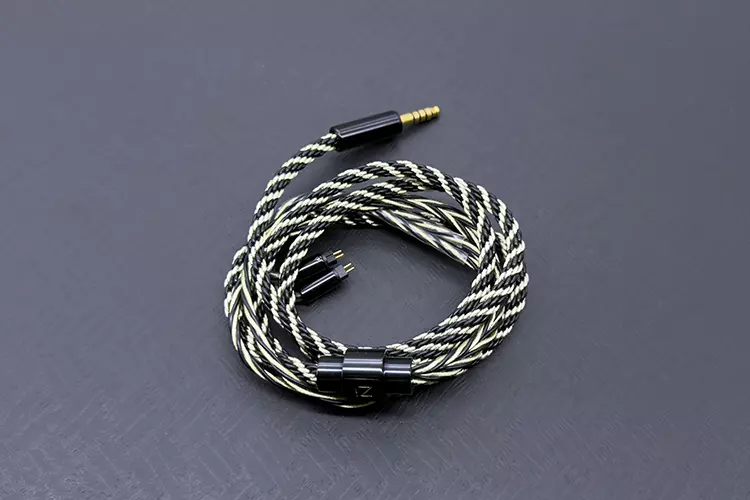
Arno Elegance comes in an 8-wire 4+4 configuration. It combines a high-purity 7N copper core with gold-plated silver conductors.
The idea here is quite clear. You get a richer and fuller base from the copper, while the silver side helps bring in a cleaner, more open top end. It is a thoughtful mix, a tried and tested one.
Each conductor uses a Litz-style structure made from ultra-thin 0.05 mm wires. That kind of build is usually chosen to keep the signal path clean and consistent.
Arno Elegance also uses resistance matching across all cores, which is a nice touch. It helps the cable sound more even and better organized, with a more stable stage and a stronger sense of coherence.
The termination plug is another solid part of the build. It uses an AECO tellurium-copper plug with 10-micron gold plating, which should help with stable contact, long-term durability, and clean signal transfer.
Zikman also gives you some room for customization here, with different plug and pin options available on the website.
Design
Arno Elegance does not try to impress with flashy looks. That is probably the first thing that stands out. It goes for a black and soft gold theme, and the whole thing feels understated in a very tasteful way. No loud and shiny colors. Just a clean, low-key premium look.
The weaving itself is one of the biggest talking points here. Zikman uses a hand-done Kumihimo braid, made by a skilled artisan on a specially developed Marudai loom. You can see the precision in the strand placement and the uniformity of the layers.
Arno Elegance has that intricate woven pattern that feels deliberate from end to end. You can tell time went into it. A lot of time, actually.
Hardware is another strong point. Everything follows the same black colorway, so the design feels consistent throughout. The parts feel solid with a bit of weight, which adds to that sturdy, confidence-in-hand feel.
The Y-split is on the chunkier side. It is shaped more like a compact rectangular block than a slim barrel. It carries the company initials right at the center.
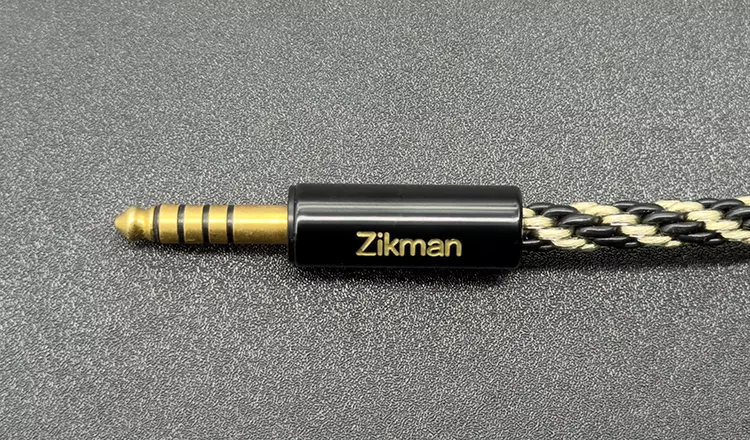
The termination plug section is better balanced. Slimmer. Cleaner. Less bulky than the splitter. It has a nice form factor and does not look oversized. The gold brand engraving on the black hardware adds just enough contrast without breaking the understated theme.
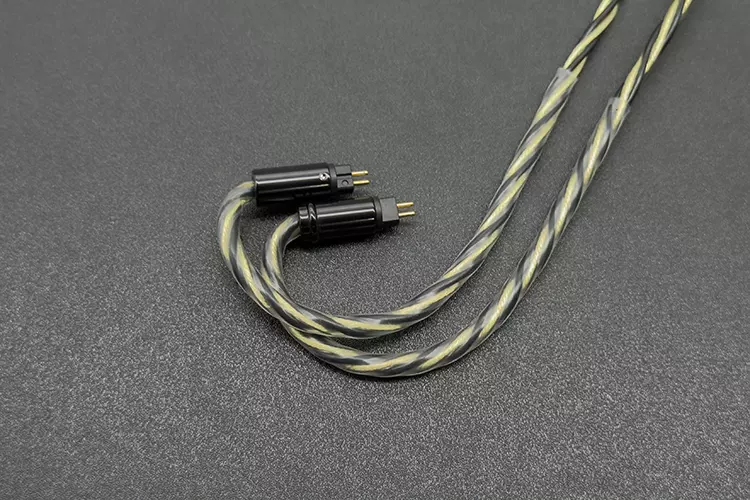
The 2-pin connectors also keep things neat. They are simple and sturdy, with no unnecessary fuss. One detail I liked here is the orientation marking. Instead of obvious L and R markings, Zikman uses a subtle circular groove on the right side. Small touch. Nicely done.
Overall, Arno Elegance feels like a cable designed with restraint. It does not go after visual bling. It goes after finish, weave quality, and physical presence.
Handling
Arno Elegance handles a bit differently from the usual 4-wire or 8-wire cable. The braiding style changes the feel quite a lot.
Because of that intricate weave, the cable comes across as more structured along its length. It does not feel loose or freely flowing in the way many regular cables do.
There is a mild stiffness here. Not something that makes the cable frustrating to use. But it is definitely not the kind of cable that feels very soft, relaxed, or highly flexible in the hand.
It feels more formed. More composed. It almost wants to keep that carefully built shape rather than casually drape around.
In daily use, that gives it a slightly mixed result. On one hand, it feels tidy and controlled. On the other hand, it is not the most effortless cable when it comes to pure ease of use.
Coiling it takes a little more space, and storing it is not as carefree as with softer cables. Still, one good thing here is that it does not keep trying to bounce back open once you coil it.
The Y-split also makes its presence known. It has some weight to it, and over longer sessions, this slight downward pull from that section can bother a bit. Also, the splitter, due to its weight, can swing a bit when you are on the move.
The good part is that Arno Elegance stays quite clean in other areas. There is very little to no noticeable cable noise, which is always welcome. It also does not get annoyingly kinked up either.
Overall, Arno Elegance has a handling style of its own. Its unique braiding gives it a distinct character, and that naturally comes with a slightly different in-hand feel than what most cables offer.
Packaging & Accessories
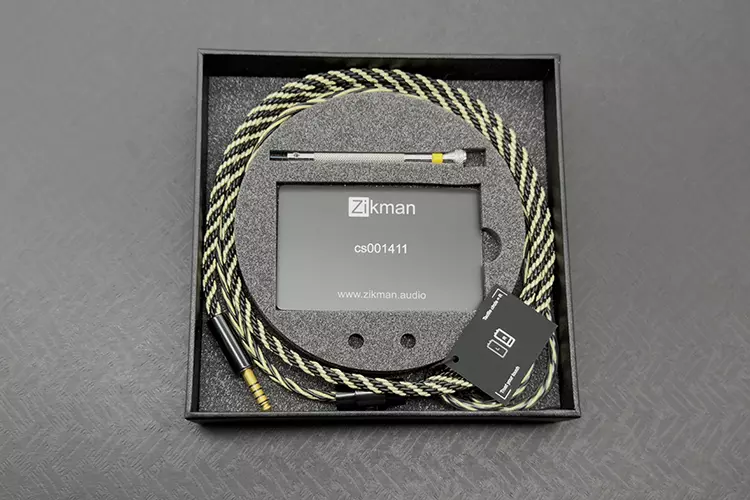
Packaging here is about as simple as it gets. No drama. No luxury unboxing moment. Just a small square box with the Zikman branding on the front and a sketch-style artwork printed below it. The black, silver, and soft gold theme does look nice, though.
Open the box, and you get the cable coiled around a circular foam cutout, sitting neatly inside the tray.
In the middle, there is a Zikman card placed in the center section, which fills the presentation a bit and stops the inside from looking too bare.
This card contains the cable’s unique ID, which you can use to check details such as the production date, the engineer who built it, measured resistance, soldering quality, and other key testing parameters on Zikman’s website.
You also get a small tool for unscrewing the 2-pin section. It can be used to swap connectors between different pin types from the available range, making the cable more versatile across different IEMs.
That said, there really is not much else to talk about here. The packaging feels very standard. Almost too standard. There is no extra treatment, no storage solution, and no sense that this is trying to elevate the ownership experience in any serious way.
At this price, I do think a proper leather carry case should have been included by default. Even a simple pouch would have helped.
Zikman seems to use this same packaging style across its cable range, and Arno Elegance gets the same treatment as the much cheaper Rhine Elegance.
Personally, that feels a bit too egalitarian. Once you move higher up in price, the presentation also should move with it.
Performance Impressions
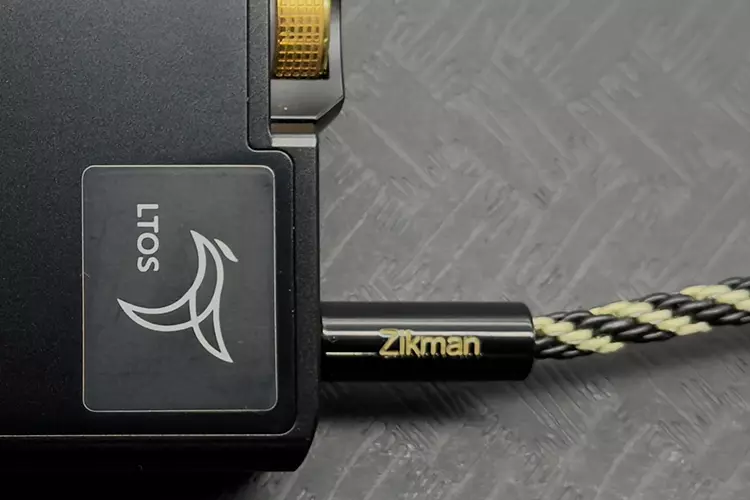
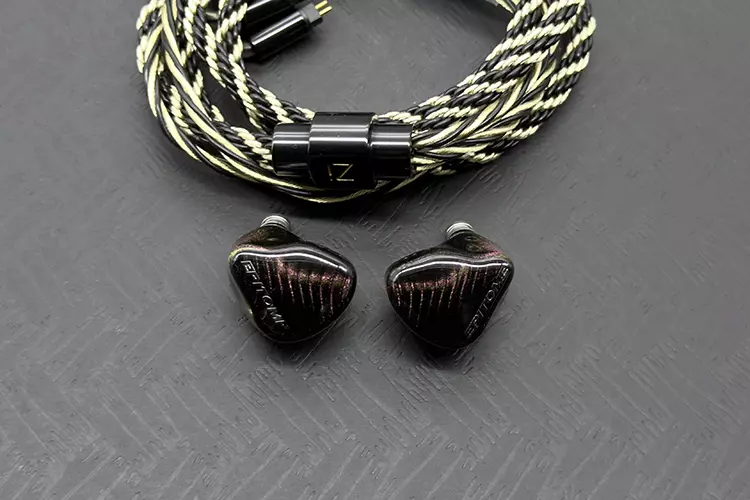
The following sound impressions of the Zikman Arno Elegance were completed using PLUSSOUND VOLTA SE, THIEAUDIO Valhalla, and iBasso EPITOME, alongside my main source, Lotoo’s PAW Gold Touch.
Summary
Arno Elegance does not hit you right away with big, obvious changes as some cables do. Its effect is not immediate. You need a little time with it to really understand what it is doing.
There is no sudden jump in bass impact. No ultra-clean midrange makeover. No overly crisp, spotlighted treble. No dramatic expansion in stage, either.
Instead, it makes small shifts across the presentation, and those gradually add up to something quite meaningful. The change comes in slowly. Almost like one of those slow-burn effects audiophiles often talk about.
Tonality and timbre are where this cable does its best work. That is really its strongest card. The copper richness, paired with a controlled yet nicely sparkling top end, gives Arno Elegance a very appealing balance.
And with many IEMs, that is exactly the kind of change you want. It adds a touch of warmth. Not enough to blur things. Not enough to make the sound thick. Just enough to give notes more body and a sweeter, more proper tone.
If an IEM sounds a bit too analytical or too dissected on its stock cable, Arno Elegance helps fill in that missing sense of tonal completeness.
So overall, this is not really a cable for forcing a certain frequency range in your favor. That is not its role. It is more about improving tonality, timbral correctness, and naturalness, while keeping the technical side intact. In some cases, it even helps a bit with layering and separation.
Timbre
Across the IEMs I tried, the most consistent change was in timbre. Some flagship IEMs chase detail and cleanliness such that they start sounding a little dry. A little too polished in a different way.
Very clear, yes, and very resolving too. But sometimes, it’s also slightly stripped of natural tone. Arno Elegance helps bring that missing bit back.
In the low end, it usually does not add much more slam or depth. That’s clear across the pairings I tried. What it tends to add instead is texture. A little more detail.
In the midrange, the cable does more. It adds a bit of warmth but also calms down extra energy if an IEM has too much bite or crispness. Vocals and instruments come through with more natural weight. Strings sound more accurate. Piano notes carry a better sense of body and decay.
Arno Elegance has a nice way of handling note decay. The tail end of notes feels more musical. Note trails hang a little more naturally. Instead of sounding sharply outlined just to show detail, they sound more complete from start to finish.
The treble also benefits from this. There is still air. Still sparkling with plenty of detail, but the metallic sheen gets pulled back a bit where needed. Cymbal strikes lose that fake clarity that can sometimes come from too much edge and lack body.
Treble notes feel more spaced out and coherent. There is less glare, less false shine, and more of a polished richness.
So yes, timbre is where Arno Elegance does its best work. A simple way to put it would be this: Arno Elegance does not repaint the sound. It just gives it a better finish. It removes some dryness, adds a touch of tonal richness, and makes the whole presentation sound more natural.
Staging & Imaging
Arno Elegance does not come in and suddenly blow the stage wide open. That is not really its game. The overall size and general shape of the stage stay fairly close to what the IEM already has. What changes is how that space gets used.
Things feel more arranged. That has been the common pattern with the pairings I tried. The stage feels more coherent and more holographic. Width, depth, and height started working together in a better way. Not in an artificial, exaggerated sense. Just more naturally locked in.
Imaging also takes a slightly different route. It is not sharper in the usual hi-fi showcase sense. It does not go after that hyper-cut, extra-crisp outline around every note.
This sharpening grabs your attention first, but in the long run, you realize the naturalness is lost a bit. Arno Elegance avoids that. Images stay clear, but they come through with more body and a more natural edge.
Micro-details are still there. Resolution does not take a hit. In fact, small details often feel easier to catch. Not because they are being pushed forward with extra brightness, but because they arrive with a bit more weight and presence.
There is less strain in the delivery. Less spotlight effect. The details feel like part of the music, not separate little events demanding your attention. That gives the presentation a nice ease.
So overall, Arno Elegance keeps the technical side largely intact. Same general capability. Same strong detail retrieval.
But it wraps all of that in a more spacious, more layered, and more organically arranged presentation. The result is not more technical for the sake of it. Just more composed.
Click on page 2 below for my recommended pairings and selected comparisons.
