

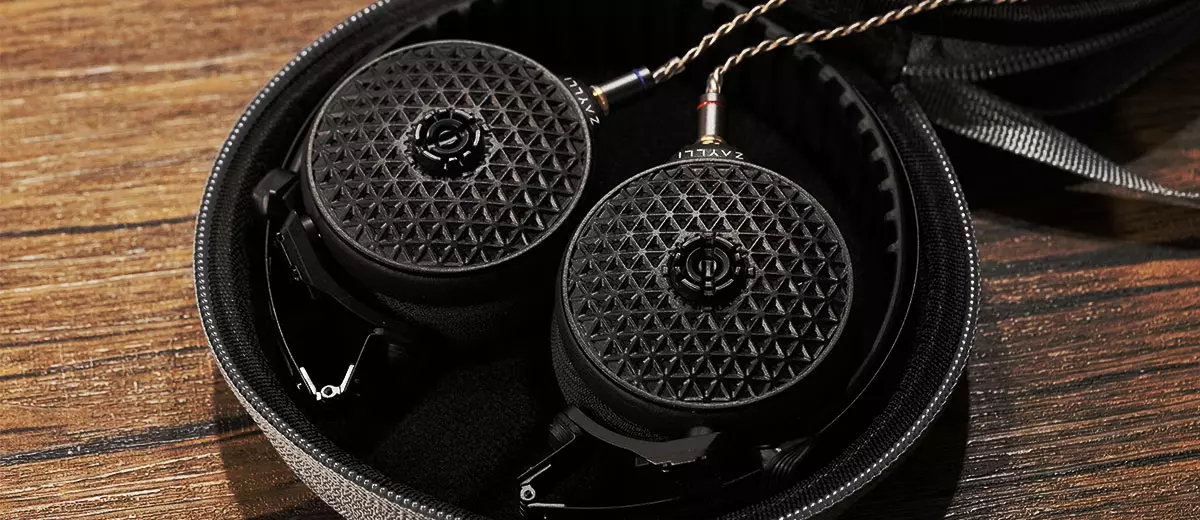
James reviews the Zaylli LYRÖ, a pair of semi-open-back dynamic driver headphones with a unique rotary tuning switch and detachable design. It has an SRP of $249 with Kickstarter earlybird prices starting at $169.
Disclaimer: I received this sample in exchange for my honest opinion. Headfonics is an independent website with no affiliate links. I thank the team at Zaylli for giving me this opportunity.
Click here to read more about Kickstarter-funded products previously reviewed on Headfonics.
This article follows our scoring guidelines, which you can read in more detail here.

On the review bench this time are the LYRÖ on-ear, open-back headphones, the first product from the new brand Zaylli, which draws its name from the concepts of strength and passion in Greek and Arabic.
Priced at around $169 for early backers on Kickstarter, the LYRÖ stands out as one of the sleekest on-ear designs I’ve encountered.
It incorporates a variety of customized metallic and plastic components in its construction, with plenty of interesting details in the design.
Although I’m typically not a fan of headphones in this style, the LYRÖ offers something unique and sounds great for the size.
Read on to discover why, along with comparisons to other compact headphones such as the ROSESELSA Distant Mountain and Final’s UX3000.
Features
Driver
Zaylli has maintained a sleek design for the LYRÖ, which features an ultra-light bio-carbon nanocomposite diaphragm, Japanese CCAW coils, and N52 magnets.
The driver diameter is 40mm officially, which confirms my own subjective feeling regarding the response and construction.
According to Zaylli, distortion is exceptionally well-controlled at less than 0.02% with third-order harmonics, suggesting the LYRÖ is free from upper-mids harshness.
In practice, the driver responds well to power, and you can indeed feel its scaling with stronger outputs.
Additionally, the driver delivers a rich bass response without the unpleasant harshness often found in thinner on-ear models.
If you’ve been put off by harshness from some on-ear headphones, the LYRÖ provides rounded, tamed mids along with satisfying bass that is far from lacking.
Sound Options
Zaylli designed two distinct acoustic profiles for the LYRÖ headphones, the Diffuse Field target, and their proprietary Zaylli On-Ear target curve.
In simpler terms, these profiles offer options for thicker bass with tamed highs, or a cleaner, more neutral, and airy response.
The Zaylli On-Ear curve is designed to be relatively bass-heavy and provides a smoother treble response that smoothens out some brightness.
This adjustment results in an approximate +8dB increase in the low frequencies compared to the Diffuse Field target, delivering a richer sound signature.
On the other hand, the Diffuse Field profile offers better clarity and allows the vocal to penetrate through more easily, yet it is still free from harshness.
For those familiar with digital signal processing (DSP) and target curves, the Diffuse Field curve emulates the response of a highly reverberant environment, which typically enhances transparency and fidelity in the output when applied.
Swappable framework
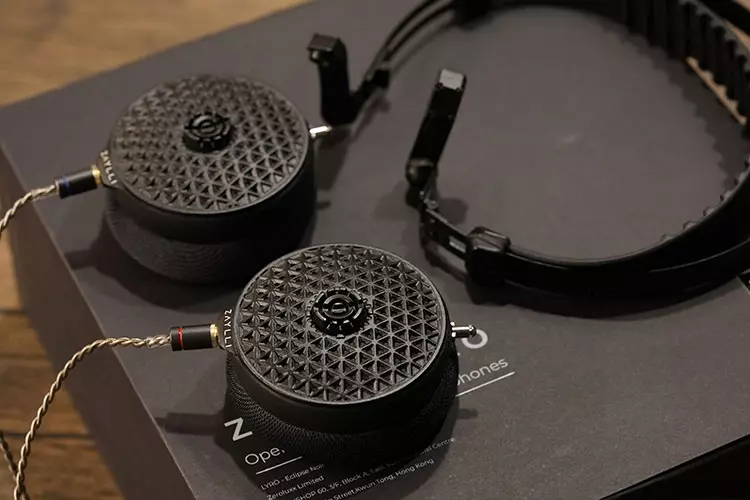
Not only can the cables be swapped out, but Zaylli has also designed two frameworks for the LYRÖ, allowing users to choose between a traditional headband or a neckband.
There is a quick release for changing the frame, and the neck-mounted configuration that is extremely light at just 85g is great if you don’t want your hairstyle to mess up.
With the cable pointing downward, the design achieves a sleek look. This configuration is ideal for travel or gym use, merging functionality with style, and both wearing methods feel feather-light on the head.
Design
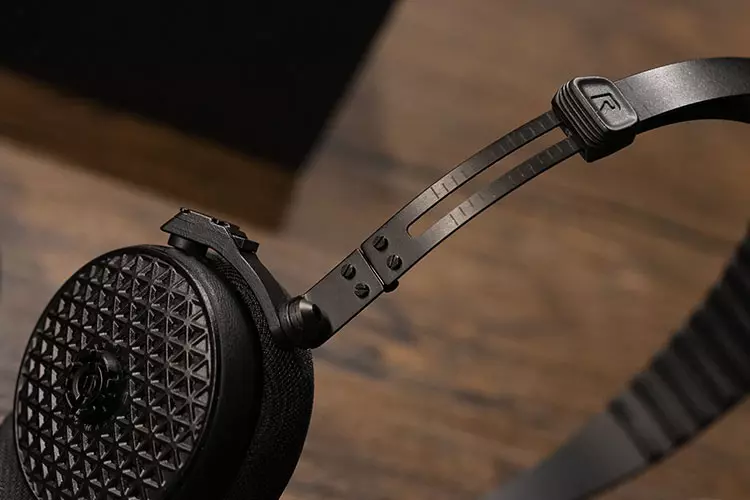
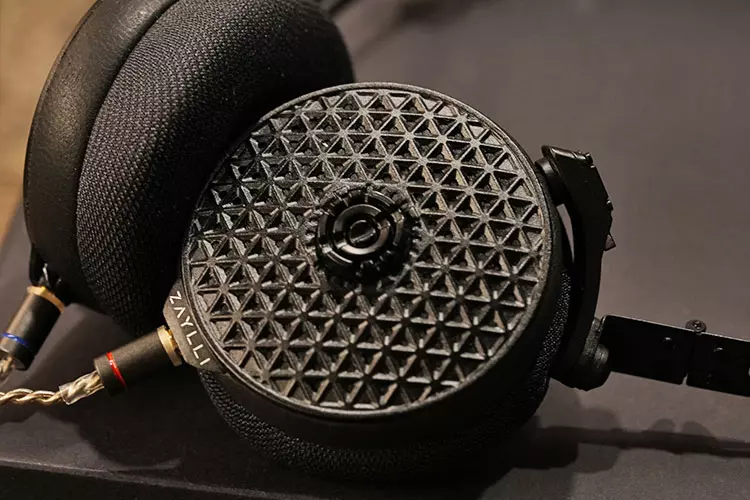
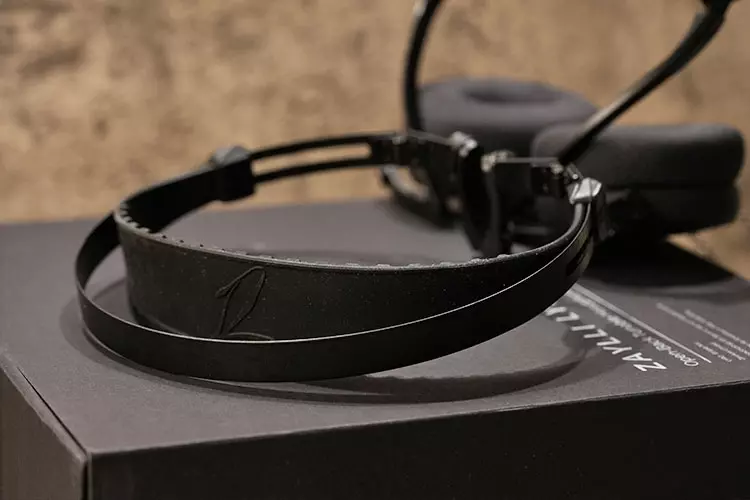
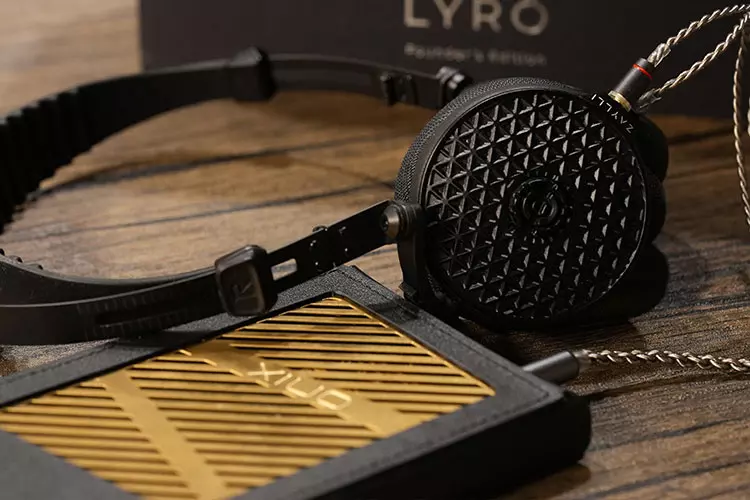
Aside from the innovative dual headband design as well as the tweakable sound profiles, the LYRÖ has some details in design that are appealing to my eyes, including the use of small hex screws and a mesmerizing geometrical pattern on the sides, which matches the tweakable mechanism nicely.
The headband uses a plastic strap instead of leather or PU, but technically, it works well to hold the LYRÖ in place. And overall, the build feels solid and cool. My only complaint would be the slightly sharp corners on the quick-release button, but it is a relatively minor issue.
The design is foldable with sleek hinges, and the package comes with a slim carrying pouch. It is possibly the sleekest foldable on-ear design I have seen, and I like the high degree of freedom on the turning mechanism, which allows it to fit instantly.
Comfort
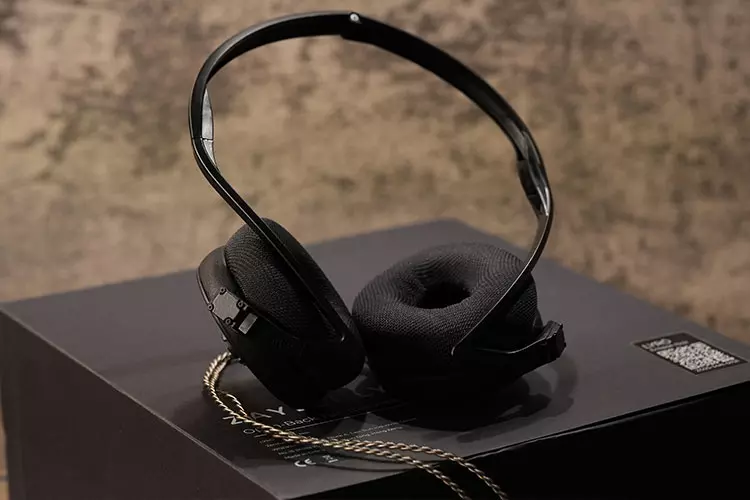
The LYRÖ is impressively lightweight, even with its metallic build, and both wearing modes fit comfortably on my head. The clamping force is just right with just enough seal, and the pads rest weightlessly on my ears, providing decent breathability.
I particularly appreciate the soft padding material, especially compared to other on-ear models that use foam or PU leather, which tends to attract dirt and warm up quickly on hot days. Despite this, Zaylli offers swappable pads should you need them as additional purchases.
The fit remains comfortable for me even after 5+ hours of listening. However, those with larger head sizes may need to tilt the headphones slightly back, as the headband isn’t very long.
This is similar to issues I’ve encountered with other designs, but there is no issue with the neck mount. If you’re wearing sunglasses or prescription glasses, it may be advisable to stick with the traditional headband.
Stock Cable
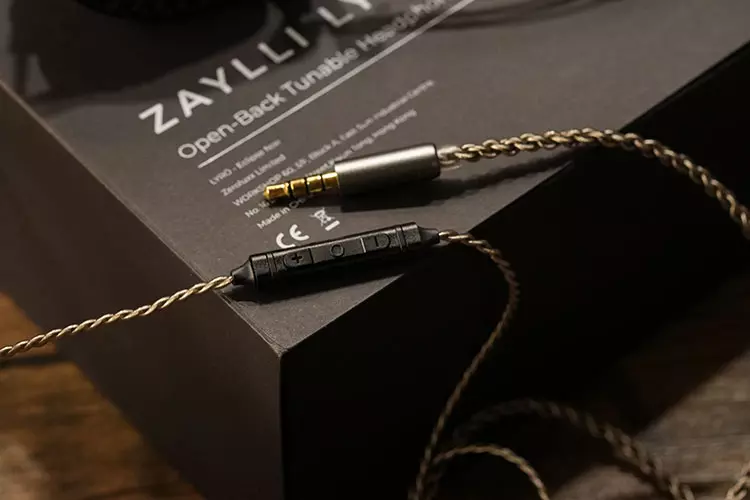
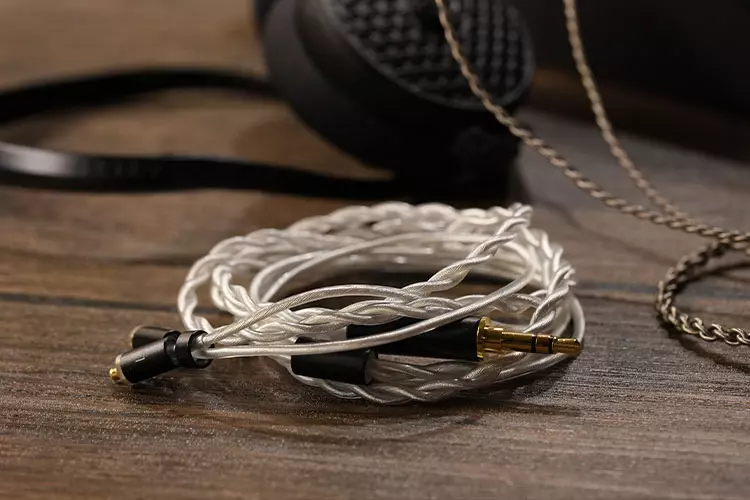
The LYRÖ sample I received is terminated with MMCX and shipped with two cables, including the brown stock cable, a SPC-based design with basic mic control.
The other silver-colored cable provided feels thicker and reminds me of the Hisenior Mega5’s stock cable, and it sounds a bit brighter than the brown cable.
I mainly tested the brown stock cable. It feels sturdy, yet very soft, and has not too much memory retention. You can instantly roll it and fit everything into the slim pouch supplied without tangling.
Packaging & Accessories
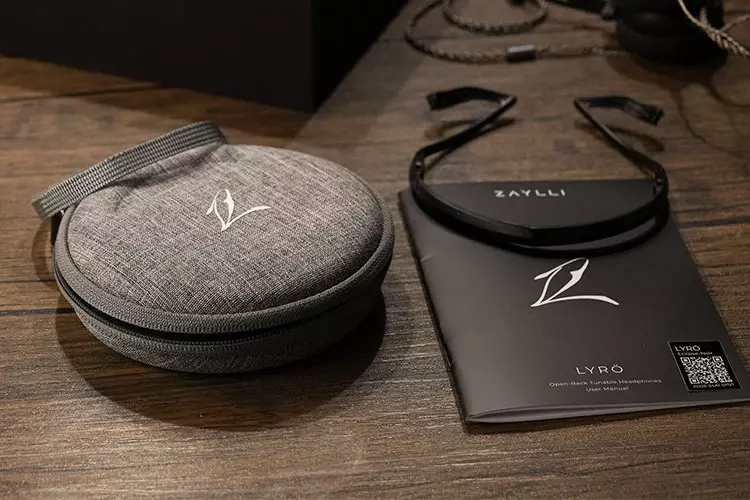
The LYRÖ arrives in a petite, minimalist package, neatly folded in a carrying pouch, with the alternative neckband tucked beneath the box. The carrying pouch has a diameter of just 130mm, making the entire package feel very compact.
Additionally, a detailed manual is included, outlining how to utilize the tuning adjustments and switch between headbands, which can be done in seconds.
Sound Impressions
The following impressions are based on the brown stock cable. When swapping it out to the silver (optional) cable, the mids and treble stand out more, though I prefer the better articulation and more distinct vocals with the brown stock cable.
After a week of burning in, I’ve paired the LYRÖ with various gear, including my MacBook Air, a range of DAPs, and desktop amplifiers, such as the FiiO K17 and Warmer R2R combo, the ONIX XM10 Ltd, and the Luxsin X9.
I’ve also used less powerful devices such as the FiiO BTR15 for the following sound impressions.
Summary
I’ve tried several on-ear designs, including the Sony MDR-5 that comes with the Sony tape recorder, the AKG 450, the Koss Porta Pro, and some newer models.
Often, I’ve found that smaller over-ear headphones can lack bass or sound harsh or bloated in the lows for bassier models. However, this is not the case with the LYRÖ.
The two distinct sound profiles on the LYRÖ likely control airflow or damping factors at the back, primarily affecting the lower registers.
This impact is quite noticeable, especially in a quiet room and with bass-heavy music, with one profile sounding deeper and fuller in bass. The vocals are also more laid-back on the former, with the latter offering stronger penetrating power, pushing the vocals more to the center stage.
Timbre
In the Diffuse Field profile, the LYRÖ presents a neutral timbre with a hint of warmth in the mid-lows, enhancing vocal separation by shifting the focus toward instruments and upper mids.
The bass is moderately fast and well-defined, particularly when connected to more powerful sources with superior decoding.
The treble becomes more prominent, much like a see-saw effect, yet remains controlled in the sibilance zone.
It offers satisfactory extension with good depth and punch in the bass, alongside a gentle roll-off in the highs, following the small elevation in the 6-7kHz range that boosts vocal forwardness.
Detail retrieval and dynamics are decent, making it enjoyable for pop, EDM, and beatbox tracks.
When switching the rotary knob 90 degrees to Zaylli’s custom tuning curve, the listening experience becomes even more immersive, particularly with bass instruments.
This setting thickens the low end while softening the treble. The bass is ample yet remains clear and punchy, even when powered by the MacBook Air or FiiO BTR15.
The tuning shifts to a more mid-centric profile, especially noticeable with darker, powerful voices and acoustic instruments, with bass guitars and drums sounding richer and more polished.
I was pleasantly surprised that an on-ear design like the LYRÖ doesn’t sound thin or bloated with R&B and club music, delivering the necessary bite and punch.
While the tuned profile may sound slightly thick indoors, it’s effective outdoors, where I prefer the Diffuse Field target in settings like coffee shops or living rooms for better vocal clarity and air, and it is more revealing yet not overly hot.
Staging & Dynamics
With vents at the back, the open-back design provides better extension on both ends compared to closed designs. The soft material ensures effective sealing, allowing the bass to kick in more solidly and firmly, creating better perceived depth.
At lower volumes, the driver offers good dynamics and clarity, still controlling harshness at higher volumes across both modes.
In Zaylli’s own target curve, the focus shifts more toward vocal richness and instruments in the mid-bass and bass ranges.
However, the polished upper vocal zone may result in less distinct positioning compared to the Diffuse Field mode. The more relaxing vibes sound more soothing with Jazz and ethereal voices, though it may get slightly flattened when the vocalist isn’t that powerful.
When seeking a more expansive timbre that emphasizes the bigger picture and to accommodate more instruments in the mix, switching to the Diffuse Field target tuning provides better openness in the upper register, giving the virtuoso a more distinct image.
Outdoors, the soundstage on the LYRÖ is moderately wide, particularly in Diffuse Field mode. I find the positioning impressively clear for headphones of this size.
Transients are well-presented thanks to the responsive driver, delivering nice, definitive power in the mid-lows with sufficient air and punch. However, a bit of power is still needed to achieve a more polished and firm attack.
Click on page 2 below for my recommended pairings and selected comparisons.
