

Synergy
Efficiency
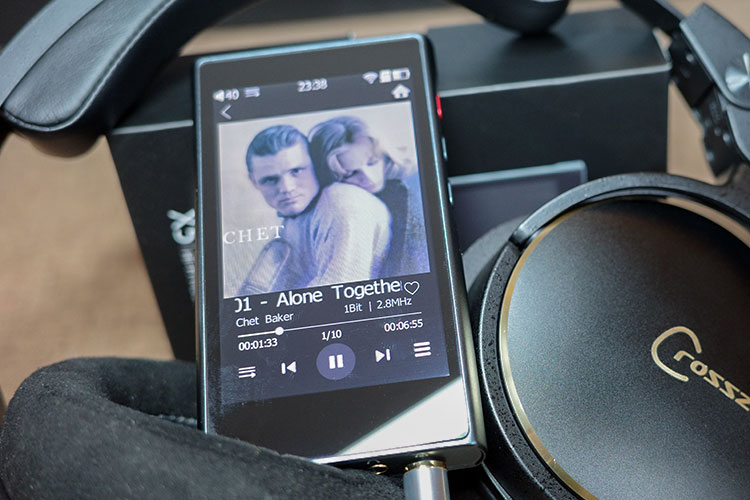
The xDuoo X5 comes across with a certain aplomb to its driving ability. Doing so without a bother, the X5 can drive many harder units, but does struggle when you move past the 300Ω limitation.
In using the SJY Horizon, I had to utilize an external amplifier, which was not the case with the 350Ω ZMF Headphones Eikon.
IEMs paired very well with the X5 and presented a black background, with no noise detected, as expected.
Power
Running the X5 alone, the unit could power pretty much everything I threw its way, except as noted above. While the 270mW rating is not much, the X5 had no issues running most of the headphones and IEMs I ran through their paces.
Only those rated above 300Ω listed maximum ran into issues, which were easily quelled when using the X5 as a standalone DAC run through a more powerful amplifier.
Pairings
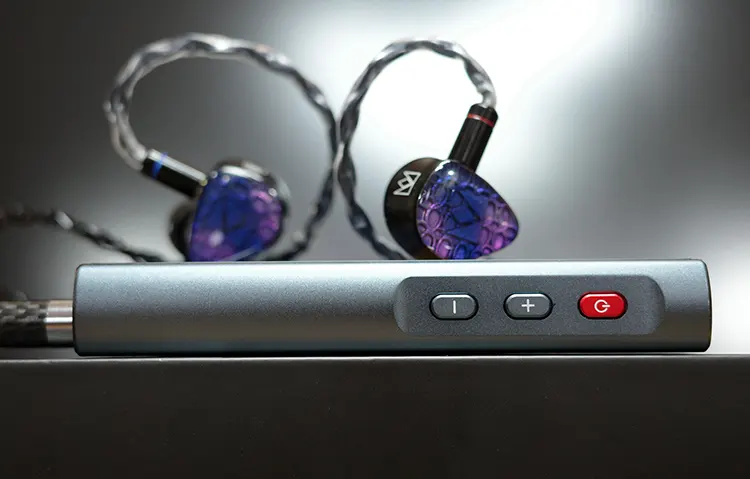
The Noble Audio Knight carries itself as slightly warm in tonality, but paired very well with the X5. This duo probably saw the most usage when running alone, which I would suspect most users will do.
The additional bass from the Knight was appreciated, and the expansion of the top end due to the X5 paired nicely with the Knight to present a thoroughly competent picture.
The SJY Horizon and Crosszone CZ-8A Enhanced were used exclusively with the X5 through the xDuoo TA-32, affording the trio very adequate power.
While I had to manually raise the volume on the X5 to max using it like a line-out, the TA-32 still had to run high gain and a volume of 50+ (out of 100) to attain adequate listening levels. And of course, raising the volume beyond that gave a very loud presentation.
The bass of the Horizon came through much like the Knight, with excellent weight and depth. The top-end reach was sublime, matching the qualities of the Horizon perfectly.
I would say that the Horizon allowed the X5 to come across as well-above its range, but the qualities offered in the X5 show that the benefit was mutual.
The Crosszone CZ-8A Enhanced could be run equally well through the X5 solo or paired with the TA-32. Running the X5 solo at 50 out of 100 afforded excellent musicality to the Crosszone, with vocals coming across as sumptuous and full.
The full natured tonality of vocals showed yet again that the X5 can play with those units bigger than expected, such as the Crosszone.
Select Comparisons
HiBy R1
Features
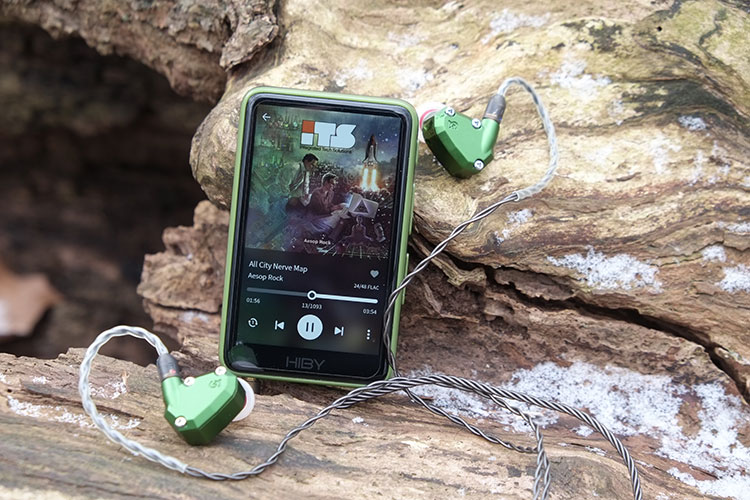
The HiBy R1 offers many enticing features, from a bright, responsive touch screen, Bluetooth 5.1, to a new HiByOS GUI skin.
Inside the translucent plastic shell is the venerable Cirrus Logic CS43131 DAC, which is the same one used in the X5, but singularly.
This helps ensure the R1 offers good sound quality while sipping power, providing an achievable 15 hours of battery life, as opposed to the 10 hours verified on the X5.
HiBy’s R1 is an approachable device from price to function to performance as a singular unit, is much the same as the X5. It presents easy-to-use technology with excellent musicality. Both “OS” systems are straightforward with a bit of customization, but the R1 provides more features.
Design
The colored buttons and screen surround with matching accents on the rear of the device avoid much of the seriousness seen in the designs of similar gear. The result is something quite similar to the no-nonsense approach of the X5, which should appeal to all, not just music purists.
Controls for the R1 are contained on the right side. Furthest up is a small power button, next a volume rocker, then another rocker for pausing and skipping to the next track, but without an option to backtrack. This is something the X5 lacks, and I do wish there were buttons for play/pause and FF/REW.
The ergonomics of both are commendable for diminutive devices such as these, and that says much thought was placed upon the engineering of usability AND functionality.
The R1 would feel more natural and be easier to use without looking if you controlled one rocker with your thumb and the other with your forefinger, versus shifting the device around to reach everything with only one finger.
The X5 seems more intuitive as a result of only having three buttons. But accessing features has to be done while the screen is active. The R1 has an LED notification light, while the X5 has no such feature.
Like the X5, the R1 features a touch screen. This 3” version has a useful maximum brightness when outdoors, nice colors, good responsiveness, and an 800 x 480 resolution that looks sharp and detailed on the small device, just like the X5’s 480 x 800 pixels.
Performance
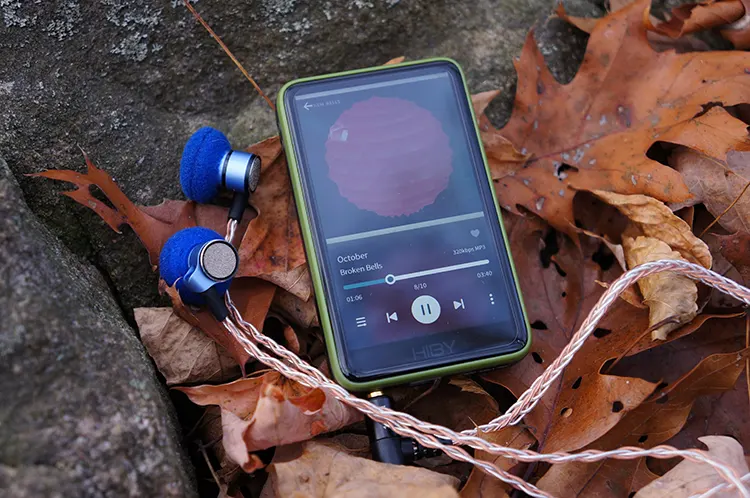
HiBy’s R1 has a nicely balanced sound with a small bias towards added mid-bass and lower midrange warmth. The X5, conversely, focuses more on the upper midrange qualities and treble extension.
Still, it’s not overly colored and pairs suitably well with everything from bass cannons to treble-heavy tunes, much like the X5.
The treble presentation is where the R1 is weakest. While it extends well and notes have a good weight, are well controlled, and have plenty of air to them, there is a digital hardness present that reduces the quality slightly.
The X5 bests the R1 with excellent extension and note weight, which comes across with a vibrancy the R1 cannot match. There is a succinctness to the top end, but not the hardness noted in the R1.
The R1’s mids lean warm thanks to the mid-bass bump, but not to the extreme, and still end up being quite balanced. Products with a lean midrange benefit from the added warmth and weight the R1’s presentation provides.
The difference is where that focus goes: on the R1, it is the lower-mids going into the bass, while the X5 focuses more on the upper reaches. The R1 also does little to alter the natural timbre qualities of a product, in a similar manner to the X5.
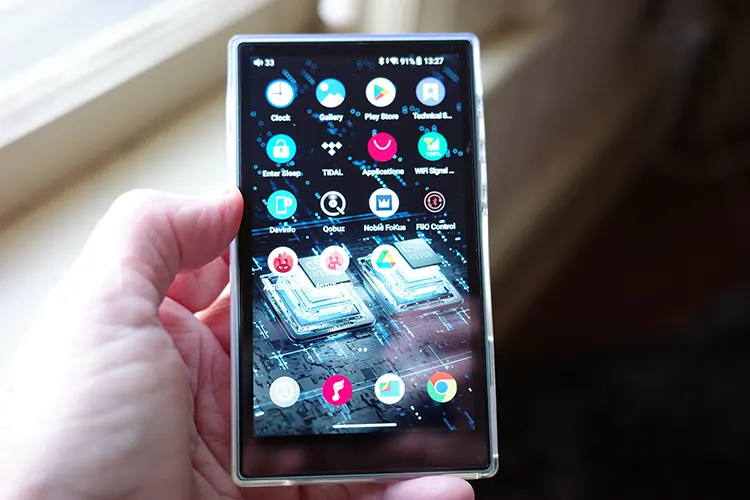
FiiO JM21
Features
The FiiO JM21 runs Qualcomm’s Snapdragon 680 8-core processor with clock response up to 2.4GHz. With only 3GB of RAM due to cost restraints, FiiO recommended only downloading music streaming apps for use.
FiiO also recommends running an app singularly for best performance. In other words, where the X5 focuses on onboard SD-card music, the JM21 is built for streaming purposes first.
The JM21 provides up to 700mW of power in balanced mode, which is much higher than the X5. It can run many harder-to-drive headphones, but is meant mostly for IEMs and headphones with easier drivability.
Three gain levels help to fine-tune your listening experience. Those gain levels are heard more readily on the JM21, whereas the X5 has little discernible difference between the two onboard.
Dual Cirrus Logic CS43198 DAC chips paired with SGM8262 op-amps run the show in either 3.5mm single-ended or 4.4mm balanced operation.
You can also use the USB-C out to another device, such as a desktop amplifier. Similar to the X5, but with a “higher” level DAC chip, functionality-wise, both are similar.
Two-way LDAC Bluetooth 5.0 (4.2 for the X5) can be used to connect a source such as your phone, then out to a powered BT set of speakers. This seems to be more and more the way manufacturers are going, and I appreciate the connectivity options.
The asynchronous USB-C DAC supports up to 384kHz/32-bit audio if you want to connect the unit to your computer or two-channel system. Again, it is very similar to the X5.
Design
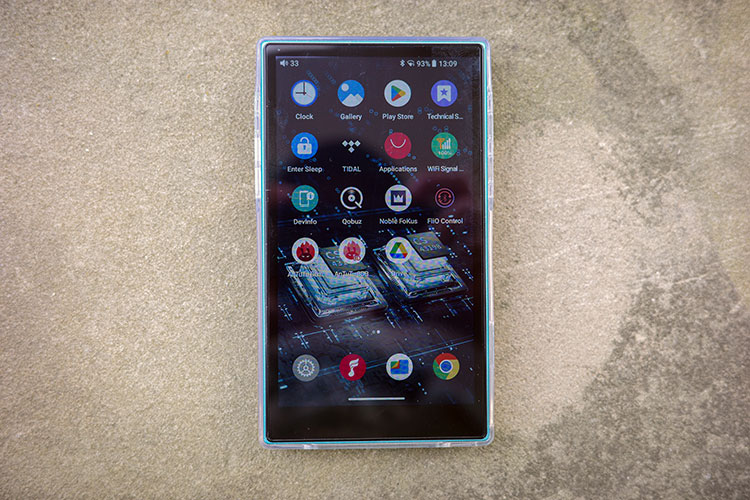
The JM21 is made of aluminum (front half) and plastic (back half), weighing a scant 156g without the included transparent plastic case. In adding the case, the total comes up to approximately 170g
Running larger than the X5, the JM21 is thin, but I like the look and feel of it, which provided easy access to the buttons (once I became accustomed to their location, more below), carrying a simple, understated look to it. I do still get the buttons mixed up while using the JM21, though.
A word about the case, though. While it does hold the JM21 in place without bother, it can be removed very easily, and I feel that longevity may be an issue.
All of the functions, including the micro SD slot, are accessible with the case on, though. To date, I have not had an issue and use the JM21 daily, but I do still worry about the longevity and protective capabilities.
The case also has a very thin top piece above the jack ports, which is right where one rests their hands. This may become an issue as I feel it is too thin.
The screen also sits above the case level, so a fall onto the front will face the whole brunt of the impact. The X5 does not come with a case, but I feel it is built to a slightly sturdier standard.
Performance
The JM21 comes across as melodic, with a nearly neutral, slightly bright signature, which is brighter overall than the X5. Even so, the slight brightness does not color the sound at all, allowing the music to carry forth on its own accord. Two approaches, both palpably enjoyable.
Notes are consistent with some peakiness, which can be associated with the tuning of certain budget-minded parts, whereas the X5 presents a more even signature.
The bass line is taut and controlled, but not especially deep, in a similar manner to the X5. A lack of sub-bass prevents overlapping bleed into the midrange, which does come across as set slightly behind both ends.
That lack of deep-reaching bass runs counter to the top end, which carries some serious push. The X5, on the other hand, excels in the midrange, tying both the lows and highs together with aplomb.
Extension is very good, with only some sibilance coming forth when the track leans towards the bright end. This never became a bother, due to the note weight and overall signature that comes across as musical, and dare I say a bit organic.
I prefer the X5 treatment up top, though. The extension carries more note weight, without denigrating the signature, nor becoming sibilant. While I appreciate the JM21 in the treble region, the X5 more closely matches my tendencies for a top-end approach.
The differences between the two lie in what the JM21 was paired with. For instance, running the Noble FoKus Apollo in TWS mode was intoxicatingly good, while using the USB-C presented a calmer, more subdued signature, which lacked a bit of detail.
Almost exactly the opposite of what I was expecting, but both represented good feedback. The X5 was much more even between the two options.
My Verdict
I used the xDuoo X10T until its battery wore out. I still have it. The sound coming forth from the X10T at the time was all I needed; such was the signature. Then streaming devices came along.
Having access readily available for our online music is a definite positive, with the ability to carry it across multiple devices.
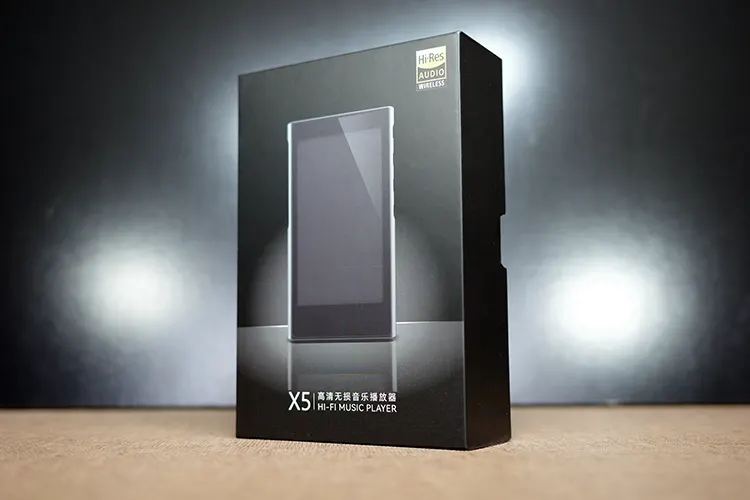
There is no denying the ease with which we can access our music. But purists may still scoff at this ability, even with music quality having jumped leaps and bounds. This is where the xDuoo X5 comes in.
You can still generally put higher-quality music onto a microSD card. But that does take up space. Using this format, you can have pretty much all of your music still readily available, but on cards.
And the sound coming forth from the X5 in a quality format is pretty much all one might need for times when streaming is not available.
No fancy treatments or equalization are needed, either. No fancy filters or bass boost to “enhance” your music. Yes, there are set EQ offerings on the X5, but listening to the music unencumbered straight from the SD card is a treat that should not be missed.
And the X5 presents that music in a manner that places it high on the list for plugging in your IEMs and headphones and simply listening.
Sure, the X5 runs a very basic OS, without much tailoring to it. And operationally, it lags behind current touchscreen standards (and lags when scrolling). But when the music starts playing, the X5 comes across with the playing ability to make one forget it is “only for SD card music.”
And when that music plays, the sound coming forth carries an expansive sound, with an evenness that allows you to immerse yourself in the listening pleasure offered.
And that is the point.
xDuoo X5 Technical Specifications
- Power Source: built-in 3.7V/2600mAh lithium polymer battery
- Screen: 3.5-inch IPS high-definition screen with a resolution of 480×800 pixels
- Operation: Multi-touch
- TF Card Support: Supports up to 1TB TF/Micro SD cards (FAT32, EXFAT, NTFS)
- Supported Music Formats: DSD: DSD64-256 (DSF、DFF、ISO), WAV: 16-24Bit/44.1k-384kHz, AIFF: 16-24Bit/44.1k-192kHz, FLAC: 16-24Bit/44.1k-192kHz, APE: 16-24Bit/44.1k-192kHz, MP3: 16Kbps-320 Kbps, WMA, OGG, M4A, AAC
- Bluetooth Version: 4.2
- Bluetooth Functions: input, Output
- Bluetooth Codes: SBC, AAC, LDAC
- USB DAC: Plug and Play
- Suitable Headphone Impedance: 16-300Ω
- Battery Life: About 10 hours
- Charging Time: About 3 hours
Output
- Unbalanced Headphone Output(3.5mm)
- Output power: 200mW (32Ω/THD+N<0.001%)
- Frequency Response: 20Hz~20kHz (±0.5dB)
- SNR: ≥115 dB
- Crosstalk: >75 dB
- THD+N: 0.001% @1kHz (32Ω @1kHz)
- Balanced Headphone output(4.4mm)
- Output power: 270mW (32Ω/THD+N<0.001%)
- Frequency Response: 20Hz~20kHz (±0.5dB)
- SNR: ≥120 dB
- Crosstalk: >115 dB
- THD+N: 0.0009% @1kHz (32Ω @1kHz)
- Line Out (3.5mm)
- Output level: 2.0Vrms
- Frequency Response: 20Hz~20kHz (±0.5dB)
- SNR: ≥115 dB
- Crosstalk: >108 dB
- THD+N: 0.001%@1kHz
