

Synergy
Efficiency
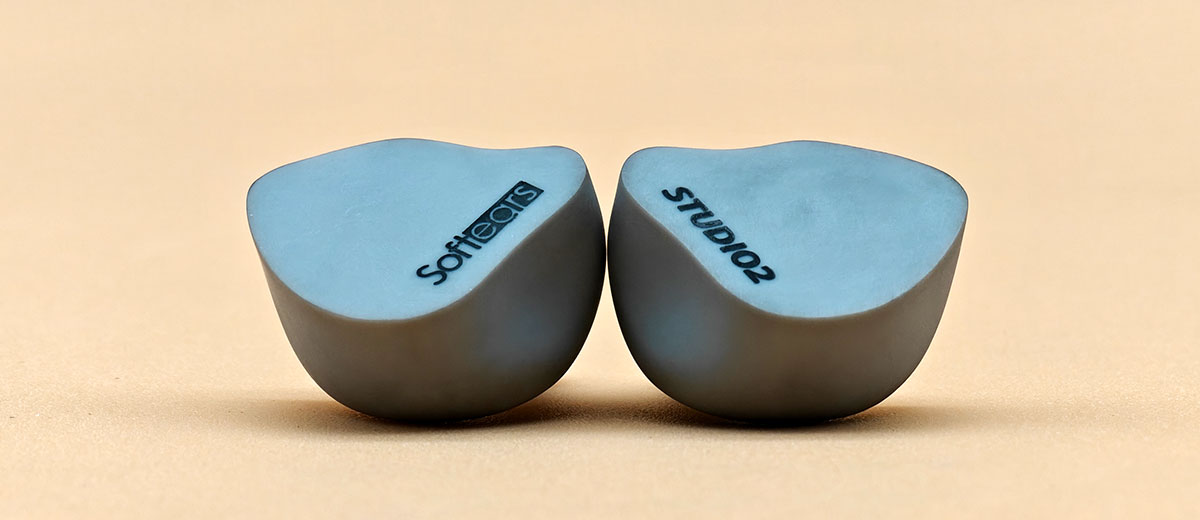
With an impedance of 86Ω at 1kHz and a sensitivity of 127 dB/Vrms, the Softears Studio 2 has a high impedance for an IEM but still reaches loud volumes easily from almost any device. There’s no need for extra power, as it performs well whether plugged into a phone, dongle, or audio interface.
Connection is handled by a standard 0.78mm 2-pin cable with a 3.5mm plug, making it simple to pair with most gear. Modular or balanced cable options aren’t included, so a third-party upgrade is needed for alternative setups.
The sound signature holds steady across all listening levels, with the midrange always at the front, no matter how quietly or loudly you listen. Quiet playback does not thin out the tuning, and increasing the volume doesn’t push the sound into harshness.
Turning up the volume keeps the bass and treble in their usual place while the midrange remains dominant. The overall style is consistent, with no surprises or shifts as you adjust the loudness.
Pairings
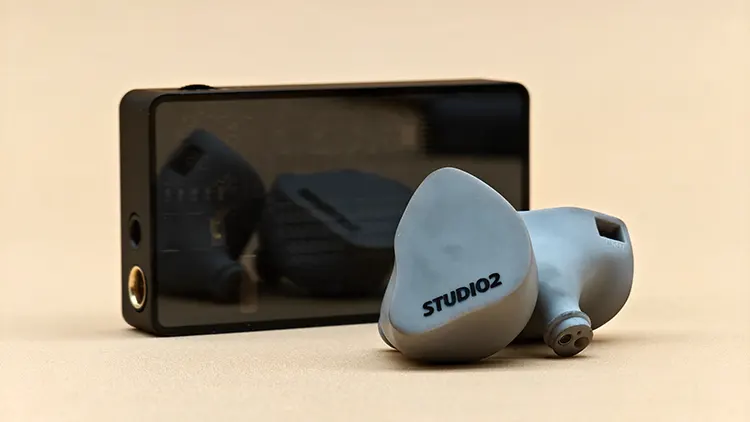
Using a phone with a 3.5mm jack as the source does not change the sound of the Softears Studio 2. The presentation remains warm and mid-focused, with no added energy or lift in the highs.
Switching to a dongle brings out a bit of extra sharpness in the hi-hats, adding a touch of needed presence to the upper range. The overall sound stays mostly the same, but percussion is slightly easier to pick out.
With the Colorfly CDA-M2, there is a mild improvement in clarity that helps details come through a little more. Even so, the warmth is still prominent, and the midrange does not lose its thickness.
Pairing the Studio 2 with the Heartfield R1 does not change the sound profile much. Since the IEM is already quite warm, the R1’s character has little effect on the overall tuning.
Select Comparisons
ZiiGaat Lush
Technical
The ZiiGaat Lush uses a 5-driver hybrid configuration, featuring a 10mm PET diaphragm dynamic driver alongside four custom balanced armature drivers.
Its dynamic driver is tuned as a dedicated subwoofer, delivering a significant bass boost focused at 20Hz, while the rest of the drivers manage the midrange and treble regions through a carefully designed crossover.
Two composite balanced armature drivers cover the mids from 200Hz to 1kHz, with the remaining two balanced armatures acting as dual tweeters for the upper treble.
A three-way passive crossover network directs each driver to its optimal range, resulting in seamless transitions and a coherent response across the spectrum.
Design
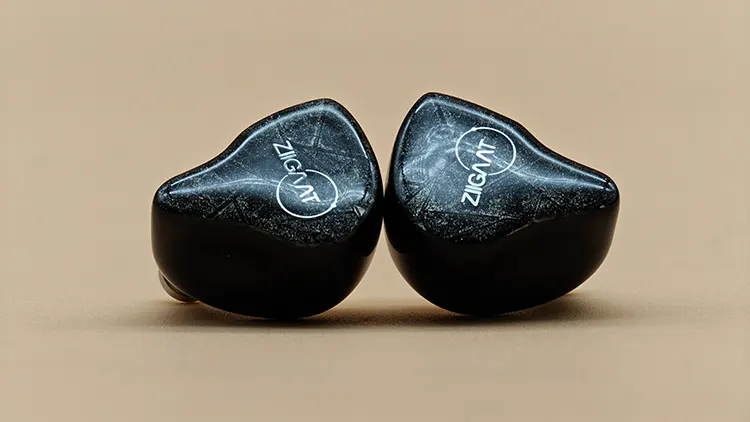
The faceplate of the ZiiGaat Lush mimics polished black granite, with metallic-gray veins running through the surface and a clear white ZiiGaat logo set at the center.
Its glossy black medical-grade resin shell is shaped with smooth, rounded contours, keeping the overall design clean and understated.
On the inside, gold-printed markings show the model name and serial number, doubling as left and right channel indicators.
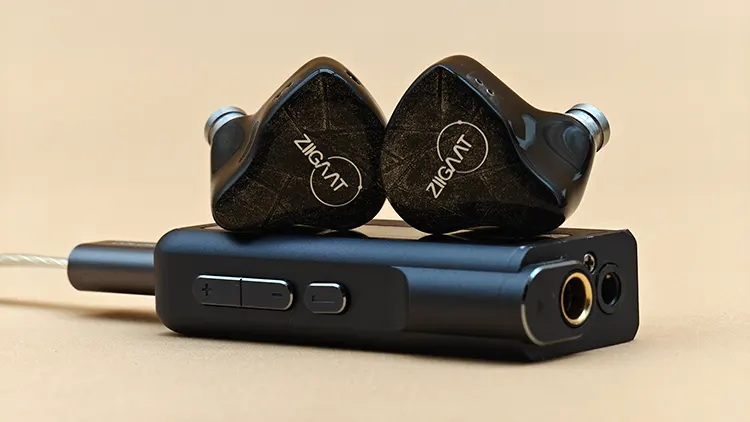
Each earpiece includes a silver nozzle with a mesh grille and tip lip, a large vent near the connector for pressure relief, and recessed 0.78mm two-pin connectors housed in a transparent mount for extra security.
Performance
Bass performance is stronger on the ZiiGaat Lush, offering real thump and kick that the Studio 2 can’t deliver. Quality is better across drums and bass lines, where the Studio 2 remains dull and lacks definition.
Midrange timbre on the Lush sounds more natural, with vocals that are clear and lifelike compared to the warm and nasally tone of the Studio 2. Studio 2’s vocal presentation feels artificial next to the more balanced and convincing midrange from the Lush.
Treble on the Lush extends further, bringing air and sparkle that the Studio 2 is missing. Cymbals, hi-hats, and upper harmonics sound more present and textured, making the Studio 2’s upper end feel even darker in comparison.
Staging, imaging, and separation are also ahead on the Lush, providing a sense of space and placement that the Studio 2 struggles with.
While Studio 2 highlights the midrange for vocalists and overall monitoring, the Lush is designed for a more engaging and well-rounded listening experience.
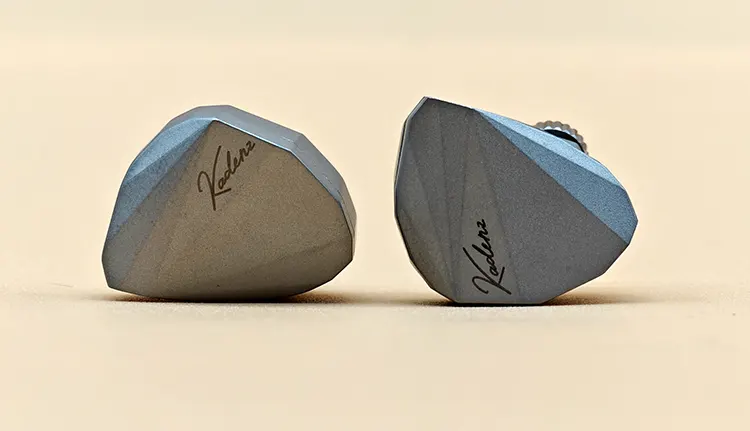
MOONDROP Kadenz
Technical
The MOONDROP Kadenz features a single large 10mm dynamic driver, building on the foundation of the MOONDROP Kato’s well-regarded driver design.
This model introduces the ULT Gen-2 super-linear dynamic driver, developed over two years with new irregular magnetic circuits aimed at improving performance.
Its diaphragm is a TAC diamond-coated dome composite, paired with an LCP base for added rigidity and durability.
This construction promises better treble extension, improved bass dynamics, and reduced distortion compared to previous designs.
Design
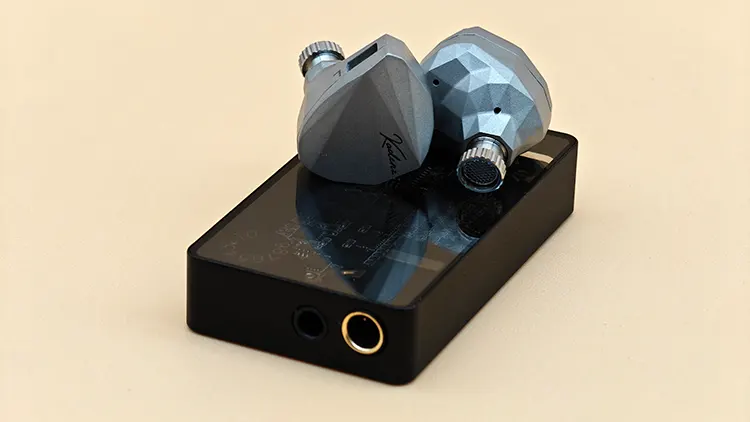
The MOONDROP Kadenz takes visual cues from the Kato but sharpens the silhouette with more pronounced edges and a thicker, sturdier feel.
The finish swaps out the Kato’s gloss for a smooth matte metal shell that resists fingerprints and smudging.
Aesthetic details include the “Kadenz” name printed in cursive, adding a premium, signature-like touch.
On the inner side, a vent helps prevent pressure build-up, and the set comes with three interchangeable nozzles, one more than the Kato offered, allowing for further customization.
Performance
Bass is livelier and engaging with the MOONDROP Kadenz, especially in the way it delivers midbass punch and energy. Studio 2 can’t match this level of excitement, coming off far less dynamic in comparison.
Midrange timbre on the Kadenz is among its strongest points, sounding natural and balanced even with a touch of warmth. Unlike Studio 2, which can feel overly thick and congested, the Kadenz keeps vocals and instruments clean and realistic.
Treble performance isn’t the most extended or sparkling on the Kadenz, but it still manages to reveal more detail and nuance than the Studio 2. Subtle elements come through more easily, while the Studio 2 often buries them beneath its darker tone.
Staging and imaging also see an improvement with the Kadenz, providing more immersion and a better sense of space between instruments. While not the most expansive, it still outperforms the Studio 2 by keeping sounds better separated and less congested.
My Verdict
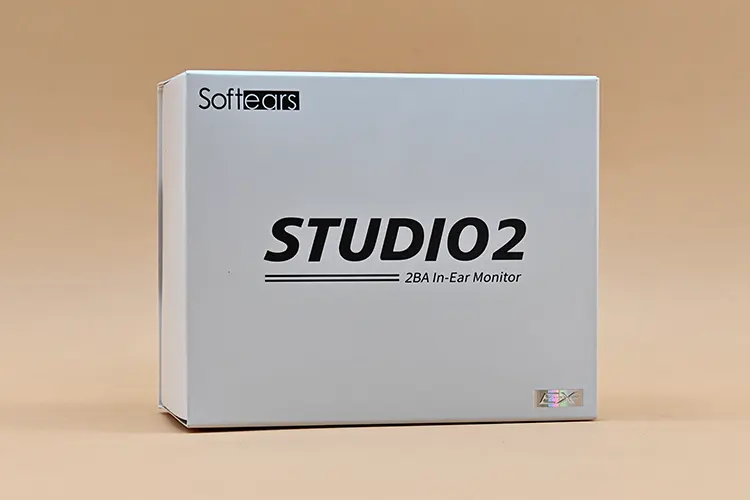
The dual BA Softears Studio 2 IEM delivers top-tier passive isolation and comfort, making it a practical choice for long sessions or stage use. Its secure fit and noise-blocking ability easily rival some of the best options in this price range.
With a focus on elevating vocals above everything else, it stays true to its purpose as the IEM for live vocalists. Its unique tuning makes it a strong option for those seeking a clear vocal presence for a reliable performance.
Softears Studio 2 Technical Specifications
- Driver Type: One (1x) Knowles 22955 balanced armature and one (1x) custom balanced armature
- Plug: 0.78mm 2-pin with 3.5mm termination
- Frequency Response: 5 – 40kHz
- Impedance: 86Ω @ 1kHz
- Sensitivity: 127dB/Vrms@1kHz
