

Sound Impressions
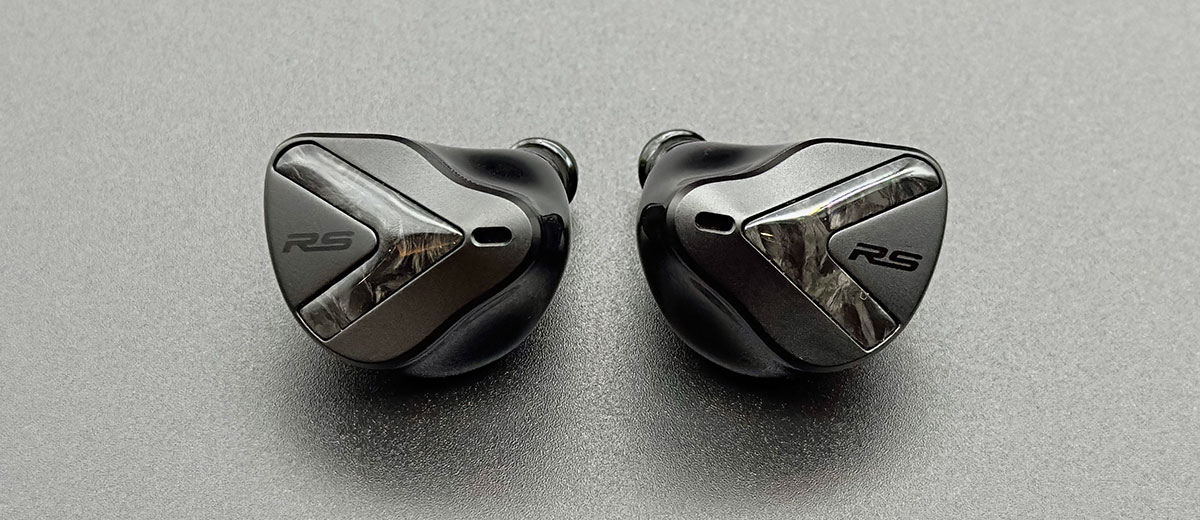
The following sound impressions of the Softears RSV-MKII were completed using a mixture of my main source, Lotoo’s PAW Gold Touch, the Questyle CMA18P, and the Campfire Audio Relay dongle. For the review, I paired the IEMs with the stock cable and Divinus Velvet ear tips, size L.
Summary
The people at Softears presumably decided to see if they could make a bass-heavy all-BA IEM, and the RSV-MKII shows they pulled it off.
The RSV-MKII delivers a warm and musical sound that is dominated by the mid-bass. The sub-bass is not very strong but remains supportive.
The midrange, as with most Softears IEMs, once again steals the show. It stands out clearly and well-separated, never lost under all that heavy bass.
There’s a slight lift in the upper midrange, which adds more texture and makes the midrange more expressive. The treble is smooth yet has enough energy, sparkle, and extension to maintain air and openness.
The technical parts are solid for the RSV-MKII to be put in the mix of its competitors. It’s not a one-trick pony, as it delivers an expansive soundstage with accurate imaging.
If you like a warm, robust low end but still want clarity up top, the RSV-MKII delivers. You get a musical, engaging presentation without losing definition or resolution.
Bass
The bass on the RSV-MKII is exquisite. For an all-BA setup to deliver such a solid low end is nothing short of a win.
In fact, it carries traits of a dynamic driver’s bass with its warmth, thickness, and the way the strikes land. The bass has decent speed, which prevents it from lingering too long, giving it good control.
The sub-bass does not have strong elevation, but you’ll still catch a gentle rumble when the track asks for it. The mid-bass, on the other hand, has greater presence and weight and is tuned slightly stronger.
If you’re chasing the kind of sub-bass that rattles ribs, you’ll probably leave wanting more. What you do get is a mid-bass that punches hard and lands with real weight, which is hard to ignore and easy to feel.
The mid-bass makes genres such as rock, hip-hop, and pop quite enjoyable. Kick drums notes hit with solid punches, and bass guitars come through with plenty of body.
However, this strong emphasis in the mid-bass region does occasionally fill up the stage. On bass-heavy tracks, you can feel it overshadowing finer details, and it may feel too dense.
At low listening levels, the bass does tend to overpower the midrange, and it may feel recessed, but with a bit more volume, the midrange becomes more present and steps forward while the bass settles into a more supportive role, something the Fletcher-Munson curves explain.
For listeners who want a strong low end, this tuning will surely appeal to them. After an hour or two, the sheer amount of low-end starts to weigh on me.
Still, even with its dominant presence, the bass steps aside just enough to let the higher frequencies shine, and that balance is where it excels.
Midrange
The midrange has always been a special sauce for Softear’s IEMs, as they mostly get the timbre and tonality right every time.
Here, you get a rich and musical tonality that feels both natural and refined. The warmth from the low end naturally flows upward into the midrange, giving instruments like piano, cello, and vocals notes offering a thicker foundation.
The timbre is executed with precision, lending the instruments a natural and convincing sound, not synthetic or dry. String instruments carry a very satisfying note weight and palpable texture.
The lower midrange sits slightly back, neat and out of the way, so guitars, pianos, cellos, and vocals keep their natural weight without picking up much thickness.
A lean, tidy lower-mid keeps the mix from ever feeling bloated or congested. Male voices keep their natural heft but never tip into chesty thickness.
When you go up into the upper midrange, there’s a subtle lift that sneaks in that enhances the presence and clarity of female vocals and instruments.
Vocals and instruments have a forward presence in the mix, popping with extra energy. RSV-MKII achieves a carefully tuned balance of lower and upper midrange that creates a musical yet detailed midrange.
Though RSV-MKII has a relaxed presentation and does not scream details. That being said, you can easily pick up subtleties, like vocal breathiness or the texture of stringed instruments.
Importantly, there is just enough extra energy to keep things lively without tiring you out. It’s a careful balance that keeps things lively but never fatiguing.
All this holds as long as the bass stays within its limits. When the bass becomes too dominant or the tracks are heavy, the midrange can feel slightly recessed or lose some of its presence. Otherwise, the midrange consistently manages to impress.
Treble
The treble on the RSV-MKII hangs back a little, happy to play sidekick to that big bass and a musical midrange.
It’s tuned for balance, not the spotlight, so everything feels coherent and easy on the ear. When heavy bass passages kick in, some air does get masked, which is expected, yet the treble never completely fades away.
Smoothness is the defining trait here. There’s no quest for microscope-level detail, yet it never slips into boredom. Instruments sound and treble notes resolve with a natural tonality, carrying just enough sparkle to keep the mix lively.
The transition from upper midrange through lower treble and up top remains seamless, so you won’t be surprised with any exaggerated peaks or excessive harshness that could make instruments sound out of place. The treble favors fatigue-free, long listening sessions.
For long sessions, this smoothness works in its favor. You can still pick out all the details as the treble notes resolve well, but they blend into the mix instead of being spotlighted.
Admittedly, the RSV-MKII does not deliver the high degree of airiness or sparkle that treble enthusiasts might seek. Honestly, I cannot label it dark either.
You won’t miss the sense of openness, as the recordings sound natural and avoid congestion, but, indeed, it never floats into ultra-airy territory.
Staging & Dynamics
The RSV-MKII projects a soundstage with great depth, but the width is not one of those ultra-stretched ones. The soundstage spans naturally wide, along with a good height.
The front-to-back layering on the stage comes across really well, and instrument placement is very accurate.
The soundstage doesn’t feel congested unless the tracks are quite heavy or fast-paced; otherwise, the stage feels relaxed, and instruments have enough space around the vocals in the center.
The RSV-MKII presents detail in an unfussy, natural manner where nothing feels forced or exaggerated. Resolution is solid; micro-details are present and accounted for, but they’re delivered smoothly, without that sharp, fatiguing edge some IEMs bring.
The sound signature definitely favors musicality over clinical, hyper-analytical precision. Imaging is precise enough for accurate placement, though it doesn’t carve out notes with surgical sharpness.
The RSV-MKII is more about drawing you into its natural stage and smooth resolution than overwhelming you with hyper-sharp detail from a distance.
The RSV-MKII handles macro-dynamics with confidence, largely thanks to its big, bold mid-bass. Big dynamic shifts, such as those in the punch of a kick drum, an orchestra ramping up, or an EDM drop, all land with impressive heft and authority, so the music always feels like it’s gripping you tight and keeping you engaged.
Micro-dynamics, though, stay easy-going. Subtle changes, such as the small expressive details and breathiness in vocals or the delicate pluck of guitar strings, are there if you listen, but they don’t jump out with microscopic clarity.
Synergy
Efficiency
The Softears RSV-MKII has an impedance of 7Ω @ 1 kHz and a sensitivity rating of 122 dB/Vrms.
The IEM will sound good straight out of most portable sources, even from low-power devices like smartphones, dongles, or basic DAC/amps.
With a few volume clicks, the RSV-MKII gets fairly loud. It does not demand a lot of power and scales more with the quality of the source rather than raw power.
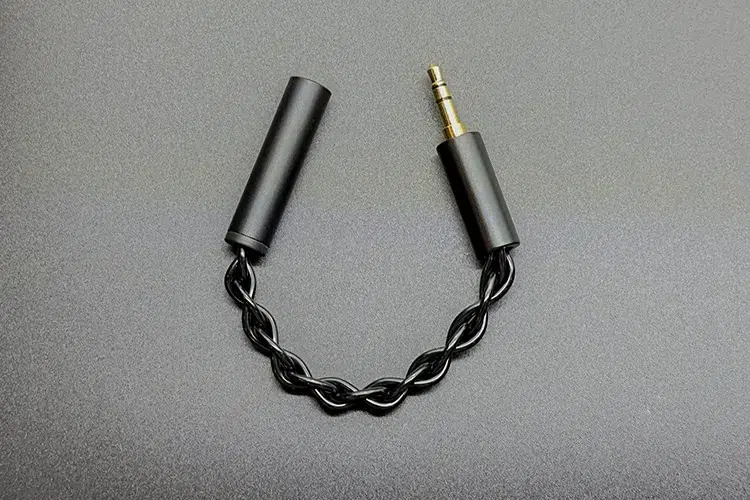
However, I did spend a decent time listening to the RSV-MKII out of my iPhone through the lightning dongle and the included 4.4mm adapter, and it did not disappoint me at all.
As expected, some of the refinement felt missing; other than that, it sounded really full and rich. On my LPGT, it takes around 30 volume clicks.
Out of curiosity, I paired the RSV-MKII with the Questyle CMA18 Master, a powerful desktop DAC/Amp, and it barely asked for a touch of the volume knob, hardly staying at one or two clicks, suggesting the RSV-MKII does not need such heavy-duty sources.
The RSV-MKII pairs best with a neutral source. Any extra warmth in the source can potentially make it feel a bit muddy and congested in presentation.
Source Pairings
On the Relay dongle, equipped with the AKM SEQ 4493 DAC chip, the pairing leans heavily on the bass side while the midrange keeps its musicality intact.
The treble does take a back seat, but it’s not a dark affair either, as it still delivers the essential nuances.
Relay gives a subtle boost in the sub-bass, which adds gentle fullness and favors the bass with decent texture. It also imparts an analog warmth to the overall tuning, more of a tube-like hue than a muddy smear.
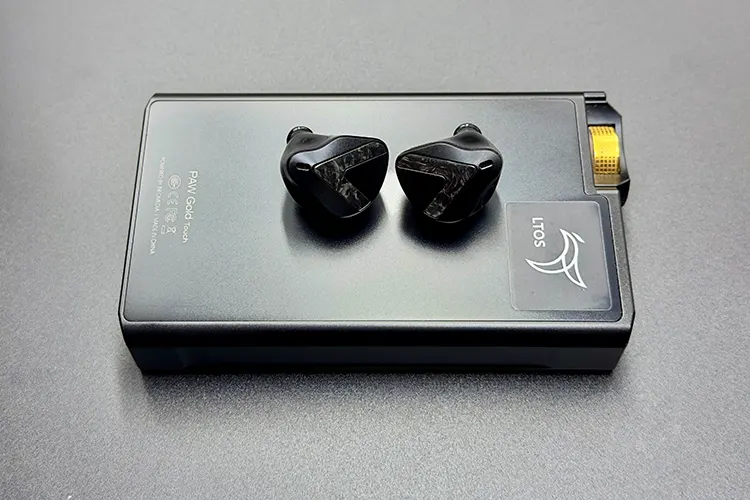
On the PAW Gold Touch, the RSV-MKII shows its full potential. The LPGT is still not a dead-neutral source, as the bass carries a little more fullness, and there is added warmth and weight in the lower midrange region, which I would prefer to avoid with the RSV-MKII.
Still, the source brings a lot of refinement to the sound and spreads the stage a bit more in width. There is nothing to complain about in the midrange, as it remains full of emotion and maintains its detail.
In the treble region, there is a very subtle boost that lets detail flow without sacrificing smoothness.
The EarMen Angel makes a really good pairing for the RSV-MKII. Out of the 4.4mm balanced output, the sound is almost neutral with a slight hint of brightness. This helps clear up the additional warmth I get from other sources.
However, the level of detail is not as strong as with the LPGT, though the added sense of air and sparkle in the treble region is certainly a delight.
In the midrange, the Angel sacrifices some musicality but improves resolution. Busy tracks with lots of treble are where the Angel struggles, as notes overlap and blur into each other, masking detail. With lighter tracks, however, it remains enjoyable, nonetheless.
