

Synergy
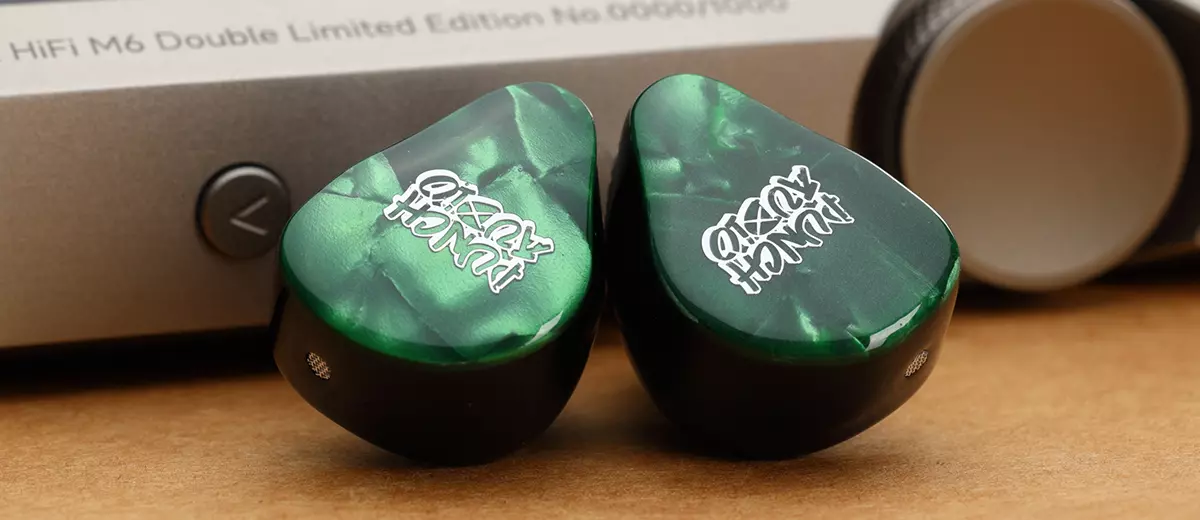
On my days listening to the Portazo, during a walking exercise, on the mall, at a café, or at home, I’m happy to report that the Portazo didn’t amplify high noise floors in all the sources I paired it with.
The cable never picked up any radio frequency interference, and the Portazo is not sensitive enough to allow the sources’ noise floor to be heard.
The average impedance of IEMs and headphones for consumer use is around 32Ω; the Portazo has 10Ω, which presents a load about three times as heavy for the source.
But despite that, the Portazo never caused any audible difficulty with any of my sources, including smaller dongle DACs not included in this review, and the MUSE HIFI M6 Double in its tube output mode, which would struggle with difficult-to-drive IEMs, but not with the Portazo.
On paper, the 10Ω impedance and the basshead tuning would suggest a difficult-to-drive IEM. In actual use, I never noticed any unusual behavior from the sources and feel Portazo is efficient.
Pairings
The Portazo is not a very revealing IEM; it is, in fact, quite forgiving of deficiencies and subtle differences between the sources.
However, I can still discern the difference in tonality of each source, and fortunately, they never induce any shoutiness or peakiness with the Portazo.
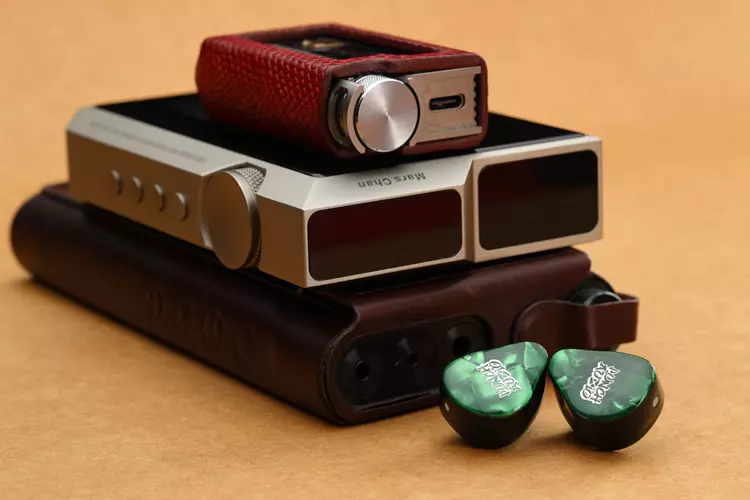
I noticed the tremendous bass presence and tightness with the FiiO M15S, thanks to its 1000mW output and high damping factor.
With the iBasso DC-Elite, I heard a mild U-shaped sound signature, with slight energy in the lower bass and upper treble.
There is a noticeable loss of subbass and a slight attenuation in the upper treble in the MUSE HIFI M6 Double in tube mode, making the sound more neutral and warmer.
I can turn the volume up to make the sound very loud without audible distortion.
The Portazo’s relative ease of drivability and efficiency make it a good pairing for just about any sources I tried. I can safely say, in terms of finding the source pairing for best sound quality, the Portazo is not finicky.

Selected Comparisons
I use my usual sources for review: the iBasso DC-Elite, MUSE HiFi M6 Double, and FiiO M15S for this comparison, and I often switch between them.
Still, I use the iBasso DC-Elite most of the time because I can discern differences more easily with its detailed sound.
Tipsy M3
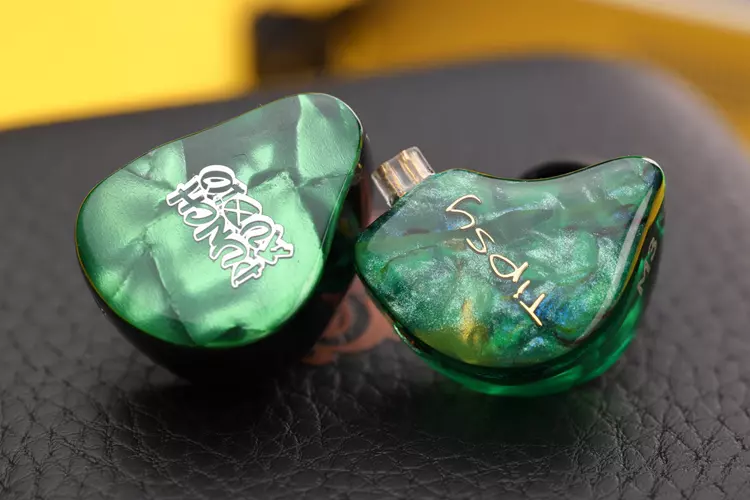
The Tipsy M3 is a recently released IEM: it was released in August 2025 and is a triple-driver hybrid set like the Portazo, but with two balanced armatures instead of planars.
Technical & Design
The M3 features a 9.2mm titanium-coated dynamic driver and dual custom balanced armatures with an independent tri-band acoustic partitioning design for each driver to ensure precise separation between lows, mids, and highs. The M3 has an impedance of 17Ω and a sensitivity of 105 dB/mW.
The M3 looks like the Portazo and uses 3D-printed shells with a randomly patterned faceplate. My M3 review sample came in green; however, it is also available in black/white and red.
For an extra $70, you can customize the faceplate with over thirty colors and the shells with ten colors, as shown on Tipsy’s website.
The M3 includes a 3.5mm plug, a 0.78mm 2-Pin Interface, made with Quad-Braided High-Purity Alloyed Copper Cable.
Performance
The M3 has this classic V-shaped sound signature, with boosted bass and treble and an apparently recessed midrange. While the Portazo has this modern basshead tuning, where the subbass and midbass are overtly boosted, the midrange is neutral, with some upper treble boost.
For staging, they are about equal in performance; they are both spacious-sounding. However, the M3 has a slight edge due to its slightly wider soundstage.
In terms of imaging, the M3 has more defined edges and more accurate placement, with better separation and layering, making the overall soundstage sound more holographic. The difference is small, though.
Both are about equal in dynamics; however, the M3, being a V-shaped tuned IEM, has more upper-midrange and lower-treble energy, giving it a snappier-sounding midrange. Therefore, the M3 has a slight dynamic advantage.

DITA Audio Project M
The DITA Audio Project M was released in the third quarter of 2023 and has since been one of DITA Audio’s most popular IEMs. I like the sound of Project M, so I bought my own set after hearing a review sample.
Technical & Design
The Project M is a dual driver hybrid set consisting of DITA Audio’s PM1+ Driver, a 9.8mm custom-built dynamic driver, and a single Knowles Balanced Armature Driver. Project M has an impedance of 32Ω and a sensitivity of 107 dB/mW.
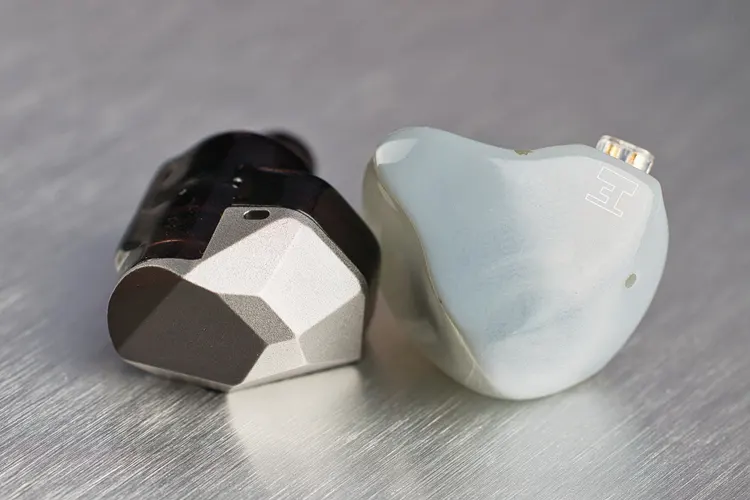
Project M’s shell is fully made of 3D-printed resin, with a metal nozzle. It is primarily available in a clean resin shell, but DITA Audio later released candy gray and candy pink versions.
The Project M is equipped with the MOCCA cable, which uses conductors made by Cardas in the USA.
The 2-pin, two-core cable is fitted with a modular plug system that includes 3.5 and 4.4mm plugs. I like that Project M provides glow-in-the-dark ear tips.
Performance
Project M has an overall brighter sound with lighter note weight, with slightly boosted but neutral bass, neutral midrange, and apparently boosted, airy upper treble, compared to the darker, warmer-sounding Portazo, which has much more boosted bass, neutral midrange, and slightly boosted upper treble.
Regarding the soundstage, Project M is apparently bigger, with a wider, deeper, and higher stage. Project M also has cleaner background decay, while Portazo trails, but it is not too far behind.
I also find the imaging with the Project M, though not the best I’ve heard, far from it, is slightly better than Portazo’s due to having cleaner spaces between instruments and a cleaner background.
Though both the Project M and Portazo sound dynamic and energetic, the Portazo is apparently more so, thanks to its dynamic and efficient bass response; the Portazo sounds livelier overall.
Kiwi Ears KE4
The Kiwi Ears KE4 is one of the IEMs that popularized the “new meta” tuning style, characterized by a warmer, fuller sound compared to the traditionally popular Harman tuning, to make the sound universally pleasing to most people.
Technical & Design
The KE4 is a hybrid featuring a 2 Dynamic Driver isobaric sub-woofer system, combined with 2 Balanced Armature drivers.
It includes a customized RAD 33518 BA driver with enhanced ventilation. The KE4 has an impedance of 28Ω and a sensitivity of 102 dB/mW.
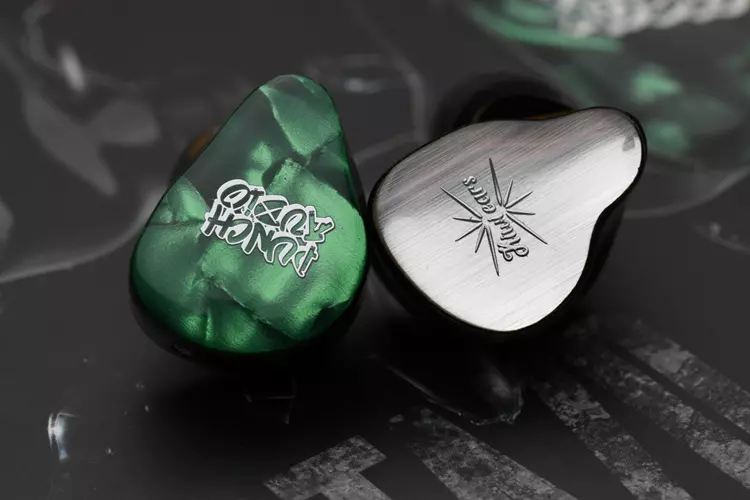
The KE4’s design is simple and understated. The black 3D printed resin shell is ergonomically shaped, and the silver faceplate with the Kiwi Ears logo completes its look.
There is a small vent near the metal nozzle and a bigger vent near the flush-mounted 2-pin connector.
The KE4 includes a gunmetal-colored four-core detachable cable with a 3.5mm single-ended termination. There is no 4.4 mm balanced version available.

Performance
The KE4 is a bassy, warm, and relaxed-sounding set with its boosted subbass, warm midbass, relaxed upper midrange, and relaxed but extended treble response.
In comparison, the Portazo has a more aggressive presentation with its ballsy sounding bass and more forward upper treble presence.
In terms of sound staging, both have about equally sized stages, but I find the KE4 has more accurate staging with more defined, cleaner imaging.
The KE4 has cleaner background decay, making for better separation, layering, and holography.
Regarding dynamics, Portazo is apparently more dynamic and energetic-sounding, with greater contrast between quiet and loud passages.
I also find Portazo louder when I give it more power, as the KE4 sounds slightly compressed at high volumes.
My Verdict
Is the Punch Audio Portazo a muddy-sounding basshead-tuned IEM with bloated bass?
Not at all, in fact, I was so delighted upon first listening to the Portazo, which has an extended yet clean, dynamic, and reasonably fast bass, and a clear midrange and treble that is never drowned out by the overt bass boost.
I appreciate that, despite the three-driver-per-channel hybrid set, the Portazo has an excellent channel balance on my test, reinforcing Punch Audio’s claim that every driver has been tested and the IEMs measured for tight channel matching.
I also like that the Portazo is efficient and can go loud easily, even with a small dongle DAC, which is good news considering most basshead IEMs are hard to drive and require turning the volume up for normal listening.
However, I must say that the Portazo is not a versatile IEM, as it won’t sound very good with songs that aren’t recorded with much bass.
I hear the bass calling too much attention to itself and sounding distracting, destroying the delicate balance of the music, especially with vocal- or midrange-centric music.
Overall, the Punch Audio Portazo is a fun-sounding set, especially with the right music, including modern pop, EDM, rap, and other bass-heavy music, and deserves the attention of bass-loving basshead audio enthusiasts or music lovers.
Punch Audio Portazo Technical Specifications
- Style: In-Ear
- Sensitivity: 102 dB
- Impedance: 10Ω
- Distortion: 0.015%
- Frequency Response: 20Hz–35kHz
- Driver Configuration: 1 dynamic driver + 2 Planar drivers
- Cable Length: 1.25m (±0.2m)
- Connectors: 3.5mm unbalanced/ 4.4mm balanced
- Weight: 4.3 grams each
- Nozzle diameter: 5.9 mm
