

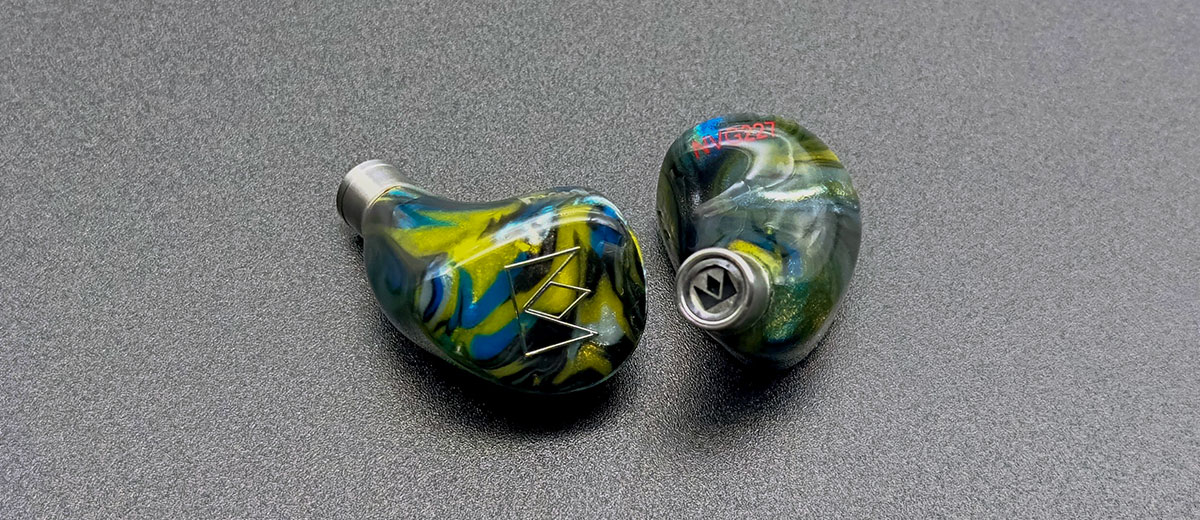
Synergy
Efficiency
The Van Gogh has an impedance of 29Ω and a sensitivity of 107 dB. It can be driven comfortably by most sources, from small dongles to smartphones and compact DAPs.
I find it needs a few extra volume clicks, and more powerful sources do it more justice. A stronger, more capable source adds dynamics and gives the Van Gogh a more refined sound.
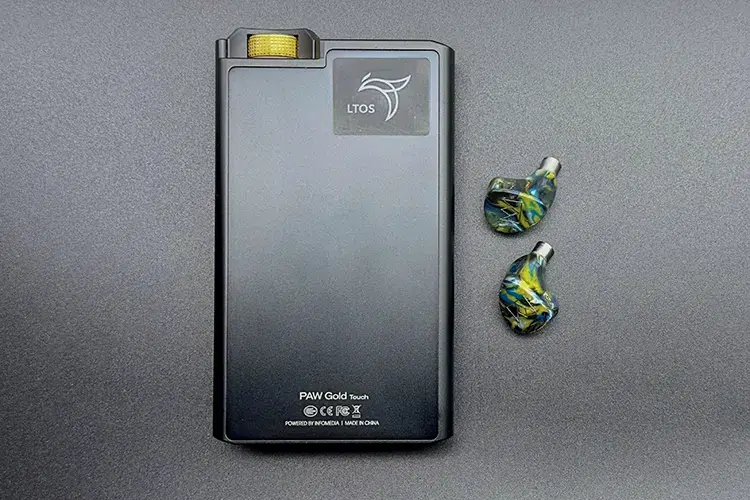
On weaker sources, the upper frequencies can sound a bit thin. On my Lotoo PAW Gold Touch, it takes more than 35 volume steps to reach a comfortable level. Sometimes I push it past 40 when I want a bigger, more thunderous presentation.
The Van Gogh is not fussy with most sources I tried. It pairs nicely with neutral sources. With warmer sources, the bass and lower mids can get a touch bloated. A bright source can push the treble slightly forward and make the sound a bit less coherent and a little spicier.
Source Pairings
The pairing with the Campfire Audio Relay dongle did not impress me much. The bass presentation is quite tasteful; however, the treble region feels a bit muted and does not feel alive.
In the bass region, the Relay adds warmth overall and some extra body to the sub-bass and adds blanket-warmth that Van Gogh never asked for. Nothing wrong with the bass that would irk you, but a reminder that a more neutral source would be the best to pair.
The midrange does not have a lot of warmth and maintains a natural feel. The upper midrange remains expressive enough to give you a good result.
The treble, however, comes off a bit mixed up, with notes not resolving enough. As mentioned earlier, the treble is not the best part of Van Gogh’s tuning; thus, it takes more of a backseat here.
On the PAW Gold Touch, the Van Gogh gets its real due. It brings out a more balanced, more resolving sound, which makes the Van Gogh quite enjoyable, hinting that Van Gogh may need a decent source to sound more refined.
The bass just gets slightly more body, helped by Van Gogh. The midrange is full of emotions and hits the right spot of musicality. The clean timbre and solid resolution help the midrange flourish on this pairing.
Treble finds its missing spark. It is still smooth, still non-fatiguing, but now with enough air and sparkle to make the music come alive. Stage stays intimate in width yet digs deep from front to back.
The instruments have enough space around them, giving an open presentation even on complex tracks. Overall, it’s the pairing that convinces me, giving the best picture of what Van Gogh has to offer.
Select Comparisons
Softears RSV-MKII
Technical
The Softears RSV-MKII is the new version of Softears’ widely acclaimed IEM, the RSV, which was originally launched in early 2021.
The IEM houses five balanced armature drivers, all from Knowles. For the low end, there are two Knowles CI-series drivers.
The midrange is handled by a Knowles ED driver, while the high frequencies use a composite Knowles SWFK driver. It features an upgraded 4-way crossover with four independent acoustic tubes.
The RSV-MKII is very easy to drive and fairly sensitive at 7Ω and 122 dB @ 1 kHz SPL. The Van Gogh needs a few extra volume clicks to sound full.
Design
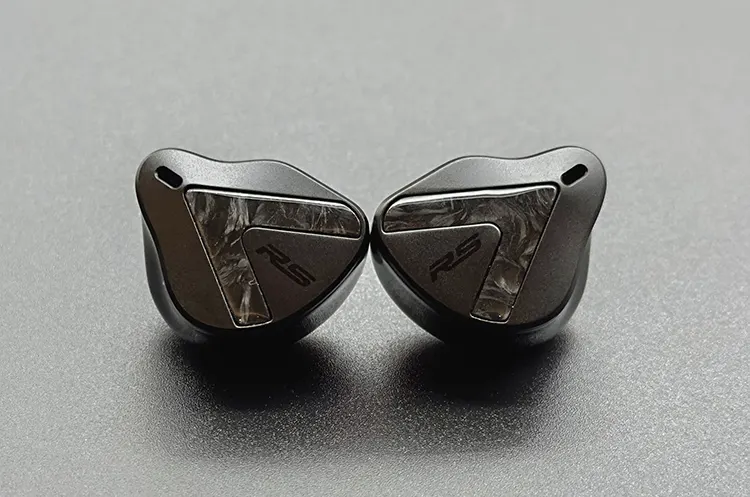
The RSV-MKII is built in an all-black theme, with a medical-grade resin body and an anodized aluminum alloy faceplate.
The faceplate has a matte finish and is shaped with CNC machining, giving it a robust feel. The shells are quite large compared to the tiny Van Gogh.
Fit-wise, I don’t see issues with the larger RSV shells, but for smaller ears, the Van Gogh will fit a lot better.
In terms of design, I prefer colorful shells, so the Van Gogh is more appealing to my eyes. That said, the minimal look of the RSV-MKII is not bad, and the solid build gives it a premium touch too.
Softears packs the RSV-MKII in a compact, clean package that feels thoughtful. It also includes more accessories, especially the carry case that you’ll miss with the Van Gogh.
For the cables, I’d call it a tie on which one I prefer. Both IEMs use a standard 2-pin connection system.
Performance
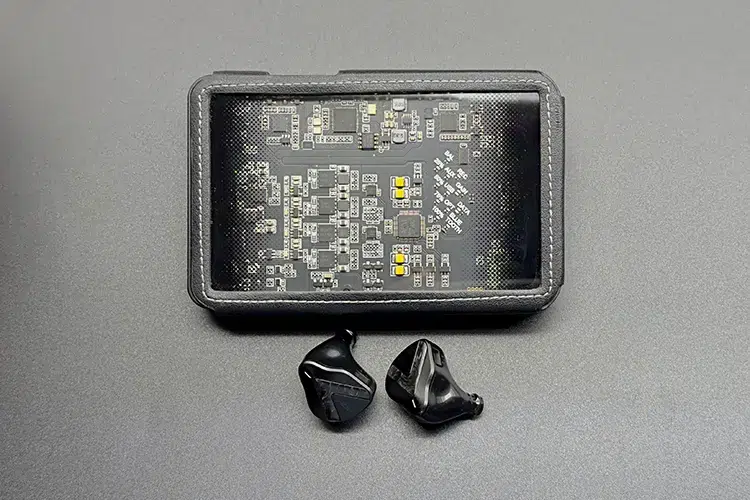
The Van Gogh has more sub-bass presence yet stays disciplined. It hits hard when called for, then gets out of the way. Even on heavy bass tracks, it does not swamp the mix.
The RSV-MKII leans on mid-bass weight. It sounds warm and full, but that extra body can creep up on busy songs and make the center feel a touch thick.
Texture and grip are good on both, but I find the Van Gogh bass more enjoyable because it keeps the groove without crowding the rest.
Midrange is the RSV’s special sauce. Its mids are accurate and honest, with just the right warmth and a hint of neutrality. Vocals sit true and steady. On dense arrangements, though, that mid-bass body can put a light veil over the mids.
Van Gogh’s mids are a shade warmer and more relaxed. They feel natural and present, not recessed, with a pleasing weight on guitars and male vocals. It is less clinical than RSV, more about flow and tone than microscopic detail.
Van Gogh steps ahead here. There is more presence and air, and cymbals carry a cleaner sparkle. Transients feel snappier, and room cues are easier to catch. RSV keeps treble safe and smooth. It is fatigue-free but can sound a bit reserved up top next to the Van Gogh.
Resolution is close. RSV pulls slightly more inner detail in the mids. Van Gogh pushes a stronger macro contrast and sounds livelier.
Staging differs: RSV feels a bit wider and a touch taller. Van Gogh is more intimate in width but reaches deeper and keeps layers tidy. Imaging is decent on both, with Van Gogh drawing slightly sharper edges.
Choose RSV-MKII if you want light warmth and midrange truth, or Van Gogh if you want impact, air, and a more engaging, fun tilt that still keeps its balance.
Alpha Omega Ra
Technical
The Alpha Omega Ra universal IEM has a tribrid multi-driver configuration. There are 7 drivers with a 4-way passive crossover: one 10 mm dynamic driver, four Sonion BA drivers, and two Sonion EST drivers.
The beryllium-plated 10 mm dynamic driver handles the low frequencies. A dual BA set covers the lower mids, and a second dual BA set covers the upper mids. The final two EST drivers take care of the upper treble.
There is a proprietary air-venting system that allows maximum airflow for the dynamic driver, noticeably extending the low end.
The Ra has an impedance of 28 Ω @ 1 kHz and a sensitivity rating of 105 dB/Vrms. It is harder to drive and requires a good amount of power to sound full. Van Gogh is more convenient in pairing with a variety of sources, as it does not demand that much power.
Design
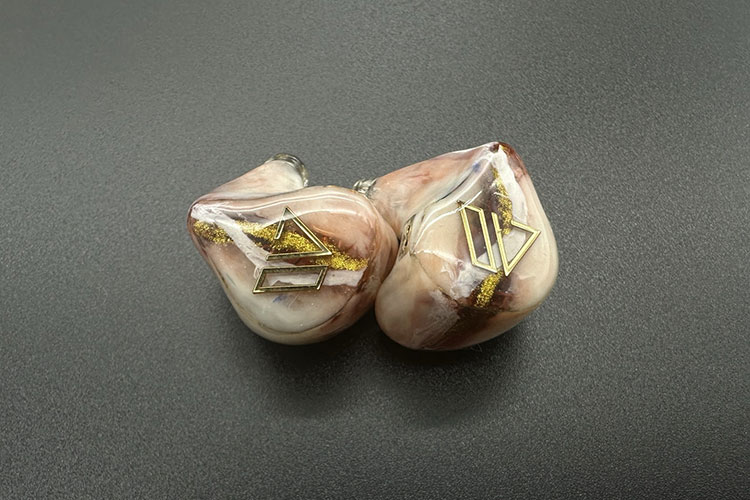
The Alpha Omega Ra uses resin shells that feel strong and durable. The shells are medium in size and hand-painted. The brand also offers custom color options if you contact them.
The shells are larger than those of the Van Gogh; however, the custom-inspired shape is very ergonomic and gives a good fit. Both IEMs have hand-painted designs with nice depth to the finish.
The resin shells on both IEMs feel very durable. Ra has a large nozzle, so pairing ear tips can be a bit of a struggle. Nevertheless, both IEMs work well with the same tips.
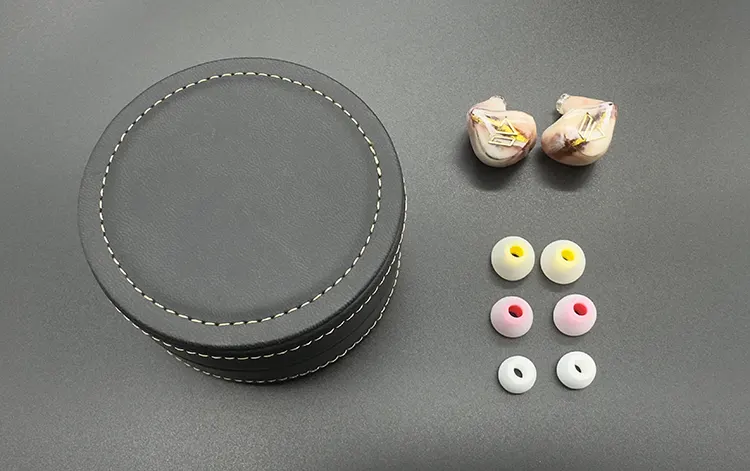
In terms of accessories, both come in a handy box and are packed nicely, but the Van Gogh offers a carry pouch instead of a carry case, which feels like a miss for the price. Both stock cables are well built, and I cannot pick one over the other.
Performance
Both chase musicality with a smooth top end, but they land in different places. Ra has very deep sub-bass, yet the Van Gogh goes bigger.
Van Gogh brings more sheer rumble and slam, with a denser “floor” under the mix. It’s the weightier, more physical listen and touch of bloom and extra warmth.
The Ra counters with better discipline: some goodness of a dynamic driver decay, tidier edges, and less mid-bass hangover. It reaches a very satisfying depth, but it’s shaped and controlled, so bass lines separate more cleanly on busy tracks.
The Ra runs cleaner and less warm. The lower midrange is trimmed just enough to keep warmth from clouding detail, and the rise into the upper midrange gives vocals and strings clear focus without shout.
The Van Gogh is fuller through the lower midrange and warmer overall. The upper midrange has better presence. It also has a better resolution and carries a touch more energy to keep the mix livelier.
Van Gogh’s treble feels more refined and airier of the two, but by a small margin. The little boost in the treble region helps, and the details pop out with less effort.
The Van Gogh keeps the treble polite and slightly more relaxed; there’s air and sparkle, but it favors comfort over bite. Ra may have less of those sparkles and energy, but feels more coherent in its approach.
Resolution and micro-detail: there is almost a tie here. On the Van Gogh, imaging snaps into place a bit sharper, and the stage shape feels more open with good vertical height. Ra is more intimate in stage width, but the front-to-back depth is better.
The Van Gogh answers with stronger macro-dynamics and depth; it’s more “live” in impact and gives more space to instruments. Ra’s coherency, along with the musical touch, works in its favor.
THIEAUDIO Oracle MKIII
Technical
THIEAUDIO’s Oracle series is well regarded as an affordable tribrid studio IEM line. The Oracle MKIII was released last year with a 2DD + 2BA + 2EST configuration.
It uses two ultra-high-frequency drivers, one high-frequency driver, one mid-frequency driver, and two low-frequency drivers, with a 4-way crossover system. The MKIII also utilizes IMPACT2 technology for its low end, a feature that appears in many of the brand’s premium releases.
The Oracle MKIII has an impedance of 13Ω at 1 kHz and a sensitivity of 99 dB @1kHz. It can be driven comfortably by lower-power sources such as dongles and smartphones.
Like Van Gogh, it also benefits from a bit more power. On my Lotoo PAW Gold Touch, both IEMs sit around volume level 35.
Design
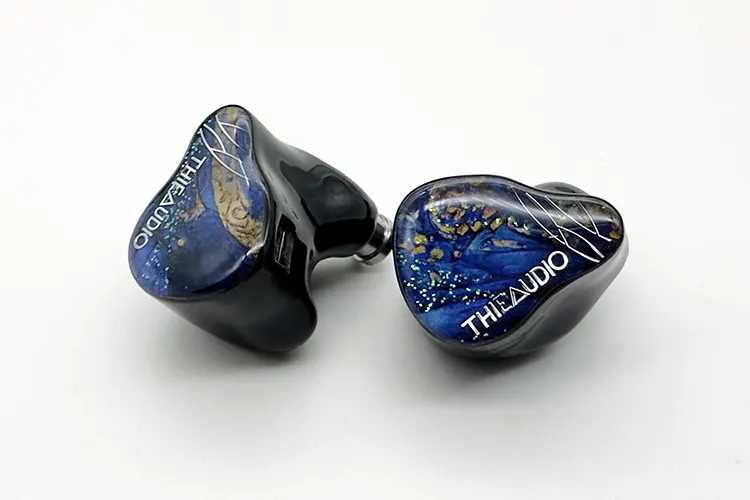
The Oracle MKIII features resin shells with a sleek, all-black look. The faceplate stands out with an intricate yet minimalist design, showing a deep blue base accented by light brown patterns.
The shells are larger than those of the Van Gogh but still offer an easy fit. The Oracle MKIII also features a metal nozzle, though it is a bit smaller in size. The Van Gogh is so tiny that there are hardly any other mid-fi IEMs this small.
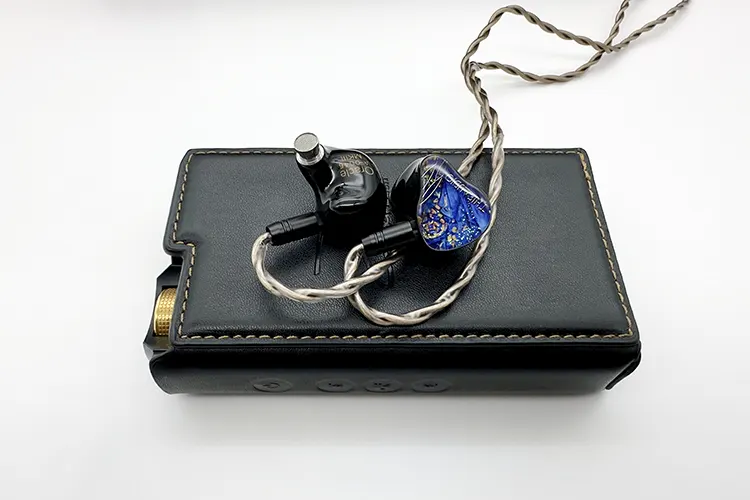
Both IEMs connect via a recessed 0.78 mm 2-pin socket. The Oracle MKIII includes a high-grade silver-plated OCC modular cable that lets you choose between 4.4 mm, 3.5 mm, and 2.5 mm plugs. This cable does not offer anything clearly better than Van Gogh’s stock cable.
Performance
The Oracle MKIII runs leaner and tidier in the low end. Sub-bass digs deep but stays in line, with clean edges and quick decay. It’s tighter and has a better-controlled presence in the mid-bass region.
Van Gogh brings more body, especially with its heavy sub-bass, but without tipping into bloat. It hits hard with loads of volume when the track calls for it, then gets out of the way.
Even on bass-heavy songs, it hardly veils the higher frequencies. Oracle’s low end is a bit more detailed.
The Oracle MKIII is more neutral in the midrange. It focuses on clarity and precision, placing vocals and instruments with a studio-like cleanliness. You hear separation first, warmth second.
Van Gogh is more forgiving. It balances resolution with a touch of sweetness, carrying a natural weight in the lower midrange. Guitars and male vocals feel fuller and lusher. Oracle shows more inner detail and edge definition. Van Gogh flows better and feels more musical.
Oracle has the crisper top end. There is more bite, more shimmer, and more perceived detail. That liveliness can turn a little sharp or edgy on thinner recordings.
Van Gogh keeps the treble smoother and a bit more relaxed. It still has air and sparkle, just not the bright spotlight. If you are treble sensitive, Van Gogh is easier. If you want extra brilliance and the last bit of sparkle and air, Oracle delivers.
Oracle leads on raw resolution and micro detail. Imaging is sharper, and the stage feels a bit wider, especially with amplification. Van Gogh counters with stronger macro contrast and better depth.
The stage is intimate in width but nicely layered from front to back, with stable placement and good separation. The Oracle is a more technical-focused IEM, while Van Gogh has a relaxed delivery.
My Verdict
The Noble Audio Van Gogh hybrid IEM feels like a purposeful experiment. It sounds like Noble tried a few bold ideas and kept the ones that made music feel alive.
The result is not a perfect reference set or the most special set for the price, and that is fine. It leans into a clear vision. Big, satisfying bass. Natural mids with a warm tone. Treble that supports rather than shouts. The stage is more intimate than grand, yet it stays organized and easy to follow.
There are a few trade-offs. Micro-details are a little relaxed, and the absolute last bit of sparkle is softened.
If you want microscope-level precision, this is not that. If you want color, weight, and a sense of flow, Van Gogh delivers. It is the kind of tuning that invites you to play the next track without overthinking.
Sure, a few IEMs come to mind that chase a similar idea, and a few get it right while a few don’t. Van Gogh avoids many pitfalls and gets a lot of things right. It packs the pieces in a balanced way and gives you a tasteful tuning that you enjoy more than you analyse.
For listeners who value musicality, a bit of fun over strict neutrality, and a bit of relaxed tuning, Van Gogh hits a sweet spot.
I see this release as a promising step, which shows a willingness to experiment and to tune in for emotion first. There is plenty here to enjoy today, and also a foundation that could evolve in future revisions. I think it deserves a chance; win or not, you’ll know after a listen.
Noble Audio Van Gogh Technical Specifications
- Driver Configuration: 1 dynamic driver + 3 balanced armature drivers
- Impedance: 29 Ω @ 1 kHz
- Sensitivity: 107 dB
- Frequency Response: 20 Hz–20 kHz
- Cable: 8-core OCC copper with 4.4mm balanced plug
