

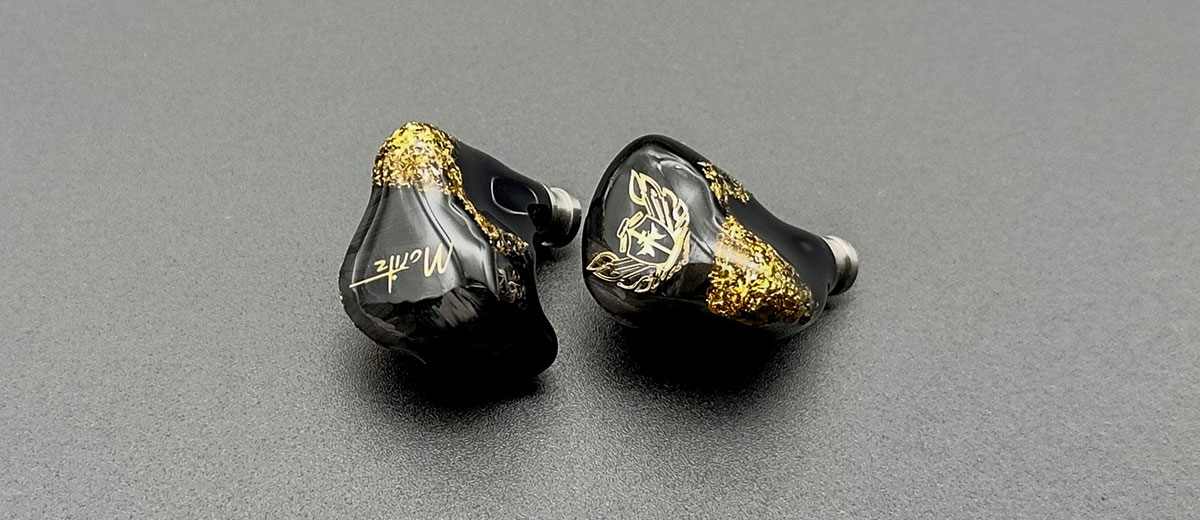
Synergy
Efficiency
ENZO has an impedance of 11Ω @ 1 kHz and a sensitivity rating of 107.6 dB/Vrms. The IEM is very efficient to drive. Even with low-specification devices such as smartphones and laptops, it sounds full and achieves a decent level of resolution.
With additional power, I do not find it to have significant scaling properties, but it does benefit from a powerful source. Also, I find it handles additional power quite well. It does not have any background hiss or static noise with powerful sources.
Source Pairings
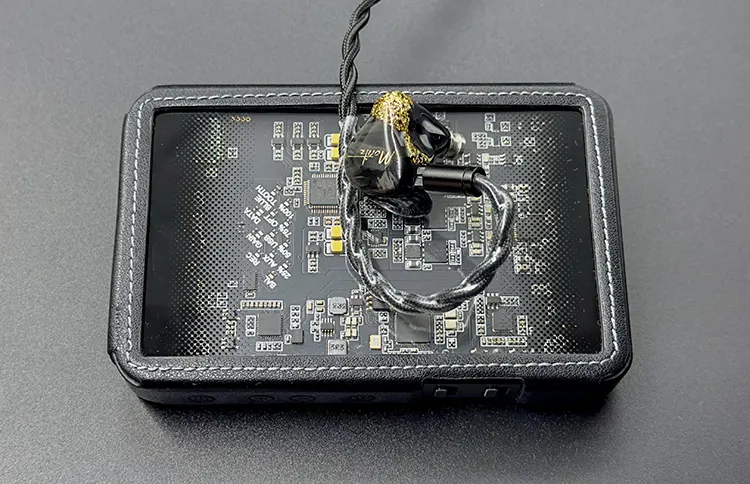
For ENZO, you do not have to use a very capable source to enjoy it. It sounds enjoyable with most of the sources I paired it with. With my go-to source, the Lotoo PAW Gold Touch, the ENZO is nothing less than fun.
The bass hits with real authority. It has impressive volume, a sense of elasticity, and each note feels very textured and layered. The midrange has a touch of emotion without ever coming across as too warm or thick. Vocals and instruments feel expressive and well-articulated.
The treble stands out as both smooth and very resolving. There is no harshness, and the details are well presented. On the DD setting, the overall sound is quite clean and balanced, letting the ENZO shine a lot.
With the Questyle CMA18P, a DAC/amp featuring the AKM 4493 DAC chipset, the ENZO pairs equally well. The additional power from the CMA18P opens up the ENZO a bit.
The bass remains as impactful as it is on the LPGT. The midrange and treble regions carry a bit of extra energy and do not feel as smooth; however, the level of resolution is nearly the same. The LPGT is ahead in detailing.
Select Comparisons
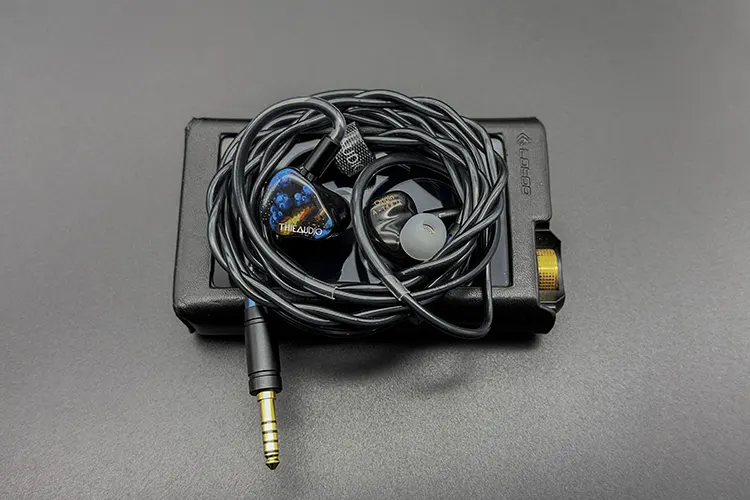
THIEAUDIO Origin
Technical
The THIEAUDIO Origin was released towards the end of 2024. This IEM features a quad-brid driver configuration with a total of 8 drivers per side.
The drivers include an in-house developed 10mm dynamic driver, four balanced armature drivers with a mix of Sonion and Knowles, and dual Sonion electrostatic super tweeters. In addition to these, there is also an in-house-developed 11mm bone conductor driver.
The THIEAUDIO Origin has an impedance of 9 Ω @ 1 kHz and a sensitivity rating of 102 dB/Vrms.
Just like the ENZO, the Origin can be comfortably driven by low-powered sources such as dongles and smartphones. Both these IEMs take a similar number of volume clicks on my LPGT.
Design
The Origin has a predictable THIEAUDIO design, with the shells built in European medical-grade resin. Both IEMs are built in resin, but it’s the ENZO that takes the lead with its premium design.
The Origin has a rather simple design with an abstract faceplate showcasing a mix of blue and yellow color patterns. The gold flakes spread on the ENZO add much to its upscale look.
The shells on Origin are bigger, though they do not pose any fit challenges. ENZO is more comfortable to wear. Both IEMs have short nozzles, and for me, the same ear tips provide a comfortable fit on both.
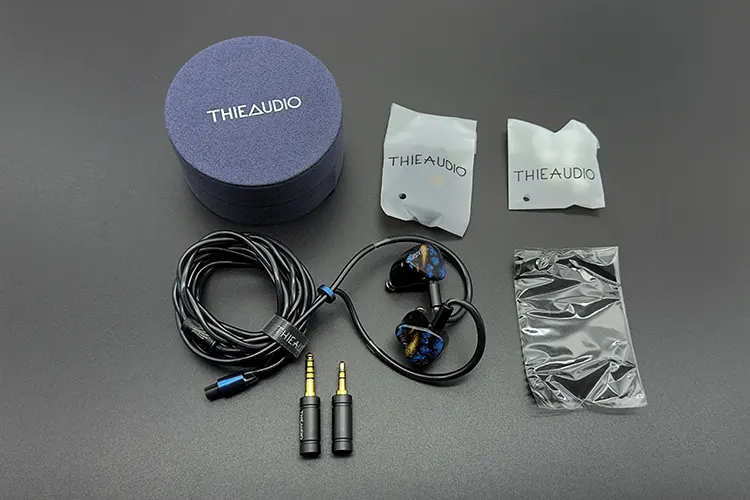
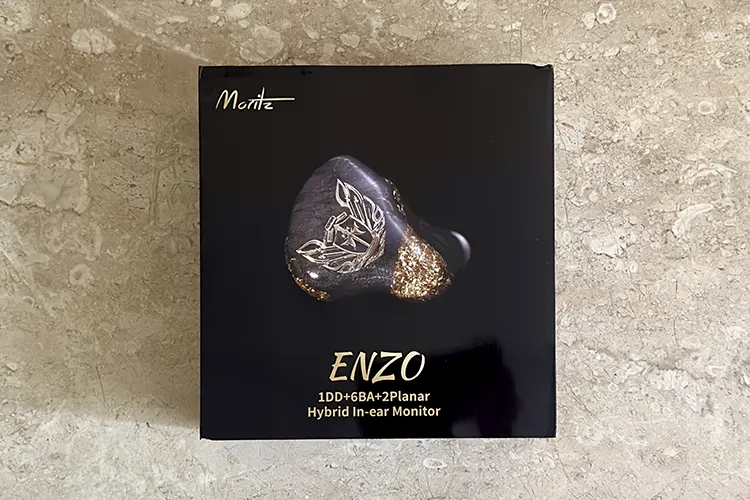
Both IEMs come in rather non-fancy and minimal packaging, packed with quality accessories. The stock cables on both IEMs are well-made in terms of build and performance.
Ergonomically, both are a bit tricky to handle, with the Origin’s cable being stiffer. The Origin includes a modular cable with 3.5mm unbalanced, 4.4mm balanced, and 2.5mm balanced connectors, while the ENZO misses the modularity.
Performance
The ENZO delivers a thicker and warmer bass. Both midbass and subbass have noticeably more impact and presence than the Origin.
In contrast, the Origin’s bass is more rounded and controlled, but it’s less pronounced. The Origin maintains good control in the low end, but it doesn’t offer the same level of authority or depth as the ENZO.
Origin features a more neutral midrange. The bass shelf tapers quickly into the lower midrange region, which results in a slightly leaner lower midrange.
The ENZO, on the other hand, is warmer, thicker, and denser in this region. Vocals and instruments on the ENZO have a better body and sound fuller and lusher in comparison.
The Origin’s midrange, while neutral and energetic, can lack some emotional touch and warmth, making it feel less engaging than the ENZO. Vocals on the ENZO are more prominent and nuanced. They feel more lifelike, whereas on the Origin, they can feel a bit lean and dry
Origin carries a good level of energy in the upper midrange but can sound a bit thin in comparison. ENZO maintains smoothness as it transitions into the upper midrange and lower treble region.
Even if the treble on the ENZO is not the best, it certainly has more details, with notes feeling taller and carrying more information and texture. Overall, ENZO’s tuning feels a bit cleaner and crisper in comparison.
Neither IEM is ultra-wide in staging, but both are immersive with a holographic stage. The ENZO is a bit wider and more immersive overall.
The bone conduction driver in the Origin does add some depth to the stage, but the ENZO still leads in overall stage width and imaging. ENZO is also the more detailed of the two, with better instrument separation and resolution, especially in the higher frequencies.
64 Audio Solo
Technical
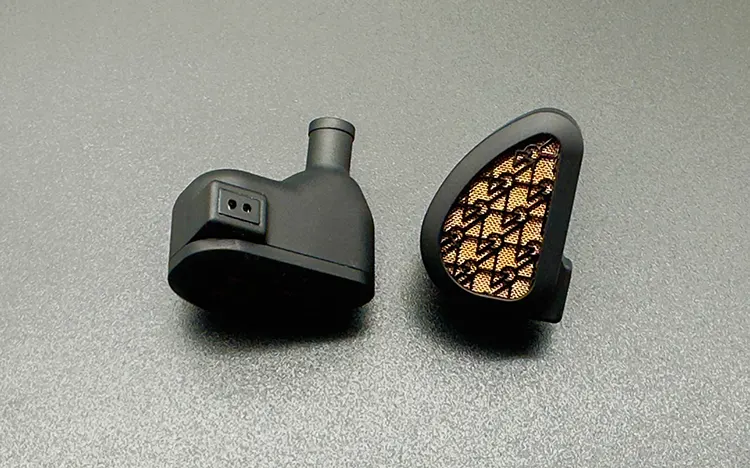
The 64 Audio Solo was released towards the end of 2024. The Solo uses a single 14.2mm planar magnetic driver combined with 64 Audio’s signature array of features, including apex Core, Linear Impedance Design (LID), and the Tubeless In-Ear Audio (tia) system.
64 Audio also incorporates Helmholtz Resonators to eliminate specific problematic frequencies with the planar drivers.
The Solo has an impedance of 16Ω @ 1 kHz and a sensitivity rating of 100 dB/Vrms. For the Solo to shine to its full potential, it needs a good amount of power, unlike the ENZO.
With low-power sources, the Solo does not sound full and can feel a bit thin and sharp. On my LPGT, the Solo can easily take nearly 8-10 volume levels more than the ENZO.
Design
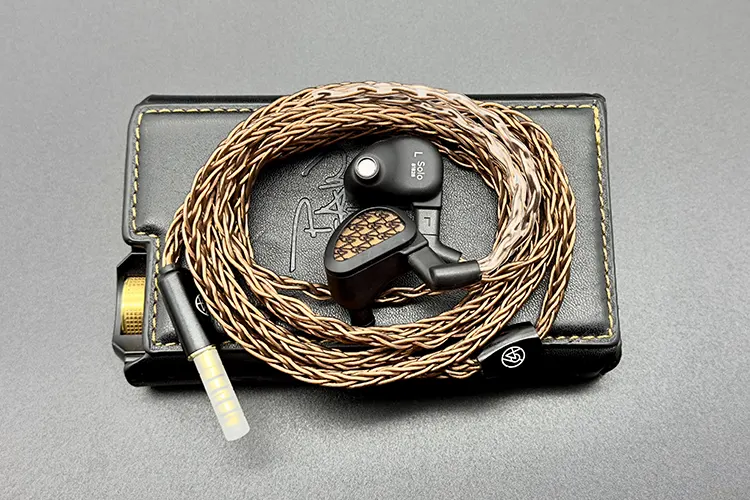
The 64 Audio Solo is one of the best-looking IEMs from the brand. The shell is constructed with T6061 aluminum, an alloy composed of aluminum with a few other elements. The faceplate features a copper mesh with an array of 64 Audio logos, giving it a unique and elegant touch.
While the resin shells of the ENZO cannot match the robust metal shells of the Solo, the ENZO does exude a premium aesthetic with its design. With ergonomic designs, both IEMs are quite comfortable to wear for long durations.
One aspect I’d like to emphasize is the isolation factor, which is not very strong in the Solo due to its open design. On the other hand, the ENZO has a superior isolation factor, which eliminates a significant portion of surrounding noise.
The Solo has thoughtful packaging, which includes two different cables, a wide range of ear tips totalling 9 pairs, and a few other accessories. The ENZO also packs a nice array of useful accessories, the most standout being the carry case, which is very spacious.
Performance
The ENZO has a stronger and bumped-up bass shelf. Between the two, ENZO is ahead in both the sub-bass and mid-bass frequencies, which give it a thicker, warmer, and more impactful low end.
The Solo is more reserved and controlled, which contributes to a cleaner and more even profile but lacks the fullness and weight of the ENZO.
Moving into the midrange, the Solo maintains a slightly leaner and drier tonality. Vocals and instruments on the Solo sound cleaner and more forward, but lack the warmth and richness present in the ENZO.
The ENZO’s elevated bass gives its lower midrange more weight and body, resulting in fuller and richer vocals and a denser sound.
The Solo’s midrange will appeal to those who prefer clarity and a more reference-like presentation, while the ENZO’s midrange is more musical. The midrange notes sound taller on the ENZO, making the mid-focused sounds feel more present and lifelike.
In the treble region, the Solo stands out with a tad brighter, airier, and more sparkly profile. There is an enhanced sense of detail and some extra shimmer to cymbals and high-frequency instruments.
Neither of the IEMs feels sharp or fatiguing, even in long sessions. The ENZO has a smoother and more restrained treble, making it a bit less airy and less brilliant than the Solo.
Both the IEMs have a similar width in the stage presentation. I prefer the Solo’s stage as it feels more immersive and holographic. Both IEMs have spot-on imaging.
A more consistent treble range on the Solo results in better instrument separation overall, as the evenness in the highs helps individual details stand out more distinctly. For resolution and clarity, I would pick the Solo.
Campfire Audio Alien Brain
Technical
Campfire Audio released the Alien Brain a few months ago. Alien Brain is a hybrid IEM with five drivers. The drivers comprise a 10 mm Glass-PU Dual-Magnet Dynamic Driver and four high-performing custom balanced armature drivers.
Two of these balanced armatures cater to the mid-frequency range, and the remaining two act as super-tweeters, catering to the high-frequency region.
The Alien Brain has an impedance of 7.8Ω at 1 kHz and a sensitivity rating of 8.97 mVrms to hit 94 dB.
Like most Campfire Audio IEMs, the Alien Brain is an extremely easy-to-drive IEM and does not demand much power. Both ENZO and Alien Brain are comfortably driven below a volume level of 30 on my LPGT.
Design
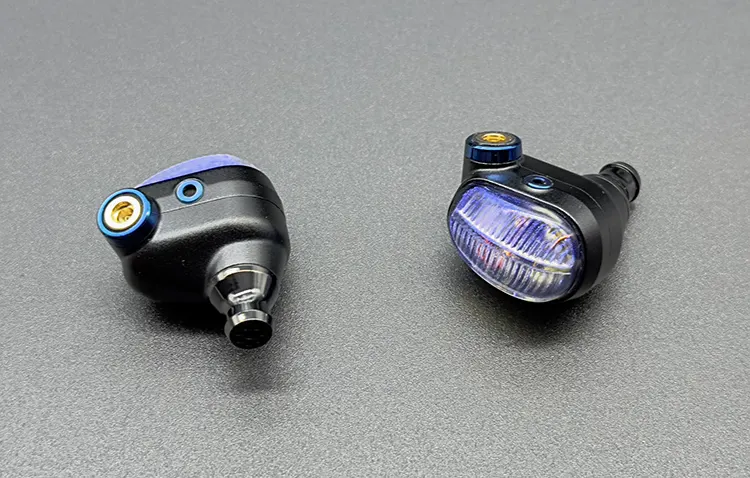
The Alien Brain has a very interesting design featuring a sci-fi-influenced look with a futuristic aesthetic.
The shells are made from matte-finished black metal, offering a rugged yet lightweight appearance. The faceplate design features a blue-accented, semi-transparent, glass-like enclosure with a ribbed texture. Through the faceplate, you can partially see the internal components like drivers and wiring.
ENZO, on the other hand, has a typical resin build but with a touch of class, using gold flakes on the faceplate. For a resin IEM, I find the build fairly robust.
With the Alien Brain, you get a decent array of thoughtful, high-quality accessories, but in very compact packaging, which is almost half the size of ENZO’s packaging.
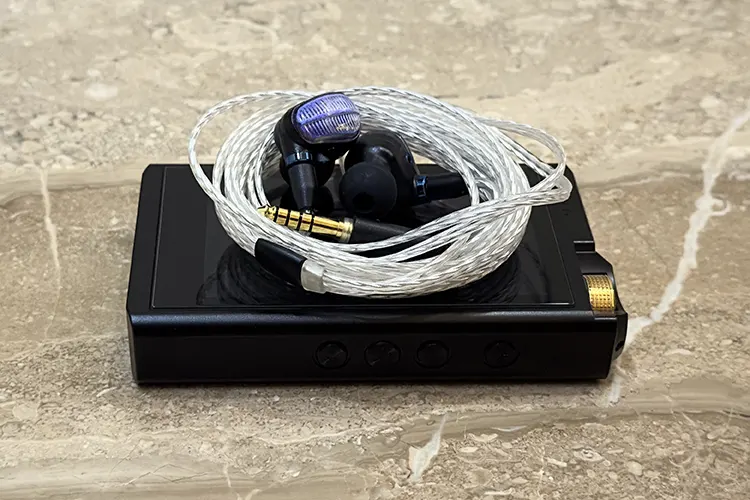
You get a pair of IEM cables in 3.5mm and 4.4mm terminations and a USB-C portable DAC dongle with the Alien Brain. However, due to better build, I prefer the ENZO’s cable. Also, the carry case that arrives with ENZO is a lot more spacious.
The Alien Brain connects via an MMCX port, while the ENZO uses a 2-pin connection system.
Performance
ENZO leads in the bass region with a more sub-bass and mid-bass presence while maintaining the bass quality. The bass overall feels heavier and warmer, which adds elements of fun and energetic punch, making the bass more enjoyable.
The Alien Brain is noticeably more restrained in the bass region, though it is not lean by any measure, as the impact is enough to keep one satisfied.
ENZO’s midrange is fuller and warmer with a slightly colored presentation. With taller notes, the midrange feels richer, but on complex tracks, there is slight congestion, which limits the resolution.
The Alien Brain has a cleaner and more balanced midrange, which carries a touch of warmth. It shows better clarity and avoids any muddiness or congestion.
The sound is more neutral and mature, which allows the details and nuances to emerge easily, and the upper midrange carries more energy and extends better on the Alien Brain.
Both the ENZO and Alien Brain deliver a lively, detailed treble. On ENZO, the treble is energetic and has a good presence, but it’s also smoother and a bit more forgiving.
The Alien Brain stands out for its consistent, more refined, and well-extended treble with more resolving and cleaner-sounding detail than the ENZO.
In the technical aspects, both IEMs have their strengths. The soundstage feels wider and deeper on the ENZO. ENZO trades cleanliness and separation for excitement.
The Alien Brain feels cleaner and more refined with a more balanced tuning, mature presentation, and smoother treble.
This gives it a stronger sense of control with better instrument separation, staging, and overall detail retrieval, especially in busy tracks, making it easier to pick out subtle details and layers.
My Verdict
Having experienced Moritz’s earlier work with the Paradise, I expected something interesting from the ENZO, and it certainly delivers.
The ENZO’s sound is just as exciting as its ambitious driver configuration. The bass is voluminous and has a deeply satisfying presence, offering something a bit different from the usual bass-heavy options on the market.
The planar drivers contribute to an impressive level of detail in the high frequencies, making the ENZO technically competitive within its price range.
There are areas where improvement is possible. The overall tuning could be a bit more mature and coherent, especially in how the ENZO handles complex tracks. Some finer details tend to get lost, even though the stage and imaging are done well.
The bass-heavy tuning does not align much with many genres. The tuning switches do not make much sense either. Other than these, I do not have much to complain about. The packaging and accessories are solid and well-matched to the price tag.
If you’re looking for an IEM that brings fun and excitement to your listening sessions, the ENZO is well worth a try. Who knows, it might just be the next valuable possession in your collection.
Moritz Audio ENZO Specifications
- Driver Configuration: 1 dynamic driver + 6 balanced armature drivers + 2 planar drivers
- Impedance: 11 Ω @ 1kHz
- Sensitivity: 107.6 dB/Vrms @1kHz
- Frequency Response: 20 Hz–20 kHz
- Cable: Silver-plated copper, 4.4mm balanced, 2-pin connection system
