

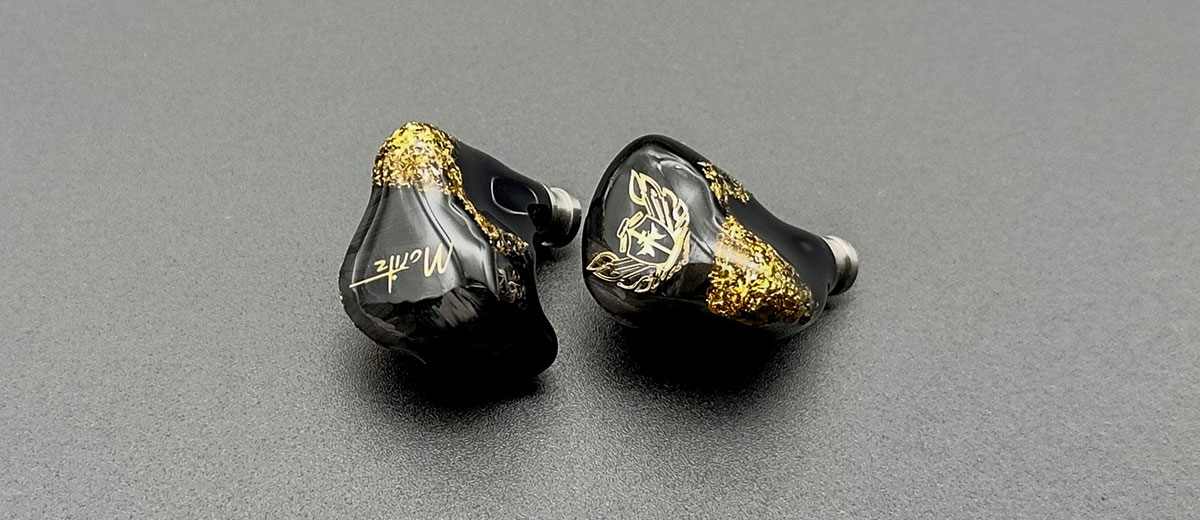
Nihal reviews the Moritz Audio ENZO, a new hybrid 10mm single dynamic, 6 custom BA, and dual planar driver universal IEM priced at $1369.00.
Disclaimer: I was sent this sample in exchange for my honest opinion. Headfonics is an independent website with no affiliate links or services. I thank Moritz Audio for their support.
You can click here to learn more about the Moritz Audio products we have previously reviewed on Headfonics.
This article follows our current scoring guidelines, which you can read in more detail here.
The Hong Kong IEM scene is growing rather rapidly these days. A lot of new brands have built a solid reputation over the last few years, including Aroma Audio, Nostalgia Audio, Eminent Ears, Hercules Audio, and SWEEAR, to name a few.
Moritz Audio is one such brand that has shown a very flourishing beginning. A few months ago, I reviewed one of their IEMs called the Paradise, and I felt quite positive about it. Moritz has released a few more IEMs in the sub-$1000 price range, and all of these have been well received.
Recently, they released a new flagship called ENZO. The driver configuration, as well as the premium design, certainly increases the interest.
In this review, we will see if the ENZO sounds like a true high-end monitor and how it compares with competing offerings such as THIEAUDIO Origin, Campfire Audio’s recently released Alien Brain, and the 64 Audio Solo.
Features
The ENZO is a tri-brid IEM that features one dynamic driver, six balanced armature drivers, and two planar drivers.
The dynamic driver and balanced armatures are in-house custom-developed, as is the ultra-low-noise crossover network to produce a cleaner, more accurate sound.
I see an increasing trend of using planar drivers for the high-frequency range. I assume there are some benefits: it saves cost and space, and a nicely tuned planar can rival electrostatic drivers. We will find out more about this in the sound analysis section.
ENZO has a sensitivity of 107.6 dB SPL/mW and an impedance of 11Ω. I find it easy to drive, so it can sound full even with some lower-powered sources.
Design
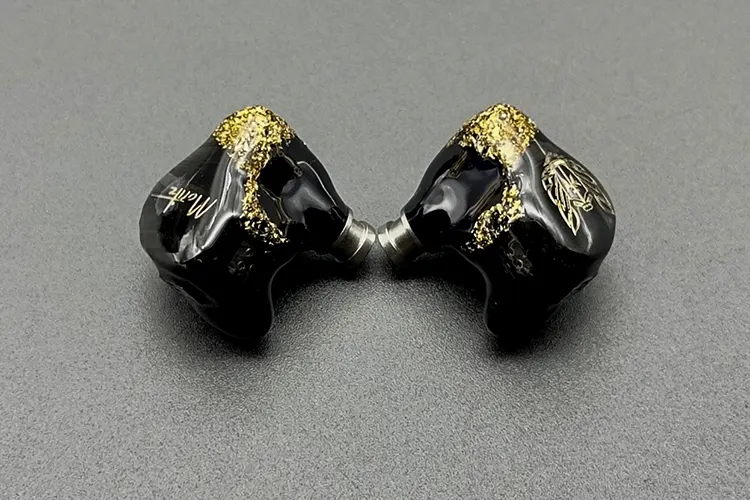
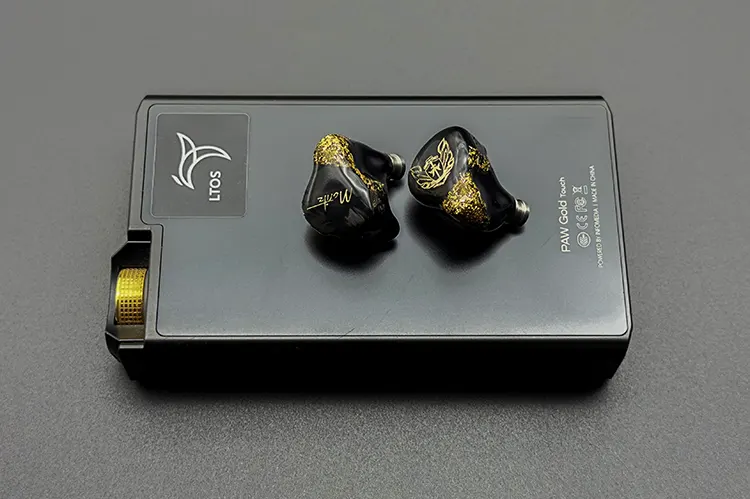
When the ENZO was launched, I was most intrigued by its design, which feels very premium. It uses a dark-colored base shell with elegant golden flakes near the faceplate edges and on the sides of the body.
The best part about the design is its restrained use of gold, which prevents the design from going overboard. The inner part of the shells has a deep blue hue when it faces light, which is otherwise not very noticeable.
The mix of gold on a black faceplate looks quite elegant. One of the shells has the brand’s name written in gold on the faceplate, while the other has a detailed crest-like emblem with intricate gold.
The resin shells have a glossy finish, giving them a polished and neat feel. There is a scale-like effect on the faceplates, adding depth to the design.
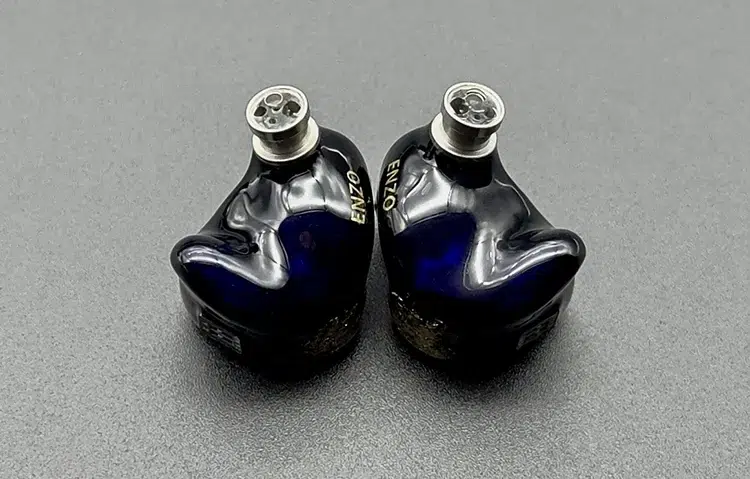
The nozzles on the ENZO are metallic in material and rather small. They are wide, and one can see multiple holes of different radii on the nozzle. I prefer a mesh covering the nozzle as it prevents dirt from entering inside. The lip on the nozzle helps provide a better grip for the ear tips.
The ENZO uses a 2-pin connection system with a large vent placed near each connector, which balances internal pressure, ensuring comfort. We get two switches on each shell, which gives different tuning flavors. Overall, the design justifies the premium pricing.
Comfort & Isolation
The ENZO shells have an ergonomic design that rests nicely inside the ear, giving a very comfortable fit.
The shells are not too large, and the resin adds nothing to the weight, so you do not feel a thing when the ENZO is in use. The inner part of the shell is smooth, with a flowing curve that follows the shape of the ear.
The nozzles are small, and with the size of this IEM, it does not stick out; rather, it sits comfortably flush in the ears. Even on the move, they do not tend to come out.
There are no sharp edges or pressure points on the body, so even after long sessions, I never find wearing the ENZO tiring.
The isolation level on the ENZO is quite satisfactory, as it blocks a good level of noise from outside. With a snug ear tip, the isolation is improved further. During my time with the ENZO, I did not face any driver flex or pressure build-up.
Ear Tips
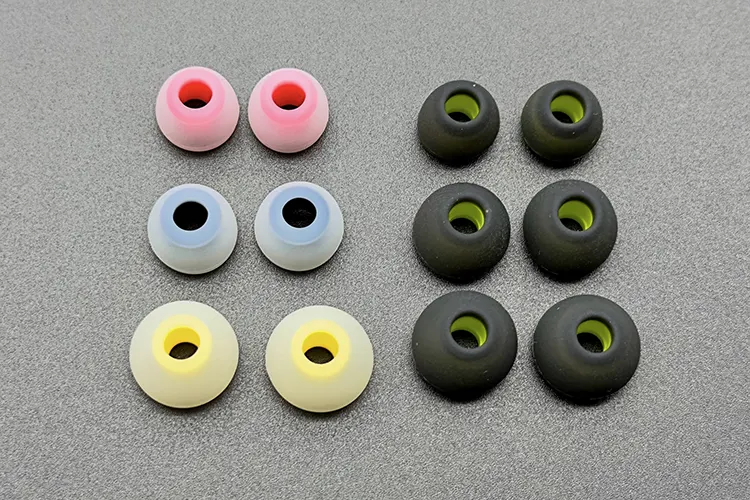
The ENZO is shipped with two sets of ear tips. By appearance, one of the sets looks like the Acoustune AET07 silicone ear tips, offered in three sizes: S, M, and L. The other set of ear tips are regular silicone ear tips, again in three sizes: S, M, and L.
The AET07 ear tips, with colorful and thick stems, look and feel quite durable. These pair quite well with the ENZO too.
The other set has thinner stems and gives a decent fit. I tried a few aftermarket ear tips, and most of them paired well with the IEM. You should not be bothered much by ENZO’s fit.
Given the spicy treble profile, I would suggest going for narrow ear tips, as the wider ones tend to be more aggressive and thinner in the higher frequencies.
Stock Cable
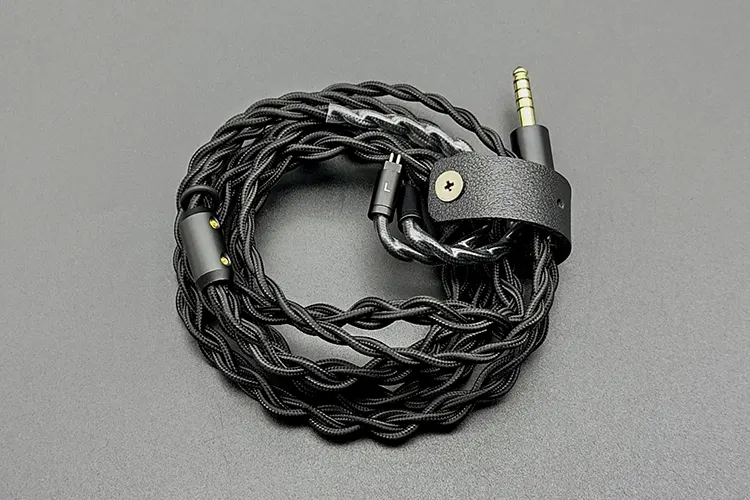
ENZO’s stock cable features an all-black look with a 4-wire twisted design. The cable has a fabric-sleeved outer layer, which gives it a thick but flexible build. The internal wiring is silver-plated copper.
The cable has a black scheme throughout, with the termination adapter, Y-split, and 2-pin connectors all polished in black. This cable is terminated in a 4.4mm balanced gold-plated connector, which has a noticeable thickness.
Similarly, the Y-split is rather large but does not possess much weight. The Y-split is built from a sleek aluminum housing and has two small screws, which add a factor of reinforcement.
I find it surprising that this cable is not a modular one, while one of the early releases, the Paradise, which is in a lower price segment, had a modular cable.
The cable also includes a black leather tie with a snap button, useful for tidy storage. When rolled up or during usage, it does not tangle much, adding to the comfort of handling. The cable has some elements of microphonics, but that does not bother me much.
The cable can take up a good amount of space when stored, but overall, it’s a functional and well-built, and durable cable designed to last a long time.
Packaging & Accessories
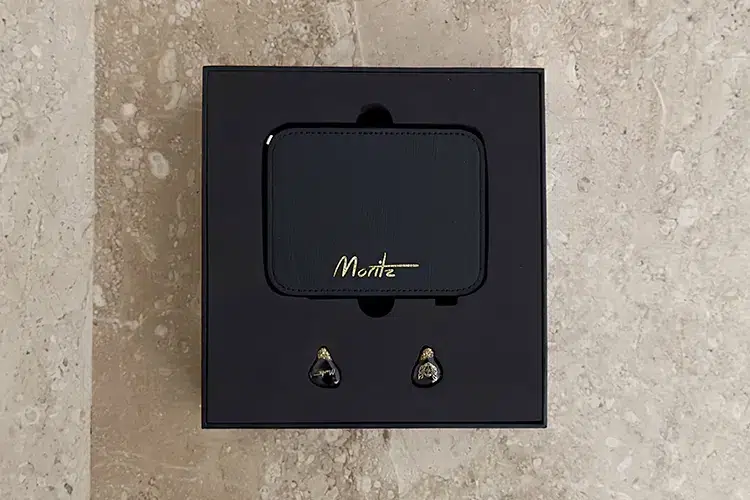
The ENZO arrives in a sleek and premium-looking black box, which is larger than a lot of IEMs in this price range.
The outer sleeve is shiny and carries a product image of the earpiece with golden detailing. On removing this sleeve, we get a matte black box with the gold Moritz brand’s signature, which gives it a high-end feel.
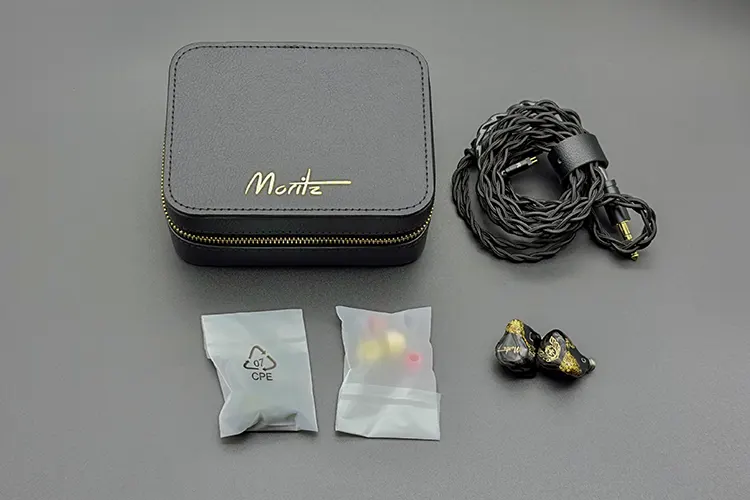
Upon removing the top lid of this box, you’re met with a neatly arranged layout. The top compartment contains a leather carrying case with gold Moritz branding.
To the lower end of the box, the IEMs are nicely placed in small foam cutouts, showing off their deep black shells with gold flakes and elegant faceplate artwork.
Removing this section, you get a small accessories box that contains two sets of ear tips. The cable is nicely arranged inside the carry case.
The presentation is elegant, protective, and neatly done. The way it highlights the elements of golden color in a black scheme adds a premium touch to the packaging.
Carry Case
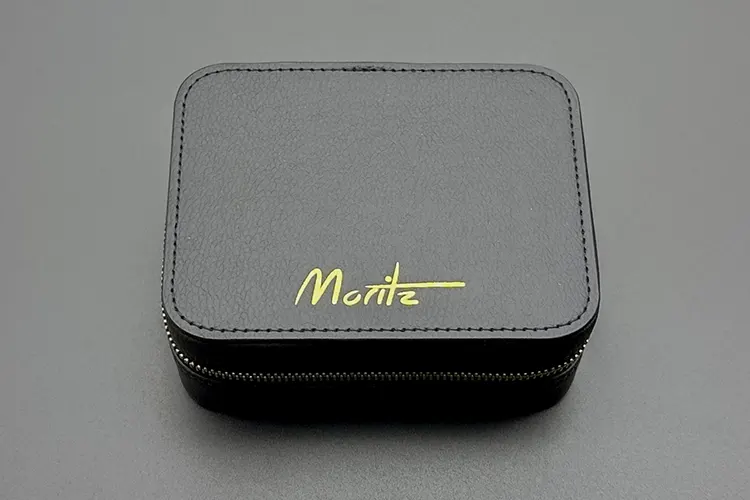
The carry case included with the Moritz ENZO is one of the highlights of its packaging. It is the same case that Moritz provides with the Paradise.
This all-black case is built with textured and high-quality leather. The case carries the brand’s logo stamped in gold on the top, complementing the overall color scheme.
A golden-toothed zipper runs through the middle of this case, giving it a sturdy and reliable feel. The stitches on the case are thick and well-finished.
To provide extra protection, the edges are reinforced. The sides and faces are also hard enough to keep the case firm in case some force is applied to it.
The case is very spacious, and there’s more than enough room to store both the IEMs and the cable. The interior padding and cushion offer enough protection. If the case were any bigger, I could very easily store my DAP inside it.
Sound Impressions
The following sound impressions of the Moritz Audio ENZO were completed using a mixture of my main source, Lotoo’s Paw Gold Touch, and the Questyle CMA18P. I paired the IEM with the 4.4mm terminated stock cable and the stock white ear tips, size L.
Summary
With its interesting driver configuration, the ENZO delivers an exciting tuning with strong bass presence and a sharp focus on technicalities, without going so far as to sound analytical.
The thick and warm bass, along with a rich midrange, strikes a good balance with the detailed treble presence. The planar drivers push plenty of details and air in the higher frequency region.
The ENZO offers a very immersive and engaging sound, but with some caveats that we are about to discuss.
The technical aspects are spot-on, as you’d expect from a premium offering. In short, ENZO emphasizes fun and engagement and sacrifices cleanliness and detailing for a smooth sound.
Bass
The bass on ENZO has a thick and warm nature, offering a satisfying thump rather than very deep and tight punches. It has a deep sub-bass with a fulfilling body and presence that adds weight to the overall sound without feeling hollow.
The mid-bass on this IEM isn’t very tight or clean, but it makes its character felt. It delivers rounded thuds and firm thumps rather than sharp and tight slaps. This region makes the bass heavier and adds a weighted feel, contributing warmth and volume to the overall presentation.
Instruments like bass guitars and cellos benefit a lot from this bass tuning. They sound full-bodied, with a lush and solid presence that starts from this bass region, giving them a noticeable weight.
If the bass is heavy on some tracks, the low end can feel a bit clumsy and overlapping. With some genres, you’d notice the bass occasionally overwhelming the mix. The weight of the bass can mask the upper frequencies, giving them a warmer tone.
For me, the ENZO is most enjoyable when the bass is more controlled in the tracks, like in soft rock, jazz, or acoustic genres. This is where the bass shines the best.
The bass adds a solid foundation to the music, giving the low end a rich and engaging character. The texture and layering on these tracks are more noticeable as the bass is less dominant.
Midrange
Even with a fat and warm bass, the midrange mostly stays clean and transparent. The midrange is slightly recessed, not a lush or in-your-ear-sounding one. There is more focus on clarity than richness.
There is no added warmth in the midrange; thus, the midrange feels very clean and enjoyable, especially on tracks where the bass does not scream much.
With a heavy bass, we often come across tunings where the lower midrange adds unnecessary warmth. The lower midrange is very controlled; hence, the instruments and vocals in this range don’t sound congested or overly warm and thick.
The transition from lower midrange to upper midrange is smooth, which gives a balanced, musical nature to the midrange. In the upper midrange, ENZO avoids being shouty or aggressive. The extension feels natural and gives a good presence for vocals, especially female vocals.
Where the midrange lacks a bit is in its sweetness quotient, particularly with the other tuning modes besides DD. The midrange on the ENZO comes across as clean, no doubt about that, but it’s not particularly engaging.
When the music gets busy, like in metal tracks or heavy rock, the midrange can feel a bit flat, and instruments or vocals may not separate out clearly. For such tracks, it’s not the most resolving midrange, so some finer details can get lost.
Treble
Most of the upper frequency region on ENZO feels smooth and non-fatiguing. There is plenty of energy and detail, with a satisfying sense of air and sparkle.
The transition from the upper midrange to the lower treble region is smooth and gentle, meaning ENZO avoids extra crunchiness and harshness. Some boost in the mid-treble region gives good presence to cymbals, strings, and the trailing edge of sounds.
The planar drivers push an ample level of detail into the mix. The air in the upper treble enhances spaciousness without ever making the sound bright or harsh. However, ENZO’s treble lacks some clarity, especially with subtle details sometimes fading away.
Many people looking at the ENZO will want to know how its planar drivers compare to EST drivers. ENZO’s planar highs have a good level of detail and speed, but the treble might feel less integrated.
Sometimes, the treble feels a bit unnatural and incoherent compared to the rest of the frequency range. Most properly tuned ESTs feel more coherent and even.
ESTs, for me, have a good balance of details and separation in the treble notes. That said, I have heard some better-tuned planars that outperform ESTs.
Staging & Dynamics
The technical aspects of the ENZO are more than satisfying. It presents a stage that feels open, though not exceptionally wide. There’s a reasonable sense of left-to-right width, so instruments don’t feel cramped or too closed in.
It’s not an out-of-head experience with the ENZO, but the stage is holographic enough to give an immersive experience. Imaging aspects meet expectations, as the details feel like they’re accurately originating from different corners.
As mentioned earlier, instrument placement is clear enough for most genres, but in very busy or dense tracks, the separation can blur a bit.
The ENZO delivers punch and energy when the track calls for it, hinting that the macro dynamics are solid. However, the microdynamics are only decent in quieter or less crowded music. The resolution and breathiness in the tracks are cleaner and more pronounced on simpler tracks.
I’d pick the ENZO for a relaxed listening session when I’m in the mood for some easy music with satisfying and punchy bass.
Tuning Switches
Most of my listening has been in the DD position, which is with both tuning switches down. This mode feels the most coherent and balanced of all.
Here, subtle nuances and micro-details are easier to pick out, and the presentation is more coherent across the frequency range. Instruments and vocals have better separation. The details do not seem in your face.
The bass in all modes has a thick and warm nature. With the first switch up, the bass gets a subtle lift in the sub-bass, which is really not required, given the default bass is itself more than enough.
With both switches up, the increased upper mid and lower treble energy pushes out more details, but at the cost of smoothness and consistency.
Treble notes are more energetic overall and feel splashy, which can make the overall sound feel less cohesive, especially on complex or bright tracks.
Click on page 2 below for my recommended pairings and selected comparisons.
