

Wireless performance
Pairing Ease
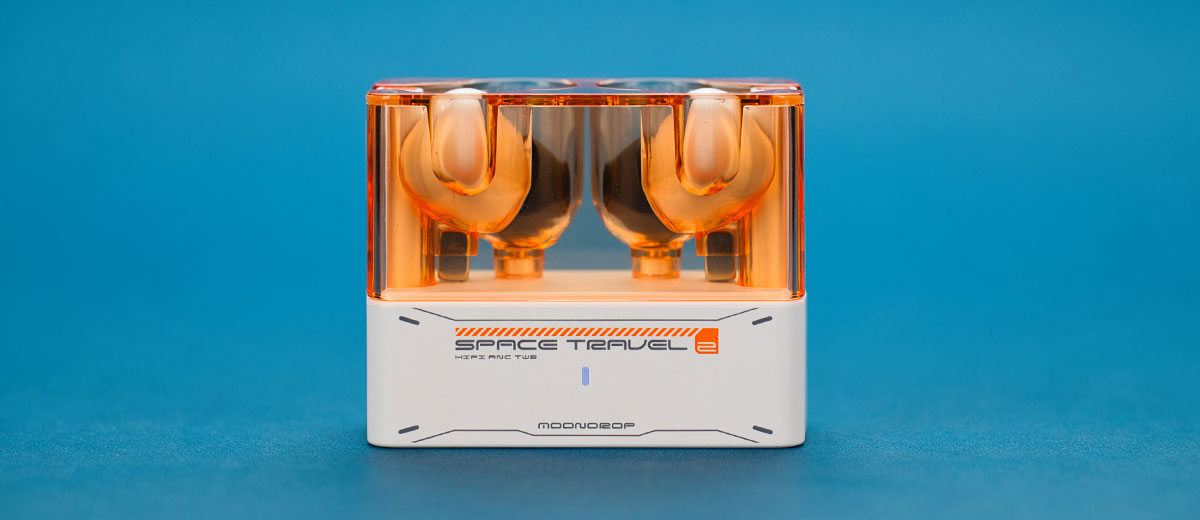
Thanks to its use of Bluetooth 6.0, which is the latest version, pairing is straightforward, quick, and fuss-free. The Space Travel 2 is paired with my PC, Samsung S21 Ultra Android phone, and the Shanling M3 Plus DAP.
Remove the earbuds from the cradle, navigate to the PC’s, phone’s, or DAP’s Bluetooth interface, locate the Space Travel 2, and then press Enter to pair. It’s that easy.
After the initial pairing is complete, the connection with the phone or DAP is established quickly and efficiently. The Space Travel 2 is connected as soon as I finish inserting the earbuds into my ears.
Stability & Range
As long as I stay within 10 meters, that MOONDROP has specified for the Space Travel 2’s range. The connection is stable, with no noise or signal loss.
Even if it sits in front of my computer with a wireless keyboard and mouse, there is no interference from Bluetooth or 2.4 GHz wireless radio frequency signals.
Latency
All Bluetooth connections introduce delay or latency to the sound. This is inherent to Bluetooth technology, as the signal requires processing before being heard through the earbuds.
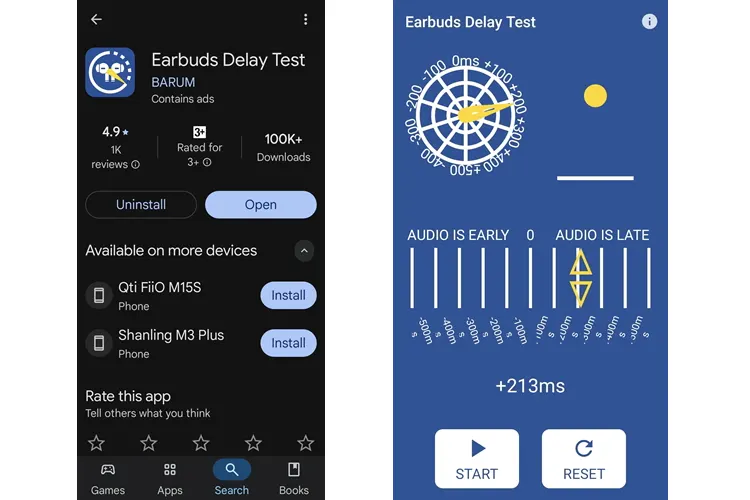
When in normal or music mode, I experience approximately 213ms of Bluetooth delay, based on my test, which is within the typical range of 100 to 300ms for typical TWS earphones.
This delay is barely noticeable if you are not looking for it, especially when watching YouTube or movies on your phone. However, for gaming, this is not ideal, particularly for action-filled games.
Tap either channel four times in the control surface. The Space Travel 2 switches to gaming mode, which reduces the latency to 55ms according to MOONDROP. I get between 54 and 56ms in my test; therefore, the 55ms latency MOONDROP claims is accurate.
A latency of 50ms or less is ideal for gaming. The Space Travel 2’s 55ms latency is okay, but the delay is still noticeable when gaming.
Select Comparisons
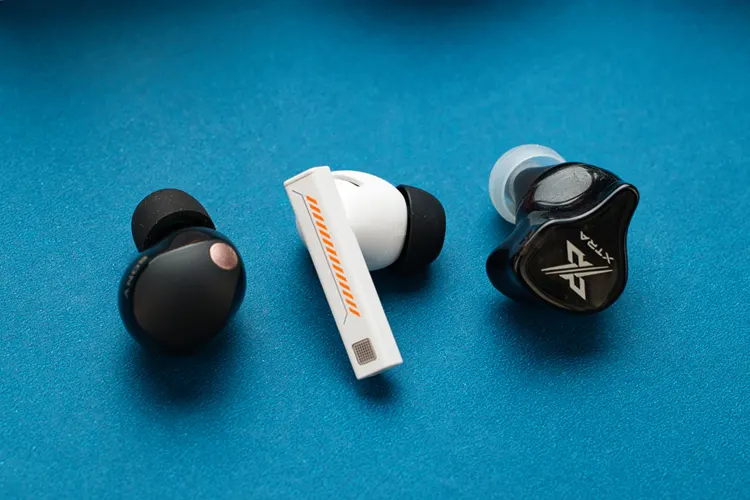
Sony WF-1000XM5
Technical
The Sony WF-1000XM5 uses 8.4mm dynamic drivers, which are significantly smaller than the 13mm dynamic drivers of the Space Travel 2. However, in use, Sony WF-1000XM5 can go a little louder than MOONDROP and sound just as clean and bassy.
Space Travel 2 features a newer version of Bluetooth, specifically Bluetooth 6.0, while the Sony WF-1000XM5 utilizes an older but still modern Bluetooth 5.3. In actual use, both have indistinguishably fast initial connection speeds and latency.
However, WF-1000XM5 can decode more audio codecs and includes LDAC reception and decoding, which is the highest data rate and audio quality available today. It has a data rate of up to 990 kbps and a sampling rate of 96 kHz, while Space Travel 2’s AAC and SBC decoding is limited to 320 and 328 kbps, respectively.
Although the data rate difference is a substantial factor, the driver and amplification quality are equally important factors in delivering good sound quality.
Sony WF-1000XM5 features a battery charging time of approximately 1.5 hours, providing a battery life of up to 8 hours with noise canceling (NC) enabled and 12 hours with NC disabled.
The charging case offers an additional 16 hours of playback, totaling up to 24 hours of listening time.
Design
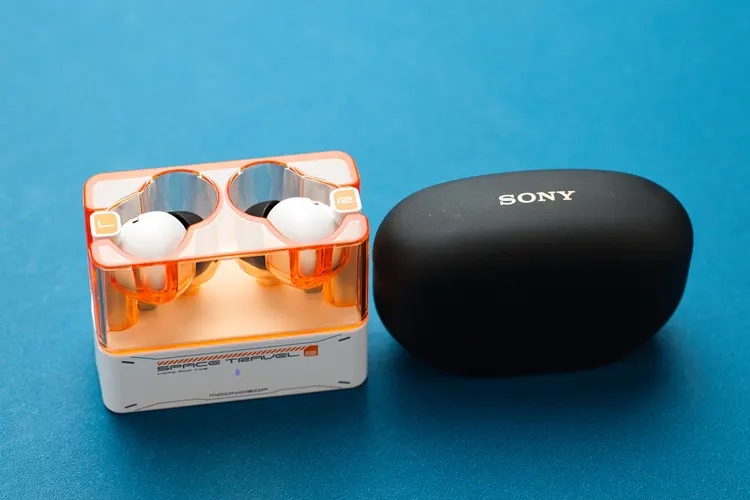
WF1000XM5 has a smaller case, measuring 64.6 x 40.0 x 26.5 mm, and a lighter weight of 39 grams, compared to The Space Travel’s 54.6 x 43.2 x 25.4 mm dimensions and 42.3 grams of weight.
They may not differ much on paper, but the rounded design of the Sony looks and feels much smaller than the boxy Space Travel 2 design.
The charging case or cradle features a clamshell-like magnetic lid that securely hides and protects the two IEM-style wireless earphones.
Unlike the MOONDROP Space Travel 2’s open-top design, which relies solely on the magnet to hold the earbuds in place, this design provides additional protection.
At the back of the charging case are the USB-C charging port and the flush pairing button, unlike the MOONDROP Space Travel 2, which has no dedicated pairing button. However, I must say that the lack of a pairing button never gave me any problems.
On the front, directly under the lid, there is a small hole that allows the light from the LED indicator to pass through. This light turns red while the device is charging and then changes to green when the device is fully charged.
When it comes to active noise cancelling performance and passive noise isolation, the WF-1000XM5 is superior. It utilizes foam ear tips, which provide a better seal and noise isolation than the silicone ear tips of the Space Travel 2.
I tested both at a mall and a noisy coffee shop and found the WF-1000XM5 to be quieter with active noise cancellation on, but the Space Travel 2 is not far behind.
Performance
First thing I noticed was that the WF-1000XM5 can go louder and bassier than the Space Travel 2. The difference is slight, but I get more volume satisfaction with the WF-1000XM5 than the Space Travel 2.
I would estimate the difference in their maximum loudness to be between 2 and 3 dB, a noticeable difference. Both are still too soft for loud listeners, though, such as me.
WF-1000XM5 features a warm, slightly U-shaped sound signature, characterized by more powerful and authoritative sub-bass, a flat midrange, and a slightly elevated upper treble response.
The Space Travel 2 features a warmer tonality, characterized by elevated midbass that adds warmth to the overall sound, a warm midrange, and a neutral treble response.
I achieve more detailed and higher-resolution sound with the WF-1000XM5, which I attribute to both its more forward-sounding tuning and the availability of a much higher-quality Bluetooth audio transmission, specifically the LDAC codec.
The Space Travel 2 isn’t bad when it comes to details and resolution; it is average in this regard for a Bluetooth TWS ANC device.
Despite Space Travel 2 having a lower data rate codec, AAC and SBC, compared to LDAC in the WF-1000XM5, it offers a bigger and more spacious soundstage, with better imaging and sound holography.
The Space Travel 2 soundstage has a spherical shape, where the width, depth, and height of the soundstage are roughly equal.
In contrast, the WF-1000XM5 has a smaller and narrower soundstage, resulting in limited lateral sound spread. It feels like you’re in a larger listening environment than the WF-1000XM5.
KZ XTRA
Technical
The KZ XTRA uses a smaller 10mm dynamic driver compared to the 13mm driver used in the Space Travel 2. However, in actual use, the XTRA has a much louder maximum volume and a punchier sound presentation than the Space Travel 2.
The KZ XTRA features Bluetooth version 5.4, but the Space Travel 2 offers an even newer version, which is Bluetooth 6.0. In actual use, there is no perceivable difference in their initial connection speed and latency; both perform practically equally in this regard.
However, the KZ XTRA has a superior Bluetooth audio connection and decoding. Xtra can decode AptX Adaptive, which has a 576-kbps data rate, compared to the SBC codec used in the Space Travel 2, which has a maximum data rate of up to 328 kbps.
Although the data rate difference is a substantial factor, the driver and amplification quality are equally important factors in delivering good sound quality.
The KZ XTRA’s charging case can be fully charged in approximately 1 hour, and the earbuds can last up to 8 hours on a single charge. The charging case can charge the earbuds four times, giving a total of 32 hours of battery life, which is longer than average.
Design
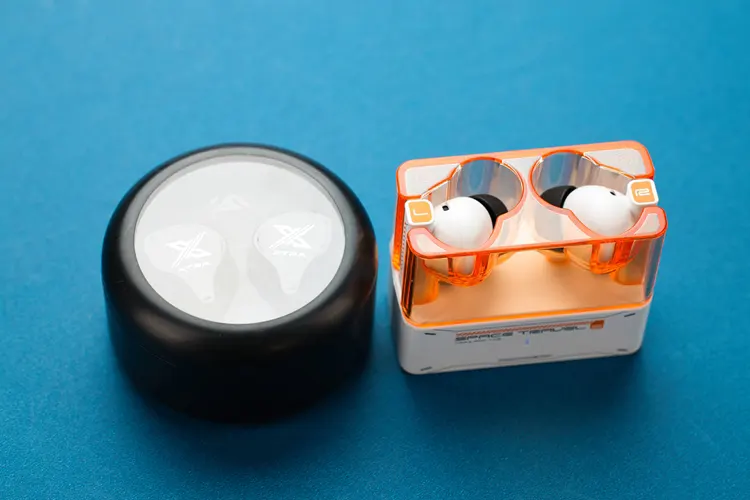
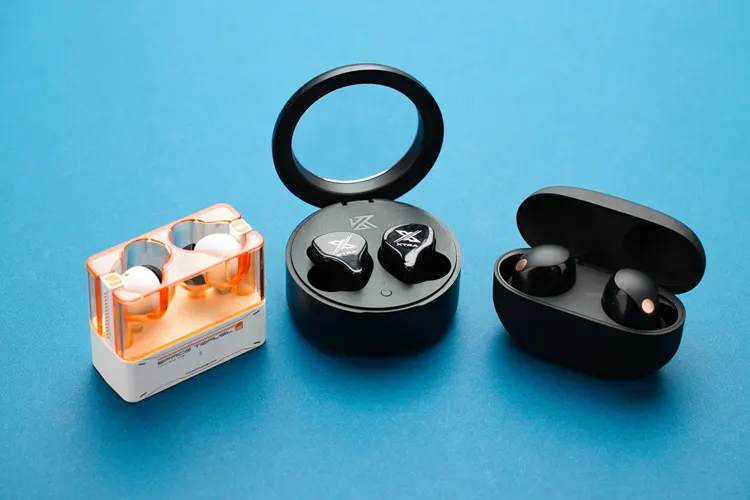
The XTRA has a slightly bulkier charging case or cradle with a circular design, measuring 58mm in diameter and 30mm in thickness.
It is also heavier, weighing 55.8 grams, compared to the Space Travel’s 54.6 x 43.2 x 25.4 mm dimensions and 42.3 grams of weight. In the pocket, the size difference is slightly noticeable, while the weight difference is not.
The XTRA features a flat, circular design with an acrylic window at the top cover that opens in a clamshell style and is magnetically secured.
The acrylic top window lets you see the earbud, the pairing buttons, and the three LED light indicators, one for each earbud and one in the cradle situated near the pairing button.
The USB-C charging port is conveniently located at the back, just like the Space Travel 2, and there are no other controls outside the cradle.
The XTRA’s covered cradle offers more protection to the earbuds than the open design on the Space Travel 2. And I feel more secure and confident bringing along the XTRA on a trip. I wish there were a protective door on the Space Travel 2.
When it comes to noise isolation, the XTRA is noticeably better than the other model, as I tested both at a mall and a coffee shop.
The ear tips used in the XTRA are larger and seal better, resulting in improved sound isolation. In contrast, the smaller ear tips in the Space Travel 2, with oblong-shaped openings, are less effective in isolating sound, or so it seems.
Both perform well in terms of active noise cancellation, but the XTRA is noticeably quieter than the Space Travel 2 in this mode.
However, during my test, the Space Travel 2 effectively cancels the noise of a busy environment, allowing me to enjoy the music with good intelligibility even at a moderate volume.
Performance
The most notable difference between the XTRA and the Space Travel 2 is the maximum loudness they can achieve. The XTRA can go much louder than the Space Travel 2, despite using a smaller dynamic driver, and has a more powerful and tighter sound presentation.
I estimate that the XTRA is about 6 dB louder than the Space Travel 2. It sounds like the XTRA is almost twice as loud, which is a substantial and undeniable difference in loudness.
Tonally, the XTRA features a slightly V-shaped sound signature, characterized by a somewhat elevated bass, a neutral midrange, and a slightly elevated treble response.
The sound tuning and the more powerful amplification on the XTRA give it a more energetic sound compared to the more laid-back and warmer sound presentation of the Space Travel 2.
Regarding perceived sound resolution and detail, XTRA is more resolving, which I attribute to its use of a higher data rate AptX codec vs Space Travel 2’s AAC/SBC codec.
There is also more perceived detail with the XTRA, helped by its brighter-sounding, slightly V-shaped tuning, which presents the details more forward.
If I listen to both at approximately equal volume, they have about equal soundstage size, with the XTRA having a slightly wider stage.
In terms of imaging, they are about equal, with a slight advantage to the XTRA due to its more defined imaging capabilities. Space Travel is not far behind.
My Verdict
The MOONDROP Space Travel 2 is another well-rounded, budget-priced product from MOONDROP. It strikes a good balance of price, design, and sound that only companies with long experience in crafting high-quality audio products, such as MOONDROP, can achieve successfully.
I especially like the vibe it gives me while using it on outings; it gives me a youthful vibe with a very optimistic future, thanks to its color and design. I also like the neutral, slightly warm sound, which is pleasing and never fatiguing.
The Space Travel 2’s average passive noise isolation is not too bad, but I wish it were better. The average maximum loudness is not too bad either. It can be beneficial for protecting the listeners’ hearing. Just don’t expect concert-level maximum loudness.
For individuals who prefer a neutral, slightly warm sound, beautiful product design, ease of use, and a companion App, at a budget-conscious price of $29.99, the MOONDROP Space Travel 2 is a decent option.
MOONDROP Space Travel 2 Technical Specifications
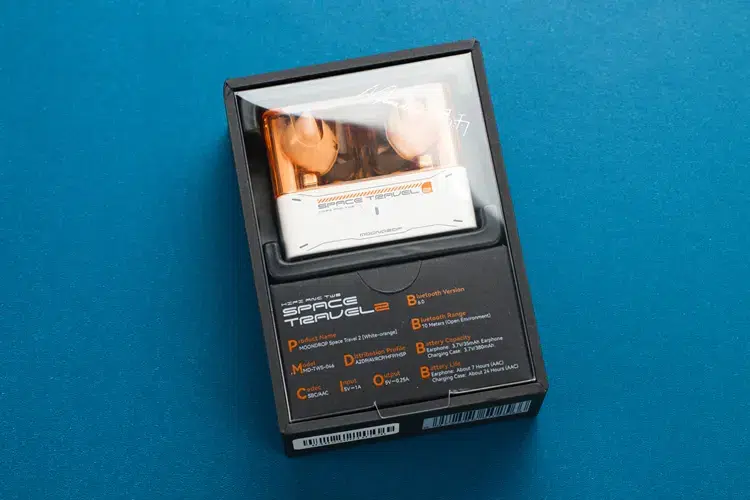
- Bluetooth version: 6.0
- Supported protocols: A2DP/AVRCP/HFP/HSP
- Codec: SBC/AAC
- Charging port: Type-C
- Working distance: 10m (barrier-free open environment)
- Support system: Bluetooth devices and mobile phones
- Earphone battery capacity: 3.7V/35mAh
- Battery capacity of charging case: 3.7V/380mAh
- Battery life of earphones: About 7 Hours (AAC)
- Battery life of charging case: About 24 Hours (AAC)
- Input: 5V⎓1A
- Output: 5V⎓25A
- Size: 54.6 x 43.2 x 25.4 mm
- Weight: 42.3 grams
