

Synergy
Efficiency
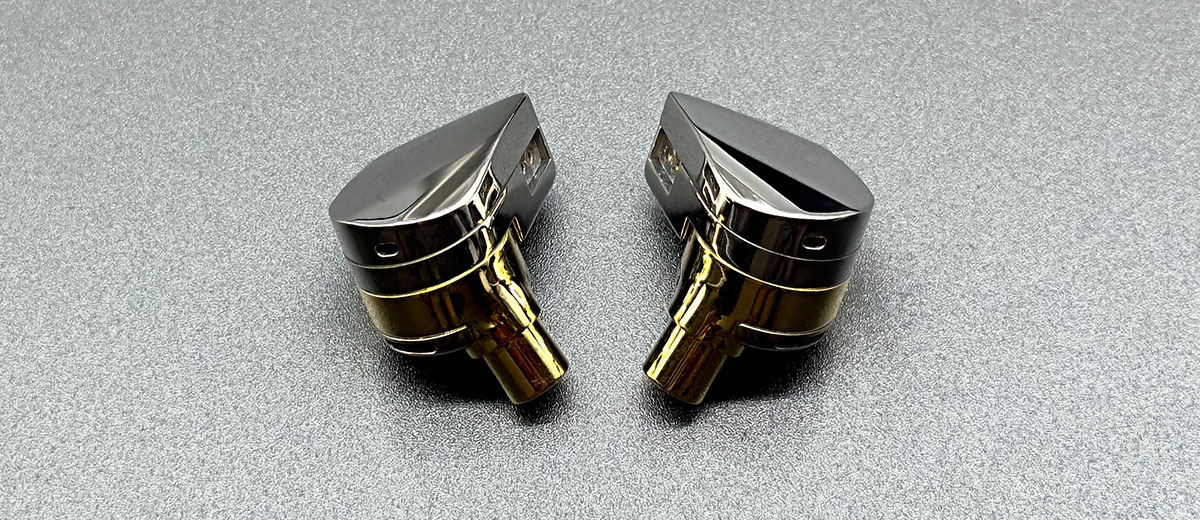
Illustrious has an impedance of 25 Ω @ 1 kHz and a sensitivity rating of 124 dB/Vrms. The IEM is efficient to drive and even with low-specification devices such as smartphones and laptops, it sounds full and achieves a decent level of resolution.
I do not find it to have scaling properties, but a nice, powerful source improves dynamics and helps it with a more open and richer sound. Also, I find it to handle additional power quite well. It does not have any static noise issues with powerful sources.
Source Pairings
The Illustrious generally pairs well with most sources I’ve tried. I prefer pairing the Illustrious with a neutral to warm source, as a bright source can push the treble region, making it sound incoherent.
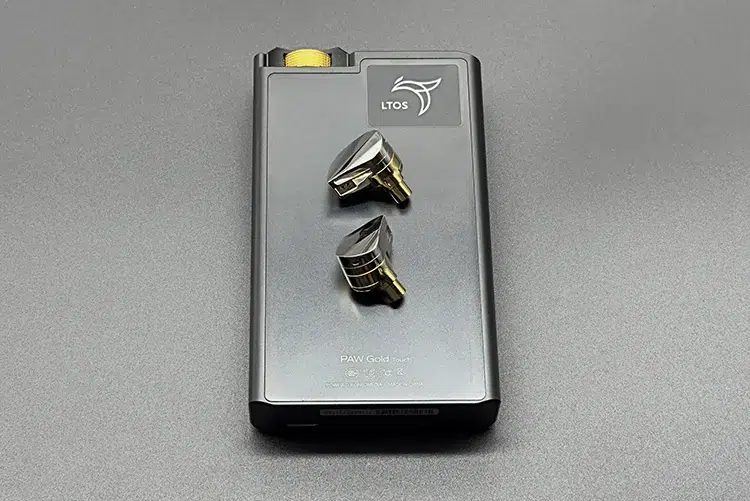
With my go-to device, the Lotoo PAW Gold Touch, the Illustrious shows good synergy, delivering a lush and warm sound.
The bass gains extra body, and the texture, layering, and separation of the bass stand out in this pairing. The midrange carries an emotional touch, thanks to the natural and clean timbre with added heft in the lower mids.
The upper midrange feels nicely extended without any hint of sharpness. The treble presents a satisfying sense of space and airiness. Overall, the sound feels natural and relaxed, with enough richness to keep you engaged.
With the Questyle CMA18P, a DAC/amp featuring the AKM 4493 DAC chipset, the pairing proves enjoyable, as the device pushes a solid dose of power that the Illustrious handles well.
Many IEMs reveal a static background hiss on the CMA18P, but I don’t find it here. The background remains clean, dynamics improve, and the bass impact and spaciousness also see some gains.
The sound may not reach the resolving capability of the LPGT, but the overall performance isn’t far behind. Also, I find some thinness in the treble region.
Select Comparisons
DITA Audio Mecha
Technical
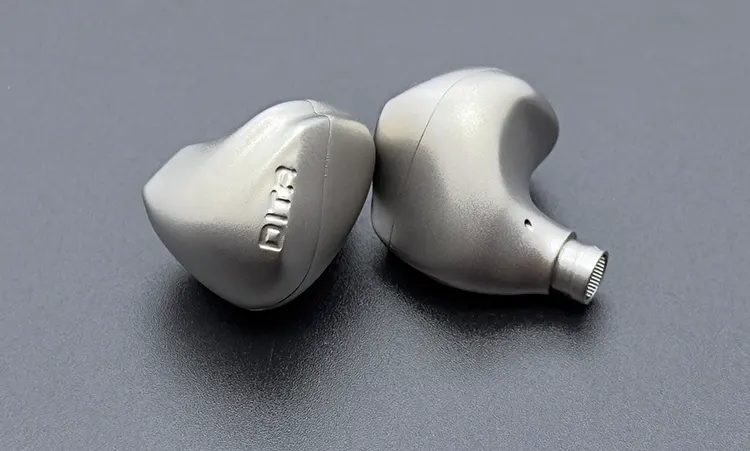
DITA Audio Mecha features a single 10mm LiMa-Carbide dynamic driver with a dual magnet setup. The LiMa-Carbide driver consists of a 9mm lithium-magnesium diaphragm surrounded by a 1mm carbide diaphragm.
There is a special venting system with dual vents on the shells that helps in achieving a well-balanced frequency response and tonality.
DITA Audio Mecha has an impedance of 32 Ω @ 1 kHz and a sensitivity rating of 113 dB/Vrms. The Mecha is highly efficient to drive and sounds stable if paired with more powerful sources. Illustrious is also quite efficient, showcasing stability with additional power.
Like Mecha, with powerful sources, the background on Illustrious remains silent.
Design
The Mecha is built with titanium shells that feature a slightly matte finish. I prefer the matte build of Mecha, which does not ask for utmost care and maintenance like the highly polished and mirror-like finished shells of Illustrious.
Mecha’s shells are larger, while the Illustrious has tiny shells in comparison. Both the IEMs have a very comfortable fit.
The Mecha, with its ergonomic shape, gives a snugger fit, which isolates the outside noise by a fair margin. The fit on Illustrious is dependent on the choice of ear tips, and the isolation factor is not as strong.
It also comes with a custom-designed Churro cable that has a superior build and offers modularity with 3.5mm single-ended, 4.4mm balanced, and USB Type-C plug options.
This cable connects to the IEM via a 2-pin system. The stock cable on Illustrious is also a modular one with 3.5mm and 4.4mm options.
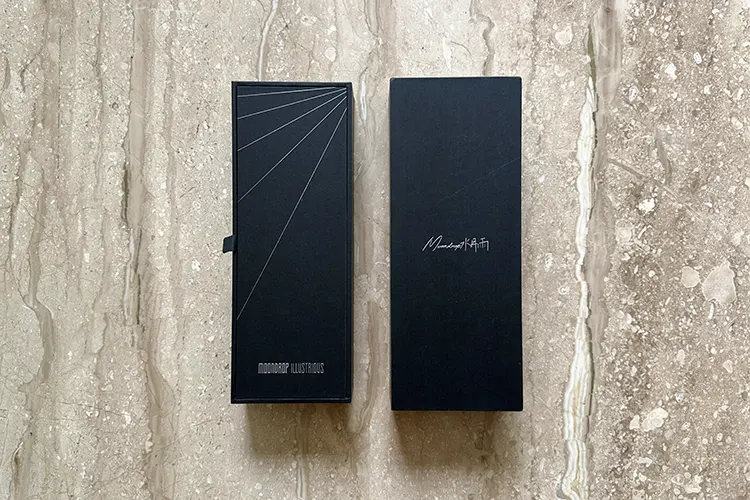
Both IEMs deliver a premium unboxing experience, with a different tone to the presentation, with the Mecha having a vibrant and exciting presentation, while the Illustrious opts for a minimal presentation. Both include thoughtfully selected, high-quality accessories.
Performance
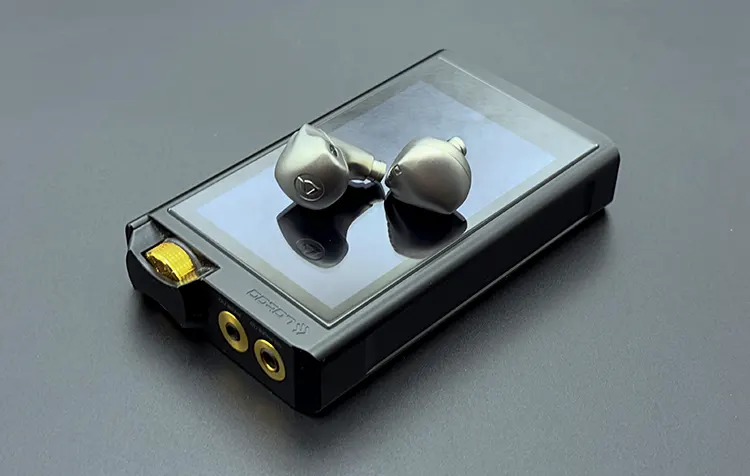
Mecha has a strong V-shaped tuning, with a deep, punchy bass, a forward upper midrange, and an energetic treble range. The Illustrious is a bass-neutral set with a more relaxed profile, but it does not sacrifice details and energy.
In the bass, we do not have much to compare, as the Mecha has significantly more impactful bass. The sub-bass goes very deep, while the mid-bass has sufficient punch.
The bass has a slower decay on Mecha, whereas it is fast and does not linger much on the Illustrious. Despite a heavy bass profile, Mecha maintains texture and details.
The lower midrange on Mecha has more body and weight, giving instruments such as bass guitar and cello a sufficient presence, which may feel weak on the Illustrious.
The timbre is cleaner on the Illustrious, as the bass shelf does not intrude much into the midrange. Mecha’s upper midrange carries a generous amount of energy and may feel occasionally sharp.
Illustrious remains relaxed but maintains a decent amount of energy, which gives it a more natural feel with enough extension.
In the treble region, overall, Mecha is more energetic but occasionally overemphasizes regions. Illustrious is smoother overall; however, it is not far behind in terms of details.
In the technical aspects, what Illustrious does better than Mecha is bring out a sense of openness and a wide, spacious soundstage.
Mecha’s stage is more in-your-ear; however, it does have good depth to it. I do not find Illustrious very resolving, but the clean timbre certainly helps in bringing out details more naturally than Mecha.
Illustrious offers more spacing among the instruments; thus, it handles complex tracks a bit better. Mecha offers better dynamics, and it is more stable with powerful sources.
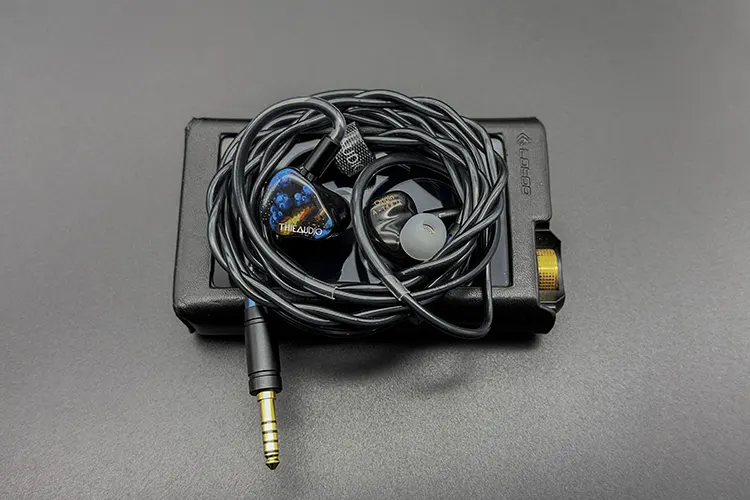
THIEAUDIO Origin
Technical
The THIEAUDIO Origin features a quad-brid driver configuration with a total of 8 drivers per side.
The drivers include an in-house 10mm bio-cellulose diaphragm dynamic driver, four balanced armature drivers with a mix of Sonion and Knowles, and dual Sonion electrostatic super tweeters. In addition to these, there is also an in-house-developed 11mm bone-conductor driver present.
Origin has an impedance of 9 Ω @ 1 kHz and a sensitivity rating of 102 dB/Vrms. The IEM can be comfortably driven by sources with lower power specifications.
While it does not demand extra power, it does benefit from a powerful source, seeing some improvements in spaciousness and dynamics.
Design
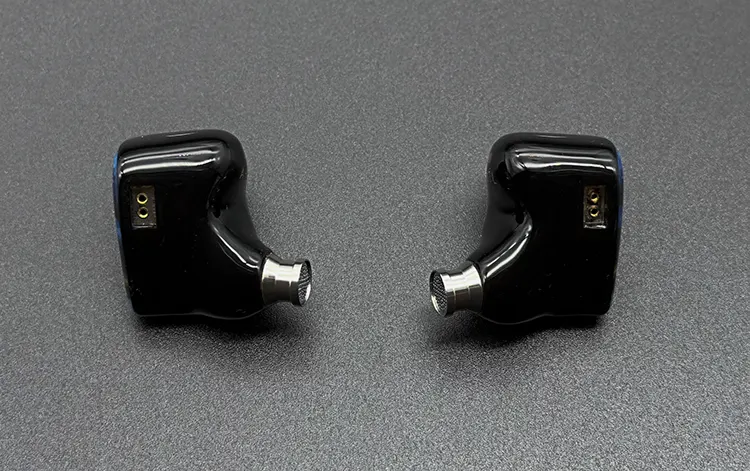
Origin shells are built from European medical-grade resin. The shells have a sleek, all-black look with a vibrant, colorful yet subtle-looking faceplate.
Origin has massive shells, thus challenging the fit. Even with an ergonomic shape and lightweight shells, the fit can bother people with smaller earlobes. The Illustrious is tiny in comparison and has an easier fit than Origin. The Origin is better at isolating external noises.
Both IEMs connect via a 2-pin system and have modular connector systems. I prefer the build of Origin’s stock cable, which feels more robust.
Performance
Similar to the Mecha, the THIEAUDIO Origin is a bass-first IEM. The bass experience is enhanced even further due to the presence of a bone-conductor driver, which adds some physicality to the bass.
The Illustrious is extremely bass-light, though the bass quality still makes up for it. The Origin’s bass is not too thick or warm; rather, it remains clean and is highly detailed.
One of the good things about Origin is that, despite the heavy bass profile, the midrange remains very neutral. The bass shelf tapers off quickly, thus preventing any bloating in the lower midrange and midrange region.
In a way, both Origin and Illustrious have a similar midrange profile, but Origin is richer and has a lusher midrange. The notes are taller and carry more weight, which also gives a more natural timbre to them. Illustrious may feel occasionally thinner and lacking enough weight in the notes.
In the treble region, Origin has an obvious advantage with EST drivers. Origin carries more air and sparkle, while the Illustrious feels less airy due to less presence in the upper treble region.
Treble notes on the Origin carry more details and also exhibit better separation. The last bits of detail, which feel faded, are more pronounced on the Origin.
For me, Origin’s soundstage is special, as it stretches wide and has a very holographic feel to it. It does marginally better than the Illustrious in all aspects, including the depth as well.
However, the Illustrious has a special openness to its sound as well, which is not easy to find on IEMs. It also gives more space to the instruments to breathe, thus is better at handling more complex tracks. It also brings out details in a more precise manner.
LETSHUOER Mystic 8
Technical
LETSHUOER has gone for an all-balanced armature driver setup with the Mystic 8. It features eight balanced armature drivers, four each from Sonion and Knowles.
The Mystic 8 also incorporates a low-pass filter module to enhance bass performance and employs a three-way crossover circuit along with a four-way acoustic tube configuration to precisely divide frequencies among the drivers.
With a sensitivity rating of 107 dB/Vrms and an impedance of 18 Ω @ 1 kHz, the Mystic 8 is effortless to drive and doesn’t require much power. In terms of drivability, I would put both the IEMs at the same level. Both IEMs are fairly stable with high power output.
Design
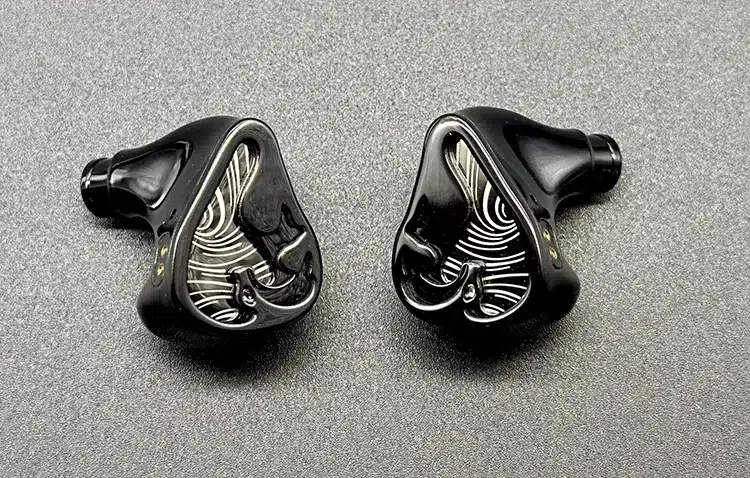
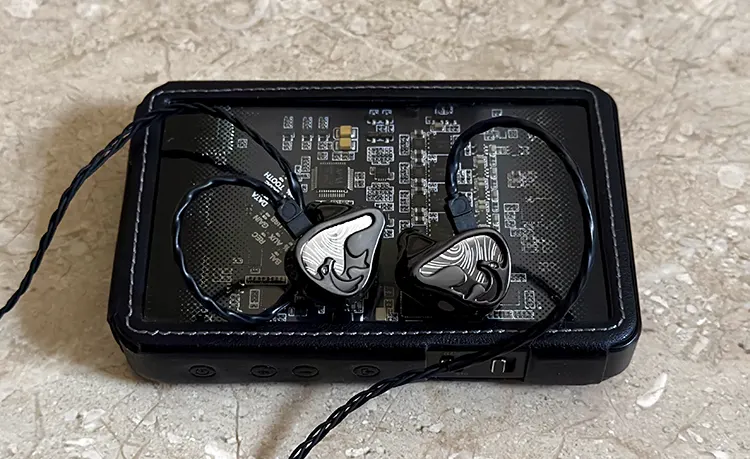
The design of the Mystic 8 is inspired by the Phantom Cat. The faceplate of the IEMs features a cutout depicting the cat, with the cat’s eyes made of faux diamond.
The shells are made of CNC-machined titanium alloy, which is strong and corrosion-resistant, offering excellent durability. The Illustrious, with a shiny, mirror-like shell, is very minimal in design.
The shells on the Mystic 8 are small in size, and owing to the ergonomic shape, they have a very snug fit. The Illustrious is even smaller in size, and the fit can be a bit tricky.
The Mystic 8, being a premium offering from LETSHUOER, offers a very elegant unboxing experience. It includes high-quality accessories, except the cable, which I feel is too flimsy. I prefer the stock cable we get with the Illustrious.
The carry case that comes with the Mystic 8 is a round, puck-style case made of shiny aluminum with a thick, black silicone cover as a lid. This one is more premium-looking and more durable than the one we get with the Illustrious. You get a better set of ear tips with the Illustrious.
Performance
The Mystic 8 is more aligned to the tuning of Illustrious than the Mecha and Origin. Both the IEMs have light bass and a natural and clean midrange without much coloration, and a fairly detailed treble range.
In the bass region, Mystic 8 has a slight edge due to its deeper and more impactful sub-bass. In the mid-bass, both the IEMs miss the necessary impact and thus remain lean. This also makes the low midrange suffer, as it also misses the weight and body on both the IEMs.
In the midrange, the Mystic 8 has a more emotional touch with a more natural and lifelike feel. Even with a rich midrange and a clean timbre on the Illustrious, it’s the tonality of Mystic 8 that wins over.
It sounds fuller and brings out nuances in a better way. The upper midrange on Mystic 8 has the right amount of extension and energy, which is occasionally missing on the Illustrious.
In the treble region, Illustrious is smoother, while the Mystic 8 has a better sense of space and offers more airiness and sparkle. Extra bits of shimmer and sparkle in the top end are not as pronounced on Illustrious.
On Mystic 8, you get a more resolving treble carrying more energy. Both IEMs offer a non-exaggerated treble range, making them ideal for longer sessions.
If you compare the soundstage, both IEMs have similar things to offer. Mystic 8 does not possess the right amount of depth in the soundstage and can feel flatter in comparison.
Illustrious has an edge with an open sound profile. The Mystic 8 leads ahead with greater accuracy in the spatial arrangement of instruments. Resolution is a touch better on the Mystic 8, which offers a clean and crisp presentation.
My Verdict
MOONDROP’s Illustrious is a bold release from the brand that comes with a premium price tag. We don’t often see single dynamic driver IEMs priced this high, so the expectations are bound to be high.
It has a solid build, premium looks, and top-notch accessories. But the sound, arguably the most important factor, can be a bit polarizing for many listeners.
Even with its natural and sweet-sounding midrange and a relaxed, smooth treble range, the bass doesn’t satisfy much. So, if you’re a basshead, you might want to stay away from this IEM.
For those who don’t prioritize bass, I think it can be a strong match. I would have loved a more incisive and resolving sound. Other than these factors, there’s nothing this IEM lacks, so you’re in for a treat.
The special sauce is the open and wide-spanning sound, which we generally don’t find on IEMs. It gives you an almost infinite soundstage that’s immediately immersive.
The second thing you’ll notice is, of course, the lean bass. This set can complement strong, bass-heavy, V-shaped IEMs quite well. For those who gravitate more toward vocal and acoustic music, the Illustrious may also be a good choice.
My suggestion is to audition it before you pull the trigger, who knows, you might find it as impressive as I did.
MOONDROP Illustrious Specifications
- Driver Configuration: 11mm Patented Dynamic Driver
- Impedance: 25 Ω @ 1kHz
- Sensitivity: 124 dB/Vrms @1kHz
- Frequency Response: 10 Hz–50 kHz
- Cable: 3.5 mm single-ended & 4.4mm balanced, 2-pin connection system
