

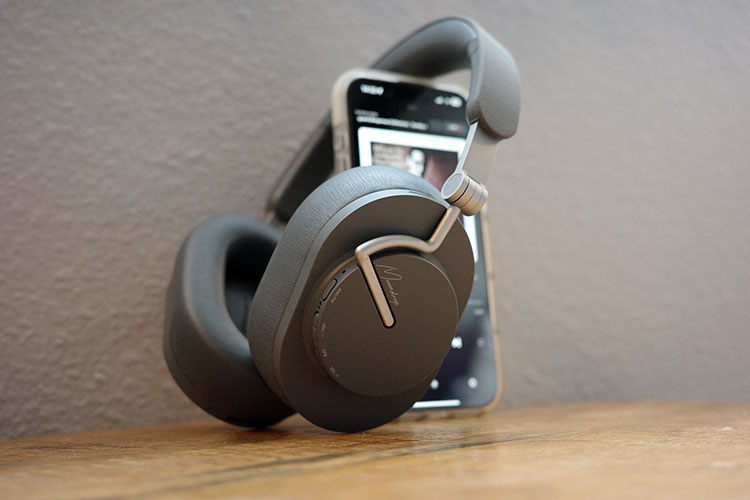
Pairing Performance
The MOONDROP Edge can reach levels of volume loud enough to bother me. Plus, when using the EQ settings, thunderous bass comes into play, making a basshead happy with the results.
What I did find, though, was that the Edge may not reach the loud levels some desire from a wireless headphone.
This can be canceled out, so to speak, by using a more powerful offering, and mind you, the Edge does reach higher volume levels. But I get the feeling that something more powerful might have a positive effect all around on the Edge’s capabilities.
Pairings
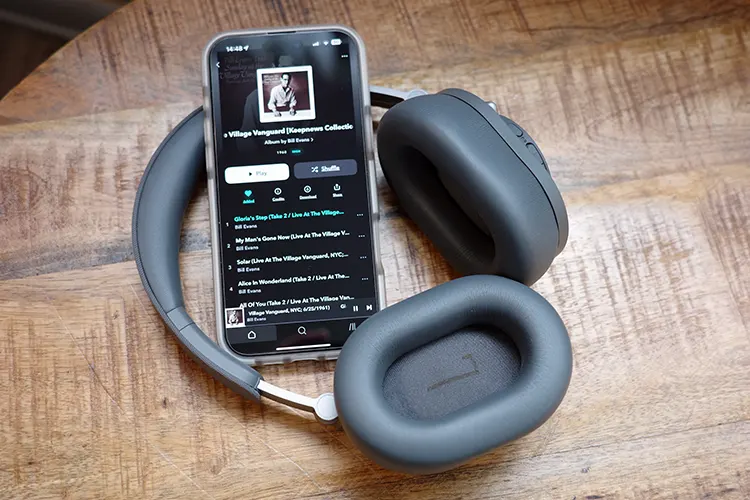
I only had my iPhone 16 Pro Max and MBP at my disposal during testing, even though burn-in was done with the HiBy R4. Due to traveling, this gives a good accountability for the traveling capabilities of the Edge.
Paired first with my iPhone 16 Pro Max, I found the use of the app to be mixed. I only used the app to change EQ settings, for the most part.
Utilizing Tidal for streaming capabilities, which already includes a pushed bassline, the iPhone/Edge pairing came across with a verve that was appreciated. While that verve pushed the signature forward, the overall level of clarity was decent, but not groundbreaking.
Switching to my MacBook Pro provided the same levels of verve, but with more detail retrieval. Switching back to the iPhone with no EQ involved showed that the two were more closely related than not, and the internal sound presented through both sources was fairly close.
Select Comparisons
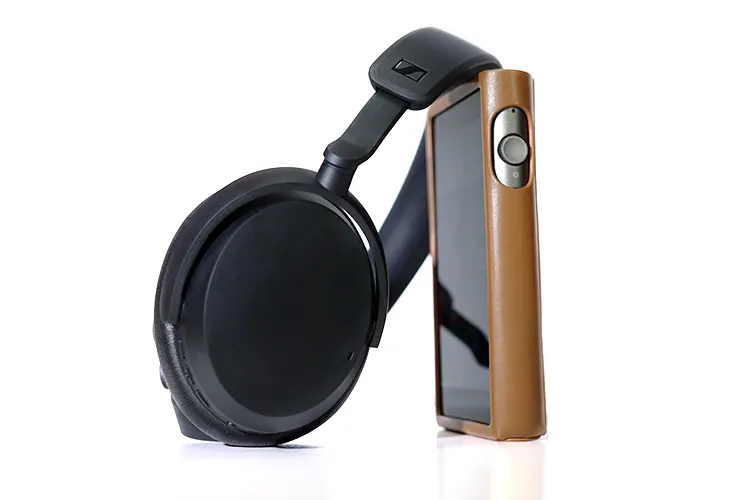
Sennheiser ACCENTUM Wireless
Technical
The ACCENTUM uses a 37mm dynamic driver (as opposed to the 40mm DD in the Edge) and supports USB-C audio for wired connectivity and a BT 5.2-capable internal chipset for wireless connectivity. The Edge uses the more current BT 5.4 but has no cabled audio capabilities.
It is capable of receiving and decoding from SBC and AAC up to aptX and aptX HD codecs. However, there is no LDAC or aptX Adaptive capability currently. The Edge adds LDAC on those sources capable of that, but no aptX or HD capabilities.
The hybrid ANC technology is either on or in transparency mode through Sennheiser’s Smart Control app (or a double press of the power/pairing button). There is no middle ground. The Edge can be on, transparent, or off.
Sennheiser has a history of good ANC quality in their wireless options, so it should be (and is) worthy of the moniker. Sennheiser pretty much sets the bar for ANC capabilities and does a better job of it than the modified Edge.
No cable jack is included, only a USB-C charging port, so the ACCENTUM is a wireless headphone first and foremost, though you can use the USB-C port for digital lossless audio, unlike the Edge.
The battery longevity adds only a couple of hours over the Edge, so this is essentially a draw.
Design
The cup size is medium-small, and those with larger ears will most likely suffer from the pads lying on their ears.
Stuffed with memory foam, the pads are comfortable for moderate use but have no waterproof rating. The Edge provides a larger listening cavern that fits well, even with the oblong shape.
The ACCENTUM is made mostly of plastic, and the headband carries over in one piece with a memory foam insert underneath for head relief.
While the fit and materials are on the budget side, they do follow the market segment. The same can be said for the Edge, but with a more upscale look and feel to it.
That padding only goes halfway down the band in a somewhat odd shape while supporting the top of your head. Those with larger heads may find that the pad/hard plastic interface could hinder comfort. Conversely, the Edge provides a much more comfortable fit and feel.
Vent slots sit on top of each cup, while two microphone holes sit on the face and side of the right cup, closer to where they are needed. The microphones for the Edge are on the top and bottom of the round cup part, which comes into play when adjusting the volume or ANC.
The tactile buttons control all functions on the right cup, with no gesturing swipe. Those buttons work well, and it becomes intuitive after a short period of use. There is a button for ANC, which is controlled via the app or a double press of the power/pairing button.
The Edge takes much more work to acclimate to usage, and I still found myself hunting for the correct button. The detented on/off button does help orient oneself, but not enough in my opinion.
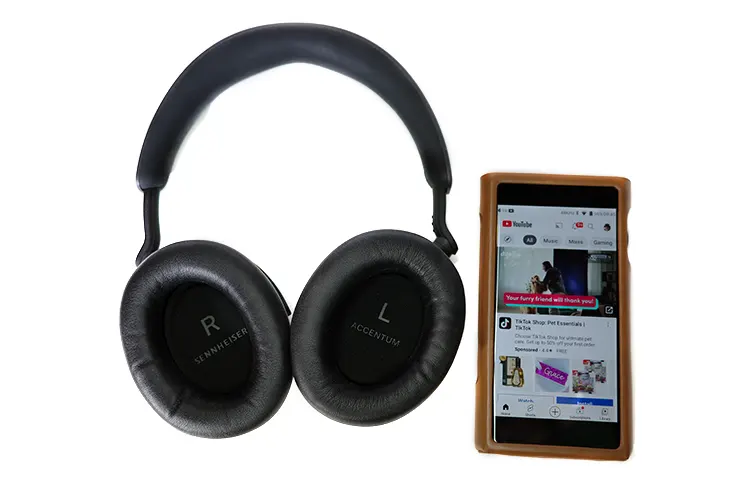
Performance
Considering this is oriented for different purposes than the more expensive models, you would think that the ACCENTUM might sacrifice itself on the sound signature. This is not entirely true. Whereas the Edge is a budget item, but places the sound levels well above its price point and does so well.
Restoring all EQ settings to flat allowed for solid bass down low, with mids pushed forward, but not lifted like the Edge. The treble notes rode that forward push a bit, but not as much as the Edge.
Similarly, the Edge followed that same sound quality, but with a more forward midrange and a bit less clarity.
Providing good reach, the upper end was rounded off, without much sparkle. Combined, this made for a bookend effect around the richer, livelier midrange.
The Edge, on the other hand, came across as smoother up top, allowing you to raise the volume level more than on the Sennheiser.
This will come down to whether you want a more succinct, detail-oriented signature of the ACCENTUM or a more immersive signature in the Edge.
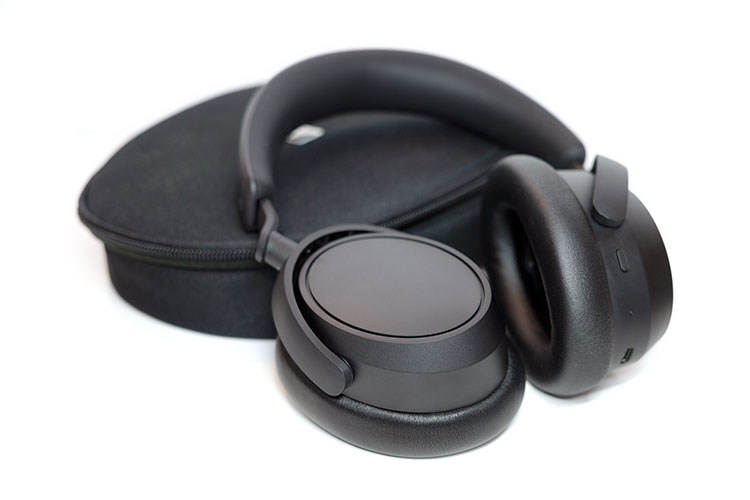
Sennheiser ACCENTUM Plus
Technical
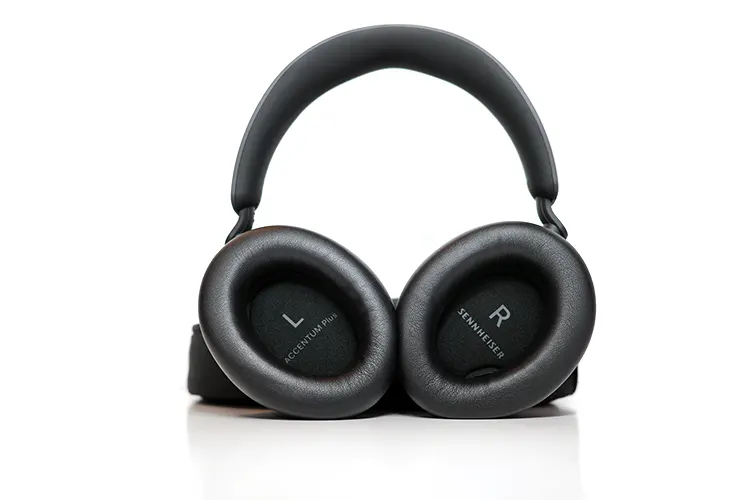
The Sennheiser ACCENTUM Plus is a set of closed-back wireless headphones with additional adaptable ANC capability, which is also a hybrid version, and Smart Control app integration. The 40mm DD of the Edge is again larger than the ACCENTUM Plus.
The Plus supports 3.5mm audio for wired connectivity (an addition over the ACCENTUM) as well as USB-C and uses a BT 5.2-capable internal chipset for wireless connectivity. The Edge uses BT 5.4 but has no wired capabilities.
The headphones are capable of receiving and decoding from SBC and AAC up to aptX and aptX Adaptive codecs. The Edge, on the other hand, uses SBC, AAC, and LDAC for those sources capable of receiving it.
The hybrid ANC technology is adaptable through Sennheiser’s Smart Control app using the slider for the “hybrid effect,” but on the ear cup, either ANC is on, or full transparency, there is no middle ground, much like the ACCENTUM. The Edge uses ANC on, off, or transparent.
As mentioned in the ACCENTUM comparison, Sennheiser pretty much sets the bar for ANC technology, but the Edge’s inclusion of transparency makes for a bit of evening the score. That said, the Sennheiser carries better ANC capabilities, with less bass bloat than the Edge.
The battery lasts slightly longer on the Plus than the Edge by only a few hours.
Design
The cup size is medium-small, and those with larger ears will most likely suffer from the pads lying on their ears, just like the ACCENTUM.
Stuffed with memory foam, the pads are comfortable for moderate use but have no waterproof rating. The more comfortable fit of the Edge gives it a leg up on the Sennheiser.
The ACCENTUM Plus is made mostly of plastic, and the headband carries over in one piece with a memory foam insert underneath for head relief.
While the fit and materials are on the budget side, they do follow the market segment. Again, similar to the ACCENTUM, but slightly behind the Edge in fit and finish.
The headband fit and feel of the Sennheiser also fall behind the Edge. While not bad, the Edge is much more comfortable to wear for long periods.
Vent slots sit on top of each cup, while two microphone holes sit on the face and side of the right cup, closer to where they are needed. The Edge carries a microphone on top and bottom of the round ear cup part, and interferes with the listening due to contact when changing buttons.
Instead of tactile buttons, there is a swipe gesture system on the right earcup. Similar to other models, with swipe gesturing, the controls become intuitive with little effort. This is a major step forward for the Plus and clearly passes the Edge in terms of functionality.
Performance
The ACCENTUM Plus deviates from the ACCENTUM with a better-detailed response and a bit more clarity. This betters the Edge but lacks the low-end grunt of the Edge.
This could be construed as a more forward bass response as well, with a brighter signature adding to the perceived detail and clarity. This tuning does better than the Edge in terms of detail retrieval, but that perceived brightness carries forth on the Edge from the midrange.
The Plus is what the ACCENTUM should have been from the start, with swipe controls and better detail retrieval. But the Edge provides a laudable effort at a more affordable price than either Sennheiser models.
My Verdict
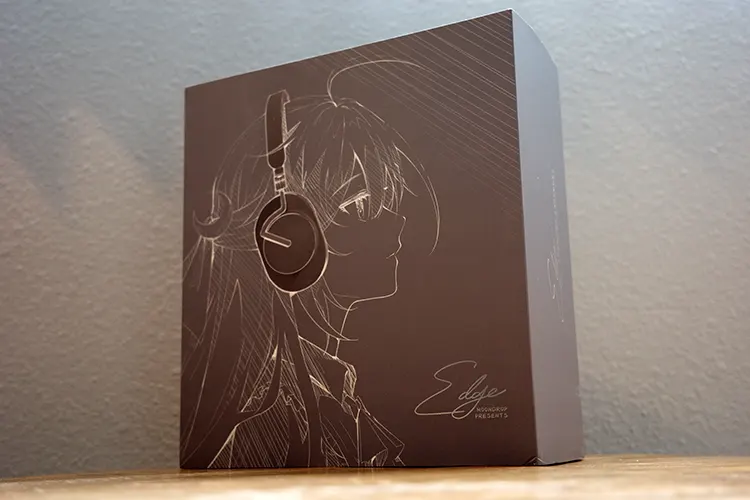
The MOONDROP Edge comes into the affordable end of the wireless headphones market while providing good sound quality. The midrange makes for very good vocals to show forth while providing a near-neutral signature and smooth top end.
However, MOONDROP takes a different approach to ANC, which works fairly well, but adds too much to the low-end in compensation while not completely keeping out external noises.
Plus, when activated, there is some noise between songs, with a less than black background. While off-putting, it is not necessarily a turn-off.
One can be overly critical when reviewing wireless headphones, but sometimes you simply need to appreciate what that item brings, which is the company’s typically good sound signature and build quality in an affordable price range.
When taken in that regard, the Edge provides a pleasant listening alternative to a market full of options.
MOONDROP Edge Technical Specifications
- Product Name: MOONDROP / Edge High-Fidelity Portable Wireless ANC Headphone
- Driver: 40mm low-distortion dynamic driver, High-resolution beryllium-plated dome, and flexible surround composite diaphragm
- Bluetooth Version: 5.4
- Distribution Profile: A2DP / AVRCP / HFP / HSP
- Codec: SBC / AAC / LDAC™
- Charging Port: USB-C
- Working Distance: Over 10m (Unobstructed Open Environment)
- Support System: Bluetooth Devices and Mobile Phones
- Headphone Charging Time: About 1.5 hours
- Battery Life Of Headphones: About 48 Hours
