

Synergy
Efficiency
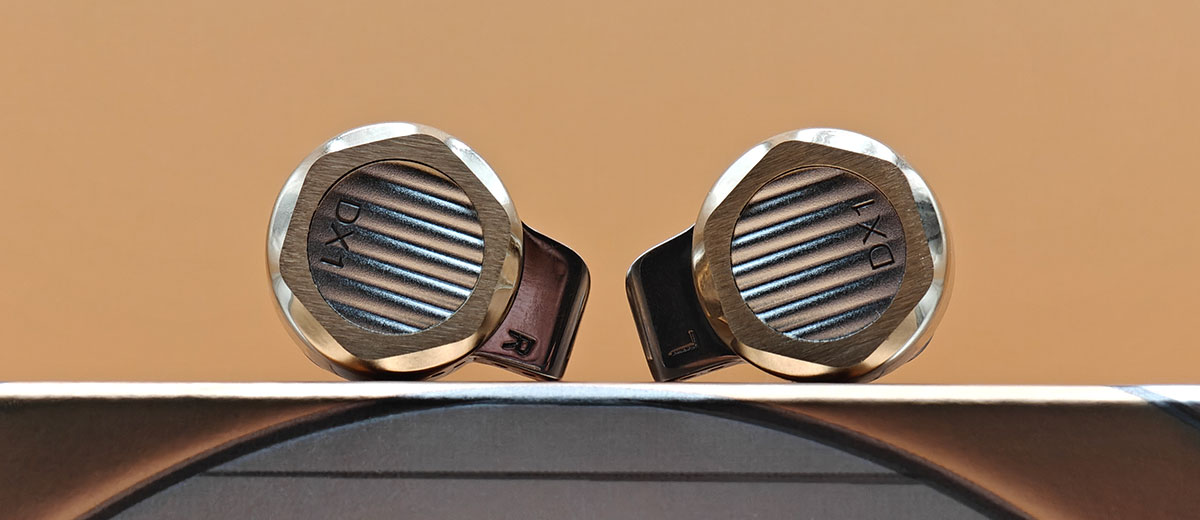
With a sensitivity of 108 dB and an impedance of 30Ω, the LETSHUOER DX1 is relatively easy to drive. It works well on most dongles, compact DACs, and even some smartphones without needing much extra power.
It comes with a 0.78mm 2-pin cable and offers a choice between 3.5mm or 4.4mm terminations, depending on the version purchased.
While this keeps things simple, it lacks the flexibility of a modular system, which would have been a more versatile option.
At lower volumes, the treble becomes even more relaxed and loses its upper-end sparkle. Still, the midrange stays upfront and keeps the overall tuning grounded.
Pushing the volume higher gives a slight boost to the treble, letting more detail and energy come through. Even then, the midrange remains the most forward part and holds its clarity without being pushed back.
Pairings
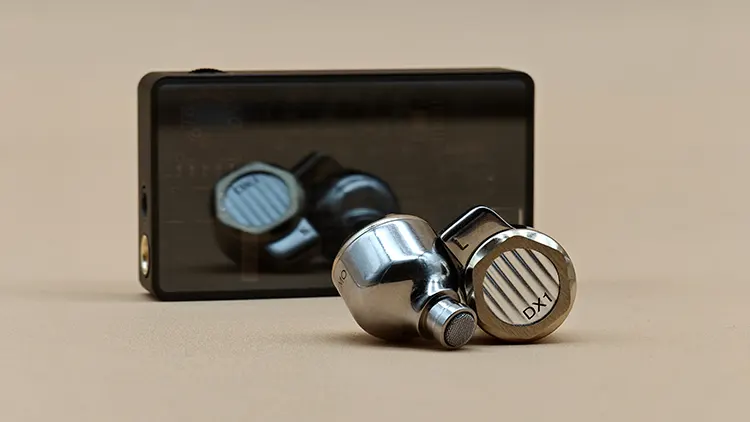
Using a standard 3.5mm jack from a phone keeps the DX1 neutral and consistent. It gets loud easily and sounds clean without any issues in power or balance.
The FiiO JA11 brings the vocals more in your face, shifting them from the original centered and laid-back position. It also adds a bit more energy to the upper mids, making the presentation feel more forward.
The Colorfly CDA-M2 helps the most when it comes to separation and layering. Instrument positions become easier to follow, and the overall stage feels better organized.
The Heartfield R1 doesn’t change the already excellent midrange. It does, however, add a slight bump to the midbass, giving kick drums a bit more presence.
Select Comparisons
MOONDROP Kadenz
Technical
The MOONDROP Kadenz uses a single 10mm dynamic driver based on MOONDROP’s ULT Gen-2 super-linear platform.
This driver is the result of two years of internal development, featuring a new irregular magnetic circuit design for improved control and reduced distortion.
Its diaphragm is made of a TAC diamond-coated dome layered on top of an LCP base. This material choice enhances treble extension, improves bass impact, and keeps the overall response clean and detailed.
Design
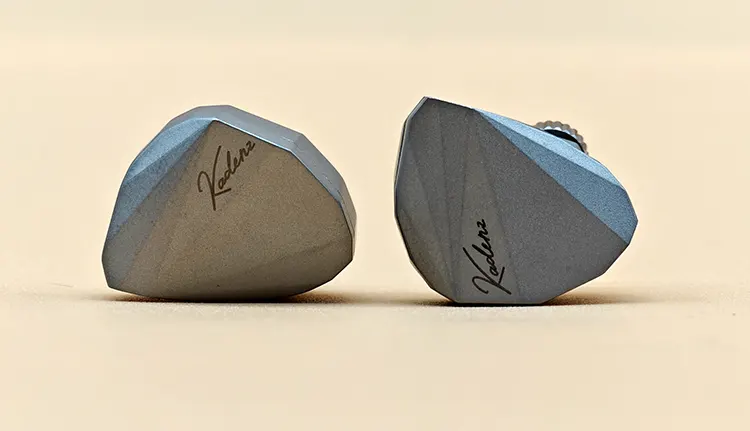
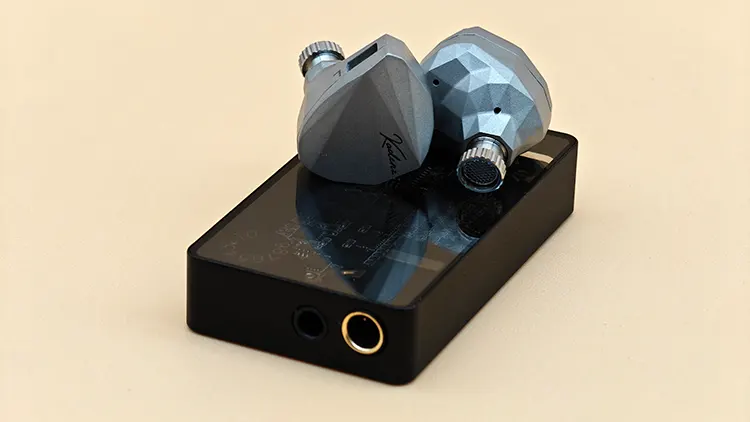
The MOONDROP Kadenz carries over the Kato’s general silhouette but introduces sharper cuts and more defined edges. It feels heavier and sturdier in hand, with a smooth matte metal shell replacing the older mirror finish.
The faceplate features the word “Kadenz” printed in cursive, giving it a signature-like look. It also includes one vent on the inner side and supports MOONDROP’s interchangeable nozzle system, now expanded to three options.
Performance
Bass on both IEMs is clean and controlled, but the focus differs noticeably. The DX1 leans toward subbass, offering stronger rumble and deeper reach, while the Kadenz prioritizes midbass, giving it a more engaging and punchier feel during drum-heavy tracks.
Their midrange presentation is a highlight, though they diverge in style. The Kadenz pushes vocals forward and gives them a brighter tone, while the DX1 keeps them relaxed and centered with thicker weight, giving male vocals more fullness and realism.
What gives the DX1 an edge is how it conveys emotion through its midrange. Vocals carry more weight and warmth, making them feel more heartfelt and natural compared to the more analytical tone of the cadenza.
Treble is tuned similarly between the two, with neither having much sparkle or air. Both do avoid sibilance and sharpness, keeping the upper range smooth, though neither stands out in terms of resolution or detail retrieval.
Soundstage and imaging go in favor of the Kadenz, with better layering and spatial separation. The DX1 still performs decently, but it starts to lose some control in busier tracks where the Kadenz keeps its structure intact.
ZiiGaat Lush
Technical
The ZiiGaat Lush uses a five-driver hybrid setup, consisting of a 10mm PET dynamic driver and four custom balanced armature drivers. The dynamic driver is tuned as a dedicated subwoofer with a focused 9dB boost at 20Hz for added low-end presence.
Two balanced armature drivers handle the midrange between 200Hz and 1kHz, targeting a neutral and natural vocal tone.
The last two BA drivers are assigned to the upper treble, aided by a three-way crossover that keeps transitions smooth across all regions.
Design
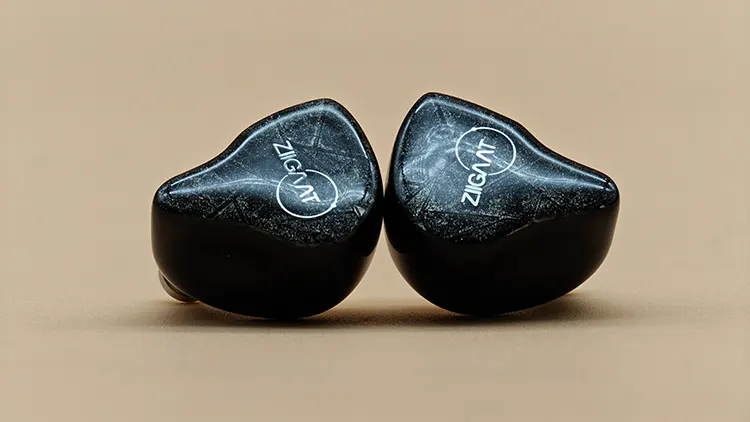
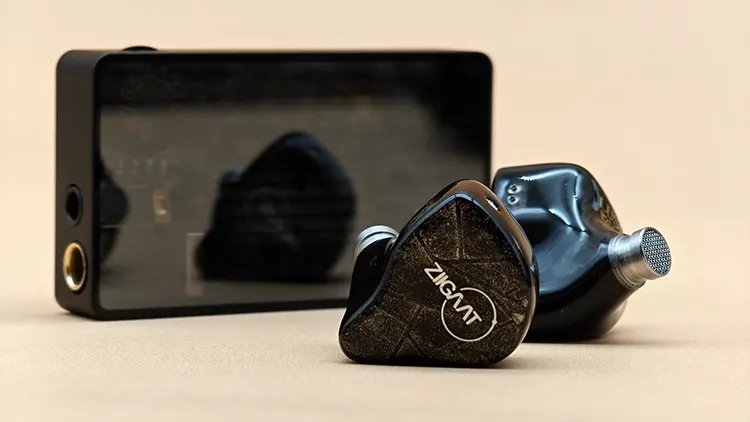
The ZiiGaat Lush has a faceplate that mimics polished black granite, with subtle gray veins running through the surface. A white ZiiGaat logo sits at the center, adding contrast to the clean, stone-like finish.
The shell is made of glossy black medical-grade resin shaped into a smooth, rounded body with no visible edges.
It includes gold-printed “LUSH” markings with serial numbers, a single large vent near the connector, silver nozzles with mesh filters, and standard recessed 0.78mm two-pin connectors.
Performance
The sub-bass reaches deeper and feels more prominent on the Lush, but it doesn’t hit with the same satisfying punch. The DX1 brings stronger midbass impact, which gives it more energy and engagement in low-end tracks.
Midrange clarity goes to the Lush, offering a cleaner and more transparent presentation. However, the DX1 carries much thicker note weight, making vocals sound fuller and more emotional with better timbre.
Treble performance is slightly better on the Lush, where it brings more sparkle and air to the upper end. The DX1 stays smoother but doesn’t extract as much detail or shine in comparison.
Staging and imaging lean toward the DX1, which offers noticeably more width in the soundstage. This extra space helps improve imaging accuracy, giving it the edge over the more compact staging of the Lush.
My Verdict
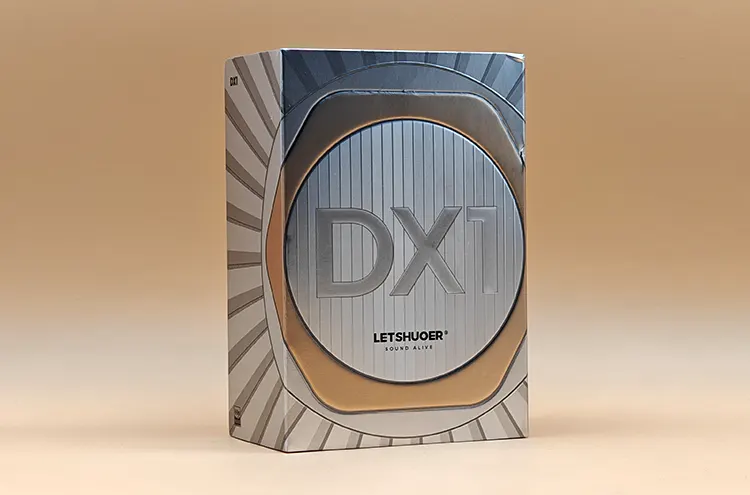
The single-dynamic driver LETSHUOER DX1 IEM delivers a smooth and emotionally engaging midrange, paired with a clean low-end and safe treble. Its thicker note weight and natural vocal timbre give it a unique sense of fullness that stands out in casual and focused listening alike.
With a compact shell, excellent wearing comfort, and a well-built cable that matches the design, it’s a complete package. This is an IEM that shows exactly what a proper midrange should sound like.
LETSHUOER DX1 Technical Specifications
- Driver Type: One (1x) 11mm aluminum-magnesium alloy nanoparticle-coated dynamic driver
- Plug: 0.78mm 2-pin with 3.5mm/4.4mm termination
- Frequency Response: 20Hz – 40kHz
- Impedance: 30Ω
- Sensitivity: 108 dB
