

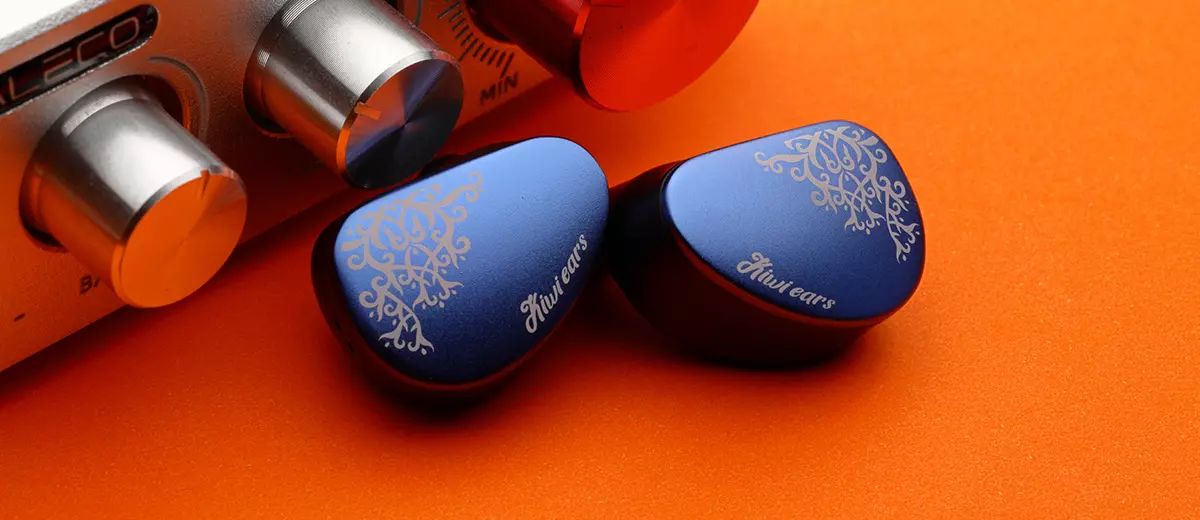
Marcelo reviews the Kiwi Ears Cadenza II, an affordable universal IEM featuring a single 10mm Titanium dynamic driver with KARS 2.0 technology. It is currently priced at $49.99.
Disclaimer: This sample was sent in exchange for my honest opinion. Headfonics is an independent website with no affiliate links or services. I thank Linsoul and Kiwi Ears for their support.
Click here to read up on the Kiwi Ears gear previously reviewed on Headfonics.
This article follows our scoring guidelines, which you can read in more detail here.

To me, Kiwi Ears has got to be one of the most popular and fastest-growing IEM brands in recent years.
I have also owned, enjoyed, reviewed, and been impressed by their products, including the Astral, Etude, KE4, Septet, and Allegro. I have always viewed their products as having good-to-great, competitive sound.
I got excited when I learned I was going to review another Kiwi Ears model, the Cadenza II, which sells for $49 and features up-to-date materials and a unique bass-tuning technique.
I’m always on the lookout for a great-sounding entry-level IEM, which is the most competitive segment for single-dynamic-driver sound quality.
So, how will the new Cadenza II perform, or more importantly, how will it compare to the competition, including the SIVGA QUE UTG and the TWISTURA D-Major? Let’s find out.
Features
The Cadenza II is a single DD IEM featuring a 10 mm titanium-coated PET diaphragm dynamic driver.
An advanced bass-tuning system, the Kiwi Acoustic Resonance System (KARS) 2.0, is also included and provides better airflow control through its carefully engineered labyrinth-tube network. This results in a more precise sub-bass tuning.
I have experienced this kind of bass tuning before with my Kiwi Ears Singolo, which was the first to implement this sub-bass tuning technique. It is supposed to cut the bass boost at 200 Hz precisely, and to my ears it works.
The Cadenza II has version 2.0 of the KARS sub-bass tuning technology. It has an impedance of 16Ω and a sensitivity of 106 dB.
Additionally, the Cadenza II features an effective pressure-release system that prevents pressure buildup in the ear canal, which can cause headache, nausea, and ear pain during walking and running. Cadenza II doesn’t have that issue.
Design
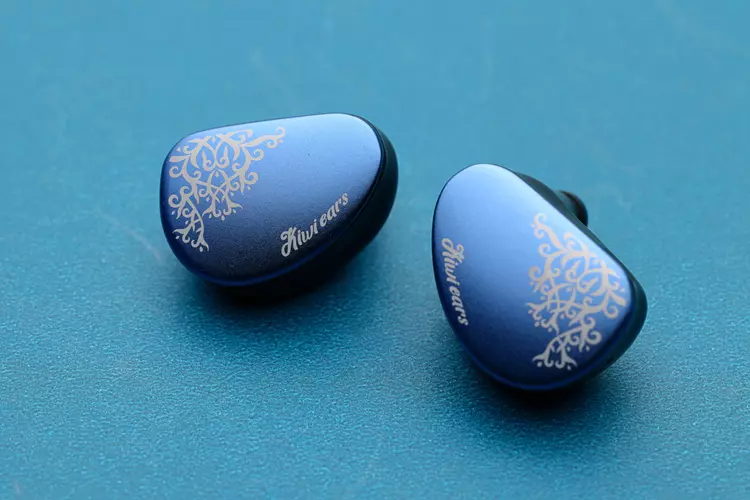
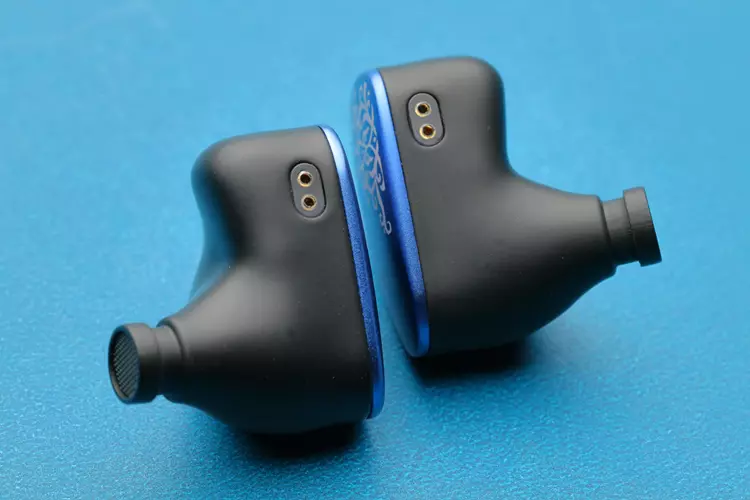
I like that the Cadenza II uses a polycarbonate composite shell, which is more impact-resistant and durable than the increasingly common 3D-printed resin shell.
The faceplate is CNC-machined and laser-engraved from aerospace-grade aluminum with a subtle honeycomb design. Its satin finish makes the Cadenza II look and feel elegant yet practical, helping prevent fingerprints from showing.
The resin nozzle is covered by a fine metal mesh, and a small vent hole is near it. This serves as a means of relieving ear canal pressure. There are two vent holes near the faceplate and the flush-mounted 2-pin connectors.
My Cadenza II came in blue, but it is also available in grey.
Stock Cable
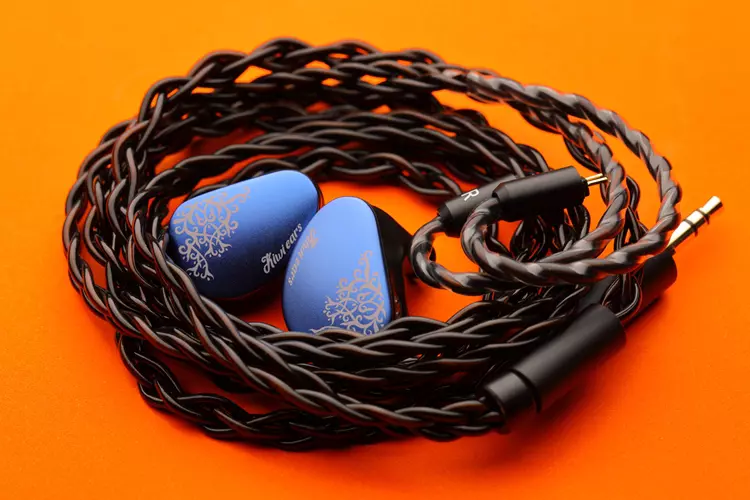
The Cadenza II comes with a detachable 2-pin 0.78mm 4-core cable system made of single-crystal oxygen-free copper.
I like that the cable is black, as it matches the Cadenza II shells very well; however, it only comes with a 3.5mm plug, which is understandable and common in this price point.
Comfort & Isolation
Weighing only 4.45 grams each, which is very lightweight for IEMs, a medium-sized shell with an average 6 mm nozzle diameter, Cadenza II is very comfortable to wear.
I have used it for hours during walking exercises or just at home for sound evaluation, and I have never experienced any discomfort.
Thanks to the supplied ear tips, which are neither too stiff nor too soft, Cadenza II seals easily in my ears.
I did find the sound isolation of the Cadenza II to be average, like most IEMs I’ve reviewed, which, to me, is a good thing, as I still want to hear ambient sounds when not playing music during walking exercises. Still, it goes away when music is played softly.
Packaging & Accessories
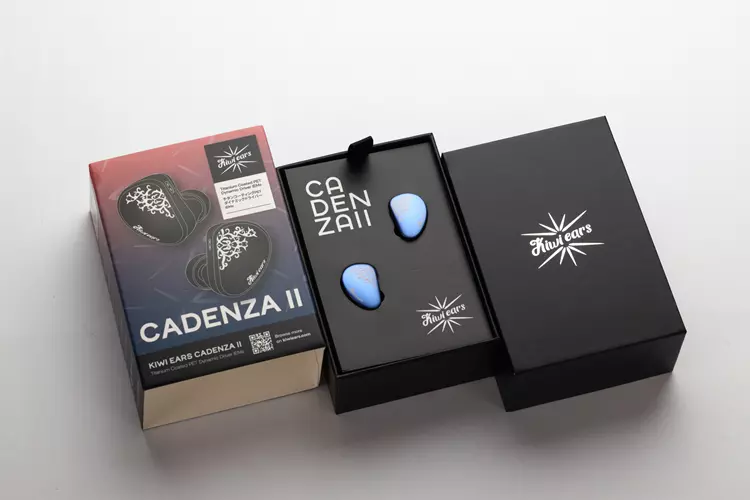
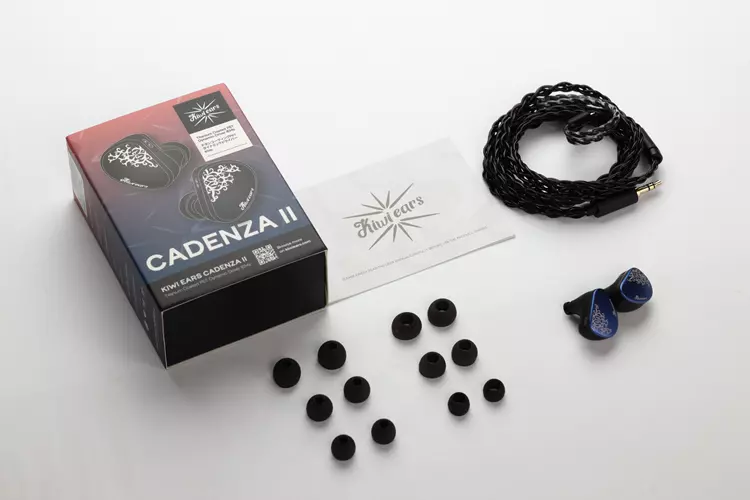
I like that the Cadenza II’s packaging is designed to be efficient and practical. The 116 x 82 x 44 mm box doesn’t waste too much material, and looks very decent inside and out, reflecting the build quality and finish of the shells.
The package includes 1 × Pair of Kiwi Ears Cadenza II IEMs, 6 × Pairs of ear tips (S/M/L), 1 × 0.78mm 2-pin Detachable Cable (1.2m, Single-Crystal Copper), and 1 × User Manual.
Sound Impressions
I did about 24 hours of burn-in by letting the Cadenza II play a spare DAP continuously to ensure the dynamic driver’s suspension has fully settled.
I noticed tighter, better bass detail, and cleaner background decay with longer reverb in the midrange and treble after the burn-in.
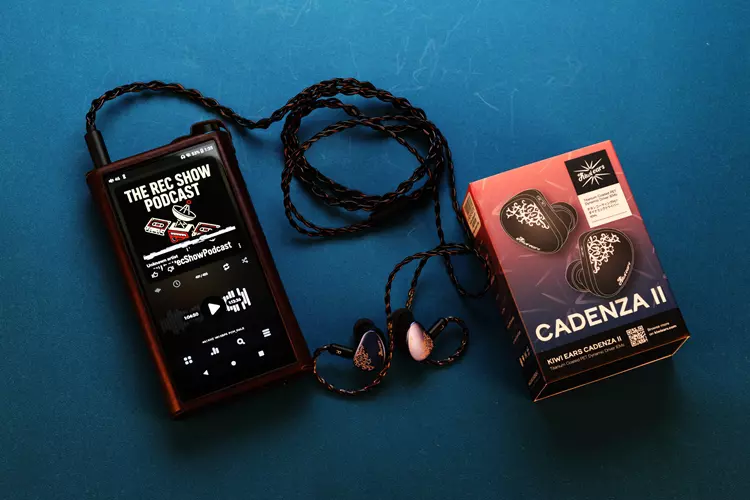
For the sources, I used my iBasso DC-Elite and MUSE HiFi M6 Double DAC amplifiers, with my Android phone and the FiiO M15s DAP, using either UAPP or PowerAmp music player Apps. No eq or any sound enhancement programs were used.
Measurements
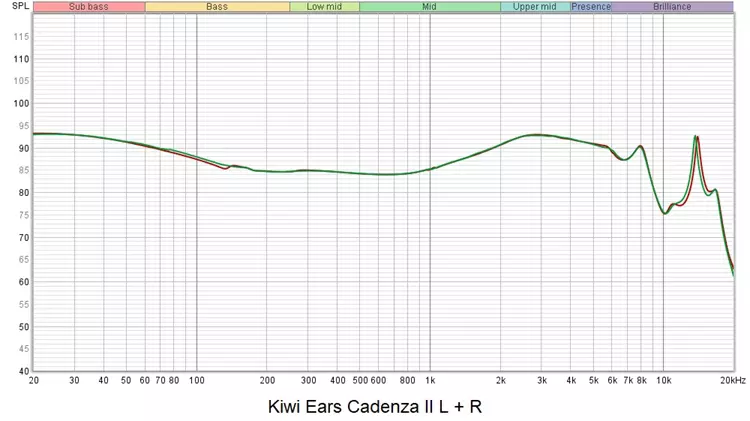
My measurements reveal a nearly perfectly matched IEM pair; the L+R curves mirror each other. This indicates a very high standard of manufacturing, which is commendable given the price point.
The bass boost occurs below 200 Hz, just as Kiwi Ears said on their product page. This is due to the precise tuning of Kiwi Ears’ very own tuning technique, the Kiwi Acoustic Resonance System (KARS) 2.0.
There is a mild-to-moderate broad elevation of 9 dB at 2.8 kHz, which serves as pinna gain to prevent the sound from becoming too dark.
The elevation is below the reference level, making the upper midrange sound laid-back but ensuring the Cadenza II will never sound shouty. This is a nice tuning compromise.
There are small peaks at 8 kHz and a sharper peak at 13 kHz. These are resonances of the metal cavity of the measuring tool, but they don’t sound that way when listened to because of the soft skin inside the ear canal.
Summary
The Cadenza II is supplied with two ear tip types: a standard-bore ear tip and a wide-bore ear tip. I tried both and found the wide-bore ear tips sounded bassy and mid-forward, with little upper treble extension, which is too bassy and dark in the treble for my taste.
I exclusively use standard-bore ear tips, which sound better to me. I also used the stock 3.5 mm cable throughout the review.
That said, the Cadenza II has this larger-than-life sound signature characterized by its clean, robust, and thick boosted subbass, with a dense and lush midrange that has good note weight, and upper midrange that is slightly relaxed yet clear and pleasing to listen to, a very smooth treble, and a very extended upper treble.
I was busy lately and never had too much time to listen to the Cadenza II while it was burning in. After the burn-in, I was surprised by how clean the subbass was.
It sounds like a properly tuned, blended-in subwoofer that, due to its dynamics and bass depth, feels separate from the main speaker yet very coherent with the rest of the music.
The Cadenza II has a clean, bassy overall sound that is well balanced with the upper treble, creating a U-shaped sound signature.
The midrange is very neutral and accurate in terms of note weight. It sounds dense and lush yet clear and accurate.
The upper midrange is clean and well-calibrated to avoid sounding shouty, yet it provides good instrument presence, which helps in good imaging performance.
Lower treble is remarkably clean, smooth, and the upper treble is airy, extended, and accurate. The overall treble sounds very neutral, with the upper treble slightly elevated enough to make it engaging without being overtly lively.
Coloration
The Cadenza II is remarkably transparent and coloration-free; there is no honkiness in the midrange, shoutiness, or nasality in the upper treble. The treble is near neutral and very smooth, with no exaggeration of details or any sharpness that I can hear even at loud volumes.
But if I had to cite a coloration, if I could call it that. It would be a boost in subbass, which isn’t obvious; it just adds a gentle note weight to the bass and excitement to the overall sound without detracting from the music.
I must add that the above coloration is achieved when I use powerful sources like my FiiO M15s DAP, but when I use my dongle DACs, the bass becomes boomier, and the overall tonality becomes darker.
Staging & Dynamics
The Cadenza II soundstage is surprisingly big; it has good width and height, but I feel that the depth is slightly greater than its width.
Overall, spherical in shape, I feel as if I’m standing in the middle of a concert, with an equilateral triangle formed between the speakers and me.
The sound occurs at a distance and never in your face; the details are never forced into my ears.
That said, the imaging is not as present or forward, especially in the center vocals, making it less defined than the best I’ve heard. The Cadenza II still supplies good imaging with good placement, albeit with a slightly laid-back presentation.
There is good left-to-right panning of the image, with good stability, so the instrument doesn’t lose integrity while panning. There are good instrument separations and front-to-back layering, though not the best.
Though the holography is good, the laid-back presentation and less-than-perfect edge definition make the imaging holography not as good as the best.
Thanks to the clean sound from sub-bass to upper treble, with good, clean background decay, I hear a lot of detail and resolution, as well as microdetails and microdynamics. And thanks to Cadenza II’s pleasing tonality, the details are not presented too forwardly and aggressively.
The Cadenza II sounds dynamic and requires a lot of power, with plenty of headroom to spare, without distorting or compressing.
However, I noticed a slight dynamic compression when the Cadenza II is paired with lower-powered sources, which I will discuss on page 2 of this review.
Click on page 2 below for my recommended pairings and selected comparisons.
