

Synergy
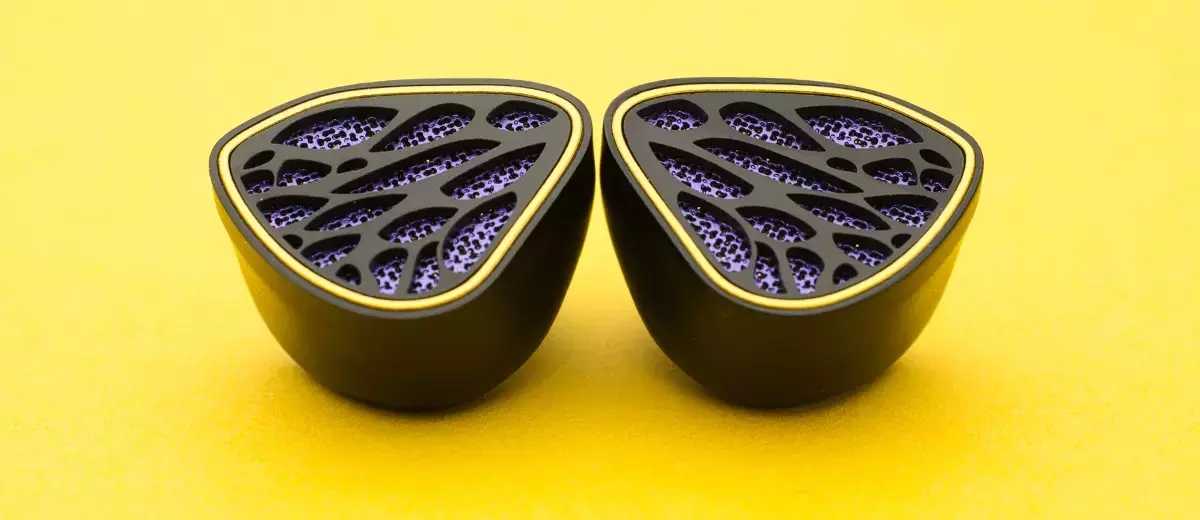
I hear no noise when plugged into the source with no music playing. The NOTT Phantom is not sensitive enough to pick up the noise floor of the source.
However, when connected to some DAC/Amplifiers, I hear a slight pickup of radio frequency noise, which occurs when the DAC and cable are placed very close to the phone. However, it disappears when I separate them.
I blame this on the loose braiding on the cable, which makes the cable feel softer and more compliant, as opposed to tighter braiding, which is less susceptible to interference but sacrifices the softness and compliance.
Personally, this is not an issue in actual use.
Pairings
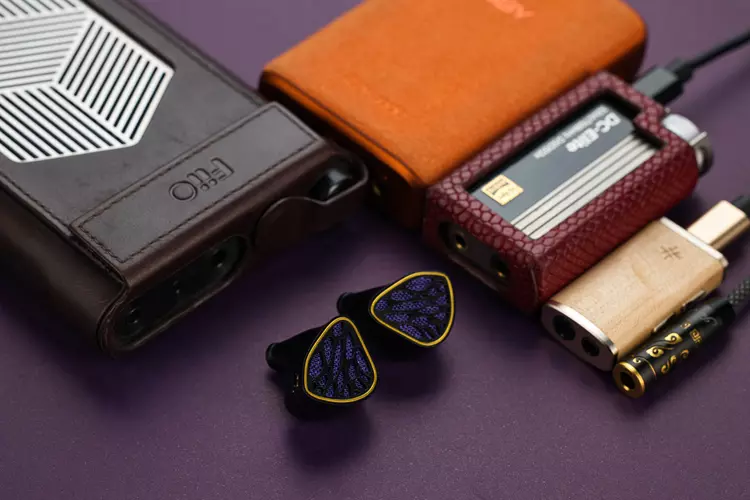
Be careful with source pairing; the NOTT Phantom may not be hard to drive, but it is very revealing of the sonic deficiencies of the source. I can easily differentiate the sound difference between cheap and expensive sources.
NOTT Phantom is not super unforgiving, though. Cheap sources, such as the FiiO JIEZI B and the SNOWSKY Melody, won’t cause fatigue or ear pain. However, they apparently don’t sound as clean, detailed, and transparent as the more expensive sources in this review.
Moving up to iBasso DC-Elite, there is an apparent increase in dynamics, resolution, details, and bass tightness. And then to the HiBy R3Pro II, which offers even more dynamics and bass grip but less resolution and details than the DC Elite.
Finally, the FiiO M15S, the best pairing in this group, may not have the micro details of the DC-Elite, but everything is better. The bass is tighter and more detailed, the midrange is smoother and more fluid, and the treble is smoother.
Selected Comparisons
QoA Martini
Technical & Design
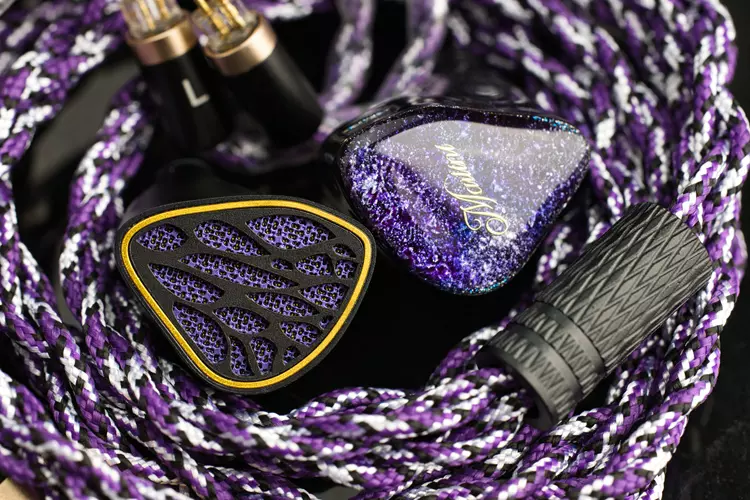
QoA Martini is a tribrid IEM featuring a 10mm bone conduction driver, a 6mm Liquid-Diaphragm Dynamic Driver, two Knowles Full-Range Balanced Armatures that focus on the midrange, and two custom Balanced Armatures that tackle high and ultra-high frequencies.
Martini has an impedance of 14Ω and a sensitivity of 105 dB/mW.
Martini features a cleanly designed, ergonomically shaped 3D-printed shell and is finished with fine, dark, blue-colored metal flakes throughout the shell, as well as a coarser metal flake pattern on the faceplate. It includes a thick customized cable with metal parts.
Performance
While NOTT Phantom is neutral, Martini is slightly more V-shaped; it has more sub-bass and a denser-sounding mid-bass due to Martini’s use of a bone conduction driver, a slightly recessed midrange, and somewhat more treble.
Martini has an edge in staging due to its spherical sound scape shape, where there is equal width, depth, and height. However, the NOTT Phantom has a noticeably wider stage, which feels like sitting or standing closer to the stage in a concert.
Regarding imaging, Martini edges the NOTT Phantom due to its cleaner background and instrument decays, allowing the images to have more definition, separation, and stability. NOTT Phantom is not far behind, though.
When it comes to resolution, they are about equal, but the NOTT Phantom has a more forward detail presentation. At the same time, the Martini is more relaxed in comparison due to its smoother treble response.
They are both very dynamic-sounding, fun, and engaging. The NOTT Phantom is more energetic in the treble, while Martini is more balanced in energy.

Dita Audio Project M
Technical & Design
Project M is a hybrid IEM that utilizes a 9.8mm custom dynamic driver and a Knowles 33518 Balanced Armature driver.
It has an impedance of 32Ω and a sensitivity of 107 dB/mW, which is average.
The Project M utilizes a 3D-printed resin shell with a minimalist design, a metal nozzle, and a QDC-style 2-pin connector.
It includes a slightly thin modular cable, known as the MOCCA cable, which is constructed of 16 strands of Cardas conductors per cable, twisted to DITA’s specifications, and jacketed in a flexible PVC outer layer.
Performance
Both are clear and airy-sounding, but the Project M has a U-shaped sound signature, characterized by more sub-bass, less mid-bass, less midrange, less upper midrange, reduced lower treble, and more upper treble.
In contrast, the NOTT Phantom is more balanced and neutral-sounding overall, although the difference isn’t significant.
They both have a similar soundstage size and shape, which is wider than it is deep. However, the NOTT Phantom has slightly more depth, while the Project M is marginally wider. Both have depth and are not flat-sounding.
Regarding imaging, NOTT Phantom edges out the Project M by having more body in the vocals, making the vocals sound more realistic and palpable.
Although they are similar in definition, NOTT Phantom is more stable and coherent due to its neutral and balanced sound signature.
They are similar in resolution, but I hear slightly more details with the NOTT Phantom due to its flatter frequency response. Project M is somewhat recessed in the upper midrange and lower treble, which affects the presentation in that detail-rich part of the audio frequency.
Both are dynamic and engaging; however, NOTT Phantom is more dynamic due to having more mid-bass and lower treble energy.
Softears Volume S
Technical & Design
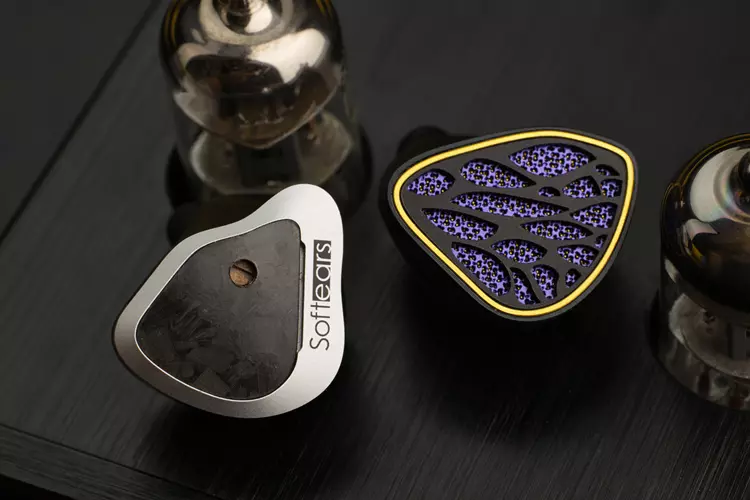
The Softears Volume S is a hybrid IEM featuring a 10mm silicone diaphragm dynamic driver plus a 6mm wool paper diaphragm passive dynamic driver, and 2 balanced armature drivers.
It features a tuning switch that alters the sound and adjusts the impedance between 31.2 and 9.8Ω, as well as the sensitivity between 114 and 124 dB/mW.
The Volume S features a 3D-printed shell with an aluminum and carbon fiber faceplate. There is a rounded hole in the faceplate that allows for the adjustment of the rotary tuning switch. I prefer the sound in its low-impedance position.
Volume S includes a thick, black cloth-sleeved, changeable 2-pin cable with 3.5mm and 4.4mm plugs.
Performance
They share a similar sound signature, and both qualify as neutral-sounding IEMs, with similarly tuned bass.
However, Volume S has a slightly recessed midrange, more upper midrange and lower treble elevation, and about the same upper treble. Compared to the flatter midrange and upper midrange of the NOTT Phantom.
Soundstage-wise, they are practically equal, as I couldn’t easily differentiate between them; both are wide open-sounding.
Regarding imaging, Volume S has a slightly more forward image presentation, especially the center image. They have similar layering, separation, and definition.
Resolution and details are similar, especially in the treble; however, I hear more information in the midrange and note weight accuracy with the NOTT Phantom, which makes the sound lush and more fluid, compared to the thinner note weight of the Volume S I blame this on Volume S’ recession in the lower midrange response.
They are equally dynamic; however, I find the NOTT Phantom slightly more dynamic due to its extended upper treble and increased energy, which gives it a better transient response than the Volume S.

My Verdict
I highly appreciate that despite the Kinera NOTT Phantom’s highly technical performance, it never sounds fatiguing, painful, or clinical. It has a very natural sound with just a little extra energy in the treble, adding excitement.
I love the look of the shell and how Kinera designed the entire package, making the cable appear as if it belongs, which in turn makes the set look aesthetically cohesive and pleasing during use.
The Kinera NOTT Phantom is not perfect, and nothing ever is. There is not much to dislike about the NOTT Phantom, sound and looks-wise. Still, if I must nitpick, I wish there were lower peaks at frequencies above 4 kHz.
Considering the price, good looks, natural tonality with clear and open sound, and the highly technical yet non-fatiguing sound, the Kinera NOTT Phantom offers a very good price-to-sound-quality ratio and thus earns my high recommendation.
Kinera NOTT Phantom Technical Specifications
- Driver Configuration: 1 Dynamic + 4 Balanced Armatures
- Impedance: 54Ω
- Sensitivity: 105dB
- Plug Type: 3.5mm + 4.4mm Balanced
- Connector: 0.78mm 2-pin
- Cable length: 1.2m
- Frequency response: 20Hz – 20kHz
- Weight: 6.7 grams each
- Nozzle diameter: 6.3mm
