

Synergy
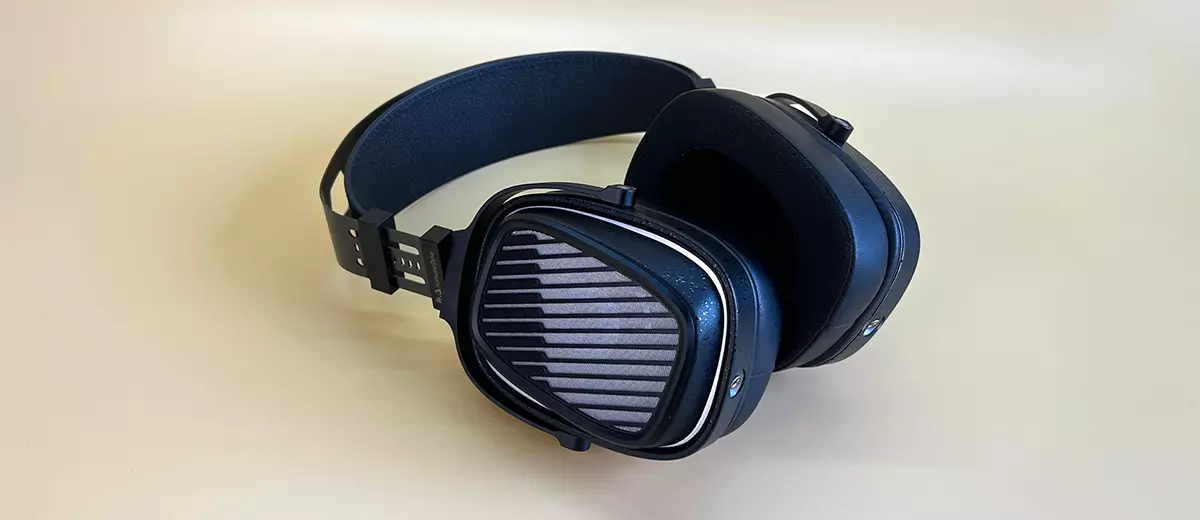
The Romantic impressed me immediately with its efficiency and versatility across sources. Even modest portable gear could drive it to satisfying volume levels with good dynamic performance and detail retrieval.
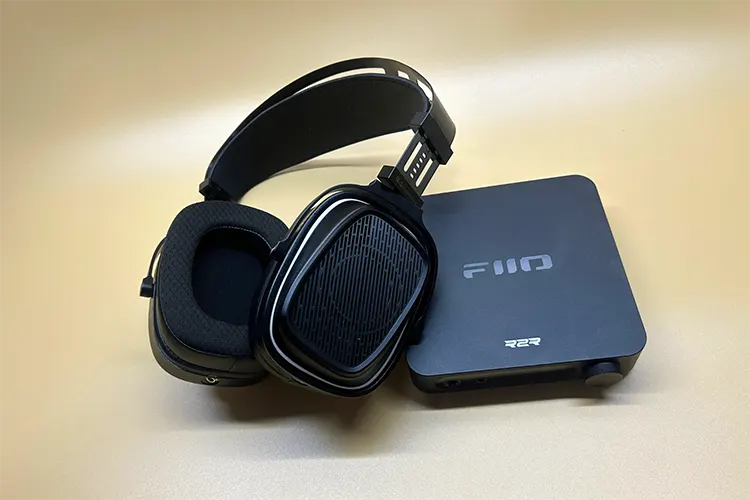
The Romantic’s colder tuning made me lean towards warmer-sounding sources during my testing. Among all the sources I tried, I preferred the FiiO K13 R2R the most.
Its smooth R2R DAC implementation complemented the Romantic’s natural tonality while adding a touch of refinement to the treble.
Bass control improved slightly, and the overall presentation felt more cohesive. This pairing became my reference for critical listening.
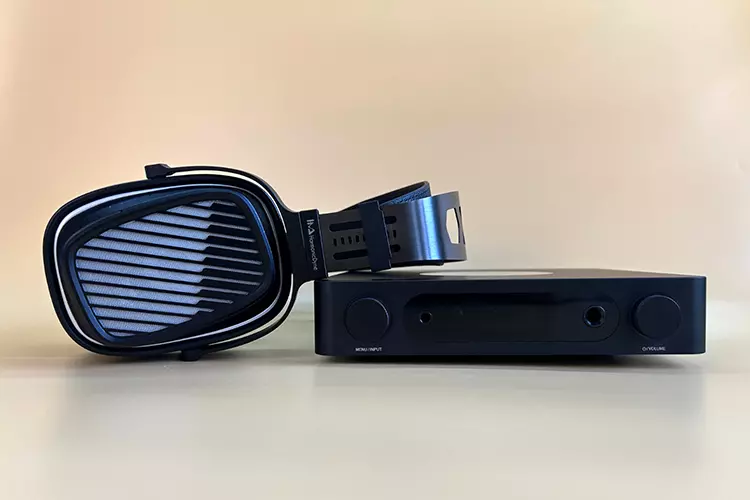
The iFi audio ZEN DAC V1 also paired well, offering a slightly more neutral presentation than the K11 R2R. But I enjoyed how its TrueBass function added more weight and body to the overall sound, giving the Romantic a more V-Shaped sound signature, which may not be for everyone.
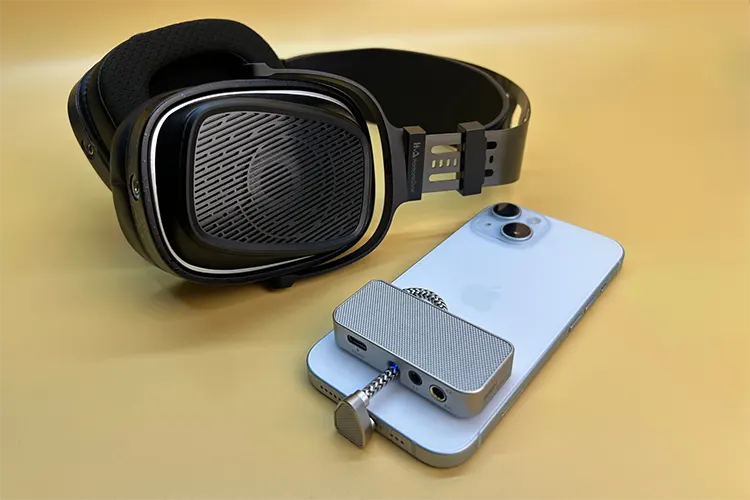
Paired with the iFi audio GO Link Max dongle, the Romantic performed admirably. Despite the limited power output of a dongle DAC, it reached comfortable listening levels with room to spare; however, its leaner bass presentation did not synergize well with the Romantic.
Select Comparisons
HarmonicDyne Baroque
Technical
The HarmonicDyne BAROQUE features a 60mm ceramic-metal composite diaphragm driver with 64Ω impedance and 109 dB/Vrms sensitivity.
The Romantic uses a 60mm bamboo fiber bio-composite driver with identical 64Ω impedance but slightly lower 107 dB SPL/mW sensitivity.
In practical testing, both headphones proved easy to drive from portable sources. Both headphones paired well with everything from dongles to desktop amplifiers.
Neither headphone is demanding, making them accessible to listeners without high-powered dedicated amplification.
Design
Both headphones have a very similar design philosophy, adopting a more modern industrial aesthetic with CNC-machined aluminum and matte black plastic. Its design language is sleek and understated. The
The weights are similar between the two models, but the Romantic is slightly smaller and lighter. Once worn on-head however, the weight difference is negligible.
Both headphones use a hybrid mesh-protein leather pad, making them equally comfortable even during extended use in warmer areas.
Neither headphone folds, but both offer good articulation for achieving a proper seal on various head shapes.
Performance
The BAROQUE and Romantic reflect contrasting tuning philosophies. The BAROQUE delivers a warmer, fuller sound with strong sub-bass authority, wider soundstage, and more impactful dynamics.
Its bass hits harder and adds body to percussion and male vocals, making music feel more physical and emotionally engaging, while remaining forgiving of poor recordings. This warmth slightly reduces midrange cleanliness and fine detail compared to the Romantic.
The Romantic adopts a cooler, more analytical presentation, prioritizing clarity, treble sparkle, and detail retrieval.
Vocals sound cleaner and more transparent, and treble elements like cymbals and high-frequency instruments are more defined and separated, though occasionally edging into sibilance or metallic timbre.
Soundstage dimensions favor the BAROQUE, which creates a wider, more expansive presentation with better depth.
The Romantic counters with slightly better instrument separation, keeping individual elements more distinct in complex mixes thanks to its cleaner midrange and leaner bass.
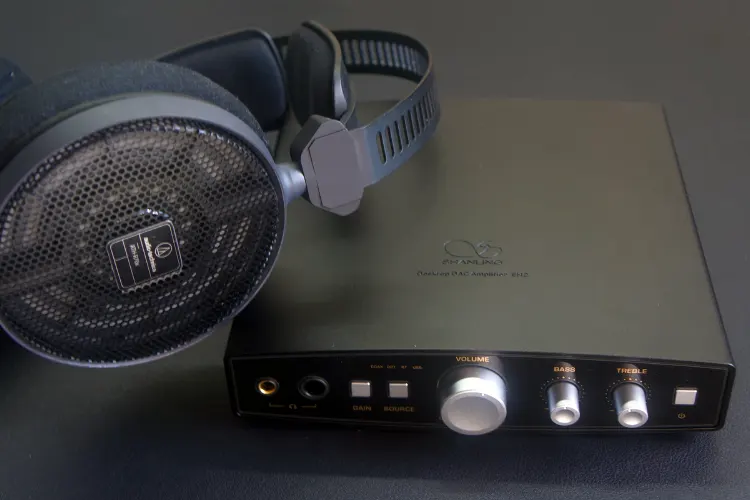
Audio Technica ATH-R70x
Technical
The Audio-Technica R70x features 45mm dynamic drivers with high 470Ω impedance and 99 dB/mW sensitivity. In testing, the R70x required powerful desktop amplification to sound its best.
The Romantic’s efficiency advantage is dramatic here. It delivers equivalent volume and dynamics with a fraction of the power required for the R70x, making it practical for a much wider range of sources.
Design
The R70x embodies Audio-Technica’s minimalist professional aesthetic. Its honeycomb aluminum earcups, self-adjusting 3D wing support system, and extensive use of lightweight materials create a utilitarian appearance focused entirely on function.
Weighing just 210 grams without cable, the R70x is significantly lighter than the Romantic’s 370 grams. This weight difference becomes noticeable during extended sessions, with the R70x disappearing on the head.
The Romantic’s metal construction and mountain ridge design create a more premium visual impression. It feels more substantial and expensive in hand, while the R70x can seem almost fragile by comparison, despite being perfectly durable.
During my testing, I found the R70x to be significantly more comfortable; there were times when I didn’t realize I even had them on.
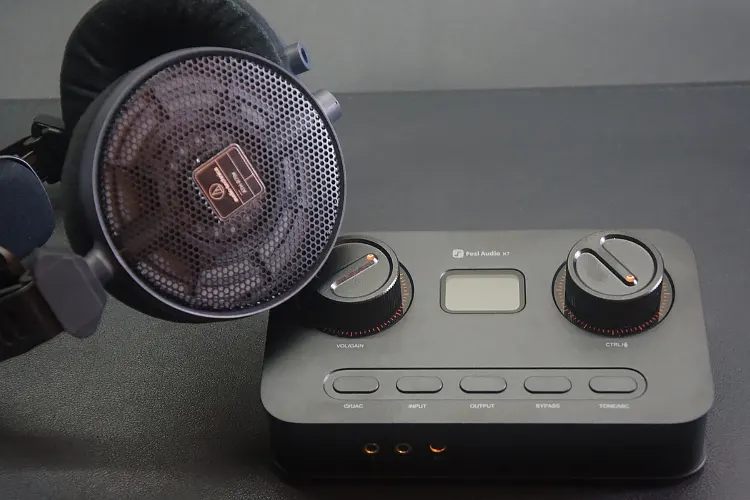
Performance
The R70x and Romantic showcase opposing tuning approaches. The R70x leans toward a warm, mid-bass–emphasized presentation, delivering fuller body and weight in bass lines and vocals, though this warmth can slightly bleed into the midrange and reduce clarity.
The Romantic adopts a leaner, more analytical tuning with tight bass and a cleaner midrange, prioritizing precision over groove.
Vocals sound more natural and lifelike on the R70x, with greater body and organic timbre, especially for lower-pitched voices. The Romantic offers higher vocal resolution and clarity, highlighting subtle inflections but often sounding metallic or overly nasally.
Treble performance strongly favors the Romantic, which reveals micro-details, cymbal textures, and guitar harmonics with superior sparkle and separation, occasionally edging into sibilance. The R70x smooths treble for a more relaxed, forgiving listen.
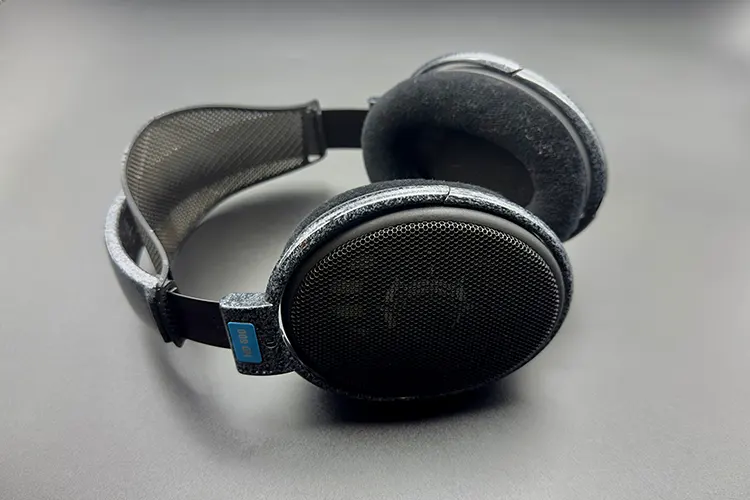
Sennheiser HD 600
Technical Performance
The Sennheiser HD 600 is a legendary reference headphone featuring proprietary dynamic drivers with 300Ω impedance and 97 dB sensitivity. This makes it significantly harder to drive than the Romantic’s 64Ω impedance and 107 dB sensitivity.
In testing, the HD 600 demanded substantially more power to reach equivalent volume levels. While it can be used with portable sources, it truly requires desktop amplification to sound its best and achieve proper dynamic performance.
The Romantic, by contrast, performs admirably from any source. This flexibility makes it far more versatile for listeners who want one headphone for both desktop and portable use.
Design & Comfort
The HD 600 exemplifies Sennheiser’s utilitarian design philosophy. Its mottled gray-blue marble finish and lightweight construction prioritize function over aesthetics. The extensive use of plastic keeps the weight minimal.
The Romantic weighs 370 grams due to its metal construction, making it noticeably heavier in hand. However, its dramatic mountain ridge design and prominent metal grilles create a much more visually striking appearance.
Comfort approaches are different. The HD 600 uses lightweight materials and velour pads with excellent breathability, but relatively shallow depth.
The Romantic’s deeper pads and better weight distribution make it more comfortable for extended wear despite the additional mass.
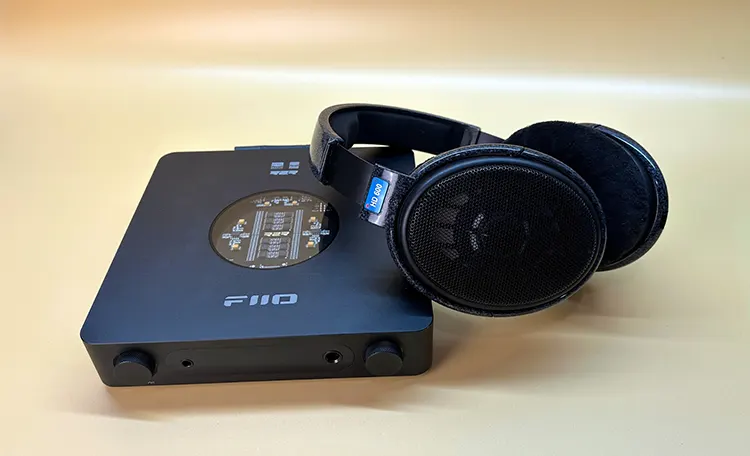
Performance
The HD 600 and Romantic reflect sharply different tuning priorities. The HD 600 aims for reference neutrality with a slight warmth, while the Romantic adopts a brighter, more analytical signature focused on treble energy and detail retrieval.
Treble is the Romantic’s defining strength, offering greater air, sparkle, and extension that exposes micro-details in acoustic instruments, chimes, and electric guitars with striking clarity and separation.
Guitars sound more energetic and layered, though snares can occasionally verge on sibilance in dense mixes, where the HD 600 remains smoother.
Vocals on the Romantic are exceptionally clean and resolving, especially for female and higher-pitched male voices, but can sound metallic or overly nasally, particularly with lower-pitched vocals.
The HD 600 counters with a warmer, more organic midrange that gives vocals greater body and realism, albeit with less technical detail.
Bass differs mainly in sub-bass, where the Romantic hits harder, though both share lean mid-bass and restrained low-end impact.
My Verdict
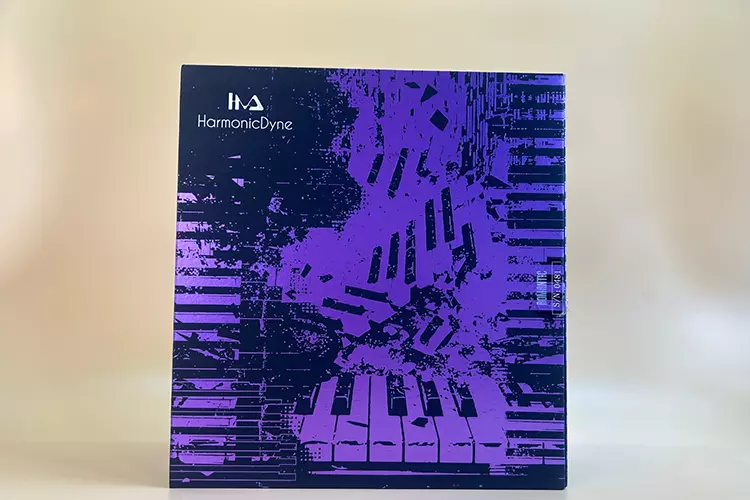
At $339, the open-back HarmonicDyne Romantic is a competitively priced set of headphones and stands out as a strong option for listeners who prioritize detail retrieval, clarity, and an analytical sound signature.
Its tuning favors precision over warmth, making it less organic with funk and disco, and less immediately engaging for hip-hop and electronic music compared to more V-shaped alternatives.
However, this same approach works exceptionally well for acoustic, string-heavy, and detail-focused recordings, where its clean midrange and extended treble highlight nuance and texture.
For those seeking a technically proficient headphone in this price bracket, the Romantic is well worth an audition.
HarmonicDyne Romantic Technical Specifications
- Driver: 60mm Bamboo Fiber Bio-Composite Dynamic
- Acoustic Design: Open-Back
- Impedance: 64Ω @ 1KHz
- Sensitivity: 107 dB SPL/mW @ 1KHz
- Frequency Response: 10 Hz – 50 kHz
- Harmonic Distortion: ≤0.2% @ 1KHz
- Cable: 4.4mm Balanced (924-Core Hybrid Braided)
- Weight: Approximately 370g
