

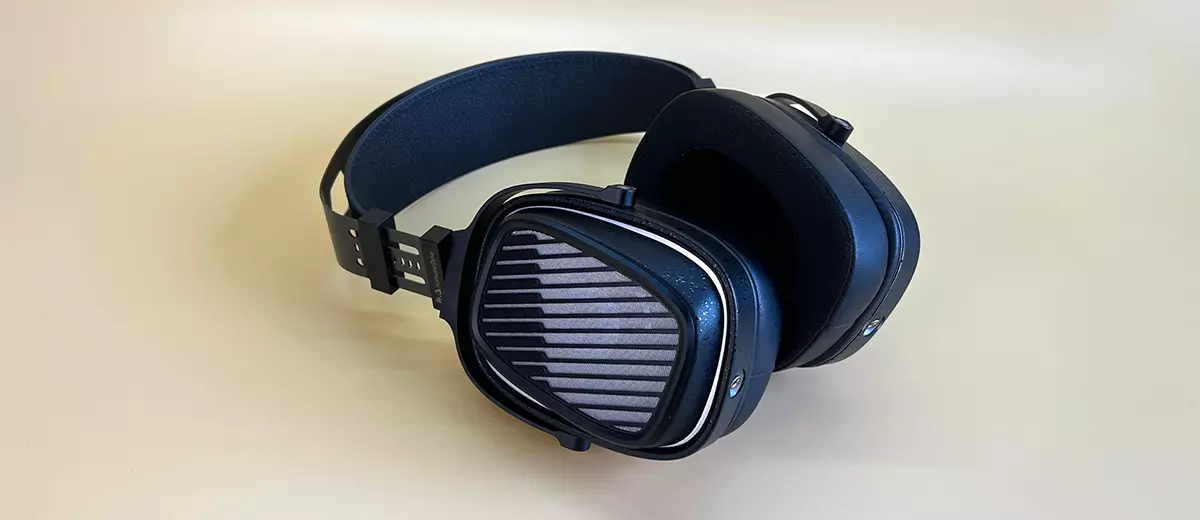
Meldrick reviews the HarmonicDyne Romantic, a new set of open-back headphones equipped with a 60mm Bamboo Fiber dynamic driver. They are currently priced at $339.00.
Disclaimer: This sample was sent to me in exchange for my honest opinion. Headfonics is an independent website with no affiliate links or status. I thank Linsoul for this opportunity.
Click here to read more about HarmonicDyne products previously reviewed on Headfonics.
This article follows our latest scoring guidelines, which you can read in more detail here.
HarmonicDyne has carved out a distinctive space in the headphone market with models like the Zeus, Helios, and, more recently, the BAROQUE.
Their latest release, the Romantic, aims to keep up this momentum with its unique 60mm bamboo fiber bio-composite dynamic driver.
Priced at $399, the Romantic is an open-back pair of headphones that sits in the middle of the brand’s headphone lineup.
In this review, I’ll be testing the Romantic with various sources and comparing it to headphones such as the BAROQUE, the Sennheiser HD 600, and Audio Technica‘s ATH-R70X. To see if the Romantic can keep up with its peers and older brother, read my full thoughts below.
Features
At the heart of the HarmonicDyne Romantic lies a newly developed 60mm bamboo fiber bio-composite dynamic driver.
According to HarmonicDyne, they chose bamboo fiber for its natural damping properties to keep the diaphragm moving evenly while minimizing distortion and unwanted resonance.
The Romantic features a high-efficiency magnetic circuit system with an impedance of 64Ω and sensitivity of 107 dB SPL/mW.
The Romantic is remarkably easy to drive across a wide range of sources, from smartphones and laptops to high-end desktop amplifiers, without demanding specialized gear.
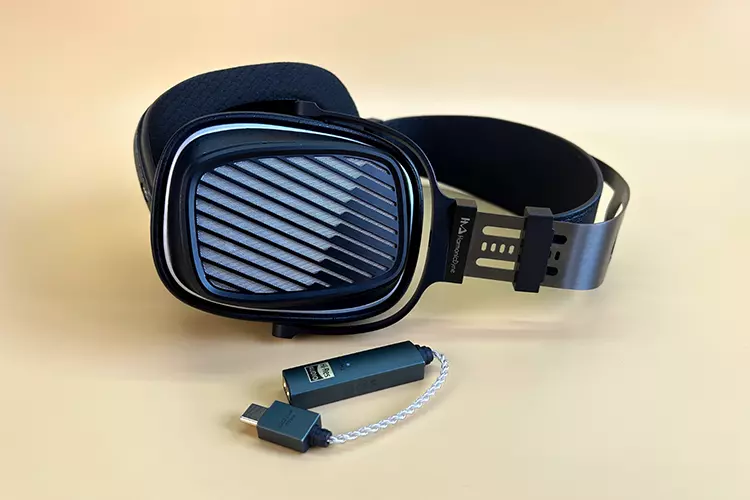
Out of the box, the Romantic also comes with a 4-weave silver OFC cable weave that terminates into a 4.4mm balanced connector.
In the past, cables like these were only found in more boutique after-market options, so having one included in every purchase is a bonus.
Design
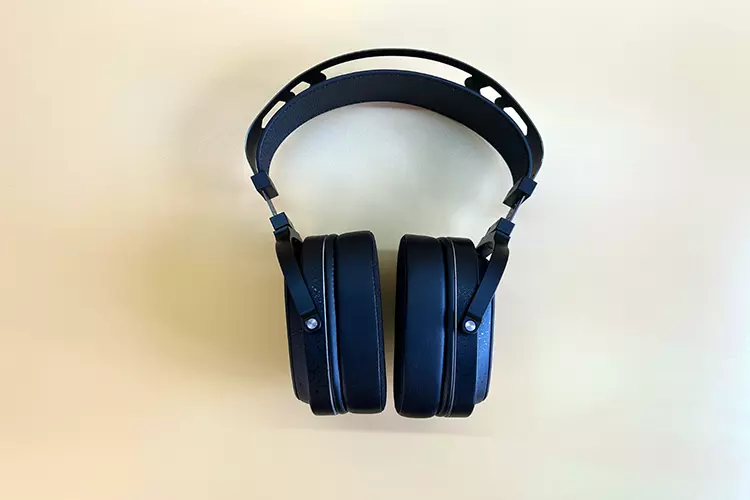
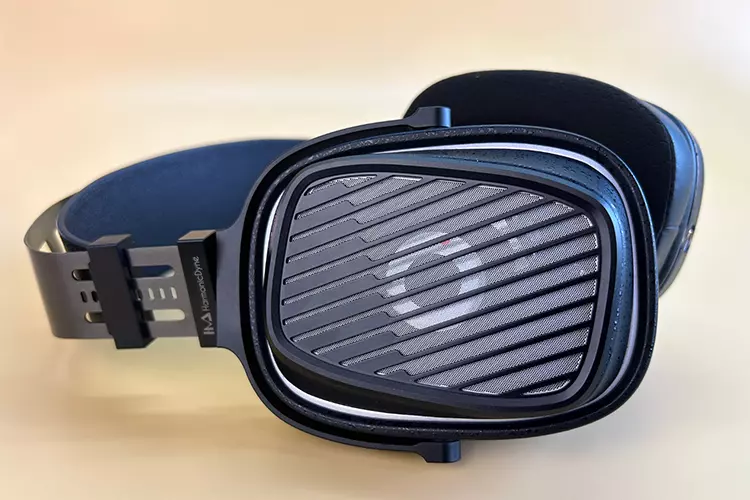
Those who’ve read our previous review of the BAROQUE may be familiar with the industrial design of the Romantic. Sporting a predominantly black and silver color scheme that balances utilitarian function with distinctive aesthetic flourishes.
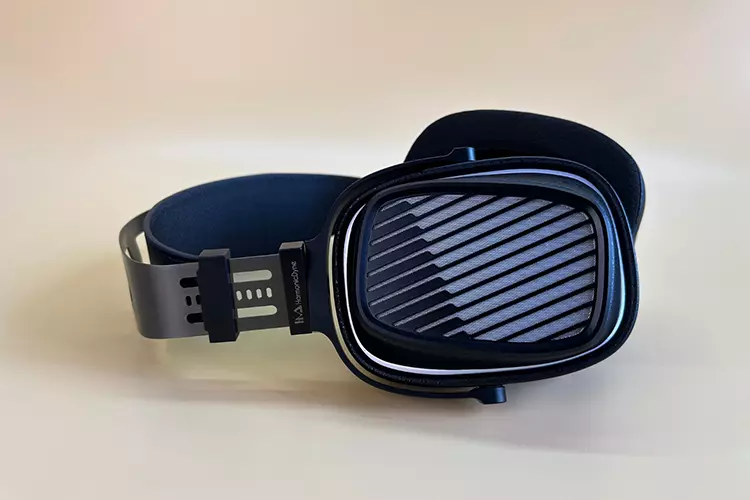
The earcups themselves are made from matte black plastic, flecked with subtle glossy specks that resemble a splattered paintbrush across a dark canvas. The outer grilles are crafted from gunmetal-colored steel, etched with intricate diagonal lines that reveal the open-back driver structure beneath.
The main headband is constructed from high-quality steel, resistant to flex or deformation during my testing. The sliders connect to plastic yokes that offer a reasonable degree of tilt and swivel for achieving a proper seal on various head shapes.
Build quality is excellent throughout. The metal frame is robust and resistant to flex, with smooth adjustment mechanisms that inspire confidence.
One limitation worth noting is that the Romantic’s cups don’t rotate flat for storage, unlike some competitors, such as the SIVGA Peng.
This affects portability and desk storage options, making it clear this is a headphone designed primarily for home use rather than travel or compact storage scenarios.
Comfort
The Romantic excels in long-term wearability, making it an ideal choice for extended listening sessions.
Weighing approximately 370 grams, the headphones aren’t the lightest in their category, but the well-balanced design prevents any single pressure point from becoming problematic.
The headband is softly padded with artificial leather and distributes weight comfortably across the top of the head. Even after several hours of continuous use, I experienced no significant discomfort or fatigue from the headband itself.
The ear pads deserve special mention. They feature a hybrid construction with breathable velour on the inner surface and protein leather on the outer ring.
This material choice significantly reduces heat buildup compared to all-leather designs, making the Romantic suitable for warm environments or summer listening.
The pads are deep with a generous opening that easily accommodates larger ears. The “soccer net” fabric lining inside the velour offers plush cushioning that conforms to ear contours without excessive pressure.
This hybrid approach strikes an excellent balance between comfort and seal quality.
Clamping force is moderate and well-judged. The Romantic grips securely enough to maintain a proper seal without causing discomfort.
The lightweight frame combined with the breathable pads makes fatigue a non-issue, even during 6+ hour listening sessions that I routinely subjected them to.
Stock Cable
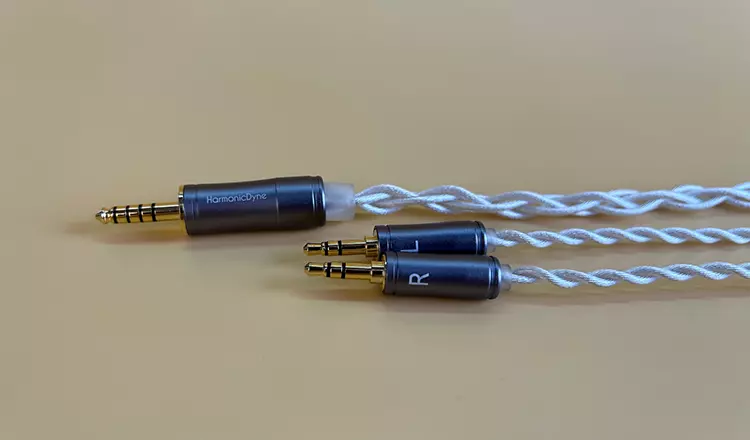
The Romantic comes with an exclusive custom hybrid braided cable that represents one of the highlights of the package.
The cable features 4-strand braiding with 924 total cores (231 strands per braid). This level of conductor density is typically found in aftermarket cables costing significantly more than what’s included here.
Termination is via a 4.4mm balanced connector, which enhances channel separation and provides an immersive soundstage presentation. The cable connects to the earcups via dual 3.5mm jacks, a common and easily replaceable standard.
Throughout my testing, the cable demonstrated excellent practical characteristics. It’s supple and tangle-free, with no memory retention even after being coiled for storage. The braided construction feels premium in hand without being stiff or unwieldy.
I observed no microphonics during normal use, even when the cable brushed against clothing during head movements.
However, I was disappointed that the Romantic came with only a single 4.4mm cable, unlike the BAROQUE, which came with both a 4.4mm balanced and a 3.5mm SE cable.
I understand HarmonicDyne’s line of thinking here; most users who purchase the Romantic will most likely have a 4.4mm source.
However, this restricts the Romantic’s out-of-the-box compatibility. I would have preferred if HarmonicDyne had included a 4.4mm to 3.5mm adapter like the one included with the SIVGA Peng.
Packaging & Accessories
The Romantic arrives in a bright purple and black box that alludes to the more upscale pricing of the headphones.
Inside, the headphones rest in protective foam inserts that secure them during shipping. The layout is straightforward and practical, ensuring the headphones arrive safely without excessive packaging waste.
Included accessories are:
- HarmonicDyne Romantic Headphones
- 924-core hybrid braided cable (4.4mm balanced termination)
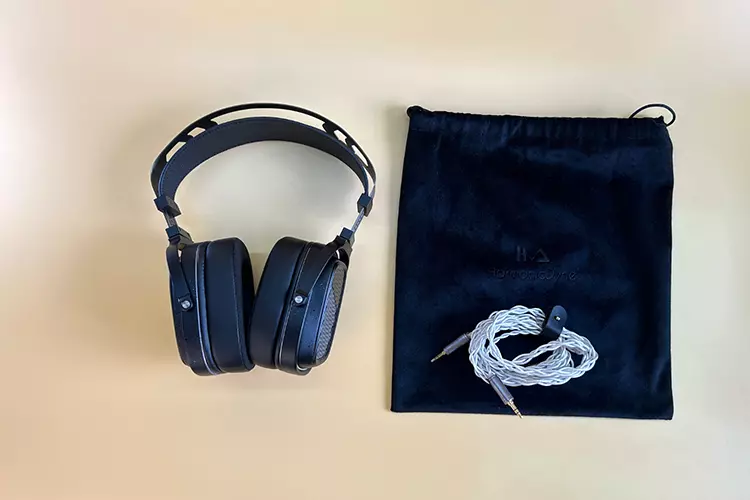
- Velvet headphone storage pouch
- User manual
The velvet storage pouch is a nice touch, offering protection for home storage or transport in a larger bag. However, it’s not a hard case, so those planning frequent travel may want to invest in additional protection.
As I mentioned earlier, notable omissions include a 3.5mm single-ended cable (only balanced is provided) and an adapter for 6.35mm connections.
At this price point, some users may expect a more comprehensive accessory package, particularly given that the BAROQUE includes multiple cable options.
Sound Impressions
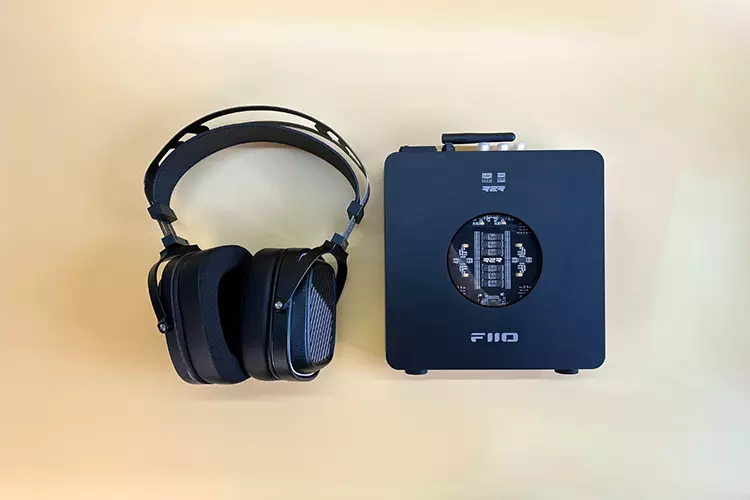
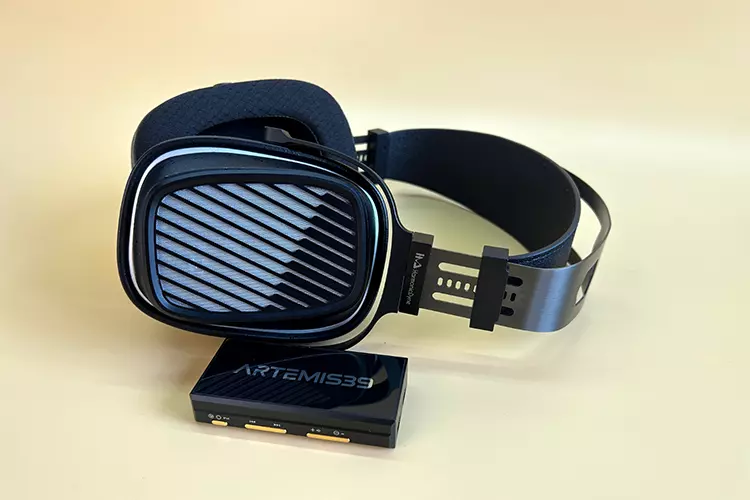
Test Setup: The HarmonicDyne Romantic was tested using a range of sources, including the iFi audio’s ZEN DAC V1, the FiiO K11 R2R, the iFi audio GO Link Max, and the 7Hz Artemis39. The stock 4.4mm balanced cable was used for all listening impressions.
Summary
The HarmonicDyne Romantic delivers an airy, treble-forward sound signature that emphasizes clarity, detail, and sparkle. Its presentation leans toward the cooler side of neutral, prioritizing resolution and articulation over warmth and body.
The bass is lean in the mid-bass with a tight, punchy sub-bass. The midrange offers excellent detail retrieval with a clean, clear presentation, though it can exhibit a slightly metallic timbre at times.
The treble is notably sparkly and energetic, revealing micro-details without crossing into sibilance.
Compared to warmer, more relaxed tunings, the Romantic takes a more analytical approach. It’s a headphone that excels at revealing the technical aspects of recordings while maintaining musicality through its natural rendering of acoustic instruments and vocal nuances.
Bass
The Romantic’s bass presentation prioritizes tightness and texture over quantity and warmth. This is a lean, controlled low-end that emphasizes quality and precision rather than visceral impact.
Sub-bass extension is impressive, reaching deep with adequate quantity and good texture. When called upon, the Romantic delivers punchy, impactful sub-bass that has proper weight behind it.
Electronic music and hip-hop tracks with synth bass lines are rendered with satisfying definition and control.
However, low-end synths lack the enveloping, room-filling quality that comes with more prominent mid-bass. The sub-bass is there, but it doesn’t create that physical, immersive sensation that some listeners crave from electronic music.
Mid-bass is quite lean, contributing significantly to the midrange cleanliness. Kick drums and bass guitars have definition and snap.
The trade-off is significant for certain genres. Funk and disco tracks that rely on thick, grooving bass lines lose considerable energy and drive.
The bass is present and well-textured, but it doesn’t provide the rhythmic foundation these genres demand.
Some percussive elements also suffer from the lean bass. Floor toms in tracks in ’90s pop tracks lack depth and impact, sounding thinner and less authoritative than they should. The texture is there, but the body and weight may be lacking for some listeners.
Mids
The Romantic has a very well-presented midrange with excellent resolution and detail retrieval, tuned toward the cooler side rather than organic warmth.
Vocals are rendered with good clarity and cleanliness. The Romantic highlights vocal details with impressive precision, highlighting subtle inflections and nasally characteristics in singers’ voices in stripped-down acoustic recordings. This level of vocal transparency is rare at this price point.
Female vocals and higher-pitched male vocals shine particularly bright. Revealing nuances in timbre and technique that more colored headphones might obscure. Vocalists sound intimate and present, with excellent separation from the instrumental backing.
However, this tuning comes with trade-offs. Vocals can exhibit a somewhat metallic, less organic timbre. The presentation lacks the natural warmth and body that make vocals feel completely lifelike. It’s accurate and detailed, but not always the most emotionally engaging.
Lower-pitched female vocals can sound overly nasally and lacking in depth and authority. The lean bass and cooler midrange tuning rob these voices of the chest resonance and weight that gives them gravitas.
Acoustic instruments benefit from the Romantic’s natural rendering. Plucks and strums from instruments like the bajo in Neil Young tracks have an organic, twangy timbre that feels authentic.
String instruments maintain their characteristic texture without added coloration. Electric guitars are a standout. They possess excellent energy and emotion, with riffs coming through with visceral impact.
Different layered electric guitar parts are remarkably easy to distinguish from one another, showcasing the Romantic’s impressive separation and clarity.
Treble
The Romantic’s treble is its most distinctive characteristic, very sparkly, airy, and extended, yet well-controlled.
There’s significant energy in the treble region, creating an open, detailed presentation that reveals high-frequency detail. Cymbals, hi-hats, and percussion have good shimmer and decay.
Chimes and bell-like instruments are particularly emphasized and beautifully rendered, adding sparkle and dimensionality to the overall presentation.
Acoustic guitar strings have natural ring and sparkle, with plucks and strums exhibiting that twangy, organic character that makes folk and country music so engaging.
The treble provides enough energy to make these instruments feel alive and dynamic without added grain or harshness.
Despite all this sparkle and energy, the Romantic manages to avoid true sibilance in vocals. “S” and “T” sounds are emphasized and very present, but they stop just short of becoming painful or fatiguing. This is a careful balancing act that HarmonicDyne has executed well.
However, the emphasis isn’t perfect across all instruments. Snares can occasionally come off as slightly sibilant or overly sharp, particularly in dense rock mixes where multiple percussive elements compete for attention. The crack of the snare sometimes crosses the line from detailed to slightly harsh.
Staging and Dynamics
The Romantic’s airy, treble-forward tuning creates a decent soundstage with good width and openness. The open-back design, combined with the extended treble to produce a presentation that feels spacious.
Horizontal spread is good, with instruments occupying distinct positions across the stereo field. The clean midrange and lean mid-bass contribute significantly to the soundstage clarity. With minimal low-end bloom or midrange warmth to obscure spatial cues.
Depth and layering benefit from the overall clarity. The Romantic provides good front-to-back separation, allowing you to distinguish between foreground and background elements in complex arrangements.
Instrument separation is a clear strength. Even in dense, complex mixes with multiple simultaneous elements, the Romantic keeps everything organized and distinct. Individual instruments maintain their identity without blurring together, a direct result of the clean midrange and controlled bass.
Dynamics are good overall, though not as impactful as warmer-tuned headphones. The tight, punchy sub-bass provides a satisfying slam when needed, and percussion has good snap and articulation.
However, the lean mid-bass means that some dynamic elements like floor toms lack the depth and physical impact they might have on fuller-sounding headphones.
Click on page 2 below for my recommended pairings and selected comparisons.
