

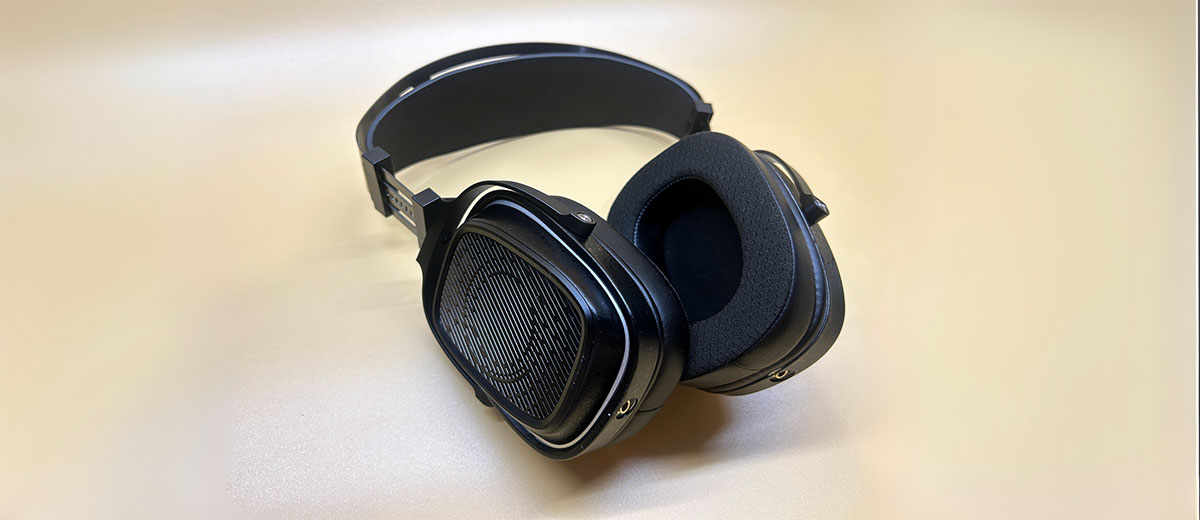
Meldrick reviews the HarmonicDyne BAROQUE, a set of flagship open-back headphones using a 60mm ceramic-metal diaphragm dynamic driver. It is priced at $599.
Disclaimer: This sample was sent to me in exchange for my honest opinion. Headfonics is an independent website with no affiliate links or status. I thank Linsoul for this opportunity.
Click here to read more about HarmonicDyne products previously reviewed on Headfonics.
This article follows our latest scoring guidelines, which you can read in more detail here.
HarmonicDyne has steadily built a reputation for producing full-size headphones such as the Zeus and G200 that combine striking design with solid performance.
Their latest release, the BAROQUE, is an open-back headphone featuring a large 60mm dynamic driver and a sleek metal and plastic construction. Priced at around $559, it lands towards the top of HarmonicDyne’s lineup.
In this review, I’ll be testing the BAROQUE with a suite of different sources and genres. If you’re curious whether the BAROQUE is worth the price tag and how it performs compared to recently reviewed competitors such as the SIVGA Peng, then you can read our full review below.
Features
At the heart of the HarmonicDyne BAROQUE lies a newly developed 60mm dynamic driver utilizing a ceramic-metal composite diaphragm.
HarmonicDyne claims that this driver material significantly reduces harmonic distortion while improving transient response, contributing to greater technical precision and cleaner note definition.
The driver is housed in an aerospace-grade CNC-machined aluminum acoustic chamber.
This structure not only minimizes unwanted resonance and flex but also allows for tighter tolerances during assembly, resulting in better channel matching and a more refined tuning across the frequency range.
With an efficient impedance rating of 64Ω and a sensitivity of 109 dB/Vrms, the BAROQUE is notably easy to drive. It pairs well with even portable sources, such as dongle DACs, without compromising headroom or resolution.
Design
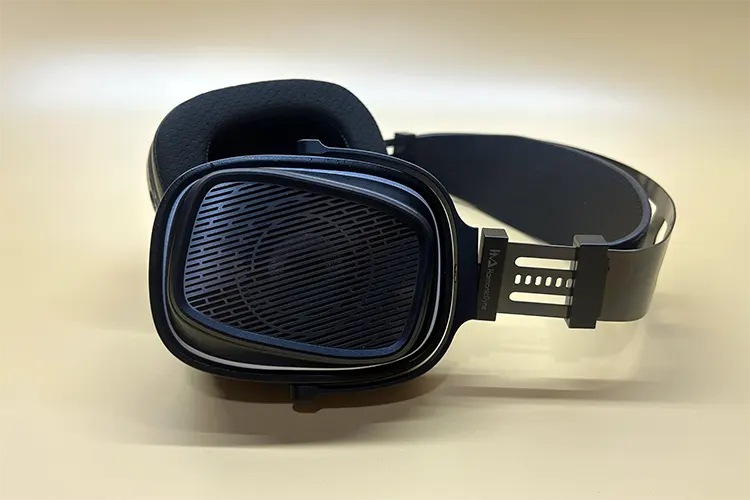
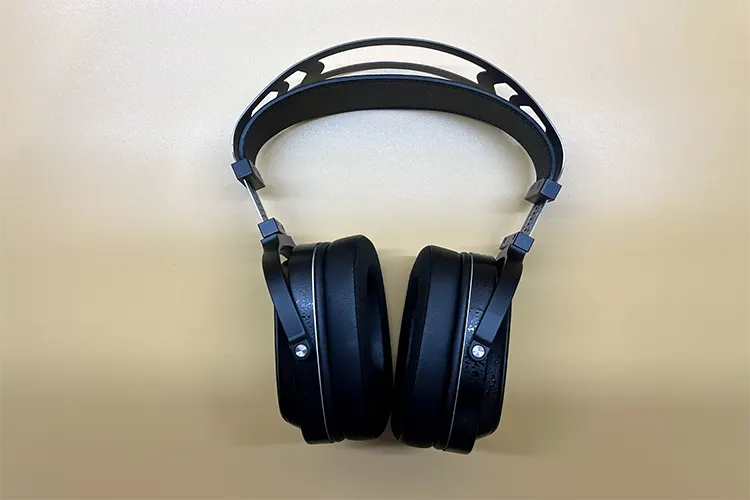
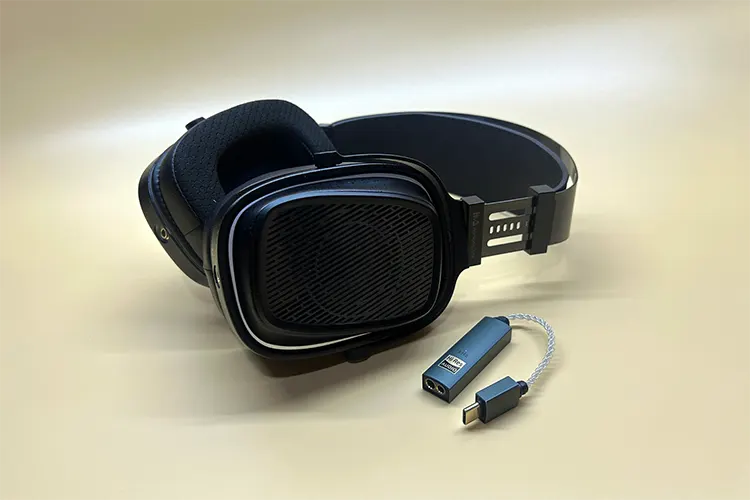
The HarmonicDyne BAROQUE sports a predominantly black and silver color scheme that leans into a utilitarian aesthetic. Black earcups, earpads, yokes, and the comfort strap are paired with a stainless steel headband and grille, creating a bold but understated look.
The main headband is made of high-quality steel, resistant to flex or deformation during my testing. It inspires confidence, extending sturdily into the sliders and connecting to plastic yokes that offer a reasonable degree of tilt and swivel.
However, unlike some competitors, such as the Sivga Peng, the BAROQUE’s cups don’t rotate flat, something to consider for portability or desk storage.
The earcups themselves are made from matte black plastic, flecked with subtle glossy specks that resemble a splattered paintbrush across a dark canvas. It’s a nice touch that adds dimension when viewed in direct light.
The outer grilles are crafted from gunmetal-colored steel, etched with diagonal lines that reveal the open-back driver inside.
Due to the combination of robust metals and large drivers, the BAROQUE isn’t the lightest headphone, but it feels solid, durable, and premium in hand.
Comfort
One of the strongest aspects of the BAROQUE is its wearability over long sessions. It’s not the lightest in its category, but the synthetic leather suspension strap does an excellent job of spreading pressure evenly across the top of the head.
There are no obvious pressure points, and the headband doesn’t dig in even after multiple hours of use.
The ear pads are another highlight. They are deep with a wide opening, and feature a hybrid material approach featuring breathable mesh fabric on the face and protein leather on the outer ring.
This configuration reduces heat buildup and minimizes sweating, making the BAROQUE suitable for extended critical listening or casual use alike.
While the earpads are not as contoured or angled as the kind found on headphones like the Sivga Peng, they are thick enough to support the weight of the headphones while remaining decently comfortable.
Clamping force is moderate. It provides enough grip to keep the headphones secure without causing discomfort. The range of cup articulation also ensures a good seal for most head shapes. In my testing, I encountered no major fatigue even after 6+ hour sessions.
While it’s not as light as other plastic headphones, the BAROQUE achieves an impressive comfort balance given its materials and build. This is a headphone that toes the line with its robust build and thoughtful comfort considerations.
Stock Cable
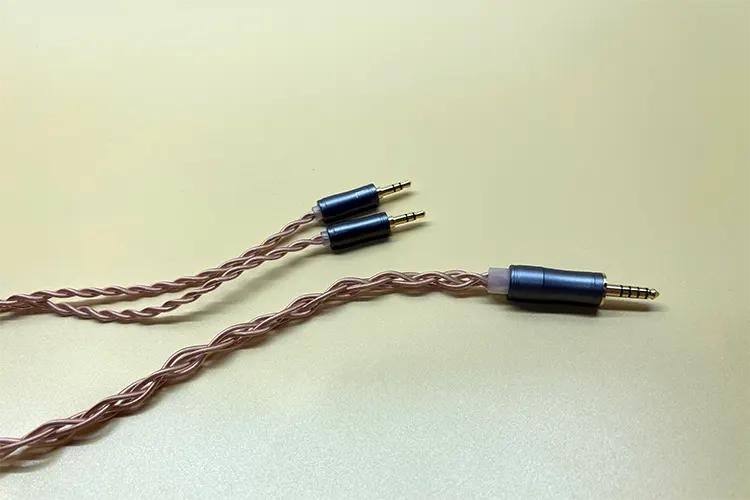
The BAROQUE comes with two stock cables: a dual 3.5mm to 4.4mm balanced cable and a dual 3.5mm to 3.5mm SE cable.
Both cables are constructed from a 4 wire copper colored weave that is wrapped in a transparent plastic sleeve that contrasts well with the black and silver aesthetic of the headphones. Each cable also comes with a small leather cable wrap that closes with a tactile metal button.
While the wires do not go beyond the functionality of a standard headphone cable, I can confidently say that these are the best-feeling stock cables I’ve seen on any headphone.
The terminations feel solid, with strain reliefs that don’t bunch or deform easily. Even after wrapping it around for storage, the cable never retains memory and easily lies flat on a desk. Throughout my mixed desk and on-the-go usage, I observed no microphonics at all.
Packaging & Accessories
The BAROQUE comes in a minimalist matte black box with tasteful silver HarmonicDyne branding. Inside, the headphone is nestled in a dense foam sandwich. Removing both foam halves shows the headphones lying on what I can describe as a foam headphone stand.
This kind of attention placed into the packaging is much appreciated, instead of the typical foam inserts that most people would just throw out, the insert supplied by Haromicdyne could realistically be used as a desktop headphone stand.
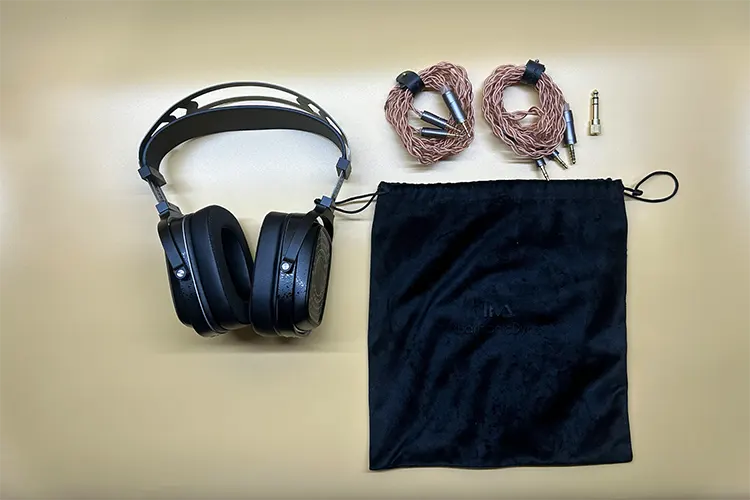
Aside from the headphones themselves, the BAROQUE comes with the following:
- Detachable 4.4mm cable
- Detachable 3.5mm SE cable
- 5mm to 6.35mm adapter
- Velvet carrying Pouch
The pouch is a soft velvet material, which, while stylish, may not offer much protection for those planning to travel frequently with the headphones.
There’s no hard case or spare pads included, which might disappoint some users at this price point. However, the essentials are covered, and the unboxing experience feels premium with well throughout packaging elements.
Sound Impressions
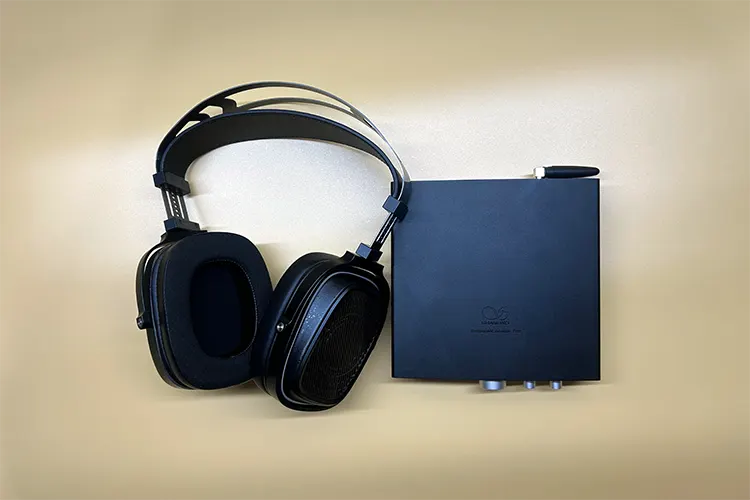
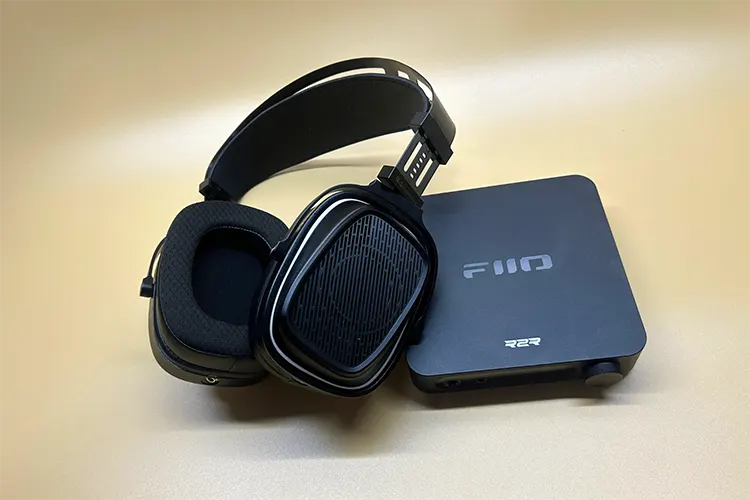
Test Setup: The HarmonicDyne BAROQUE was tested using a range of sources, including the Shanling EH2, iFi audio’s ZEN DAC V1, the FiiO K11 R2R, the iFi GO Link Max, and the FiiO BTR13. The stock 4.4mm balanced cable was used for all listening impressions.
Summary
The HarmonicDyne BAROQUE delivers a smooth, warm-leaning sound signature that avoids excessive emphasis on either the low or high end.
Its midrange is rich and full-bodied, the bass is understated yet textured, and the treble remains easy on the ears without compromising too much high-end detail.
While it doesn’t sound artificially wide or overly spacious, it offers just enough openness to allow instruments to breathe and occupy their own space in the mix.
Compared to the livelier and more V-shaped tuning of brighter headphones, the BAROQUE leans toward a more relaxed and natural presentation.
Bass
The BAROQUE has a warm-sounding midrange that prioritizes mid-bass body over sheer sub-bass slam and impact.
Sub-bass extends reasonably low; however, it doesn’t hit as deep or as hard as more V-shaped headphones. There’s enough slam to drive electronic and hip-hop tracks, but it remains restrained enough to avoid boominess.
The mid-bass is more prominent, adding body to kick drums and a tasteful thump to bass guitars and synths. This warmth shows itself in more atmospheric trip-hop and funk music, where rhythmic bass lines are played back with an enveloping quality.
Where the BAROQUE stands out is in texture. Basslines remain articulate and well-defined even in dense mixes. It doesn’t blur into the mids, and instruments like double bass have good note weight and natural-sounding harmonics.
The impact is rounded rather than sharp, with a focus on natural decay rather than exaggerated punch. While it won’t satisfy pure bassheads, the quality and nuance of the low end serve acoustic, jazz, and indie genres particularly well.
Mids
The BAROQUE has a lush, warm mid-range that feels laid-back while maintaining good dynamics. There’s an unmistakable richness here, emphasizing body and fullness without masking important vocal nuances or stirring detail.
Male vocals and lower-register female vocals, in particular, come through with commanding authority and impact.
Instruments such as violins, guitars, and brass are played back with satisfying thickness and body. Acoustic guitars and string-based instruments, despite the midrange warmth, are played back with commendable harmonic detail.
One surprising standout is how the BAROQUE handles large-scale acoustic or pop arrangements with church organs.
The lower mids fill the space effortlessly, enveloping the listener in a cathedral-like atmosphere that feels almost as if you’re inside the hall where the organ is being played.
Upper mids are relaxed, steering clear of the glare or harshness that can plague some mid-forward headphones. This restraint gives the BAROQUE a non-fatiguing quality, even with extended listening or less-than-ideal recordings.
Treble
The mid-range warmth carries over into the treble. While being on the more relaxed side, I never found the detail resolution lacking.
There’s a gentle lift around the lower treble region, which lends clarity and shimmer to cymbals, strings, and upper harmonics. However, it avoids any harsh peaks or sibilance, even on treble-sensitive recordings.
The BAROQUE steers clear of the sharp upper treble peaks that often cause fatigue, opting instead for a smoother, more relaxed presentation that maintains clarity.
Treble integrates seamlessly with the midrange, positioned just high enough to add a touch of air and shimmer without overshadowing the main body of the mix.
Details like string harmonics, synth textures, and acoustic overtones are still well-rendered, providing subtle energy and texture without pushing the tuning into brightness.
Staging & Dynamics
The BAROQUE delivers a well-rounded soundstage with good 360-degree directionality.
Its horizontal spread is particularly well-developed, allowing the left and right channels to fan out with enough separation and openness to give live recordings and orchestral pieces a convincingly immersive presentation.
While the depth doesn’t reach the levels of more open-sounding headphones like the Audio-Technica R70x, it still offers a natural sense of placement across the front-to-back axis.
Vertical layering is also decent; its Z-axis spacing isn’t especially dramatic, but it’s competent enough not to detract from the overall experience.
Imaging is a strong suit of the BAROQUE. Instrument and vocal positioning are clean and easy to follow. Quick snare hits, plucked strings, and trailing piano decay are all articulated with good contrast, allowing the listener to track subtle shifts within the soundscape.
This holds especially true in jazz and classical tracks, where dynamic phrasing and micro-positioning are critical to emotional delivery.
Dynamics are another highlight. The BAROQUE carries weight and slam when the music calls for it, with percussive hits landing with a satisfying physicality.
Drum kits and timpani rolls have real body behind them, while orchestral crescendos swell with the appropriate sense of scale and intensity.
Click on page 2 below for my recommended pairings and selected comparisons.
