

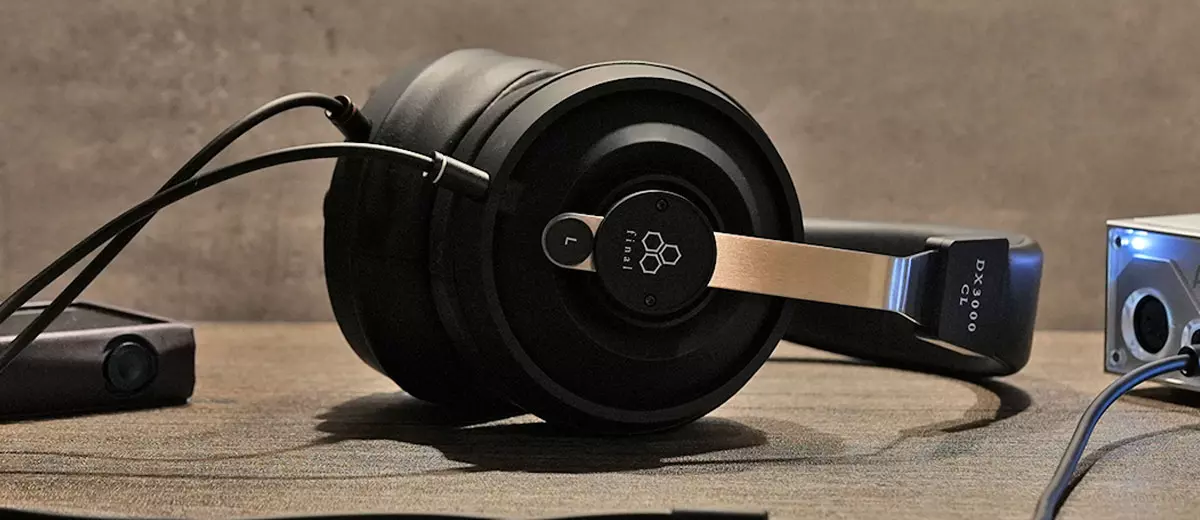
James reviews the final DX3000 CL, the company’s next-generation dynamic driver headphone featuring a hybrid paper and carbon fiber diaphragm. It is currently priced around $599.
Disclaimer: I received this sample in exchange for my honest opinion. Headfonics is an independent website with no affiliate links or services. I thank the team at final and Jack Rabbit Media for this opportunity.
Click here to read more on the final audio products previously reviewed on Headfonics.
This article follows our current scoring guidelines, which you can read in more detail here.
final recently released a new dynamic driver closed-back headphone called the DX3000 CL, priced at $599. It is the second addition to the DX series after the DX6000, with a CL suffix indicating its closed-back design.
The company seems very confident with this design, which features a hybrid 40mm paper plus carbon-fiber diaphragm, that allows enhanced transient response performance.
The built-in-Japan design is minimalistic and beautiful to my eyes, and there are quite a few unique design elements, so I am eager to see how it performs and compares to the likes of the Dekoni x HIFIMAN Cobalt closed-back as well as the Fostex TH900 in my full review below.
Features
The final DX3000 CL uses a Washi (Japanese paper) membrane fused with carbon fiber for greater strength and a speedier transient performance.
The membrane has a borderless edge that allows uniform movements, unlike a traditional flat membrane, which is like a plain sheet fixed to the frame.
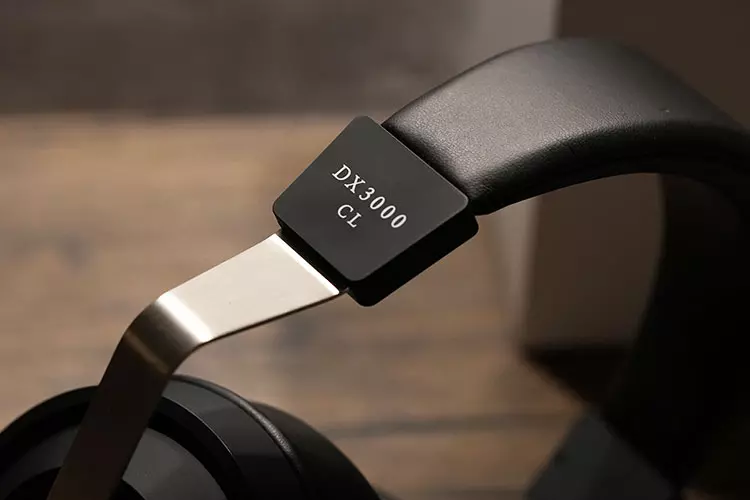
The DX3000 CL uses Glass-fiber reinforced resin as its build material, which helps keep it very compact at just 410g, despite its rather large diameter.
Clearly, it is designed for home use as it comes with a 2-meter-long cable, and the impedance is 37Ω along with a 96 dB/mW sensitivity rating, which suggests a little bit of amping may help it to scale.
There isn’t much context shared by final, but when compared to the DX6000, you will notice the DX3000 CL being slightly heavier.
The DX3000 CL is a lot easier to drive and sounds clear when powered by portable sources, compared to the DX6000, which requires stronger amplification.
Design
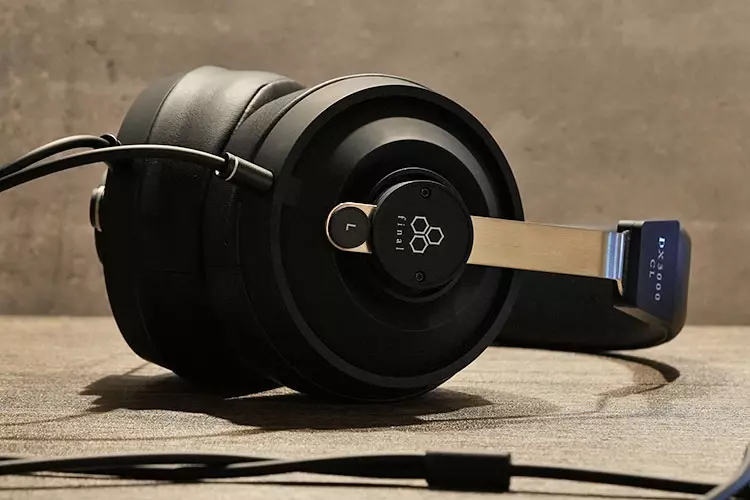
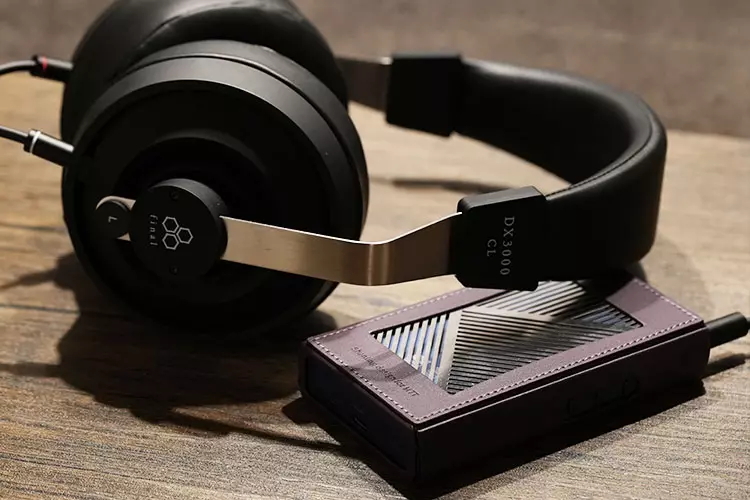
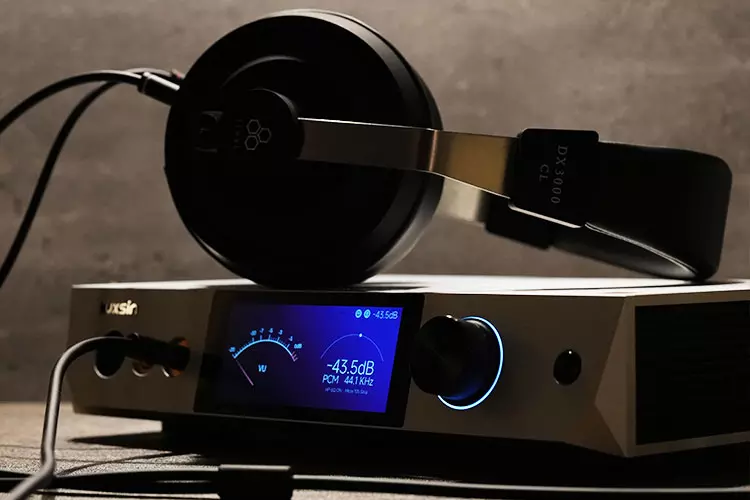
The design language of the DX3000 CL returns to final’s metallic headphones, such as the Sonorous X or the Pandora Hope, but with a stealthier palette using contrasty black and silver colors as the main tones.
Minimalistic, future-proof, and looks better in reality than in photos when light bounces off from different surfaces at various angles.
To the touch, the matte finishing on the body feels sturdy and nicely molded, though it may catch some fingerprints if you have oily hands. The L/R are cleanly labelled, or you can refer to the extrusion angle of the connectors to determine which side faces the front, which is intuitive.
Overall, it is still considered very nicely built with quality material, sturdy cabling, thick pads, and smooth hinges. You can feel parts fitting seamlessly and without movable gaps.
Comfort & Isolation
Just like the Pandora Hope, the DX3000 CL has a rather large diameter, and with its movable hinges, it is easy to get a good fit without the need for frequent adjustments.
The pads are quite thick and soft with a very good seal, and allow for better bass reproduction. Such also makes it a charm during winter times, though it may get a bit stuffy in the hot season.
The clamping force also helps provide a good sealing force, maybe just a tiny bit tight, but it could loosen up over time. After an hour of listening, I don’t feel it over-pressuring, and the weight is not causing any discomfort.
I also like how final tilts the connectors a bit towards the front, so when you look downwards, they won’t be blocking the way.
Stock Cable
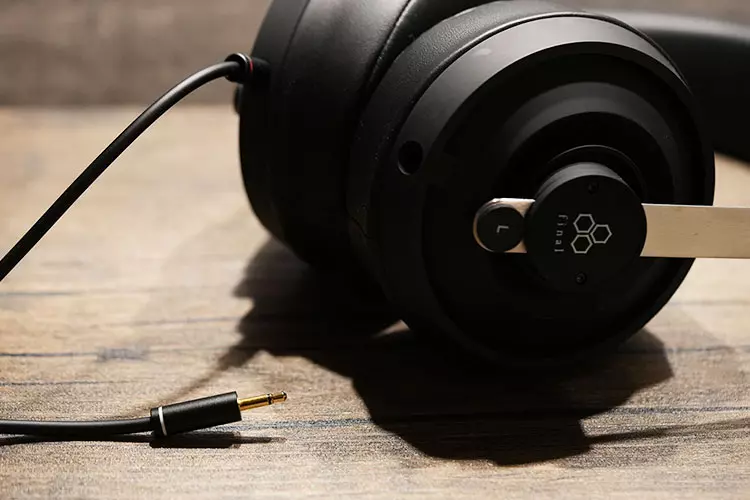
The DX3000 CL comes with a 2m OFC cable with 4.4mm termination. The cable is thick and sturdy, just like the one seen on the DX6000, and it is also very soft and without much memory, so you can just roll it up after use.
You can also swap to other cables and make sure that the sockets on the headphones are slightly recessed, so you will need to make sure the connector on the cable end fits.
Packaging & Accessories
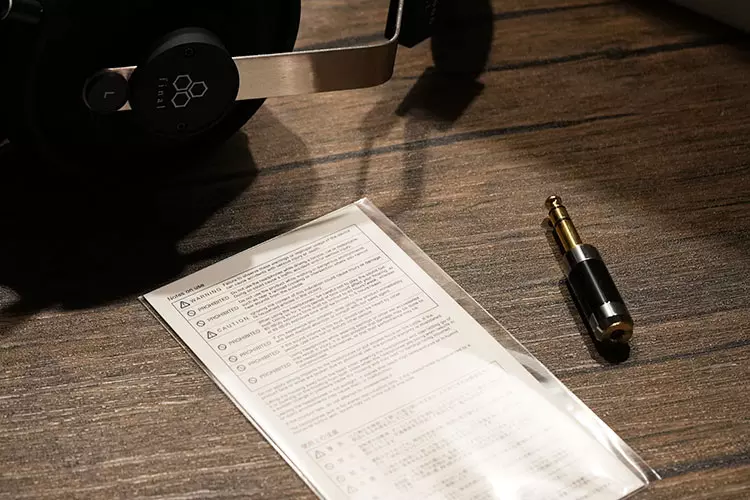
The headphones come in a minimal, white card box package, just like many other final products. It is clean and professional with quality prints and paper, and inside you will also find a 4.4mm BAL to 6.3mm SE adapter for connecting to SE-terminated amplifiers.
The 6.3mm converter is very well built, probably one of the best examples I have seen, and there is good attention to detail everywhere, although the package is kept simple.
Sound Impressions
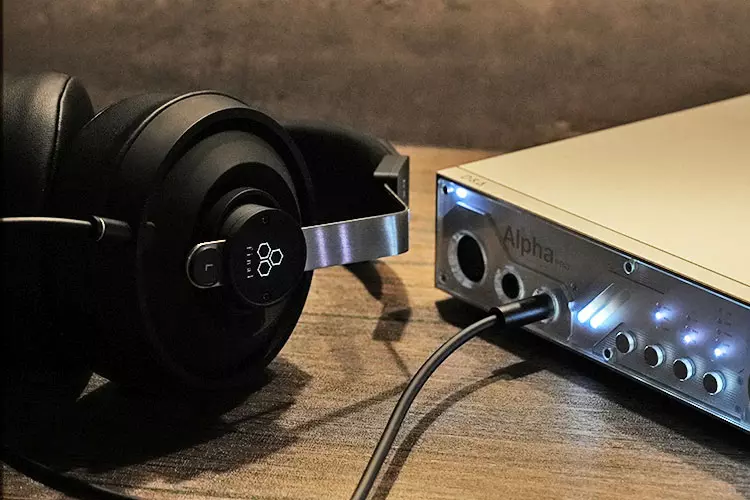
I gave the final DX3000 CL roughly a week of burn-in, paired it with multiple portable sources, including the Shanling M7T, the D&A Alpha PRO with Eversolo DMP-A6 Gen 2, and the FiiO Warmer R2R with the K17, for the following impressions.
Summary
It has been a long while since final released a closed-back headphone. They have certain advantages using a large diameter design with lots of backspace, plus plenty of experience in doing drivers and damping designs in their other open-back headphones.
For this model, the DX3000 CL, there was some delightful listening straight out of the box as the tuning feels quite open, airy in the lows, and with the vocal image nicely outlined.
The openness doesn’t compromise the closed-back design, with little leak to the ambience, where in a quiet room, the bass feels quite deep and punchy, bearing good agility.
The tuning is overall slightly warm, with the bass being more prominent than the upper frequencies. The vocal is given good weight in the body, which complements the smooth and rounded upper treble for a stereophonic, well-separated, and marginally forward vocal presentation.
Timbre
final has been stressing the word “realism” when doing their product pitches, and I think they have a point here, as their recent releases, including the TWS TONALITE I have just covered, also give a good sense of realism in their soundscapes.
In particular, the mid-bass has been well structured to not sound bloated but outlined very cleanly and punchily. This helps achieve better clarity, spatial positioning, and more detail in the upper frequencies, swiftly delivered. Overall articulation is smooth, and it feels neutral with a hint of warmth.
The metallic counterparts from final give an impression of brighter, more brittle treble, but this is not the case for the DX3000 CL. It is still transparent in tone but less aggressive in squeezing out every bit of treble details or sounding artificially expansive.
That said, the vocal sounds well separated, clean, and smooth, and the bass has good agility that helps keep the whole picture clean with a good sense of precision, while not sounding boxed as if it is a semi-opened design.
While the bass is rendered quite fast, it doesn’t mean it lacks fullness. In fact, it sounds quite punchy and airy without lacking a firm and tight attack that is sometimes absent in closed designs.
With fast BPM, consecutive bass listening to fast rock and metal, the bass is still impactful and clean with adequate punch and depth, and without muffling up, which is well done.
Despite this, you can still hear the constraints of a closed design, especially in a very quiet room, as the extension is limited. I believe the earpads also help space out the drivers from the ears for bigger and deeper bass to be delivered.
Staging & Dynamics
The DX3000 CL is fast in transients with good punching power in the lows. This allows it to sound rather deep and layered while keeping the mids well-articulated and clean, such that the positioning of the vocalist can be clearly heard.
The stage rendered is like a big classroom but doesn’t feel curtained or boxy with its clean bass and mid-lows performance.
The vocal image feels quite concise and defined, great job considering this is a closed-back headphone that will sometimes sound boxier in the mid-lows.
The bass doesn’t feel trapped, while the housing design isn’t really leaking air to the ambience, so this surprised me quite a bit. final also implemented a bass trap or diffusor under the lid, which could have helped enhance this aspect.
Overall, the stage perceived is naturally rendered with a good sense of depth thanks to the clarity in the mid-bass and bass; the treble is also adequately extended. The fast transient response offers excellent dynamics and resolution for a closed-back design.
There is even good room to scale with stronger amplification to sound slightly more expansive, and with tube amplifiers, you can also easily feel more colors going into the mids.
Click on page 2 below for my recommended pairings and selected comparisons.
