

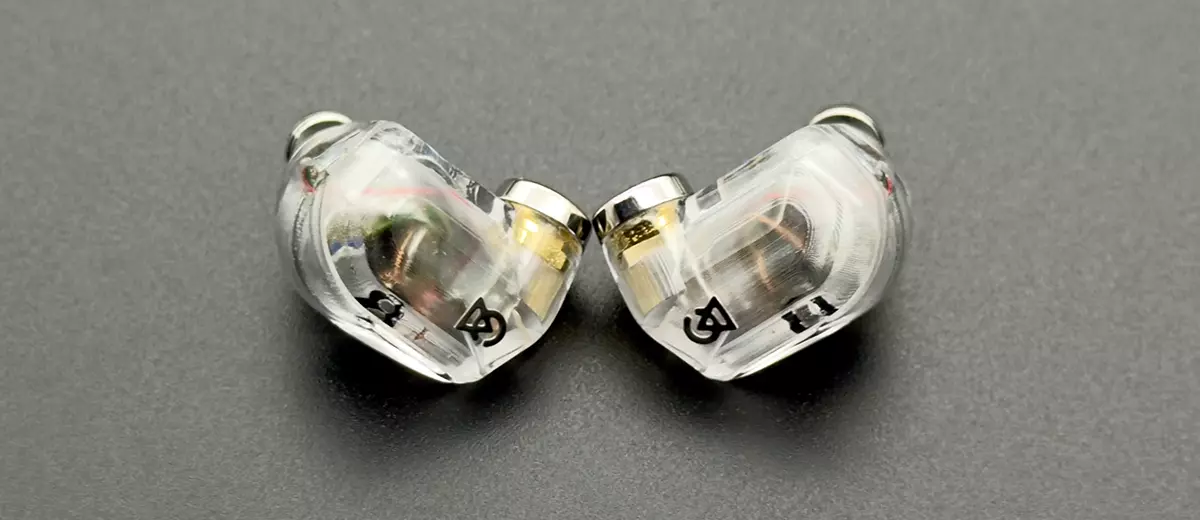
Nihal reviews the Campfire Audio Iris, a new 10mm ADLC dynamic driver and a single balanced armature driver hybrid universal IEM. It is currently priced at $349.00.
Disclaimer: This sample was sent to me in exchange for my honest opinion. Headfonics is an independent website with no affiliate links or services. I thank Campfire Audio for their support.
Click here to learn more about Campfire Audio products previously reviewed on Headfonics.
This article follows our current scoring guidelines, which you can read in more detail here.
Campfire Audio has been quite busy lately, dropping new releases across pretty much every price bracket.
As a listener, you are spoiled for choice, whether you are shopping for entry-level or looking at their more premium stuff. Their last few releases, like Alien Brain, Grand Luna, and Andromeda 10, have also landed well with the community.
Alongside those, Campfire has been paying attention to the more affordable side too, with sets like Axion and the newer Iris. The good part is, even at these lower price points, they do not cheap out on build or tuning.
That said, Iris is not exactly “budget.” Its pricing pushes it into that busy mid-fi zone, where competition is tough, and options are endless. So, the real question is simple: can Iris stand out and make an impact?
Let’s find out as I break down what it offers and stack it against strong picks in this range, like the recently released THIEAUDIO Hype 4 MKII and the well-known DITA Audio Project M.
Features
The Iris has a humble hybrid configuration with a dynamic driver and a balanced armature driver.
It uses one of the advanced dynamic drivers from the Campfire Audio lineup. It is built around an ADLC (Amorphous Diamond-Like Carbon) diaphragm. This driver takes care of the low-end and the midrange frequencies.
The balanced armature driver is a custom-developed one that caters to the high frequencies. Iris pairs these drivers with carefully engineered acoustic geometries.
These internal shapes guide the airflow and reflections, which help extract more performance from the drivers.
There is also a vented design. There is a large vent along with a tiny one. Given the bass-heavy nature of the tuning, the vent is important for keeping the airflow and the air pressure balanced inside the shell.
Design
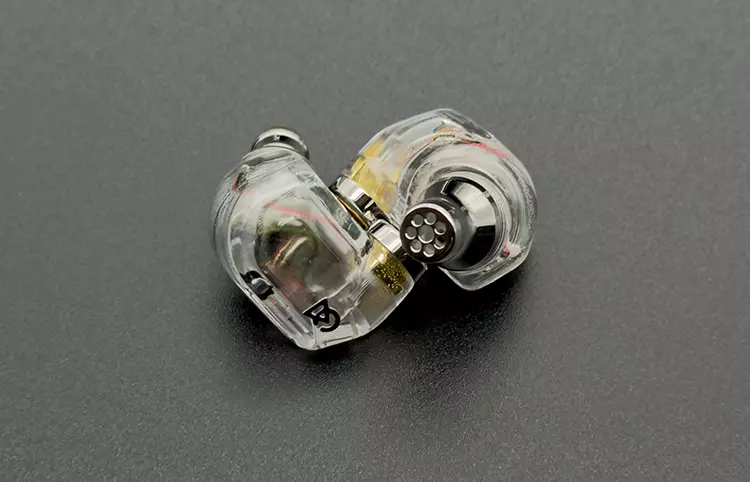
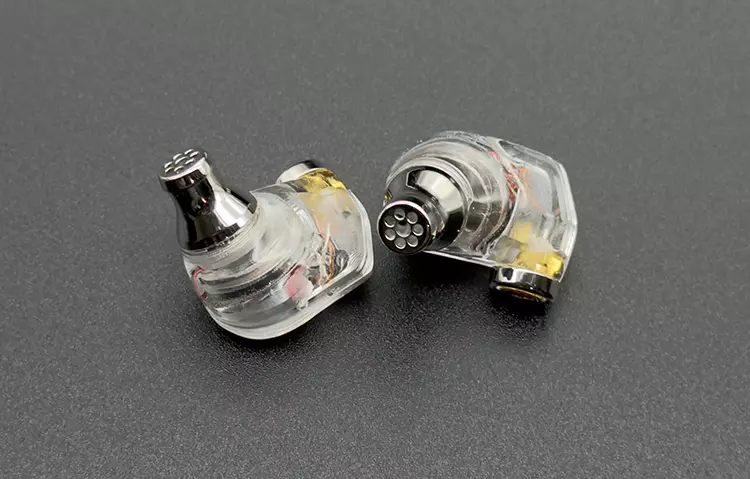
The Iris keeps the shell simple and compact. It is genuinely small. Size-wise, it feels close to the Axion.
The housing is 3D-printed acrylic, and it is transparent, but not the full clear glass type. There is a slight matte finish on the shell. So, it looks a bit muted.
Still, you can see inside, so the drivers are visible. Even the small wiring shows up if you look closely. It is a nice touch if you like seeing the internals.
There are stainless steel accents to break the acrylic look. The CA logo is small and clean. It has a shiny highlight, so it pops a little when light hits it. The nozzle is metallic as well. Overall, it looks neat and not loud.
For the cable, Iris uses MMCX. That is classic Campfire Audio. They have started moving to 2-pin on newer stuff like Andromeda 10, but Iris sticks to MMCX.
Comfort & Isolation
Comfort is one of the best parts of the Iris. The shells are tiny. They almost disappear once they are in. It is the kind of fit where you put them on and forget they even exist.
For me, ear tips matter a lot here. The shells are so light that the tips end up doing most of the holding. Once you find the right pair, the fit locks in and stays stable. With the wrong tips, it can feel a bit loose even though the shell shape itself is good.
There are no pressure points at all. Nothing pokes. Nothing pushes against the ear. You just slide them in, and they sit naturally, even for long sessions.
Isolation is decent, not crazy. It depends a lot on whether you get a good fit. It cuts some surrounding noise, but do not expect full shut-off isolation.
Still, with a good seal, it does the job well enough for daily use. The lightweight shells and easy fit make Iris a decent choice for on-the-go listening.
During my time with Iris, I did not get any pressure build-up or any discomfort in long sessions. No driver flex either. It stays comfortable and stable without that annoying vacuum feeling.
Ear Tips
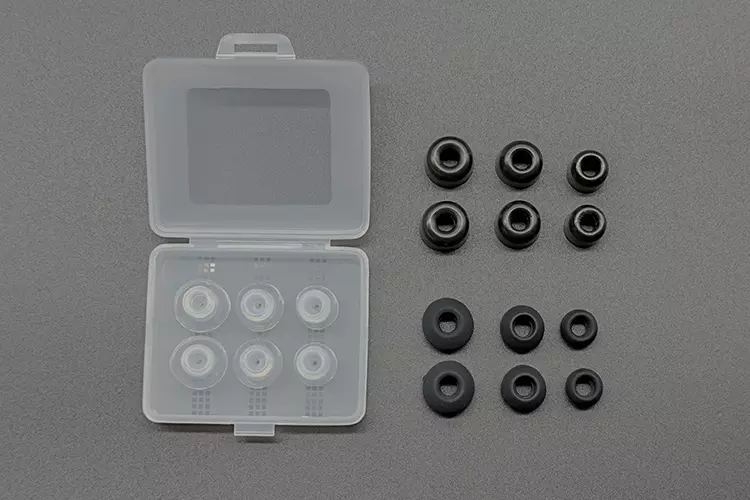
The Iris is packed with three sets of ear tips: standard silicone, foam tips, and clear silicone tips. These all come in three sizes: S, M, and L.
The selection of ear tips ranges from wide-bore to medium-bore to narrow-bore. Most of the ear types should be catered to with these ear tips. All these ear tips have a decent build and soft finish.
The standard black silicone ear tips have a very soft texture, but their smaller stems make them unusable for me. Due to the tiny shells, the fit is a tricky one, so you must experiment with a variety of ear tips to see if the IEMs fit nicely.
With most of the small-sized ear tips, the seal is improper for me. I found that larger ear tips gave a better fit, giving a better insertion and seal. Among the ones I tried, the Divinus Velvet tips and the Azla SednaLight ear tips fit well. I finally settled for the Azla ear tips.
Stock Cable(s)
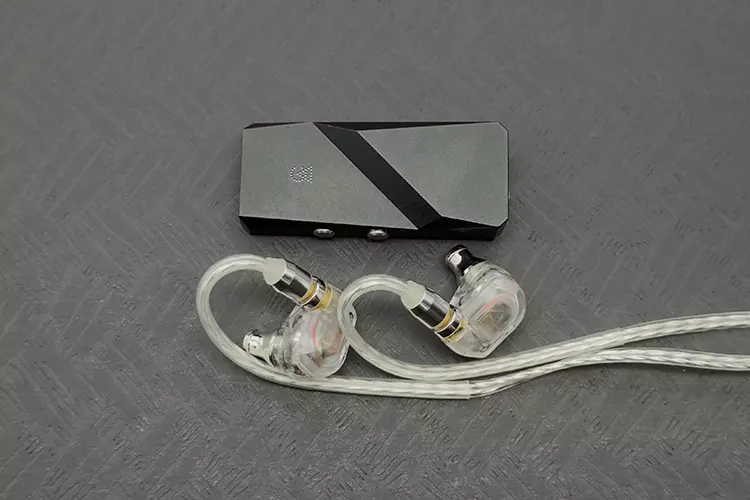
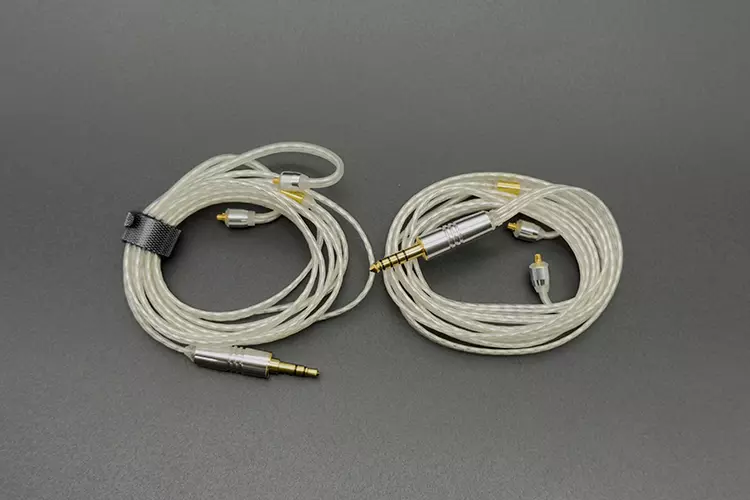
Campfire Audio includes two Time Stream Metal cables with the Iris. You get one with a 3.5mm termination and one with 4.4mm. It is the same cable set we have seen with Alien Brain, which is a more premium release, so it is nice to see it bundled here.
This cable design came from the Chromatic Series lineup. Those cables show up in different colors. On Iris, the hardware is all metal. That is a step up. Alien Brain uses more of the black plastic hardware, so the cable on Iris feels better in the hand.
Braiding’s different, too. It’s not the usual round and twisty look you get. It carries a flat design, with wires sitting side-by-side instead of twisting around each other. Handling-wise, it is as easy as the twisted counterparts.
If I am being picky, I still prefer a single modular cable setup, like the Time Series cable on the Grand Luna. It is just more practical. But for the price of Iris, getting two terminations in the box feels like a solid bonus. It is basically a free pamper for the buyer.
Packaging & Accessories
Packaging on Iris is grand. Campfire Audio really went a step ahead here. The closest comparison I can make is Alien Brain. The vibe is similar, and the accessory count is almost in the same league.
The IEM comes in a pretty large box. Big enough that you start thinking, what is even inside to justify this size?
When you open it, everything is laid out in an open way. No thick foam. No fancy layers. Just a full spread of accessories sitting there, and you pick them up one by one. It feels like the unboxing keeps going.
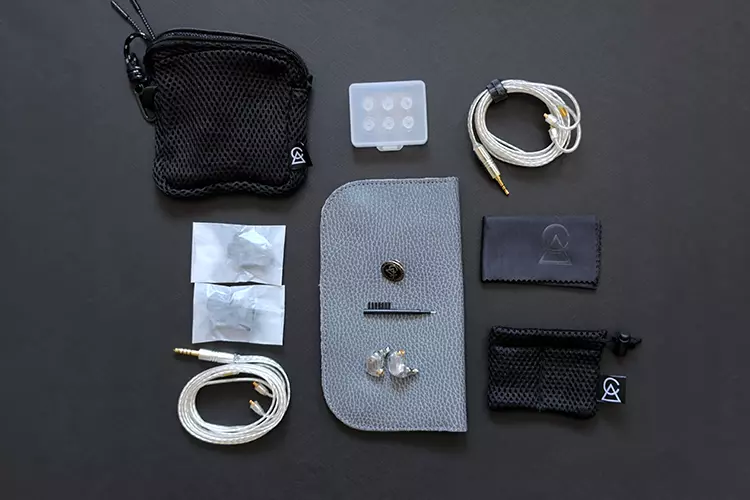
You get a large leather folding wallet, which is the main highlight. There is also a small mesh carry bag, which is the classic Campfire touch.
The cable bundle is generous. You get two Time Stream Metal cables, one in 3.5mm and one in 4.4mm, so you are covered either way.
You get three packs of ear tips in total. Two sets come in simple paper pouches, and one comes in a small plastic case. You also get the usual extras: a cleaning tool, a microfiber cleaning cloth, and a Campfire Audio pin.
Overall, it feels like Campfire Audio tried to pamper the buyer with Iris. For the price, this kind of accessory spread feels genuinely satisfying.
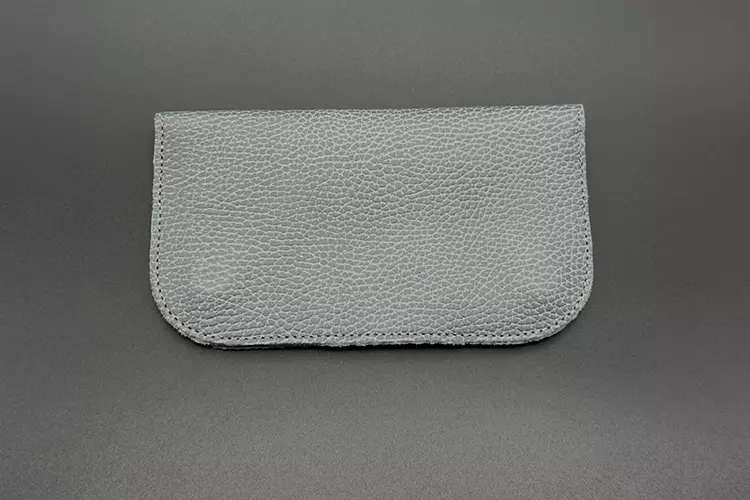
Carry Case
The gray leather folding wallet is a really nice addition. It feels premium in hand. It is handmade in Portugal, and you can tell it is not some random generic pouch. The leather feels genuine, and the wallet is fairly large.
When you open it up, you get pockets on both sides. There is enough space to store a cable and small accessories without forcing anything in. It is more like a mini organizer than a basic IEM case.
One thing though, I would be a bit careful about storing the IEMs inside if you are tossing it in a bag.
The wallet does not have hard protective edges, so if something presses against it, the shells might take the hit. For desk use or light carry, it is totally fine. For rough travel, I would think twice.
Also, a small warning. Hide this wallet away from your better half, or you might lose it forever. It has that vibe where someone could just… pocket it, then swear blind they’ve had it for years. Honestly, you could just gift it and avoid the fight.
The other carry option is the Breezy Bag, and it does the job well, too. Campfire has included this with other IEMs like Clara and Axion, so it is a familiar accessory.
It is simple, but it is roomy. You can fit the IEMs and the cable comfortably. No struggle. It also has an attached string, which is useful if you want to sling it over your shoulder. It is a thoughtful inclusion, and it works.
Click on page 2 below for my sound impressions and recommended pairings.
