

Select Comparisons
64 Audio Solo
Technical
The 64 Audio Solo was released towards the end of 2024. The Solo uses a full-range single 14.2mm planar magnetic driver combined with 64 Audio’s signature array of features, including apex Core, Linear Impedance Design (LID), and the Tubeless In-Ear Audio (tia) system.
64 Audio also incorporates Helmholtz Resonators to eliminate specific troublesome frequencies with the planar drivers.
The Solo has an impedance of 16Ω @ 1 kHz and a sensitivity rating of 100 dB/Vrms. The Solo takes a good amount of power compared to the Grand Luna and shows some scaling properties.
With low-power sources, the Solo does not sound full and can feel a bit thin and sharp. On my LPGT, the Solo can easily take nearly 8-10 volume levels more than the Grand Luna.
Design
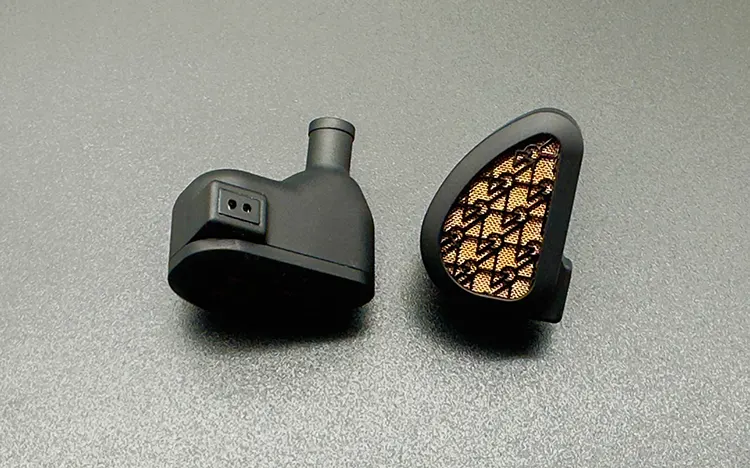
The 64 Audio Solo has a shape and design similar to most of the universal offerings from the brand. The shell is constructed with T6061 aluminum, an alloy composed of aluminum with a few other elements.
The faceplate features a copper mesh with an array of 64 Audio logos, giving it a unique and premium look.
While the metal build on Solo feels quite durable, I prefer the more aesthetically pleasing design of the Grand Luna. Owing to an average size, both IEMs have a good fit, though the Solo is slightly smaller in size.
The isolation factor is not very strong in the Solo due to its open design. On the other hand, the Grand Luna offers a superior isolation factor, eliminating a significant portion of surrounding noise.
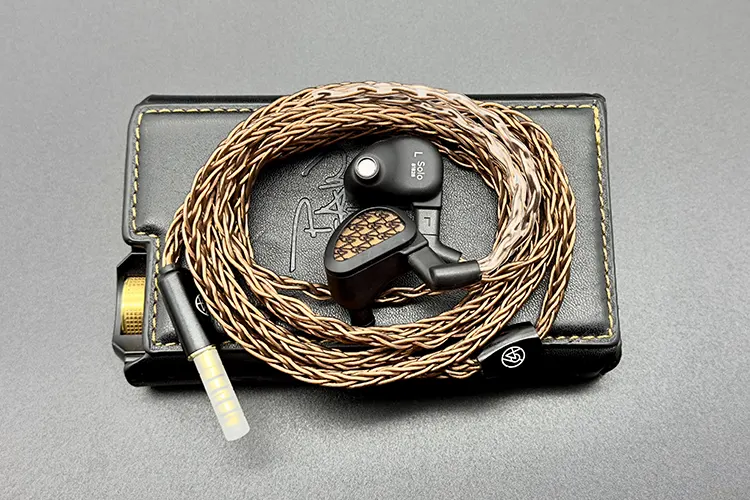
The Solo has thoughtful packaging, which includes two different cables, a wide range of ear tips totalling 9 pairs, and a few other accessories.
The Grand Luna arrives in a bigger box and is equally well-accessorized. The inclusion of a small DAC and modular cable system makes it a better package overall.
In terms of overall presentation, the Solo feels more understated, focusing on simplicity and functionality, whereas the Grand Luna leans toward a more premium, feature-rich approach.
Performance
Grand Luna offers more rumble and depth in the sub-bass. It also has more mid-bass presence, which gives the overall bass a fuller and warmer nature, though it can occasionally appear bloomy.
The Solo’s bass is mid-bass focused but has a leaner and more restrained bass profile. It is enjoyable, but does not offer the impact and rawness of the Grand Luna’s bass.
On the Grand Luna, the elevated mid-bass lends better body and weight to the lower midrange. This region adds more warmth and thickness in male vocals and instruments, while the Solo has a leaner lower midrange, which helps with clarity and better separation.
Together with a better-extended upper midrange on the Solo, vocal presence and instrument clarity are more strongly conveyed. This also helps with sharper imaging and better technical perception. The Grand Luna sounds smoother, more relaxed, and also less forward.
The Solo has more treble bite and presence, contributing to the perception of an airier sound and greater precision. It offers more sparkle and maintains more energy throughout, whereas the Grand Luna is smoother and has a mellower treble profile.
The treble notes are more detailed and resolve better on the Solo, which may appear muted or dim on the Grand Luna.
I find the Solo leading ahead in resolution and detailing. The stronger emphasis on the upper midrange and an airy and sparkly treble profile help the Solo achieve a more open and expansive sound. The imaging is more accurate on the Solo.
While both IEMs have an immersive soundstage and a similar stage width, the Grand Luna offers better depth. For me, the Grand Luna does a better job of achieving a more musical sound, while the Solo is more precise in nature.
Campfire Audio Alien Brain
Technical
The Alien Brain was released by Campfire Audio a few months ago. It is a hybrid IEM with five drivers. The drivers comprise a 10 mm Glass-PU Dual-Magnet Dynamic Driver and four high-performing custom balanced armature drivers.
Two of these balanced armatures help the mid-frequency range, and the remaining two act as super-tweeters, catering to the high-frequency region.
The Alien Brain has an impedance of 7.8 Ω at 1 kHz and a sensitivity rating of 8.97 mVrms to hit 94 dB.
Like most Campfire Audio IEMs, the Alien Brain is an extremely easy-to-drive IEM and does not demand much power. The Grand Luna can take up a few more volume clicks and does not get as loud as easily as the Alien Brain.
Design
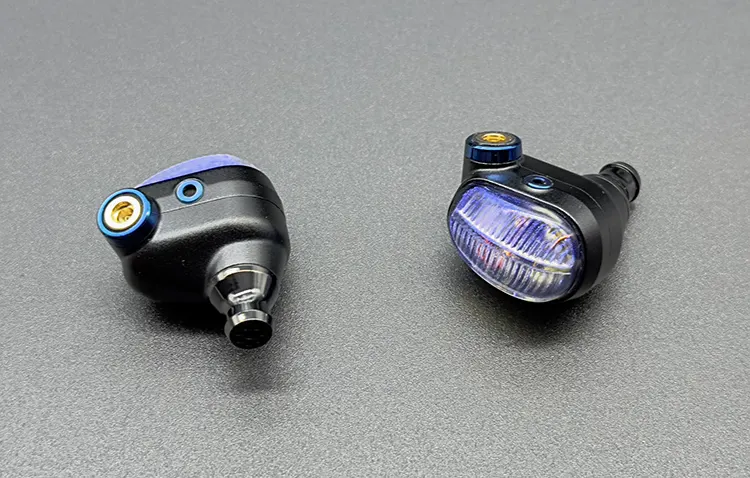
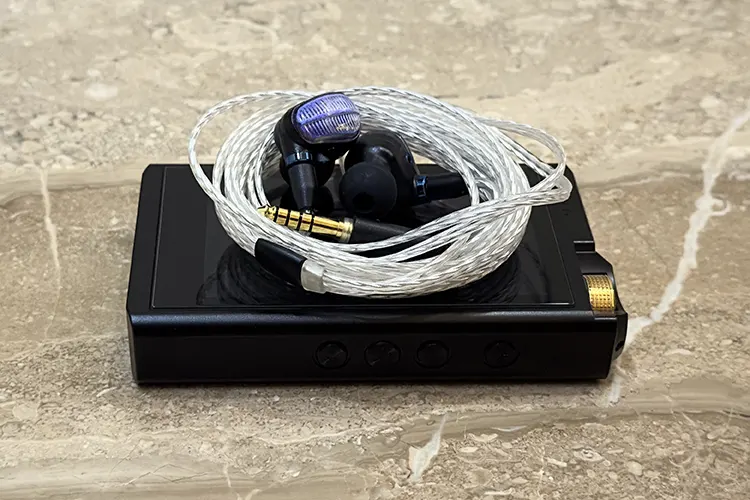
The Alien Brain has a very quirky design, featuring a sci-fi-influenced look with a futuristic aesthetic.
The shells are made from matte-finished black metal, offering a rugged yet lightweight appearance. The faceplate design features a blue-accented, semi-transparent, glass-like enclosure with a ribbed texture. Through the faceplate, you can partially see the internal components like drivers and wiring.
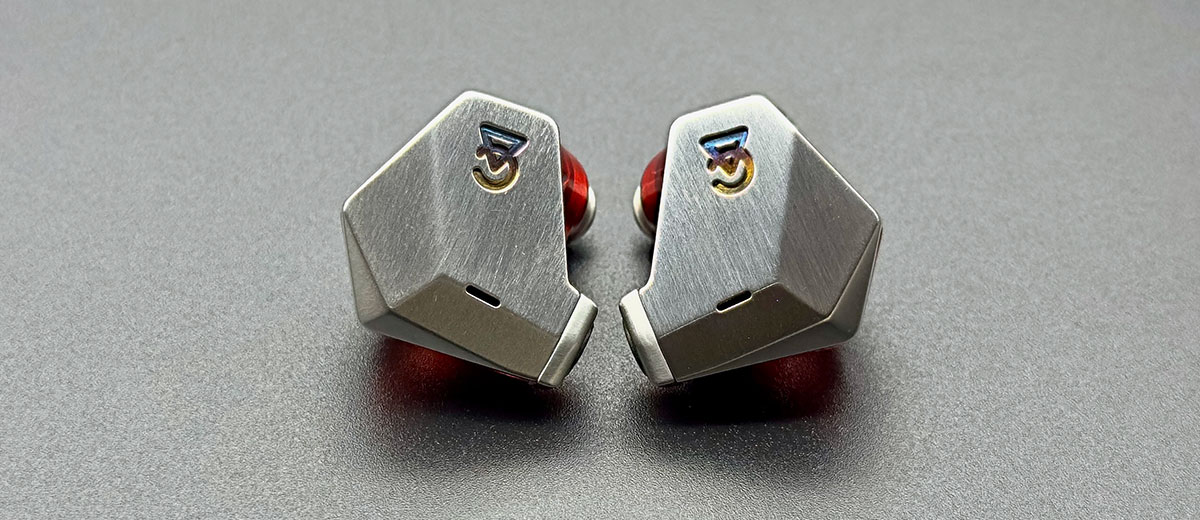
The Grand Luna resembles a regular design but is very aesthetically pleasing, with a metal-brushed faceplate and ruby red shells. This design is much more ergonomic and is quite easy to fit for all ear types.
The Alien Brain’s fit is more challenging and demands a good amount of ear tip rolling. The smaller nozzles on the Alien Brain make this worse.
Similar to the Grand Luna, the Alien Brain is packed with a decent array of thoughtful, high-quality accessories, but in very compact packaging, which is almost half the size of the Grand Luna’s packaging.
You get a pair of IEM cables in 3.5mm and 4.4mm terminations and a USB-C portable DAC dongle with the Alien Brain. Gone are the days of multiple cables, as the Grand Luna includes a modular cable with 3.5mm and 4.4mm terminations.
The DAC dongle shipped with the Grand Luna has a different chipset, but most of the other accessories, from ear tips to mesh and pouch, remain the same. Both IEMs use an MMCX port to connect to the cables.
Performance
Alien Brain has a very solid bass presence, offering more sub-bass and mid-bass than the Grand Luna. It’s the warmth of the bass that is the main differentiator.
Alien Brain offers strong punches but remains relatively clean, tuned to give impact without overwhelming the higher frequency ranges. Grand Luna is noticeably warmer, with more bloom in the mid-bass, giving a fuller and denser bass presence.
Because of the warmer mid-bass on the Grand Luna, the lower midrange feels richer and lusher. Male vocals and the body of instruments, such as bass guitar, cello, and piano, sound warmer and more organic.
Alien Brain has a slightly recessed lower midrange in comparison. The upper midrange on Alien Brain is more elevated but never appears sharp or harsh. This region adds forwardness and extension to vocals and instruments.
On the Grand Luna, the upper midrange is a bit muted and softened by the warmer bass. Alien Brain offers a cleaner timbre, while the Grand Luna prioritizes musicality over clarity.
The treble on Alien Brain is livelier and more energetic and offers crisper, more precise details. On Grand Luna, the entire treble region is smoother and more controlled, less edgy, focusing more on naturalness than on air and sparkle.
It rolls off earlier, keeping things smooth but with less air and sparkle. For people who favor a detailed treble, they will definitely prefer the Alien Brain.
While the Alien Brain offers better resolution and more detail, it’s the immersive and grander soundstage of the Grand Luna that is more appealing to me. The Alien Brain is slightly congested in its stage presentation.
Grand Luna has the edge in both width and depth of the stage. Owing to an airy and sparkly treble response, the imaging feels more accurate on the Alien Brain.
Moritz Audio ENZO
Technical
The ENZO is the latest IEM from a Hong Kong-based brand, Moritz Audio. It is a tri-brid IEM that features one dynamic driver, six balanced armature drivers, and two planar drivers. The dynamic driver and balanced armatures have some in-house customizations.
ENZO has a sensitivity of 107.6 dB SPL/mW and an impedance of 11 Ω. I find the ENZO to be very stable on powerful sources and at higher volumes, and it shows some scale-up properties as well. On my Paw Gold Touch, the ENZO takes a few more volume clicks than the Grand Luna.
Design
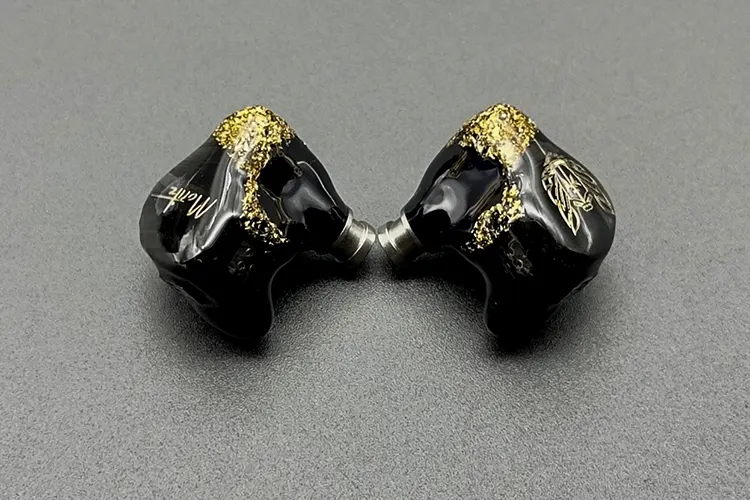
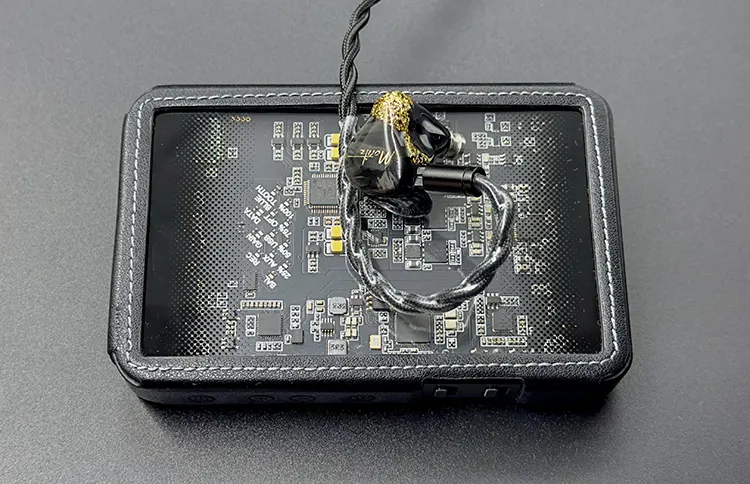
ENZO is built entirely of resin and uses a dark-colored base shell with elegant golden flakes near the faceplate edges and on the sides of the body.
Both IEMs have a premium look, but personally, I prefer the Grand Luna’s appearance, which contrasts well with the deep red shells and metal faceplates.
Both IEMs are nearly the same size, nothing that would bother users, so the fit is equally comfortable on both. Both have average-sized nozzles, and for me, the same ear tips provide a comfortable fit on both.
However, on ENZO, you may need a narrower ear tip to tame the sharp treble. On ENZO, we get two switches on each shell, which provide different tuning flavors. The IEM uses a 2-pin connection system.
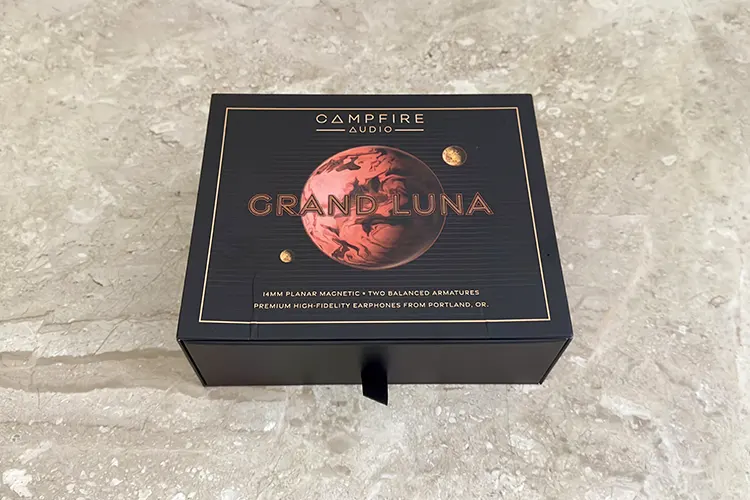
While the packaging and accessories included with the ENZO are quite satisfactory, the Grand Luna offers more aesthetically pleasing packaging and provides a more thoughtful set of accessories.
The carry case of ENZO provides a lot of space, and it is much more comfortable to store the IEMs along with the cable in the case.
Performance
The bass on ENZO is very tasteful; it’s thick, warm, and offers a solid punch without overwhelming the higher frequencies. Grand Luna has a tighter sub-bass, but the mid-bass lags in impact compared to ENZO.
ENZO has a more spread-out, head-filling bass, which creates a more enveloping sensation. Where the Grand Luna shines is in providing better texture and a more detailed low end.
In the lower midrange, both IEMs have richness owing to a bold bass presence. This region is more accurate on the Grand Luna, as instruments and male vocals have better body. ENZO has the cleaner timbre of the two, and the details pop out better on it.
In the upper midrange, Grand Luna is more relaxed, while ENZO can appear spicy at times. Grand Luna’s midrange is more about preserving musicality and keeping details slightly out of focus.
In the treble region, ENZO has a livelier and more energetic profile. Even if the notes do not resolve quite well, the energy they carry makes the treble more engaging. Grand Luna’s treble is all about smoothness and lacks air and sparkle in comparison.
However, on treble-heavy tracks, ENZO lacks coherence and can sound brittle and jumbled. I prefer Grand Luna for such tracks, as, even if lower in resolution, it sounds more consistent.
ENZO pulls ahead in technicalities, providing better resolution and a more detailed sound. Micro-details and nuances are more vivid on ENZO.
The stage feels more immersive and grander on ENZO; however, the Grand Luna is quite close here and offers a tad better stage depth.
Due to an airier and more energetic treble profile, imaging feels more accurate on ENZO. Both IEMs offer good layering and provide enough breathing space among instruments and vocals.
My Verdict
Campfire Audio has always followed one guiding principle: every release is distinctly different, ensuring its products appeal to a wide range of listener preferences.
The Grand Luna is no exception. Its configuration is among the most unique to date, featuring a planar driver paired with custom balanced armatures.
Yet, despite its planar foundation, this is perhaps the least planar-sounding IEM I’ve ever heard. You don’t get the typical fast planar bass, sharp treble, or metallic edge. Instead, the Grand Luna delivers a very relaxed presentation with a punchy and deep bass and a tuning unlike any other in Campfire’s lineup.
Often, we chase resolution and micro-detail in IEMs. But once in a while, we want to set aside the sharp edges and analytical precision and simply enjoy a relaxed, musical session.
The Grand Luna fits that role perfectly. Unlike a lot of bass-heavy sets that compromise midrange richness, this one maintains warmth and musicality even with its elevated low end.
Of course, for listeners who prioritize technicalities, the Grand Luna may not fully align with their preferences, and I don’t blame them.
As a reviewer, it’s not easy to ignore technical shortcomings, but I often find myself craving non-critical listening, and the Grand Luna is an excellent companion for that.
Think of it as a perfect complementary IEM rather than a do-it-all flagship. One thing worth noting: pairing matters. On low-spec sources, the Grand Luna can sound underwhelming, as it benefits greatly from a high-quality source chain.
Overall, I had high expectations when the Grand Luna was first announced. Some of them were met, some not entirely. But listening to it does bring a smile to my face very often.
Campfire Audio Grand Luna Specifications
- Driver Configurations: 14mm planar magnetic driver + 2 high-frequency balanced armatures
- Frequency Response: 5 Hz – 30 kHz
- Impedance: 13 Ω
- Sensitivity: 94 dB @ 1 kHz – 33 mVrms
- Cable: High-purity silver and copper conductors with swappable 3.5mm, 4.4mm balanced, & USB-C DAC Terminations
