

Sound Impressions
The following sound impressions of the Campfire Audio Grand Luna were completed using a mixture of my main source, Lotoo’s Paw Gold Touch, the Astell&Kern SP3000, and the newly released Campfire Audio Relay DAC/Amp Dongle.
For the review, I paired the IEMs with the stock cable and Divinus Velvet ear tips, size L.
Summary
As with many Campfire Audio releases, the Grand Luna is a very uniquely tuned IEM. Uniquely, because it took me some time and effort to truly understand and relate to the tuning.
Initially, when I started listening to it, it did not impress me much. There seemed to be a lot of bass and very little detail on offer, and I immediately knew it would need some time to settle.
After a few days, the sound opened up and felt more detailed. I think the people at Campfire Audio took on the challenge of heavily taming the planar driver and making the tuning a very relaxed one.
The bass really took me by surprise; I did not expect the Grand Luna to be a bass-heavy IEM. The midrange is sweet and musical, but the resolution takes a hit and may not appear highly detailed.
The treble shows its presence, but those last bits of sparkle and air have been cut down to give the Grand Luna a very inoffensive and smooth presentation.
This IEM is clearly meant for those long listening sessions where you don’t focus on the technical aspects but rather just plug in the IEM and enjoy the music.
The Grand Luna has helped me explore so much music: jazz, 70s–80s rock, especially the lighter, less complex tracks, along with smooth soul, R&B, and funk. All of these styles really come alive with it.
Bass
The bass on the Grand Luna is its heart and soul. I was not expecting the planar low end to be this bass-heavy. It is unashamedly a bass-first IEM and sacrifices a bit of detail and sparkle for bass prominence.
Both the sub-bass and the mid-bass have a good presence and a lot of punch. The sub-bass goes very deep and has a lot of rumble on offer.
On some bass-heavy tracks, it can really have a head-pounding effect. It is a very tight and extended sub-bass that stays within limits and does not become overwhelming.
The mid-bass has a very satisfying level of impact without much overemphasis. The bass favors sub-bass extension over mid-bass weight. A controlled mid-bass keeps the low end clean and separated from the midrange, but one may notice some instances of bass bloom.
Along with good presence and satisfying impact, the bass texture and layering are commendable. The speed is moderate for a planar driver, and I do not find it as fast as many planar-only IEMs. There are some warmth and a little bit of lingering presence in the bass.
For me, this bass resembles a dynamic driver a lot. I tried the Grand Luna with a wide variety of genres and found the bass to be very resolving and detailed.
Grand Luna’s bass is more about deep extension and separation than just raw punch. The bass line has always been distinct without any overlapping. Genres like jazz and acoustic go quite well with the Grand Luna, where you get flavors of bass guitar with strong textures in plucks and slides.
Overall, the bass leans more toward a controlled bass rather than a warm or boomy presentation. The quantity should be enough to tickle the bassheads.
Midrange
With a prominent low end, the midrange is expected to take a back seat. The midrange is mildly recessed here, but the richness is not sacrificed much.
With some help from the mid-bass, the lower midrange has a good presence, is effectively rich, and carries good weight.
This gives male vocals and instruments such as bass guitars, cellos, and other string instruments a satisfying body, but it could definitely be more full-bodied. A good thing is that the region avoids being too warm or having a muddy presentation.
The female vocals and other midrange instruments have a natural presentation and convey a good hint of sweetness. The upper midrange region is gentle and just adds slight energy and presence to the mix. Do not expect a very forward and extended region here; rather, we have a non-aggressive and restricted one.
Female vocals lack some openness, and instruments such as piano, guitars, and other string instruments don’t have the last bite. Nevertheless, the presence is there, but in a soft way.
The midrange lacks those last bits of resolution and detail, making it a case of very relaxed and inoffensive tuning. It may appear slightly congested and lacking transparency, especially in complex tracks.
If you are plugged into some easy tracks, there is nothing much lacking on the Grand Luna. And that’s what the tuning choice on the Grand Luna is.
There are details, but not so prominent, as if after a few tracks you are forcibly told to put your mind off the details and resolution you have been following with most of the IEMs.
Grand Luna’s midrange best suits genres such as acoustic, pop, easy jazz tracks, etc., where the lack of detail is less distracting.
Treble
If you have been with me this far, by now you must have guessed the treble profile of the Grand Luna. The treble takes a back seat, with just enough presence and clarity, but with less air and openness.
This aligns with the grand scheme of things, making this IEM a very smooth and relaxed listen.
To be honest, I struggled a bit during the initial days while adjusting to the treble and the overall resolution, but trust me when I say I do not miss much detail with these. You’ll find all the details, but they are not in your face or overly prominent.
This, in turn, gives the IEM a very different character. It’s an IEM that simply asks you to enjoy the music and ignore the details for a while. There is hardly any emphasis or exaggeration across the entire treble region.
The lack of energy and forwardness in the treble makes vocals and instruments like guitars, violins, and snares sound slightly recessed, laid-back, and at times distant.
The treble notes are not highly resolving. While you do hear treble energy throughout the range, many times you’ll notice overlaps that create a sense of blurred detail rather than clean separation.
This makes the treble feel present but not well-defined, reducing the perception of refinement and precision.
In the upper treble region, there is a sharp roll-off, meaning ultra-fine micro-detail and airiness are limited. I believe this region, or the treble as a whole, has been purposely cut off to allow for casual listening.
This treble would suit listeners who prefer an easy-going, non-shouty presentation where vocals and details don’t stand out too aggressively.
Staging & Dynamics
The technical aspects of Grand Luna do not disappoint and substantiate the overall tuning. Starting with the soundstage, I find it impressively well done. The width does not extend unexpectedly wide and feels very natural and impressive, but it is the depth that is more commendable.
The voluminous bass also adds some weight to the stage depth. The stage presentation shows a holographic and enveloping character, which enhances the musical aspects further.
Imaging is above average; however, I find the placement within the stage very accurate. It’s just that Grand Luna falls short of delivering razor-sharp imaging.
The separation among instruments and vocals is good enough, and each of them gets its due space. The IEM does a great job with stereo panning and left-to-right movement in music, making it sound quite realistic.
The transient response isn’t particularly fast or slow; it sits comfortably in the middle. There is a good sense of pace, though the heavier bass can make the overall presentation feel a bit sluggish.
The IEM’s background isn’t the cleanest or blackest, so the music doesn’t emerge completely silent, and some parts crave extra clarity. Some micro-details may seem missing or less prominent.
With compromised resolution, the images are not as sharp as I would like, but enough of this complaining. The overall coherency is decent, and all the frequency ranges integrate well enough to avoid sounding disconnected.
Grand Luna may not dig out every last detail, but the musical flow is intact, and it remains a fun, emotionally engaging listen.

Synergy
Efficiency
The Grand Luna requires 33 mVrms to reach 94 dB @ 1 kHz and has an impedance of 13 Ω @ 1 kHz. The Grand Luna is sensitive and efficient, as most of Campfire Audio’s IEMs have been.
It doesn’t need much voltage to get loud, but the sound is highly dependent on the type of source it is paired with. With some low-spec devices such as smartphones and laptops, I don’t find the Grand Luna struggling much.
The included HiFi DAC provides enough power for the IEMs. The Grand Luna doesn’t require brute-force power, as I hardly notice it scaling with additional power.
Beyond a point, any extra power is futile, but it benefits greatly from a quiet and clean source. This allows the Grand Luna to shine with clarity, detail, and refinement.
When paired with the Questyle CMA18P and Earmen Angel, I hear some background static noise, though not to a level that bothers me. On the SP3000, the Grand Luna reaches a volume level near 40, and on the LPGT, it takes fewer than 30 volume clicks.
Source Pairings
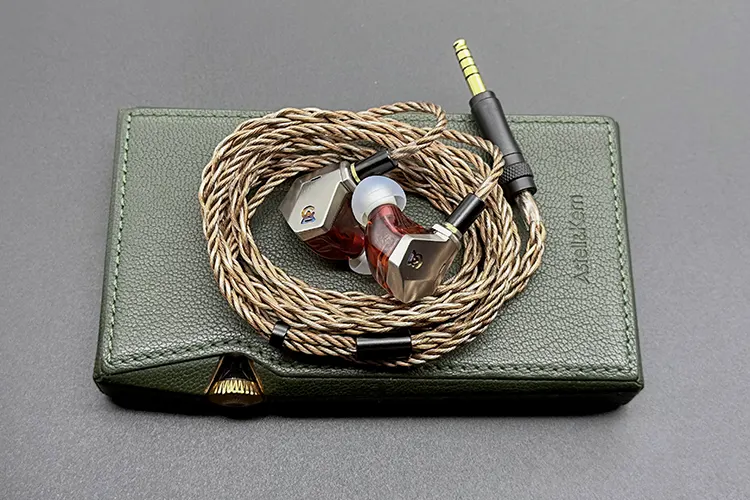
Among the sources I have paired with the Grand Luna, the Astell&Kern SP3000 has the most refined sound of all. A neutral midrange with a clean and silent background, along with the polished sound, benefits the Grand Luna greatly.
The SP3000 has a very impressive soundstage, which makes the Grand Luna’s sound more immersive. The bass gains tightness, with the sub-bass extending its depth further. There are improvements seen in details and textures in the low end.
All Grand Luna needs is some support in detail and resolution, which is rightly achieved with this pairing. It feels as if a veil has been lifted, and the clarity and richness peak.
Though I am not an advocate for extremely costly high-end sources, I encourage people to try the Grand Luna with such devices and experience the difference for themselves.
On my other source, the LPGT, there are a few things I like and a few I feel could be better. The bass has a slight bloom here, as the LPGT itself lends some weight to the low end of the IEMs, and the Grand Luna does not need that.
However, the bass is never loose; it remains deep, textured, and enjoyable. I just wish it were tighter. The midrange gains some added warmth, though nothing unpleasant.
If anything, the LPGT contributes some richness and a musical touch. The treble is nothing to complain about; it is mostly unadulterated and presented as it is.
Compared to the SP3000, the LPGT has a less immersive soundstage, as it lags in width, though the depth is quite similar on both. The SP3000 delivers a cleaner and grander sound reproduction than the LPGT and can be considered an upgrade over it.
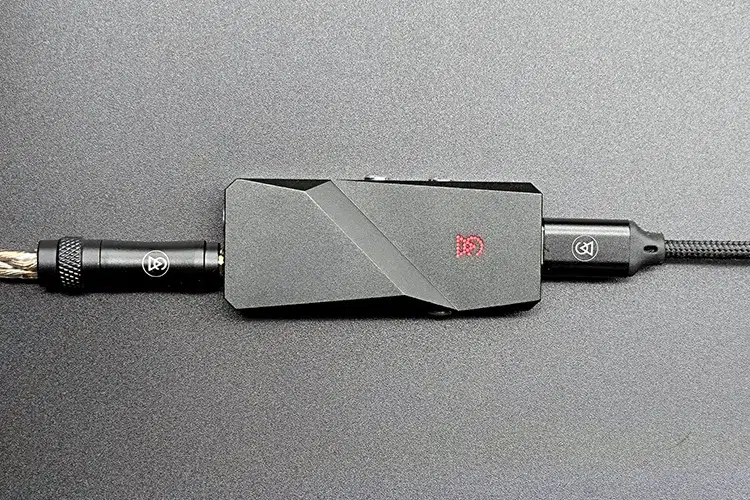
Dongle Pairing
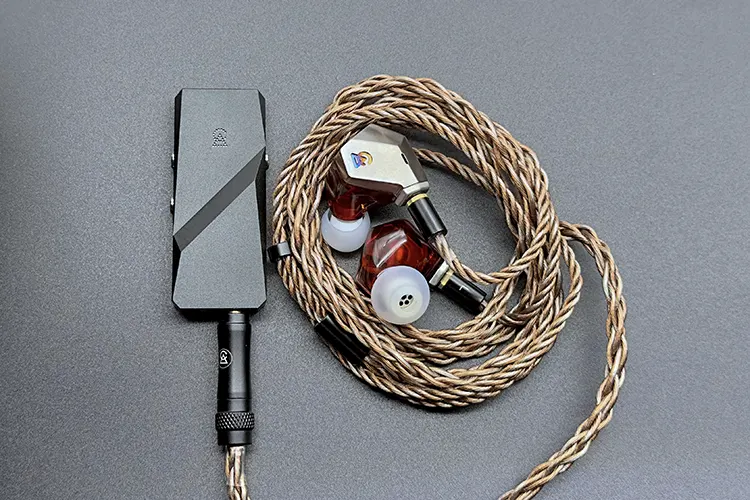
The included HiFi DAC is an appreciable solution if you want to connect the Grand Luna to portables such as laptops or smartphones. This little USB-C–ended device offers enough power to drive the IEMs.
While you cannot expect a very refined sound, I find the performance quite decent. There is enough loudness even with just a few volume clicks.
Compared to the IEMs connected via a simple 3.5mm end, the DAC shows some improvement in stage presentation, which is more expansive with the latter. The instruments have more breathing space among themselves.
The low end is also more controlled and authoritative, with greater sub-bass depth and more detail. The midrange and treble regions gain some refinement with a cleaner, more resolving sound.
The newly launched Relay DAC/Amp, equipped with the AKM SEQ 4493 DAC chip, surprised me with its excellent sound quality. I was really not expecting this level of refined sound from it.
If someone told me this little dongle had some special synergy with the Grand Luna, I would believe them.
One of the highlights is the polished bass, which has outstanding texture and solid impact. There is a subtle boost in the sub-bass region, but it mostly remains rounded and detailed. The super-clean background, along with good stage presentation, makes listening quite engaging.
The brand mentions they chose this high-performance AKM DAC chip for its incredible tonality and analog warmth, and that is exactly how I hear it: a detailed, extra refined, well-textured sound with a touch of sweetness.
This DAC gets my recommendation, at least to people who own or plan to get the Grand Luna. For casual listening as well as more critical sessions, Relay feels like a worthy companion that easily justifies its place in any portable setup.
