

Selected Comparisons
Noble Audio AGIS II
Technical
Noble Audio AGIS II features an 8-driver hybrid architecture with four Sonion balanced armature drivers, two Sonion bone-conduction drivers, and two Knowles balanced armature drivers.
The two Sonion BA drivers are for the high and ultra-high frequency ranges, two Sonion bone conductors are employed for the midrange, the other two Sonion BA drivers cover the mid-bass regions, and the final two Knowles drivers handle the bass and ultra-bass regions.
There is not much known about the internal architecture of AGIS II, except that it is rated at < 35 Ω impedance and is easy to drive. Compared to Andromeda 10, it takes a couple of extra volume clicks on my LPGT.
Design
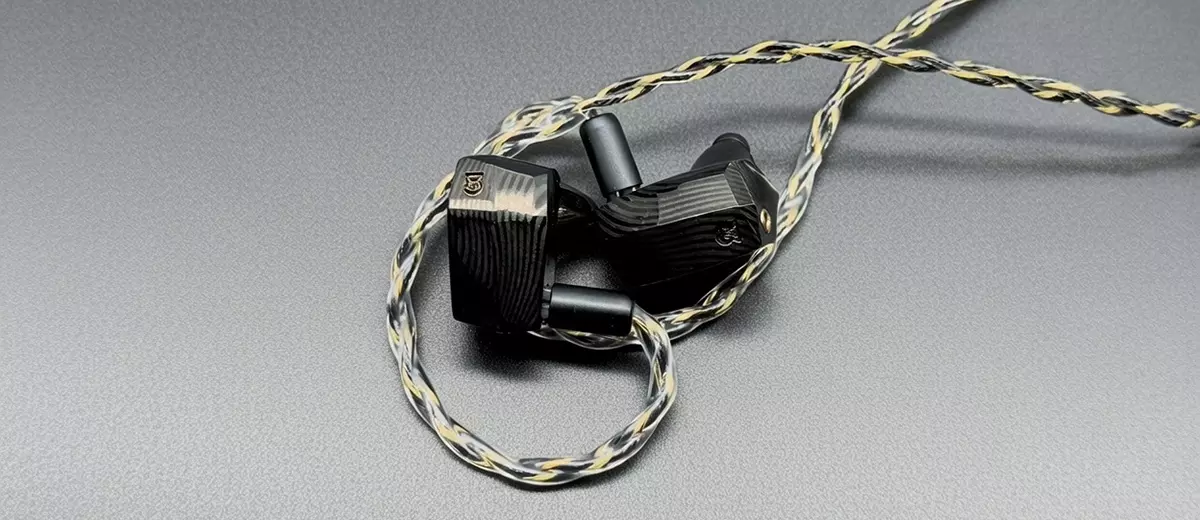
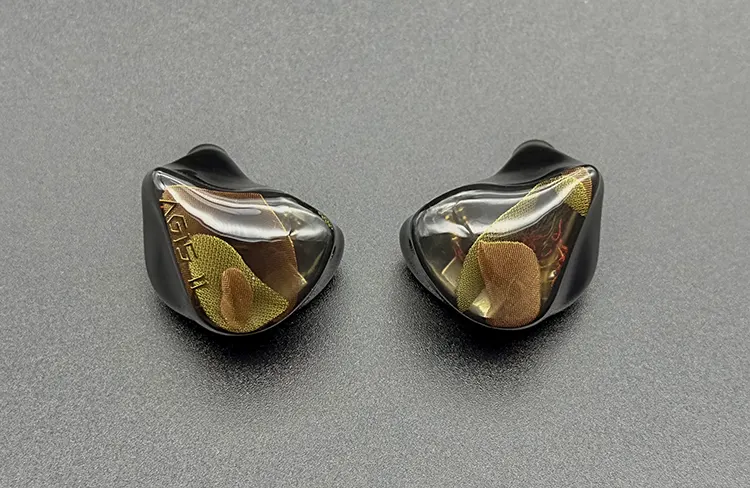
The AGIS II has a sleek, glossy black shell with a soft, flowing shape. Built in resin, the shells carry one of those minimal but very thoughtful designs.
For the faceplates, Noble Audio has used irregular shards of ultra-fine metallic mesh randomly arranged like abstract patches of fabric. The different colors of this mesh give the design a unique touch.
The Andromeda 10 LE is built in real Damascus steel and gives off a more premium vibe. It has a clean design and keeps the ergonomics in check. It has more weight, but it never bothers.
The regular Andromeda 10 edition should be lighter and easier on the ears. Notably, AGIS II has larger shells, and they sometimes press hard against my ears, fatiguing in the long run. For the fit, I prefer the Andromeda 10’s design.
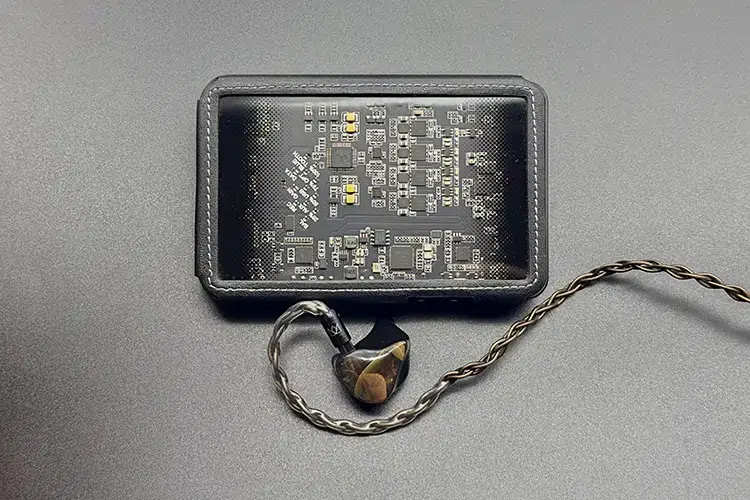
Looking at the packaging, both the IEMs come with a solid set of accessories. The large AGIS II leather case that packs everything inside and takes the packaging to a different level. It’s a big case with room even for your DAP.
Andromeda 10 also packs things quite well. The carry case and other set of accessories do not let the premium tag down either.
Performance
In the low end, AGIS II carries more volume and has extra depth and rumbles in the sub-bass. Mid-bass also hits a bit harder, with a stronger sense of slam.
Andromeda 10 LE goes for a cleaner approach. It is leaner in weight, but it does not feel “missing” in texture. You still hear the layers in bass lines, but it just does not shove as much air at you.
AGIS II has more density in the lower mids, so male vocals and strings carry more weight and warmth. It sounds lusher and a bit thicker, but the clarity is never compromised.
Andromeda 10 is cleaner and more controlled. It feels more musical and organic. It also has more forward upper midrange.
The Andromeda 10 has a more obvious sparkle and a bit more bite in the treble notes. It sounds crisp and lit up. AGIS II is smoother in comparison.
It still has air and sounds open, but the treble energy is more even and less peaky in feel. If you like a treble that shows off shimmer and presence, Andromeda 10 leans that way. If you want the same openness with a softer touch, AGIS II is easier.
Technically, AGIS II feels more spacious and more holographic with more height and a more “around you” presentation, and imaging feels a bit more accurate. Andromeda 10 spreads vocals out more, sometimes at the cost of a strong center anchor.
AGIS II feels more centered and structured, so the lead stays cleaner and better separated in the mix. It also handles dense tracks slightly better.
In the end, Andromeda 10 sounds very coherent and very clean, so it comes off refined and musical, while AGIS II feels smooth but more physical when the track demands it.
Campfire Audio Grand Luna
Technical
The Grand Luna is the first IEM from the Campfire Audio lineup to feature a planar-balanced armature hybrid configuration.
It uses a new generation 14mm planar magnetic driver and two balanced armatures. The custom 14mm planar magnetic driver helps the low end and the midrange, while the two balanced armatures support the high-frequency regions.
The Grand Luna requires 33 mVrms to reach 94 dB @ 1 kHz and has an impedance of 13 Ω @ 1 kHz.
The Grand Luna is sensitive and efficient, as most of Campfire Audio’s IEMs have been. It takes a similar volume of clicks on LPGT as the Andromeda 10.
Design
The Grand Luna’s design takes cues from both the Astrolith and Clara. It has that instantly likable design and a solid build.
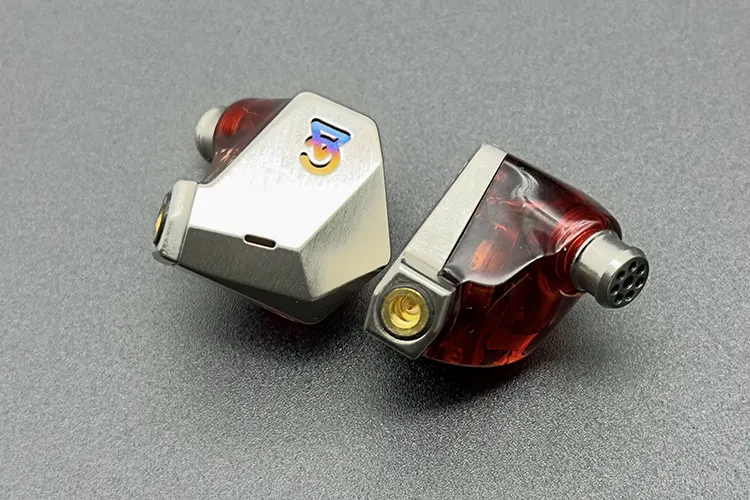
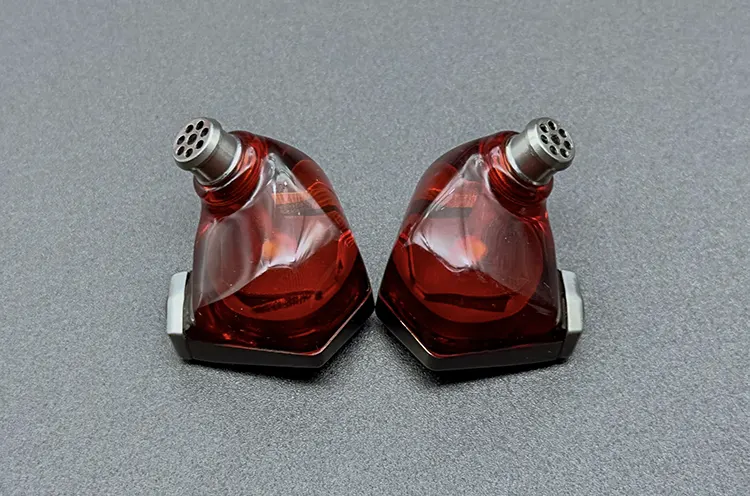
The body combines deep ruby-red acrylic shells with a geometric, angular metal faceplate. The acrylic shells are transparent, faintly revealing the internal driver structure of the IEMs.
The Andromeda 10 LE may look and feel better in hand than the Grand Luna, but for the Andromeda 10 in its standard edition with green shells, I would have second thoughts about which is better between the two. Both IEMs follow similar nozzle styles, and the same set of ear tips can go on both.
Grand Luna has an MMCX connection, and the stock cable is the Time Link Cable System. These swappable cable terminations include 3.5mm single-ended and 4.4mm balanced connectors, and a USB-C DAC termination. Andromeda 10 ditches the MMCX connection and goes for a 2-pin system.
The Andromeda 10 LE includes a 4.4mm-terminated cable, but this one is more flexible and feels more premium in build. With the regular edition, you get the same modular Time Link Cable.
Packaging-wise, they both go for a similar style with colorful interiors and high-quality accessories. The Grand Luna carry case is slightly smaller, but the rest remain the same.

Performance
Grand Luna has more physicality in its lows with that dynamic driver punch, where bass hits feel bigger, rounder, and more satisfying on first contact. There is more rumble, more depth, and more of that “floor” under the track.
Andromeda 10 is cleaner and leaner in comparison. You still get texture, layering, and good note definition, but it does not dig as deep. It focuses more on control and speed.
Midrange is where Andromeda 10 starts sounding more “correct” and more natural. It keeps the vocal range clean and well-separated, with a mroe accurate coloration, and less warmth bleeding in from the lows.
Grand Luna’s midrange sits a bit further back and comes across darker and thicker. It has richness, but it does trade away some clarity and some fine detail. Andromeda 10, on the other hand, feels cleaner and more resolved.
Treble is a clear contrast. Andromeda 10 has more sparkle, more air, and more presence up top. Cymbals have a cleaner shimmer, and the overall sound stays more open because the top end is simply more awake.
Grand Luna takes a step back in treble energy and sounds smoother and more relaxed. Vocals and instruments like guitars, violins, and snares can come off a bit laid-back and sometimes slightly distant, and may lack bite.
Technically, Andromeda 10 feels more spacious and more precise. Imaging is sharper, and placement is clearer. Separation of instruments is much better when tracks get dense-sounding.
Grand Luna has a more enveloping and immersive soundstage, but it is not as open or as sharply defined.
In the end, they are chasing different moods. Andromeda 10 leans technical, clean, and natural. Grand Luna leans warmer, darker, and more relaxed, with bigger bass-driven drama.

THIEAUDIO Valhalla
Technical
The Valhalla is an all-BA IEM featuring a total of 19 balanced armature drivers on each side. The drivers use a combination of drivers from Knowles and Sonion.
Specifically, there are four Sonion subwoofers for bass, ten Sonion drivers for low-midrange and midrange frequencies, four Knowles drivers for the mid-treble, and one Knowles ultra-treble tweeter for the highest frequencies.
The Valhalla also uses a 4-way passive crossover network with a 4-bore acoustic tubing system to accurately split and deliver different frequency ranges.
The THIEAUDIO Valhalla has an impedance of 9Ω @ 1 kHz and a sensitivity rating of 103 dB/Vrms. Compared to Andromeda 10 LE, it asks for a lot more power.
On my LPGT, Valhalla takes a volume level of 35 comfortably, compared to which Andromeda 10 settles near 25.
Design
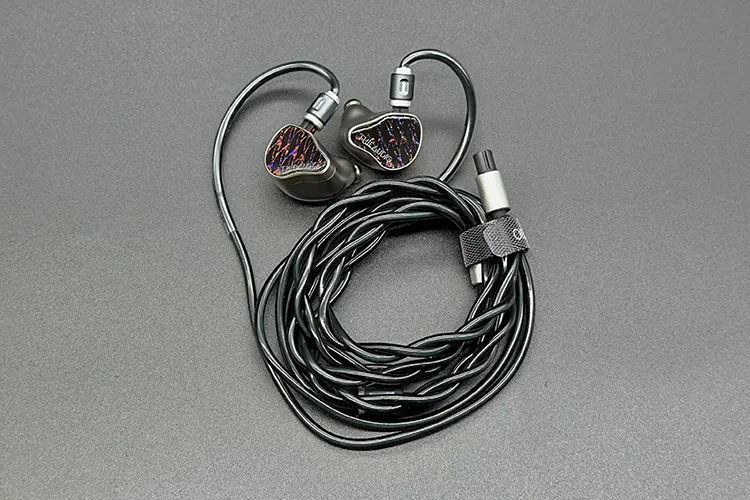
Valhalla features Grade 5 titanium shells, which give a strong and durable build. The shells are larger than typical IEMs, but thankfully, the weight is on the lighter side. The titanium shells have a matte finish, which is easier to maintain than the Andromeda 10 LE’s shells.
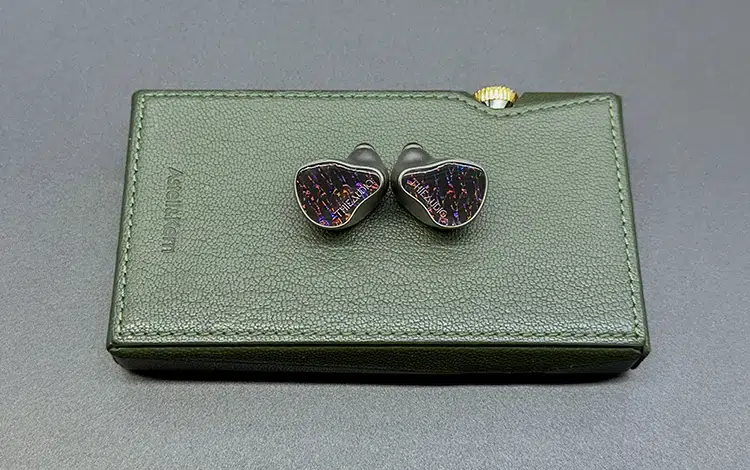
The faceplate showcases a holographic design with a multi-colored, prismatic pattern. THIEAUDIO also gives the option to choose from a set of pre-customized faceplates for an extra charge.
In terms of fit, the Andromeda 10 is easier due to the smaller shells. For people with small ears, Valhalla’s fit can be a struggle. Both the IEMs use a 2-pin connection.
Campfire Audio packs a better set of accessories with the Andromeda 10 in both the limited edition and the standard one.
This is one area where Valhalla falls short. The carry case packed with Valhalla is quite small. Valhalla’s cable is a modular one, allowing users to swap the cable plug between 3.5mm unbalanced and 4.4mm balanced.
Performance
Valhalla is the one that digs deeper. It has a super-deep, rumbly foundation that feels special for an all-BA setup. The low end is tight, clean, and textured.
Andromeda 10 leans more into punch and warmth rather than sheer depth. The bass feels a bit rounder and more mid-bass driven. The lowest notes do not carry the same rumble or floor-shake that Valhalla can bring.
Andromeda 10 brings vocals a bit closer and gives them a richer tone. There is more lushness, more density, and that slightly warm, natural glow that makes voices sound emotionally convincing.
Valhalla is more neutral and cleaner. Notes feel more trimmed and organized, with less warmth filling in the gaps. It comes across as more matter-of-fact, and it can sound a touch leaner next to Andromeda’s fuller presentation.
Valhalla sounds airier and more open up top. It has more sense of lift and space, and cymbals feel like they have a longer, more natural trail. There is also a bit more crunch and bite, which helps it sound crisp and clean without needing to shove the treble forward aggressively.
Andromeda 10 still has enough sparkle and energy, so it never feels dull or missing detail, but it shapes the treble differently. It comes across a bit more sparkle-focused rather than air-focused.
On the technical front, Valhalla edges ahead by a small margin, mainly because it stays cleaner when the mix gets intense. Separation is a touch stronger, especially on busy tracks with a lot of simultaneous layers. That bass cutoff and a cleaner midrange help there.
Andromeda 10 pulls out details easily and has that effortless “everything is just there” kind of clarity, but on very dense passages, Valhalla has a stricter separation. Stage-wise, both feel similarly spacious and open.
My Verdict
Back in the day, Andromeda sat very close to my heart. I moved on to many other IEMs over the years, bought and sold a bunch, and chased different signatures, different driver tech, and different flavors.
Still, that fondness never really went away. Andromeda kept changing too, in style and tuning, but the name kept carrying its own little legacy, and I always had that soft spot for what it stood for.
Andromeda 10 feels like Campfire Audio remembering why people fell for this line in the first place. It nails timbre without overthinking it. It’s clean and musical, the kind of tuning you don’t have to overthink about.
Bass moves with you instead of punching for attention. It has that sort of midrange that lets you forget gear exists and start humming along, which was always the old Andromeda’s secret handshake. Treble opens up the room, gives it air, and keeps you engaged.
It’s not perfect, and nothing is, but the balance lands in that solid zone where you just like listening to it. It preserves what makes Andromeda special and still pushes the name forward in a way that feels respectful.
What it did to me, honestly, was a bit personal. The first few hours of listening, I felt like a kid digging through a closet and finding that one toy you swore you outgrew. That rush of familiarity hit first, and it just felt humbling.
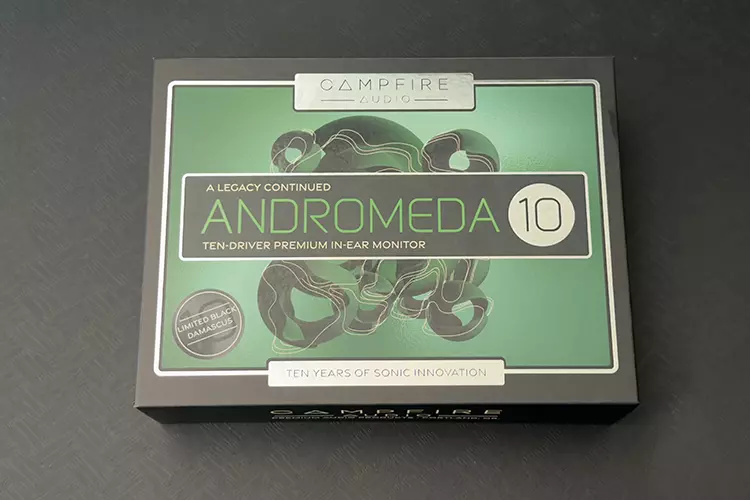
The Launch Edition keeps the premium quotient high. The build feels special, the accessories are proper, and it is a complete package. If you go for the standard version, it feels like the smarter value pick while still keeping that Andromeda charm intact.
Andromeda 10 has my recommendation and kudos to Ken and the team for making it happen.
Campfire Audio Andromeda 10 Technical Specifications
- Driver Configurations: 10 Balanced Armatures
- Impedance: 8.5 Ω @ 1 kHz
- Sensitivity: 94 dB @ 1 kHz – 12.10 mVrms
- Frequency Response: 5 Hz – 20 kHz
- Cable: Gold-plated copper conductors in 4.4mm with 2-pin connectors
