

Synergy
Efficiency
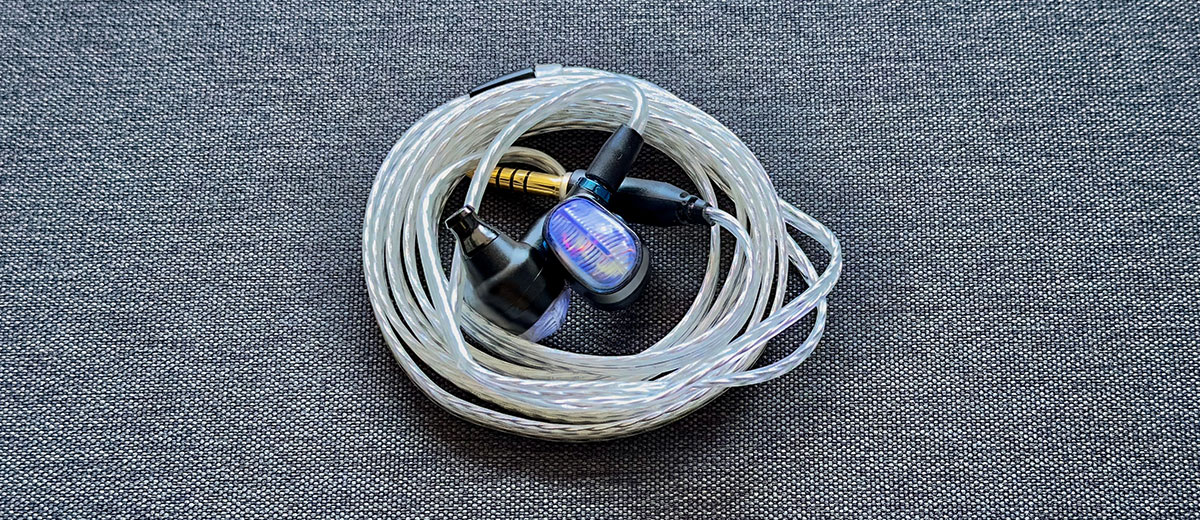
The Alien Brain has an impedance of 7.8 Ω at 1 kHz and a sensitivity rating of 8.97 mVrms to hit 94 dB. It is an extremely easy-to-drive IEM and does not demand much power.
One can comfortably drive it through smartphones and low-power-rated dongles. It does not have a scaling property, so using a powerful source does not offer any benefit.
On some powerful sources that I tried with the Alien Brain, you may get some background static noise. This is common with some Campfire Audio IEMs that I have tried, such as the original Andromeda.
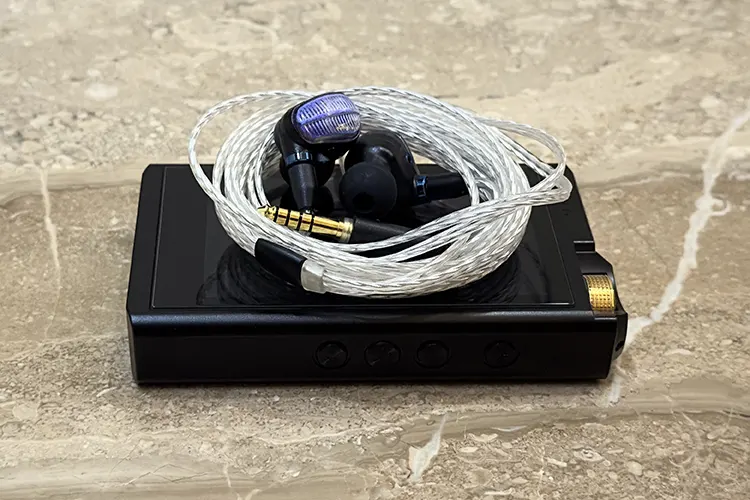
The sensitivity makes it tricky to pair with many sources. On my Lotoo Paw Gold Touch, it takes around 20 volume clicks to reach a satisfactory listening level.
Source Pairings
Due to its balanced tuning, the pairing of the Alien Brain is pleasant across a wide variety of sources.
On my LPGT, the bass has a satisfying body and impressive texture and layering. The midrange is very natural with a bit of forwardness and renders vocals with great nuance, capturing the delicate textures and emotional subtleties in the vocals.
A full-bodied and rich lower midrange helps with the weight and warmth of instruments and vocals, which adds a sense of fullness. In the treble region, I find the Alien Brain performs fairly well with enough air presence and a resolving nature. The soundstage on LPGT feels a bit restricted in width.
On the SP3000, a DAP that is more resolving and offers a more spacious stage, the pairing is a bit more enjoyable than with the LPGT.
The bass is more textured on the SP3000 and feels a bit more controlled and has more speed as well. Even though the LPGT’s slowish bass is denser, it’s the more sub-bass depth on the SP3000 that makes the bass a bit more enjoyable.
The midrange has a cleaner timbre and spreads out wider than the more forward and closer-to-ear LPGT midrange. The treble region carries more energy, and the sense of space is noticeably better.
I also tried the Alien Brain with the Questyle CMA18P DAC/amp, which is powerful even with a small form factor. On this pairing, there is a static hissing noise in the background, as the IEM is sensitive to power.
It has some elements of similarity to the tuning that we have on the LPGT, but it is not as resolving and textured. The emotional quotient is missing with this pairing, as it sometimes sounds a bit dry.
USB-C Portable DAC
The DAC dongle included comes in quite handy when you need to pair it with portable devices. I think this is the first time I have seen Campfire Audio include a dongle DAC with their IEMs.
With 32-bit/384 kHz resolution, it makes for easy listening to high-res audio on the go. I did spend a decent amount of time with the DAC connected to my MacBook and smartphone. It does not offer any significant improvement, but I do find some bits of refinement.
Selected Comparisons
THIEAUDIO Hype 10
Technical
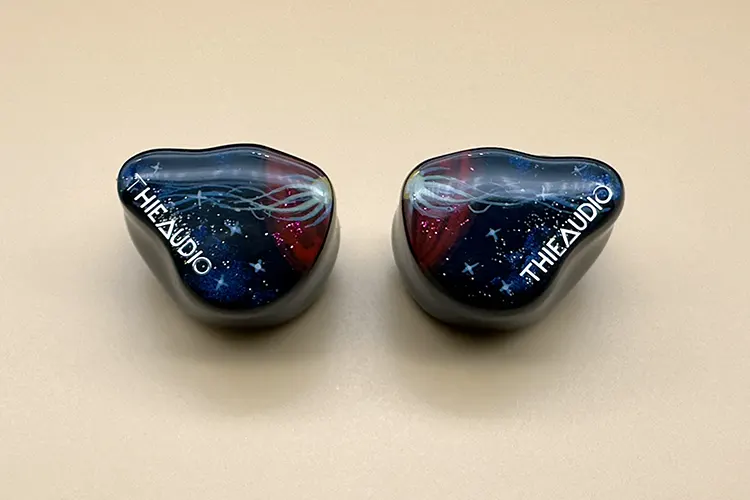
The THIEAUDIO Hype 10 is a hybrid IEM featuring dual dynamic drivers and ten balanced armature drivers. It incorporates the IMPACT2 technology common in the other Hype series IEMs, such as the Monarch MKIII and Oracle MKIII.
Hype 10 implements two dynamic drivers and ten balanced armatures. In the low-frequency region, Hype 10 incorporates two Sonion balanced armature drivers in addition to the dual dynamic drivers.
Hype 10 has an impedance of 18 Ω @ 1 kHz and a sensitivity rating of 104 dB/Vrms. Though it does not demand any extra power either, the Alien Brain is a lot easier to drive than the Hype 10.
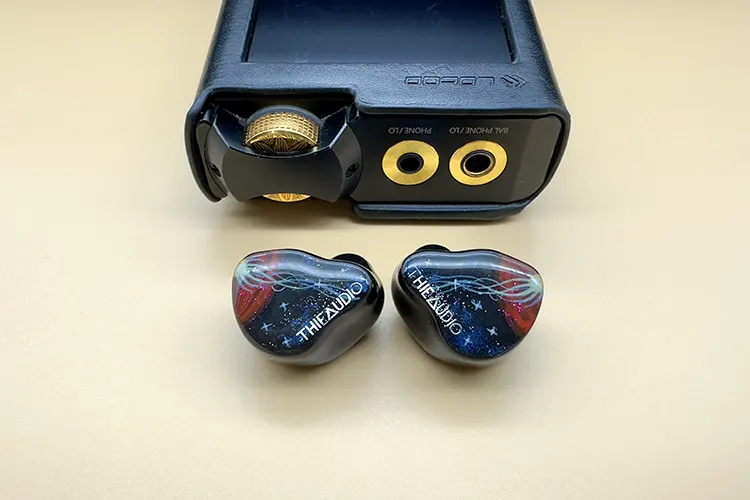
On LPGT, Hype 10 takes a volume level of less than 35, while the Alien Brain usually stays at a level of less than 25.
Design
The Hype 10 features resin shells that are noticeably larger in comparison. Its faceplates showcase an artistic, cosmic-inspired design with subtle shimmers that resemble stars.
For a resin shell, I find the Hype 10 designed well. In comparison, the Alien Brain is a very differently designed IEM with a metal shell base and a transparent, shiny dome lid, revealing the inner workings of each shell.
When it comes to fit, the smaller shells of the Alien Brain are more comfortable, but the fit is a bit tricky.
The Hype 10 comes with a modular cable offering interchangeable terminations, including 4.4mm, 3.5mm, and 2.5mm options, while the Alien Brain is offered only with two separate cables with 4.4mm and 3.5mm terminations.
I would have preferred a single cable with modularity instead of two separate cables that you’d need to change. Given the MMCX ports on the Alien Brain, I find it a bit cumbersome to swap cables. I prefer the 2-pin system of the Hype 10.
Even with a smaller box, the Alien Brain offers a more elegant unboxing experience, while the Hype 10 keeps it very minimalistic, as is the case with the accessory set included with it.
Performance
The Hype 10 leans toward a cleaner timbre with a more neutral and transparent tuning, while the Alien Brain focuses on delivering a lush and richer tonal character. The bass on the Hype 10 carries a bit more impact and mid-bass body, with refined texture and layering.
However, the Alien Brain isn’t far behind, as it offers a sense of detail and depth with a fuller, more emotionally engaging bass presentation. Both sets handle the bass region with control, ensuring it doesn’t bleed into the upper frequencies or introduce any muddiness.
In the lower midrange, both IEMs have a similar character with sufficient body and depth. The Hype 10 has a cleaner, more neutral, and more resolving midrange.
Tonality-wise, both are quite close to each other. The upper midrange on Hype 10 is a bit more extended and creates a better sense of space.
The midrange is more forward and closer to the ears on the Alien Brain. As a vocal enthusiast, I find the Alien Brain more enjoyable as the vocals come through denser, fuller, and with greater nuance.
The treble on Hype 10 leads ahead, exhibiting more details and an airier treble range. There is more clarity, and notes are resolved better on the Hype 10.
If you prefer a smoother treble, Alien Brain is the one for you. On the Hype 10, even with more energy and details, it never feels exaggerated.
Technically, Hype 10 offers a more holographic soundstage that spans wider than the Alien Brain’s, while the depth is nearly comparable.
Both IEMs offer precise and clean timbre, showing off solid imaging capability. Hype 10 does a better job at instrument separation and layering, thus handling complex tracks a bit better, though the Alien Brain is never congested.
DITA Audio Mecha
Technical
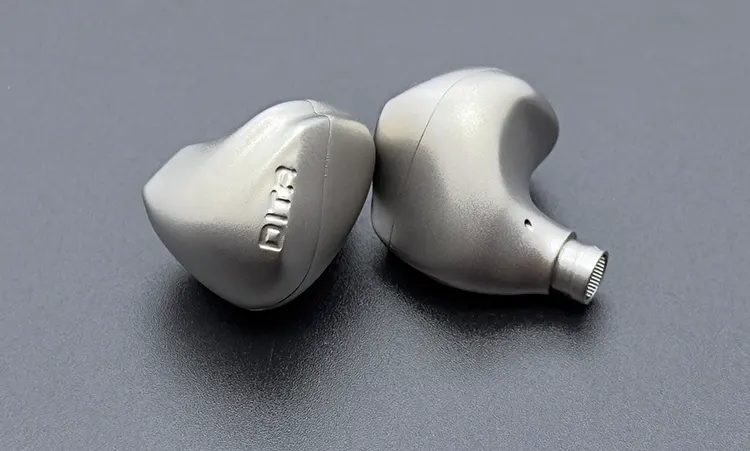
The DITA Audio Mecha features a single 10mm LiMa-Carbide dynamic driver with a dual magnet setup. The LiMa-Carbide driver consists of a 9mm lithium-magnesium diaphragm surrounded by a 1mm carbide diaphragm.
Additionally, there is a special venting system with dual vents on the shells that helps in achieving a well-balanced frequency response and tonality.
DITA Audio Mecha has an impedance of 32 Ω @ 1 kHz and a sensitivity rating of 113 dB/Vrms. The Mecha is highly efficient to drive and sounds stable if paired with more powerful sources.
The Alien Brain is a lot easier to drive in comparison. On some powerful sources where we get static noise with the Alien Brain, the same is not noticeable with Mecha.
Design
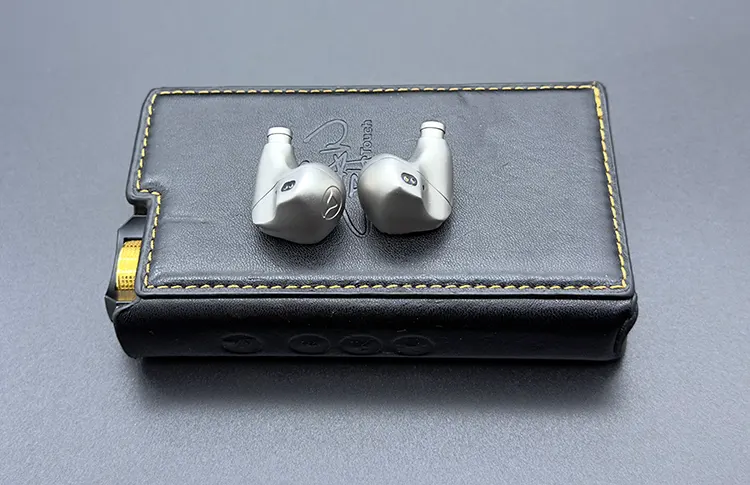
The Mecha is built with titanium shells that feature a slightly matte finish. In comparison, the Alien Brain has a very peculiar design. For those who prefer quirks over minimalism, Alien Brain has a preferable design.
Mecha’s shells are larger, while the Alien Brain shells are smaller but similar in weight. The fit factor is better on Mecha, as it has a more ergonomic shape.
The Mecha comes with a custom-designed Churro cable that has a superior build and offers modularity with 3.5mm single-ended, 4.4mm balanced, and USB Type-C plug options.
This cable connects to the IEM via a 2-pin system. Alien Brain has an MMCX connection system, which is common to most of the Campfire Audio IEMs.
Mecha delivers a premium unboxing experience, and like the Alien Brain, it has a vibrant and exciting presentation. Both IEMs include thoughtfully selected, high-quality accessories. Alien Brain has a better array of accessories than the Mecha.
Performance
Mecha has a more V-shaped sound, with impactful bass, a forward upper midrange, and a more energetic treble range.
I find both IEMs offering a similar level of impact, possessing a warm analog character. The bass has a slower decay on Mecha, whereas it is quick in speed and decay on the Alien Brain.
Of the two, the Alien Brain’s bass feels cleaner as the mid-bass remains in control. Bass traits such as layering and texture are more perceivable on Alien Brain.
The lower midrange on both IEMs carries a satisfying weight and depth, imparting adequate body to instruments such as bass guitar strings, cello, and vocals.
Alien Brain’s midrange has a cleaner timbre, while the Mecha carries a bit more warmth, and the bass sometimes seems bloated in comparison.
The upper midrange is contrasting in nature on Mecha, as it carries a touch of extra energy that is occasionally sharp and potentially fatiguing. The region is smooth yet nicely extended on the Alien Brain, thus giving a more natural feel.
The lower treble region is more emphasized on Mecha, whereas it feels more coherent on the Alien Brain. In the upper treble region, there is a greater sense of space and sparkle on Mecha.
Though it throws more details, it may sometimes sound artificial compared to the smooth and natural treble region on the Alien Brain.
The soundstage is quite comparable on both IEMs, with the Mecha offering better depth, while the width is nearly the same on both. The crisp and precise treble range adds to better imaging and more openness in the sound.
Both IEMs have similar resolution, throwing out nearly the same level of detail. Both IEMs handle complex tracks well without congestion or smearing of detail.
Sennheiser IE 900
Technical
The Sennheiser IE 900 is a TrueResponse 7mm single dynamic driver IEM. The IEM houses three Helmholtz resonators, which contribute a lot to how the treble is tuned.
The IE 900 has an impedance rating of 18 Ω @ 1 kHz and an SPL of 94 dB @ 1 kHz. Like the Alien Brain, it does not ask for a lot of power. It can be comfortably paired with low-powered devices. On the LPGT, both of these IEMs take a volume level near 30.
Design
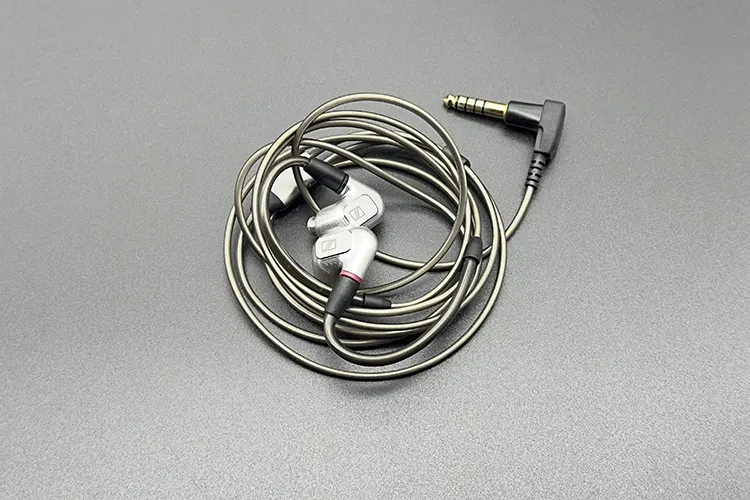
The IE 900 is a shockingly small IEM, built from aluminum using a five-axis CNC machine, precision-cut from a single block. I can hardly find any IEMs smaller than the IE 900.
However, due to its smaller size and narrow nozzle, the fit can be quite challenging. For me, the SpinFit Omni ear tips go quite well.
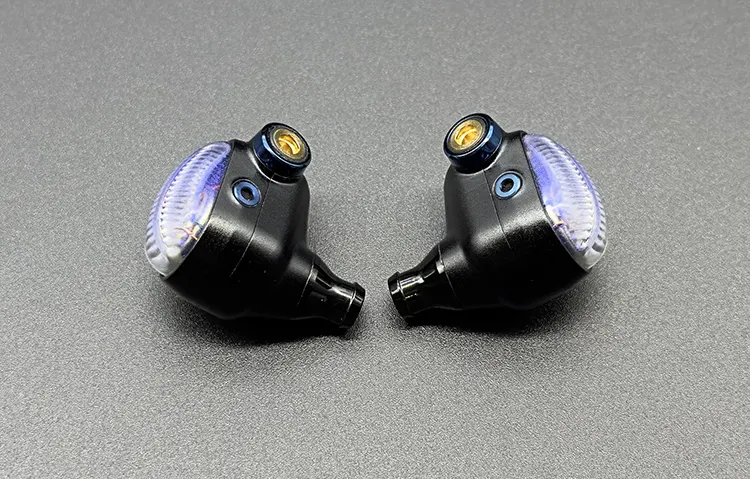
The Alien Brain sports a more vibrant and eye-catching design while maintaining a solid, robust build. Its faceplate features a striking and unique design, and the black matte finish on the shells adds a sleek, premium feel.
The Alien Brain stands out with far more expressive and engaging looks than the IE 900’s minimal and understated design.
While the IE 900 includes a generous set of accessories, the Alien Brain takes a more thoughtful and user-centric approach. Its well-curated extras feel more stylish and striking, likely to leave users pleasantly surprised.
The IE 900 includes three stock cables with 2.5mm, 3.5mm, and 4.4mm terminations. In comparison, we have two cables with the Alien Brain, one with a 3.5mm termination and the other with a 4.4mm alternative. I would have preferred a modular cable with different options.
Performance
The IE 900 has a U-shaped sound signature that leans more analytical, while the Alien Brain offers a warmer presentation with greater musical richness.
The IE 900 has a strong bass with a deep sub-bass and a punchy mid-bass. The Alien Brain also delivers powerful bass and might appeal more if you like a warmer bass.
The IE 900’s bass is quicker and fades faster, while the Alien Brain’s feels more natural and dynamic. The IE 900 has a more controlled and precise bass, whereas the Alien Brain prioritizes a richer and more analog bass.
In the midrange, the IE 900 has a neutral character with minimal warmth. In contrast, the Alien Brain feels richer and fuller, offering a warmer, more engaging midrange.
The mids are more forward and intimate on the Alien Brain, while they tend to feel slightly recessed on the IE 900. Vocals on the IE 900 are drier, whereas the Alien Brain delivers more authentic timbre with better texture and nuance.
The Alien Brain has a smoother treble compared to the IE 900. The IE 900 exhibits more energy and sharper notes, which can occasionally come off as exaggerated or slightly incoherent.
It does, however, offer a touch more air and sparkle. I prefer the Alien Brain’s treble, as it is more natural and does not miss out on details.
Both IEMs offer satisfactory width and depth in soundstage, but fall short in vertical height. The Alien Brain presents slightly better depth on the stage. The IE 900, with its more incisive tuning, achieves more precise imaging and a sharper spatial arrangement of instruments.
Instrument separation is comparable between the two. While the IE 900 may come off more detailed, it veers into a more clinical tuning that sacrifices a bit of musicality.
My Verdict
I feel that with the Alien Brain, Campfire Audio has strengthened its legacy and added another feather to its cap.
The Alien Brain, with its inoffensive, balanced tuning, is likely to be loved by many. The big, bold bass, natural midrange, and smooth yet detailed treble range should make a recipe for success.
Even if they haven’t experimented much with the tuning, the more universal approach is a safe choice, and you can hardly go wrong with it. With very little room for improvement, I think they’ve done most things quite well.
The sci-fi-influenced design is a definite eye-catcher and keeps me hooked. A wide array of thoughtful accessories and the included DAC make it a versatile choice for listeners. I thoroughly enjoyed my time with the Alien Brain and hope to see it receive the love it deserves from the community.
Campfire Audio Alien Brain Specifications
- Driver Configuration:
- 10mm Glass-Pu Dual-Magnet Dynamic Driver
- 2x Mid Frequency Balanced Armatures 2x Super-tweeter High Frequency Balanced Armatures
- Impedance: 7.8Ω @ 1kHz
- Sensitivity: 8.97 mVrms
- Frequency Response: 5 Hz – 20 kHz
- Cable: Time Stream Cable – 3.5 mm single-ended & 4.4mm balanced, MMCX connection system
