

Select Comparisons
THIEAUDIO Origin
Technical
The THIEAUDIO Origin was released towards the end of 2024. This IEM features a quad-brid driver configuration with a total of 8 drivers per side.
These drivers include a custom-developed 10mm dynamic driver, four balanced armature drivers with a mix of Sonion and Knowles, and dual Sonion electrostatic super tweeters. In addition to these, there is also a custom-developed 11mm bone conduction driver.
The THIEAUDIO Origin has an impedance of 9Ω @ 1 kHz and a sensitivity rating of 102 dB/Vrms.
The Origin can be comfortably driven by low-powered sources such as dongles and smartphones. On my LPGT, the Origin takes a few extra volume clicks.
Design
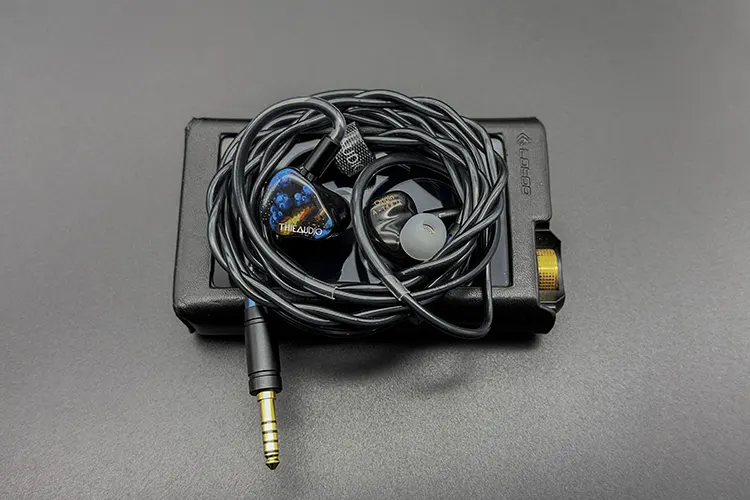
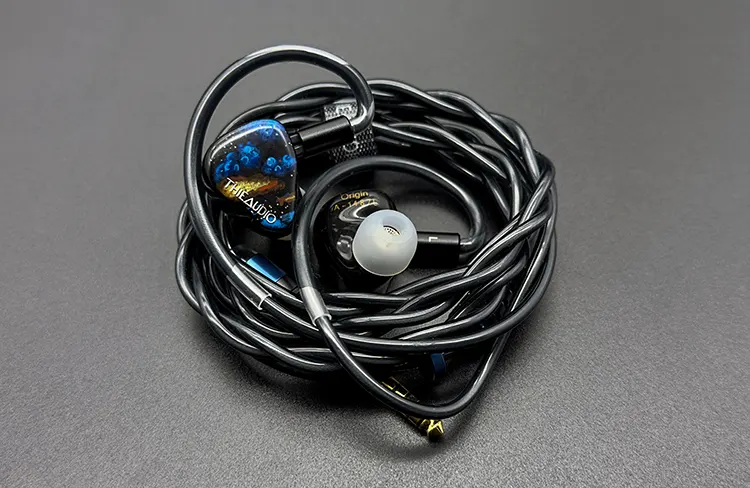
Both IEMs are built with resin and have a very durable build. The Origin has a minimal design with an abstract faceplate showcasing a mix of blue and yellow color patterns.
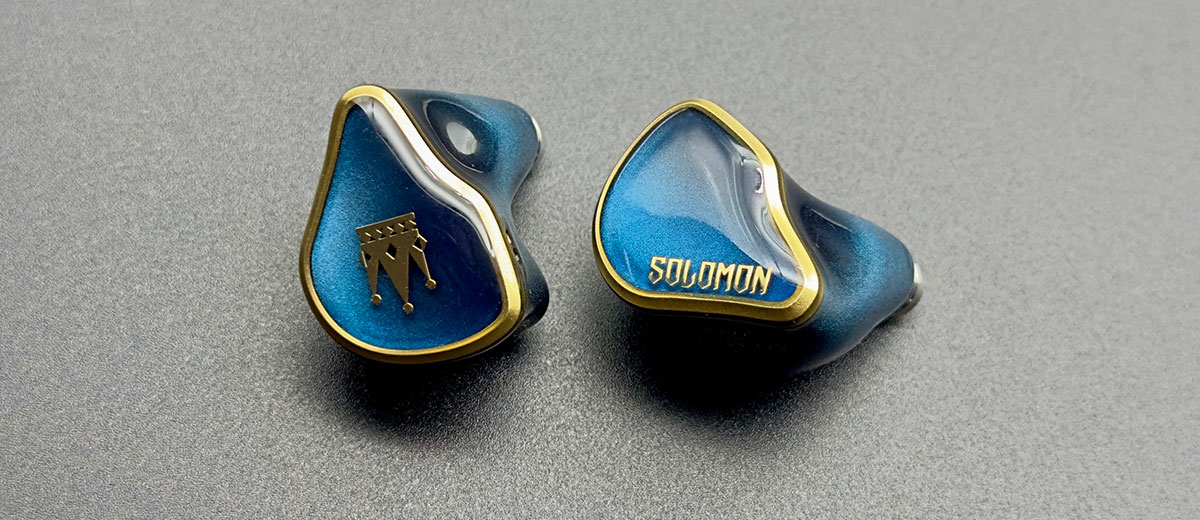
The Solomon, too, does not have a very flashy design; rather, it keeps it simple in a single color tone with a glossy finish. It looks more premium than the Origin.
The shells on the Origin are marginally bigger than those of the Solomon. Both of them fit quite well, but Solomon has better comfort. Both IEMs have short nozzles, and for me, the same ear tips provide a comfortable fit on both.
The Origin includes a modular cable with 3.5mm unbalanced, 4.4mm balanced, and 2.5mm balanced connectors. However, this cable is stiff, whereas Solomon’s stock cable is more comfortable to handle, though it misses the modularity.
The inclusion of the Temple cable with the Solomon is a big plus, as this cable feels a lot more premium than the stock cables on both IEMs.
Solomon’s grand packaging and accessories leave no scope for comparison, as the Origin arrives in very minimal and non-fancy packaging.
Performance
Solomon and Origin have a few similarities in their tuning. Both IEMs offer a well-controlled bass, but the BGVP Solomon leans more toward a neutral bass shelf, while the Origin delivers more physical impact and physical slam.
Origin’s sub-bass is more elevated in comparison, which provides it with more rumble and a weightier low-end. Bass notes feel fuller and more extended and carry more thickness, while Solomon’s feel cleaner. Origin’s bass is a bit thicker and warmer, which gives a warmer tilt to the overall tonality.
In the lower midrange, both the Solomon and Origin have slightly leaner profiles. Male vocals and lower instruments are clear but a bit more distant, thus prioritizing separation over fullness.
In comparison, Origin feels fuller and more engaging. Solomon’s upper midrange region is More forward and resolving. Origin is also forward but smoother and less focused on resolution and openness.
Both male and female vocals sound natural and expressive on Origin. Solomon highlights detail and layering in the midrange, with better separation.
In the treble region, Solomon carries more energy with better clarity and extension throughout, while Origin is smoother with a less aggressive presentation. I
n the upper treble region, Solomon has greater extension and more shimmer, while Origin is slightly rolled off. You’d feel enough air on Origin, but it feels muted in comparison to the Solomon. Origin is more suited for treble-sensitive listeners who prioritize smoothness over sparkle.
The presence of bone conduction drivers on both the IEMs gives them a very immersive and holographic soundstage. Solomon’s stage feels a bit wider, while Origin has more depth.
Solomon has better resolution and is more detailed-sounding with superior instrument separation. Imaging, owing to a better treble profile, feels more precise on the Solomon.
Moritz Audio ENZO
Technical
The ENZO is the latest IEM from Moritz Audio, a Hong Kong-based brand. It is a tri-brid IEM that features one dynamic driver, six balanced armature drivers, and two planar drivers.
The dynamic driver and balanced armatures are in-house custom-developed.
ENZO has a sensitivity of 107.6 dB SPL/mW and an impedance of 11Ω. I find the ENZO to be more stable on higher volumes and can take some additional power as well. On my LPGT, the ENZO takes a few volume clicks more than the Solomon.
Design
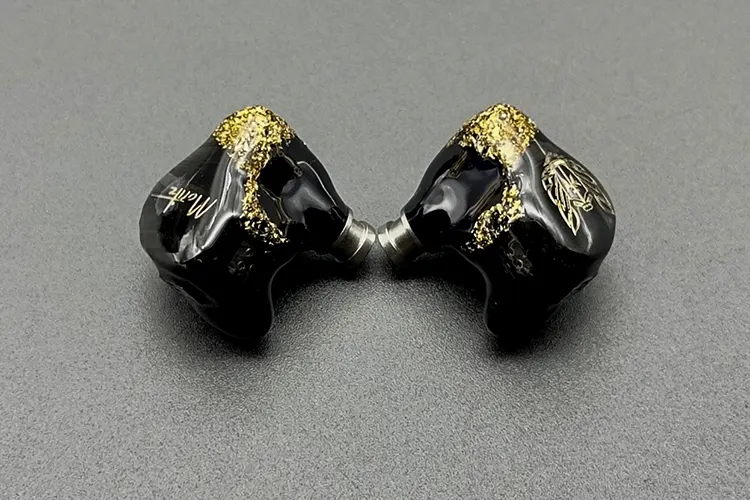
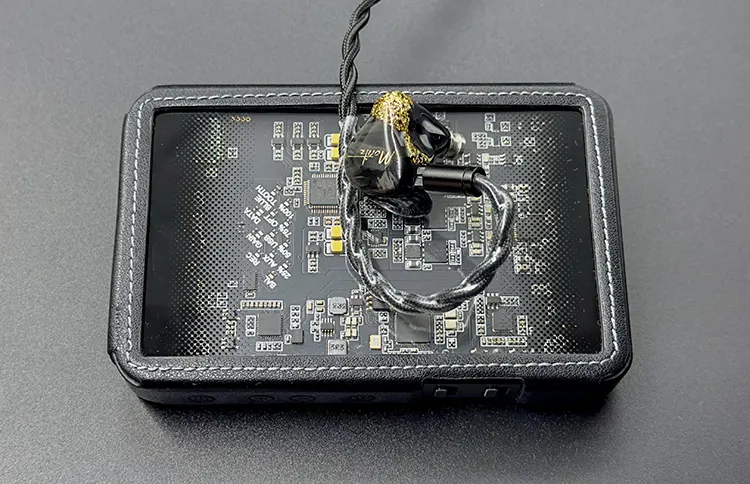
Both the IEMs are built in resin and have a robust build. The ENZO uses a dark-colored base shell with elegant golden flakes near the faceplate edges and on the sides of the body.
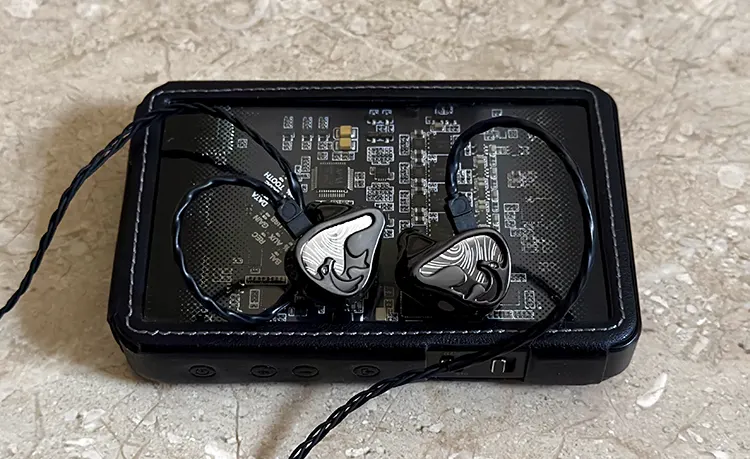
The Solomon has an all-blue shell with golden linings along the faceplate. Both IEMs have a premium look, but personally, I prefer Solomon’s look.
Solomon’s shells are marginally bigger than the ENZO’s, but the fit is equally comfortable on both. Solomon and ENZO both have short nozzles, and for me, the same ear tips provide a comfortable fit on both.
However, you may need a narrower ear tip to tame the sharp treble on the ENZO. On ENZO, we get two switches on each shell, which gives different tuning flavors. Both the IEMs use a 2-pin connection system.
While the packaging and accessories included with the ENZO are more than satisfactory, the Solomon offers a more premium touch and provides more thoughtful accessories.
Performance
Starting off the low end, ENZO has a strong and elevated sub-bass, which extends deeper and has more powerful rumbles.
Solomon has a cleaner bass floor, with less emphasis on slam or punch than ENZO. ENZO offers stronger bass authority with more physicality and rumble. It has a more prominent mid-bass and overall is thicker and a bit warmer as well.
In the lower midrange, Solomon retains more natural warmth and weight, compared to ENZO, which is leaner and less engaging. Vocals and instruments feel slightly thin or pushed back on ENZO.
Solomon has slightly fuller male vocals and more body to instruments such as guitars, cellos, or pianos. The upper midrange on both the IEMs is engaging and energetic, but Solomon has more of these with more forwardness to vocals, especially female vocals.
Both the ENZO and Solomon deliver a very lively and detailed treble, but it’s the Solomon that is more consistent and better extended.
The planar drivers on ENZO push a lot of details, but sometimes the treble feels exaggerated and unrefined. Even with all the details, the treble feels incoherent and less smooth on ENZO. Both the IEMs need some tip rolling to tame down the treble energy.
Solomon’s soundstage is one of the best among its peers, but the ENZO gives a tough fight and is marginally better in depth. The front-to-back separation feels better on ENZO. Imaging is strong on both the IEMs, but feels more precise on the ENZO.
The instrument separation and resolution are a touch better on the ENZO. It’s the more coherent treble on Solomon that makes the micro-detail more alive and even.
LETSHUOER Mystic 8
Technical
The Mystic 8 is one of the recent releases from LETSHUOER. It has an all-balanced armature driver setup, featuring eight balanced armature drivers, four each from Sonion and Knowles.
The Mystic 8 also incorporates a low-pass filter module to enhance bass performance and employs a three-way crossover circuit along with a four-way acoustic tube configuration to precisely divide frequencies among the drivers.
With a sensitivity rating of 107 dB/Vrms and an impedance of 18 Ω @ 1 kHz, the Mystic 8 is effortless to drive and doesn’t require much power.
It is also more stable with additional power and offers better dynamics with more powerful sources. On the CMA18P, Mystic 8 has a clean background while Solomon has a static hissing noise.
Design
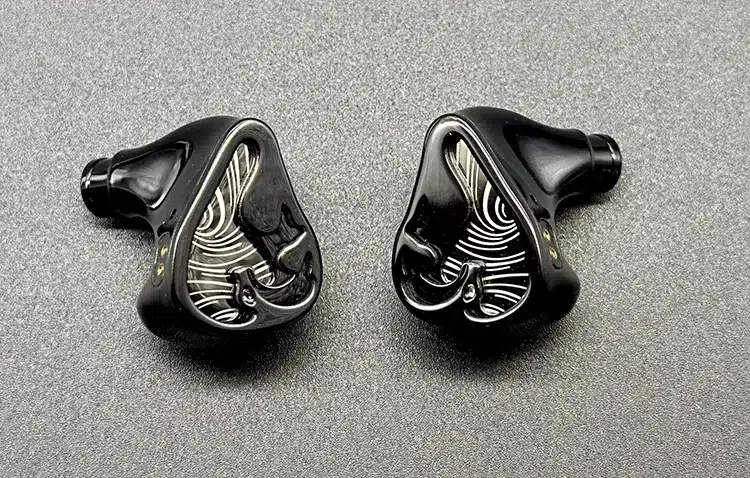
The shells of the Mystic 8 are all-black and are made of CNC-machined titanium alloy, which is strong and corrosion-resistant, offering excellent durability.
The faceplate of the IEMs features a cutout depicting a cat, with the cat’s eyes made of faux diamond. Solomon’s design is minimal, yet the glossy finish and gold accent over a blue shell add a premium touch.
The shells of the Mystic 8 are smaller in size, and owing to the ergonomic shape, they have a very snug fit. Solomon’s resin shells are bigger in size but remain very lightweight, thus offering an equally comfortable fit.
The Mystic 8, being a premium offering from LETSHUOER, provides a very elegant unboxing experience. It includes quality accessories, but Solomon has outdone it.
Solomon offers more premium packaging with better accessories, more usable ear tips, and a sturdier cable. Mystic 8’s carry case does not have enough space to comfortably store the IEMs.
Performance
Solomon sounds balanced with a touch of brightness and openness. Mystic 8 has a very different tuning, which sounds more mid-forward, slightly leaner in bass, and less airy in the top end.
Solomon has a stronger sub-bass presence, with more rumble and low-end authority. On the Mystic 8, the sub-bass impact is lighter and leans more toward a neutral presentation. Solomon’s mid-bass is slightly elevated over Mystic 8’s, giving the bass some warmth and fullness.
Mystic 8’s mid-bass is tighter and cleaner, but feels less impactful and misses the fun element. Instruments such as drums and bass guitars have more weight on Solomon, which makes the sound more satisfying for EDM and hip-hop.
In the lower midrange, Solomon retains some warmth from the stronger bass and gives vocals and instruments a fuller body. Mystic 8 is a little leaner in comparison in this region.
In the upper midrange, both Mystic 8 and Solomon sound forward and energetic, and can feel shouty depending on the recording. I prefer the midrange of Mystic 8, which conveys more emotions, especially in female vocals and high-pitched instruments.
Solomon has a more elevated treble profile. There is a better sense of air, openness, and more sparkle in the higher frequencies.
Mystic 8 rolls off faster, so it sounds a bit smoother and less airy. Treble notes sound crisp on both IEMs, but Solomon has better extension, and the note trails carry more weight.
Solomon offers a more immersive soundstage, with more width and depth than that found on Mystic 8. A crisper and airier treble makes the imaging sharper and more precise on Solomon.
There is more breathing space among the instruments, so Solomon does better justice to complex, fast-paced tracks.
My Verdict
With the Solomon, BGVP has taken a formidable step into the crowded sub-1500 USD market. For those who may have heard the brand’s name, there is now something to go and try.
Solomon’s tuning is impressive right from the get-go. From the solid low end to a clean and transparent midrange to a very detailed and lively treble, every frequency range has been put to justice. The treble, though, comes with a word of caution, but trying multiple ear tips can help here.
The technical aspects rival the best IEMs in Solomon’s price range. The bone conduction driver adds a layer of excitement to the sound by introducing physicality to the notes. The immersive soundstage and precise imaging help in delivering a very refined listening experience.
The ultra-premium packaging and carefully included accessories take the offering to another level. As a consumer, I would not ask for anything more. It’s like doing full justice to the $1299 they are charging. The inclusion of a premium cable is the icing on the cake.
If you are in the market for a premium product in this price range, I would strongly suggest demoing the Solomon. I am sure you will find it as appealing as I did.
BGVP Solomon Technical Specifications
- Driver Configuration: 2 dynamic drivers + 3 balanced armature drivers + 2 electrostatic drivers + 2 bone conduction drivers
- Impedance: 7.3 Ω @ 1kHz
- Sensitivity: 110.8dB SPL@1KHz (100mV)
- Frequency Response: 20 Hz–70 kHz
- Cable: 4-Strand Furukawa OCC Mixed Cable
