

Sound Impressions
The following sound impressions of the BGVP Solomon were completed using a mixture of my main source, Lotoo’s Paw Gold Touch, and occasionally the Questyle CMA18P. I paired the IEMs with the stock cable and the stock vocal ear tips size L.
Summary
Solomon’s tuning can be best described as balanced and detail-focused. It comes across as a clean, detail-forward IEM with a focus on precision, but does not sacrifice any musicality.
The low end is tight and controlled with a good amount of impact. The bass may not satisfy the bassheads, but it adds a lot of fun and excitement to the sound.
The midrange stays clean and has a high level of resolution. The high frequencies carry a good amount of sparkle that brings out micro-details and adds a sense of openness. The treble can be a tad bright for treble-sensitive people, but it can be easily tamed using some tip rolling.
The bone conduction driver adds some tactility and physicality to the note definitions. On the technical front, Solomon’s soundstage and imaging are very strong, making it a highly competent IEM among its peers.
Bass
The bass on Solomon is more about the quality than the quantity. It does not push itself to be at the forefront; rather, it stays in the background supporting the overall tuning.
The quantity does not disappoint, but it does not boast a lot of impact and punch. If you are not a basshead, it won’t really bother you much.
The bass is very detailed and resolving. The controlled nature gives it a clean tuning, which lets the details and texture shine. The sub-bass offers a good level of depth and rumble, but it does not have a hard-hitting impact.
Similarly, the mid-bass also offers a good amount of punch but remains contained so that it does not overwhelm the midrange and higher frequencies. With the bass ear tips, I find the bass getting better in depth and impact, so you should certainly give it a try.
The details and texture help you catch even the subtle bass notes. Even if the tracks are complex, the layering helps in picking up multiple instruments operating simultaneously.
The mid-bass, which never overpowers the mix, even on bass-heavy tracks, gives room for each element to have its own space, so you get a well-separated and tight low-end response.
The bass has a fast speed and carries a slight lingering, which lets the impact be felt but never overstays its welcome or feels bloated. Even with bass-heavy tracks, the control in the low end is notable.
Midrange
The midrange on the Solomon is tuned with clarity and separation in mind. It avoids excessive warmth or lushness and favors a more reference-style presentation, but it is rich enough to be called immersive.
Both instruments and vocals come across as clean, slightly forward, and tonally balanced without any coloration. For those who prefer a transparent and resolving midrange, you will be well served.
It’s a nice balance of musicality with some extra focus on details and clarity. Let’s not forget the contribution of the bone conduction drivers, which add some sensation and enhance the details the notes carry in the midrange.
The lower midrange is gently recessed, contributing to a leaner and less warm presentation. This region lacks warmth or, say, a fuller body, but it avoids sounding hollow or overly dry.
Male vocals may come off as lean or slightly thin at times. However, this slightly lean lower midrange helps in achieving a good separation in the midrange instruments and vocals.
The upper midrange has a gradual rise, lending a slight forwardness and openness to the sound. This benefits the female vocals and high-pitched instruments like violins and flutes, which have good extension and never sound shouty or harsh. It may be a bit unforgiving of poorly recorded tracks, which may sound thin and sharp.
Overall, the midrange maintains a natural, clean timbre with a crisp and energetic presentation.
Treble
The treble on the BGVP Solomon is a highlight for me and is tuned to offer high resolution, clarity, and air, without crossing into harsh or fatiguing territory.
It may appear a bit sharp, but some ear tip rolling can help the frequencies cut off. It maintains a balanced presentation with some hint of brightness but offers a smooth transition from upper midrange into lower treble.
This is followed by a refined and extended upper treble response, resulting in a high-detail sound full of sparkle and shimmer, which goes well for longer sessions.
The lower treble has a moderate and well-controlled presence. The transition from upper midrange to lower treble is smooth without unwanted peaks or emphasis.
This region adds crunchiness to the vocals and air instruments, making sure they are rendered with clarity. Instruments like hi-hats, cymbals, snares, etc., are presented with an authentic attack without sounding thin or aggressive.
The upper treble region has a decent level of energy, which adds to a sense of air and openness. The decays of cymbals or reverbs in vocals, etc., are present in a delicate and polished way, which never feels pushed or very focused.
The Solomon delivers a good level of micro-detail across the treble region. The separation of notes is clean and distinct.
Staging & Dynamics
What makes the Solomon a complete package are its solid technical abilities. The Solomon offers one of the widest and most spacious soundstages in its price range. The stage feels large and stretches far and wide. We get a good perception of depth as well as height.
The crisp treble and extended upper frequencies add a natural openness to the presentation. Even during complex musical passages, the stage remains open and well-separated.
The instruments have enough breathing space among themselves. There’s never a feeling of overlap; both instruments and vocals get ample space within the stage.
Solomon’s imaging is precise and sharply defined. A clean midrange, fast transients, and an airy treble improve the imaging. A crisp and precise imaging makes it easy to locate the instruments within the stage.
A key improvement is achieved by the bone conduction driver, which enhances the physicality of sound. It adds layers of vibrations and sensations that strengthen low-end body and midrange note density. It also enhances microdynamics, bringing life to the tiny details and nuances.
Resolution is a strong point, with the Solomon revealing fine details without sounding overly clinical. A major part of this resolution is driven by its clean upper midrange and well-extended, controlled treble.
The background remains clean, allowing the small details and nuances to come out easily. Overall, Solomon has a well-resolved yet natural presentation that few can match in its class.

Synergy
Efficiency
The Solomon has an impedance of 7.3Ω at 1 kHz and a sensitivity rating of 130.8 dB/Vrms. The IEM does not demand much power and can be comfortably driven by most sources, from small dongles to smartphones to smaller DAPs.
A powerful source can improve Solomon’s sound by making it a bit more expansive; however, I don’t find Solomon scaling much with additional power. With just a few volume clicks, the Solomon gets very loud.
On my CMA18P, a source that is too powerful for a few IEMs, the Solomon has some background static noise. On my Lotoo Paw Gold Touch, it takes fewer than 30 volume clicks to reach a comfortable listening level.
Source Pairings
For its near-neutral and energetic treble profile, the Solomon has good synergy with warm-leaning sources. Pairing it with bright sources can make it sound a bit cold and dry.
Solomon has good synergy with the LPGT. The DAP helps the Solomon in the low end and gives it a better body. The lower midrange shows good improvement, lending some weight and density to the vocals and instruments such as bass guitars and cellos.
The midrange has a high level of detail and carries a musical touch. The treble is a bit bright but hardly bothers and remains highly extended and detailed.
The sharpness in treble can be tamed by some tip rolling. The soundstage spans nicely across width, height, and depth, making the listening experience immersive.
On the Questyle CMA18P, a DAC/Amp featuring the AKM 4493 DAC chipset, the pairing is a bit brighter in the treble region and lacks some musicality.
The low end shows a similar level of impact and detail but lacks some thickness, which makes the bass more satisfying on the LPGT.
Compared to the LPGT, the midrange also lacks resolution and remains more neutral. In the treble region, there is some sharpness and a bit of extra energy, which can be fatiguing over long sessions.
Cable Pairings
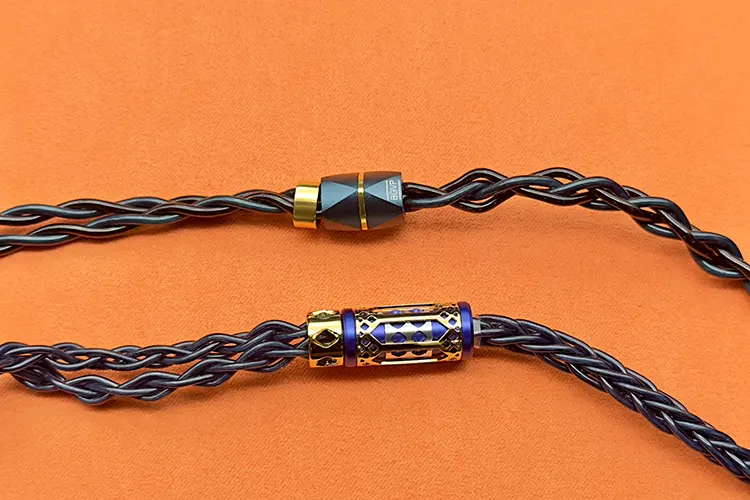
The Temple cable brings some subtle yet noticeable changes, which make the sound on Solomon more enjoyable.
The most apparent of these changes are in the sub-bass region and the upper midrange to the treble region. In the sub-bass, there is some tightness and added depth. The bass reaches deeper and adds more impact and fullness to the entire low end.
The texture and layering also see some minor improvements. In the midrange, there is some refinement to the micro-details. The upper midrange and treble region gain smoothness without sacrificing any details. The sharpness is less noticeable, and the treble notes resolve better.
Astral Acoustics Mars, a 21AWG-rated copper coaxial audio cable, brings some marginal improvements in the lower midrange region, adding fullness to vocals and instruments such as bass guitars and cello.
I also find better soundstage depth with the cable. The treble gains some added crunchiness in the lower treble region but remains smooth and highly resolving. The background is cleaner than with the stock and the Temple cable. Mars also helps in improving instrument separation.
Overall, the tonality is cleaner and more transparent than with the other two cables.
