

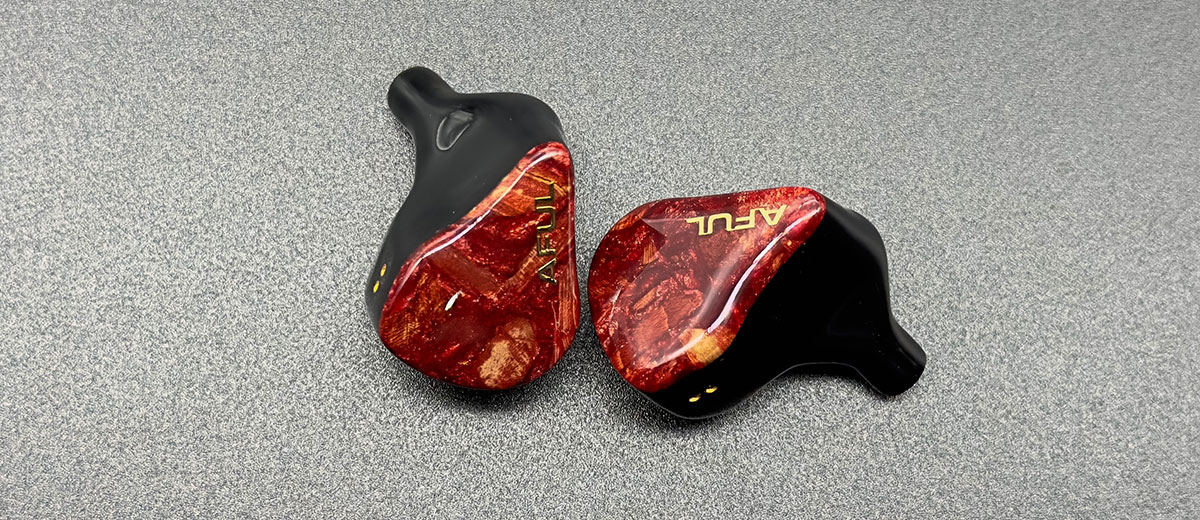
Selected Comparisons
BGVP Solomon
Technical
The Solomon is the latest premium release from BGVP and features a mix of nine drivers, consisting of two dynamic drivers, three Sonion balanced armature drivers, two Sonion electrostatic drivers, and two Sonion bone conduction drivers.
One of the Sonion balanced armatures caters to the midrange, the remaining two are employed for the mid-treble region, and the two third-generation Sonion EST drivers handle the ultra-high frequencies.
Each of the dynamic drivers is 8 mm in size, built using PU (polyurethane) and LCP (liquid crystal polymer) diaphragm materials, and arranged coaxially. There is a five-way architecture to precisely divide frequencies among the drivers.
Additionally, there is a four-acoustic-tube arrangement to help the sound from different driver groups channel separately to the nozzle.
The Solomon has an impedance of 7.3 Ω at 1 kHz and a sensitivity rating of 130.8 dB/Vrms. The IEM is that power demanding and stays at a lower volume level than the DAWN-X. Both the IEMs are stable with high-powered sources.
Design
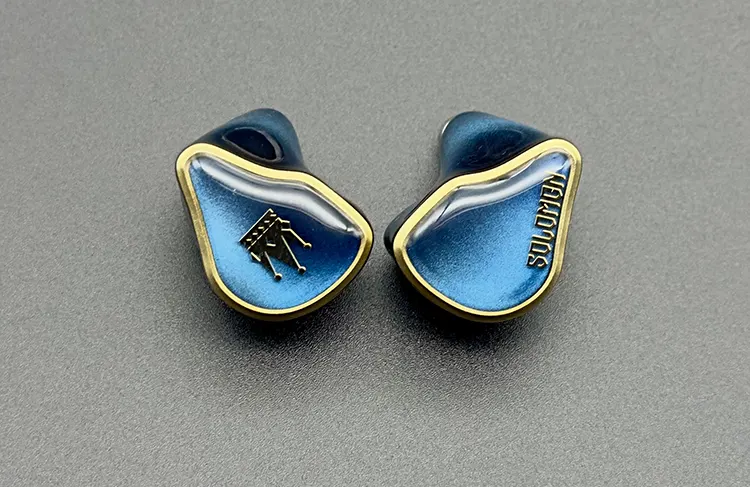
Solomon has an intriguing, premium-looking design with a deep metallic blue scheme and a rich gloss finish throughout. The faceplate is separated from the body of the shells by a thin golden bezel.
The shells, built from medical-grade resin similar to the DAWN-X, feel quite robust. Both IEMs have large shells but ergonomic shapes, so you can expect an easy, pressure-point-free fit, provided the size is comfortable.
The nozzle of the Solomon has a silver metallic finish with a mesh grill to keep out dirt and debris. It’s smaller but wider than that of the DAWN-X. In terms of fit, both IEMs are comfortable, but people with smaller ears should be cautious of their large shells.
The stock cable on the Solomon is terminated in 4.4mm and lacks modularity like the DAWN-X. Solomon’s cable is a 4-wire design that matches the overall look. I prefer this cable over the DAWN-X’s simpler one, as it looks more premium.
The inclusion of the Temple cable with the Solomon is a big plus, as this cable feels more premium than the stock cables on either IEM. The Temple cable also offers some improvements over the standard stock cable of the Solomon.
Solomon’s grand packaging and accessories leave little room for comparison, as the DAWN-X arrives in smaller, non-fancy packaging that feels almost insignificant next to Solomon’s. Solomon also packs a lot of accessories and presents them in a very premium style.

Performance
Both DAWN-X and Solomon take a clean, well-controlled approach to bass, but they play it differently. The Solomon is a bit conservative in the sub-bass, as it reaches deep but doesn’t push too hard.
You feel the rumble when it’s there, but it misses a good depth. DAWN-X lets the low end hang around longer, adding a touch more body and impact.
The mid-bass on the DAWN-X also has a bit more punch, making it feel meatier, while the Solomon stays tighter and leaner, keeping things cleaner and more separated.
Midrange is where their personalities really split. The Solomon leans toward a more neutral, sharper midrange, which feels less musical and more on the analytic side. DAWN-X sounds organic, a bit intimate, but not shouty or pushed.
Guitars and male vocals have a natural weight, edging ahead in richness and warmth, thanks to their fuller lower midrange. DAWN-X keeps the upper midrange smooth and controlled, while the Solomon adds a little more energy and air. Female vocals on the Solomon pop a bit more.
The treble is where Solomon clearly opens up. It’s livelier, brighter, and throws in more sparkle and bite, while DAWN-X goes for smoothness and balance.
Solomon has more top-end shimmer but can sound a touch sharper on some tracks. The DAWN-X’s treble stays polite and airy, keeping fatigue at bay; less exciting maybe, but easier to live with for long sessions.
On the technical side, both IEMs sit pretty close. Solomon leads with a better resolution and micro-detail handling. The Solomon feels a bit wider and more spacious, throwing out a slightly bigger stage with sharper imaging.
Both the IEMs get that bone conduction magic, which is more felt than heard, adding a bit of texture and physical depth.
THIEAUDIO Monarch MKIV
Technical
The THIEAUDIO Monarch MKIV was released in June this year and features a tri-brid driver configuration with a total of ten drivers per side.
These drivers include two custom-developed 10mm dynamic drivers, six Sonion balanced armature drivers, and dual Sonion electrostatic drivers. There is a 4-way crossover implemented, and the IEM pushes the output to four separate sound tubes.
The THIEAUDIO Monarch MKIV has an impedance of 10 Ω @ 1 kHz and a sensitivity rating of 100 dB/Vrms.
Like the DAWN-X, the Monarch MKIV does not demand a lot of juice and can be comfortably driven by low-powered sources such as dongles and smartphones. On my LPGT, the DAWN-X can take a few volume clicks more than the Monarch MKIV.
Design
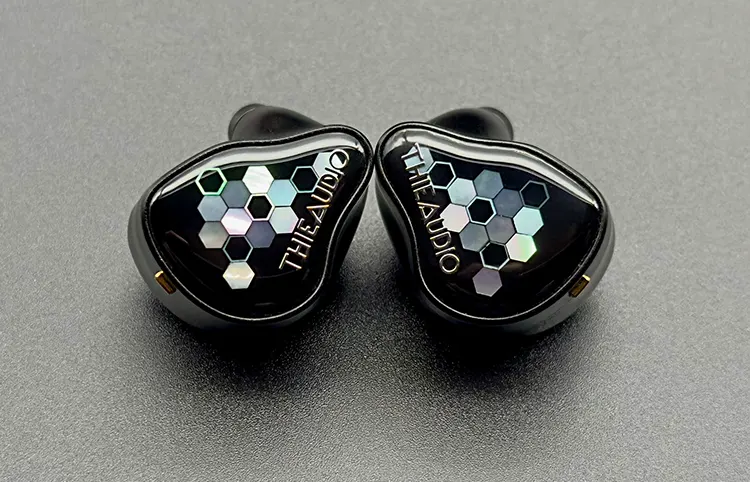
The shells of the Monarch MKIV are made from T6 aircraft-grade aluminum. These shells are finished in black and come with two different options for the faceplate design.
The one I have is the Kaleidoglow version, which features a honeycomb pattern that shifts colors when light hits it. It has a subtle rainbow effect that looks lively without being flashy.
The other option, Stellashot, has vertical streaks that look like beams of light cutting across the faceplate. THIEAUDIO also allows you to order custom faceplates for an extra charge.
The Monarch MKIV, though made with metal shells, is quite light and easy on the ears. The DAWN-X is made of resin shells and feels lightweight yet very durable.
However, both the Monarch MKIV and DAWN-X have fairly large shells and may present a challenging fit for people with smaller ears. The Monarch MKIV has short nozzles and is not very fussy about ear tip pairing.
For my larger ears, I find that both IEMs offer a good fit. I have never experienced any discomfort with either of them, even during longer sessions.
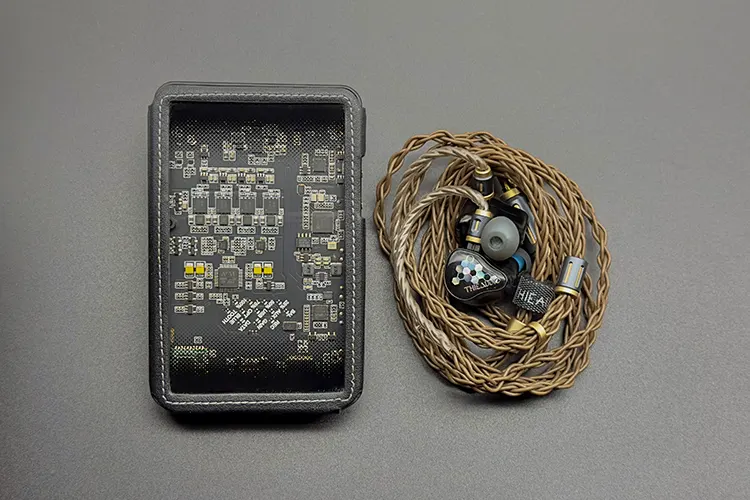
The MKIV comes with a modular cable that includes 3.5 mm unbalanced and 4.4 mm balanced connectors.
Both stock cables have an 8-wire design, but the MKIV’s cable is noticeably thicker and takes up more storage space. I find both cables functional, but both IEMs benefit from higher-quality aftermarket cables.
THIEAUDIO uses a minimal packaging style but ships the MKIV in a larger box with plenty of space inside. The DAWN-X packs a similar level of accessories into a smaller, more efficient package.
The carry case of the DAWN-X deserves mention due to its ample space inside, while the MKIV’s case feels cramped when storing the IEMs and cable together.
Performance
Compared to the Monarch’s STANDARD mode, the DAWN-X has a slower bass, which extends deeper in the sub-bass and has more mid-bass presence.
The MKIV keeps the bass a touch leaner and faster, though it remains controlled and tight. Its sub-bass just scratches the surface with less physical weight.
In the mid-bass, the DAWN-X carries slightly more body and warmth, lending drums and basslines a satisfying punch, while the Monarch stays cleaner and a bit more restrained.
In RUMBLE mode, the MKIV hits harder down low, giving that satisfying basshead punch the DAWN-X doesn’t quite reach.
The Monarch MKIV has a forward midrange, especially in the upper midrange, which carries more energy and extends better. It sounds more open and vivid, with female vocals becoming more expressive.
The DAWN-X midrange sits a bit more relaxed, giving the sound a warm, easy-going flow. Male vocals sound denser and rounder on the DAWN-X, while the Monarch feels cleaner and more detailed.
Guitars and pianos have more bite on the Monarch, whereas the DAWN-X trades that edge for a more organic tone. The RUMBLE mode adds extra weight to the midrange on the MKIV.
Up top, the Monarch MKIV pushes more energy and sparkle, giving cymbals a crisp, lively shimmer and more air overall. The DAWN-X keeps things smoother, avoiding sharpness and fatigue.
The Monarch’s treble sounds more extended and detailed, but can border on bright depending on the track, while DAWN-X stays polite and is easier to listen to for long sessions. MKIV resolves the notes better and feels more accurate.
For technicalities, MKIV takes the lead with a better resolution and how vividly the micro-details are pushed. The soundstage feels more enveloping on MKIV, though DAWN-X is not far behind. Imaging feels more precise and crisper on MKIV.
Moritz Audio ENZO
Technical
The ENZO is an IEM from Moritz Audio, a Hong Kong-based brand. It is a tri-brid configuration IEM that features one dynamic driver, six balanced armature drivers, and two planar drivers.
The dynamic driver and balanced armatures are in-house custom-developed, as is the ultra-low-noise crossover network.
ENZO has a sensitivity of 107.6 dB SPL/mW and an impedance of 11 Ω. ENZO takes a similar level of volume as the DAWN-X. I find both the IEMs to be stable at higher volumes.
Design
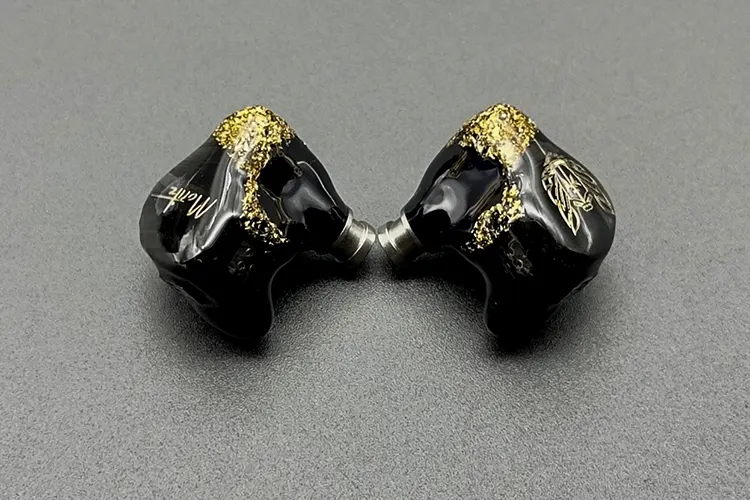
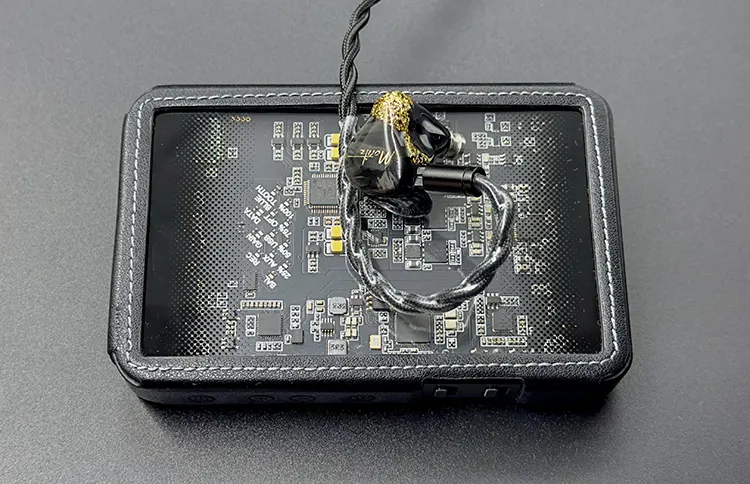
The ENZO features a dark-colored resin shell accented with elegant golden flakes near the faceplate edges and along the sides. The shells are well-built and feel durable. The DAWN-X also uses resin shells, but has slightly larger ones, and they are heavier too.
Both IEMs fit me comfortably and have good ergonomics, but for people with smaller ears, the DAWN-X may pose some challenges due to its larger size.
The DAWN-X has longer and narrower nozzles and requires more effort when tip rolling. In terms of build and design, I find the ENZO a bit more premium.
The ENZO includes two tuning switches on each shell, offering four possible sound profiles. Personally, I didn’t notice significant differences between the tunings and ultimately preferred the “DD” setting.
Both IEMs use a standard 2-pin connection system. The unboxing experience and included accessories are at a similar level for both models.
However, I would have preferred higher-quality cables for both. I have a preference for ENZO’s cable due to its better hardware. Both IEMs come with very spacious and well-built carry cases, so there’s a tie there.
Performance
Both the DAWN-X and ENZO go for a similar kind of bass, which feels steady, smooth, and a little slow on the release. There’s a bit of that soft resonance that gives the low end some character.
The ENZO just reaches farther down, where sub-bass rumbles a notch lower and hits with a touch more thump when the kick drops.
The DAWN-X instead leans on the mid-bass, filling out the stage with extra warmth and body. It feels fuller but doesn’t quite slam as hard. That mid-bass lift adds some thickness to the mix, giving the DAWN-X a softer, more relaxed tone, while the ENZO keeps things cleaner and separated.
In the midrange, the ENZO pulls ahead in clarity and detail. It’s got that open, slightly brighter midrange where vocals breathe and instruments stand out cleanly.
The upper midrange gains a step of energy, so vocals sound natural and energetic without being sharp. DAWN-X keeps the lights low, where notes come out smoother, with a more laid-back approach.
It sounds cozy and musical, but ENZO feels more direct and intimate. It stretches each note a touch higher, letting trailing edges peek through, while DAWN-X rounds them off for a calmer ride.
Up top, the DAWN-X is smoother and easier on the ears, keeping the treble even across the range. The ENZO goes for more shine, giving cymbals and strings a bit of bite and air. It resolves better, pulling out those fine details that DAWN-X tends to leave tucked back in the mix.
Technically, DAWN-X spreads the stage wider and deeper, while ENZO feels closer and taller. Imaging is sharper on ENZO, with slightly better focus, though DAWN-X wins in separation. On busier tracks, ENZO still keeps things punchy and alive.
My Verdict
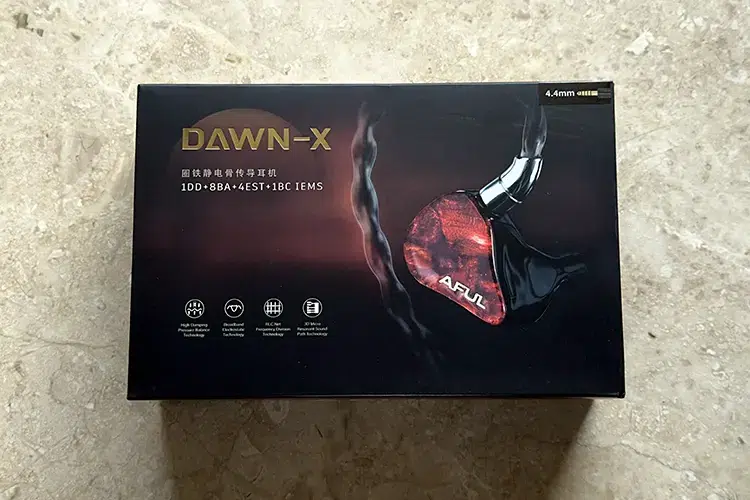
I see the AFUL DAWN-X as an admirable attempt. It’s good that the company took its time to release a flagship and managed to get a lot of things right.
The 14 drivers work together in a way that feels deliberate, giving a warm-neutral sound that’s easy to like.
The bass strikes with polite authority, the midrange pours a rich musical layer, and the soundstage spreads wide enough to let everything breathe. The bone-conduction driver lends a nice supporting role by adding a gentle tactile layer that feels almost ticklish at times.
Still, the kilobuck space is crowded. On one side, we have the Monarch MKIV playing the grown-up card, which feels more refined and mature in its tuning, and on the other, the Solomon, which sounds truer and more honest with its stingy and sparkling treble.
The DAWN-X chooses the middle seat, leaning toward a relaxed and easy-going presentation without losing detail. The IEM is certainly not the last word in slam or shimmer, but pushes itself hard into the competition.
That said, I respect the tuning choices AFUL made here. For most listeners, this balance will feel just right.
What’s even more exciting is seeing more brands pushing their limits, packing in impressive tuning and technical performance, and making the competition tighter than ever.
In a market that keeps raising the bar, AFUL’s first flagship is a confident release. In the end, it all comes down to preference, and who knows, you might just find yourself liking it enough to own one.
AFUL DAWN-X Specifications
- Driver Configurations: 14 Drivers (1DD+8BA+4EST+1BCD)
- Frequency Response: 5 Hz – 35 kHz
- Impedance: 15 Ω ± 13%
- Sensitivity: 101 dB (± 1 dB) @ 1 kHz
- Cable: High-Purity 6N Single-Crystal Copper Cable (4.4 mm/3.5 mm)
