

Today, Nihal reviews the Effect Audio DIONYSUS, a new Signature Series II flagship 26AWG 8-wire aftermarket IEM cable currently priced at $429.
Disclaimer: This sample was sent to me in exchange for my honest opinion. Headfonics is an independent website with no affiliate links or services. I thank Effect Audio for their support.
Click here to read more about the Effect Audio products previously reviewed on Headfonics.
This article follows our current scoring guidelines, which you can read in more detail here.
If you think Effect Audio is done with the Signature Series II, they haven’t. Effect Audio has more surprises in this line of cables.
What started as an update to the earlier Signature Series of cables, released in 2024, later gained the Ares S II × Cadmus II (A×C) cable. Built by mixing different materials to create a unique sound, it came as a nice surprise in both its build and sonic performance.
Now there is a more premium entry in the series called DIONYSUS, priced higher than the existing cables. It was meant for a limited run, but it seems the team decided to go for a regular release.
At US$429, the cable sits at the top of the Signature Series lineup, earning it the title of mini flagship, and expectations are high.
Let’s dive in and see what the new release brings and how much of a performance boost it offers over the existing Series II cables and closely priced competitors such as the ddHiFi Nyx Net.
Materials & Geometry
DIONYSUS introduces Effect Audio’s flagship Gold-Plated Silver as one of the bundled materials alongside pure silver and copper, totalling six multi-sized bundles. This premium inclusion is intended to add some density to the tonality.
As with the other Signature Series II cables, it shares a similar internal structure, using a central core made of a silver and copper alloy surrounded by six multi-sized bundles. It also uses EA Ultra Flexi™ Insulation for flexibility and protection.
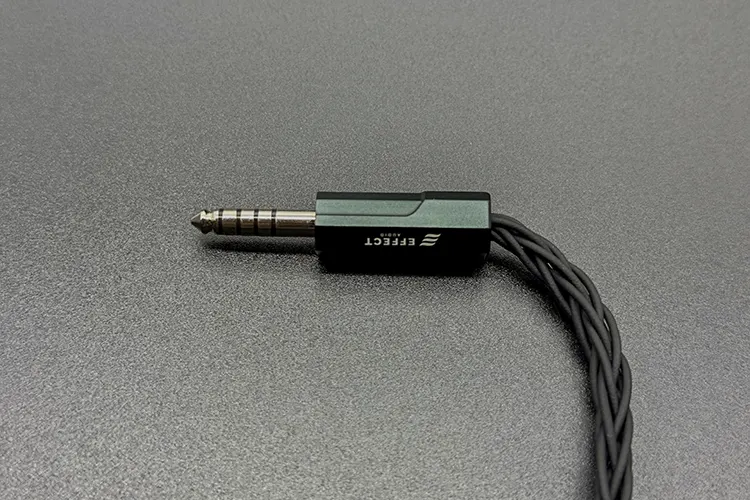
The cable connects via a default 0.78 mm 2-pin and is offered with plenty of customizations on the product page. The termination is the EA standard rhodium-plated brass straight plug.
Design
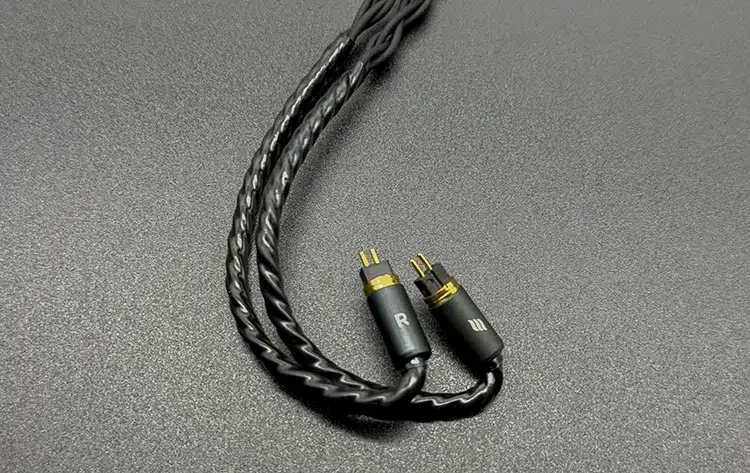
In terms of design and looks, if you ask me what was missing from Signature Series II, I will say a black cable.
EA built cables in many color schemes, but not black. DIONYSUS carries an all-black sleeve and, for me, becomes the best-looking cable in the series. Sorry, A×C, you are now the second choice.
The jacket feels silky smooth, not sticky, and under low light, it gives off a low-key glow instead of a flat, chalky finish. Among its siblings, its appearance aligns with EROS S II, which also has a dark tone, though DIONYSUS is pure matte black and has better looks.
The central design theme keeps familiar elements such as the termination and 2-pin connectors you see on the other cables.
By looks alone, it carries a premium vibe. The braiding is very even, does not feel tight, and has no visible gaps. Every metal part has a soft matte finish that catches just enough light to keep the build from looking sleepy.
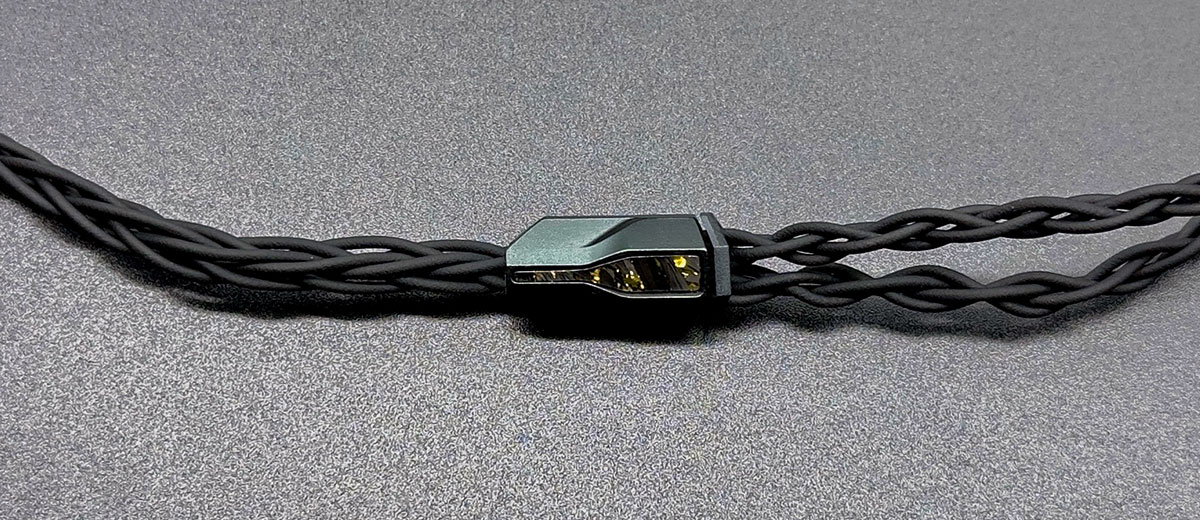
The Y-split, the showstopper, is machined from forged carbon with random dark facets and a subtle gold flake spread that flashes a muted shimmer, hinting at the gold-plated silver conductors inside.
This subtle design element adds depth and complexity, echoing the cable’s refined performance.
You also get the proprietary ConX system, which enables easy swapping of connectors and compatibility with 2-pin, MMCX, and Pentaconn Ear. Sadly, even at this price, the ConX set is not included.
Handling
Like the other Signature Series II cables, DIONYSUS is a comfortable one. From pre-release images, I expected it to be stiff, but it is surprisingly polite in hand. It has some thickness due to the 8-wire build, yet the weight is surprisingly low, so you don’t feel it in use.
The braid is relaxed without gaps when twisted or bent, so flexibility is top-notch. When rolled up, it keeps its shape but uncoils a bit on its own, which is not bothersome, though.
However, it’s not a stiff cable by any definition. It also does not take up much storage space, making it more manageable than many other 8-wire cables. The outer sleeve is butter-smooth, adding to easier handling.
Because the sleeve is smooth and the cable has some thickness, tangling is not a concern. The memory hooks are not very stiff, so there is no pressure behind the ears during use.
Packaging & Accessories
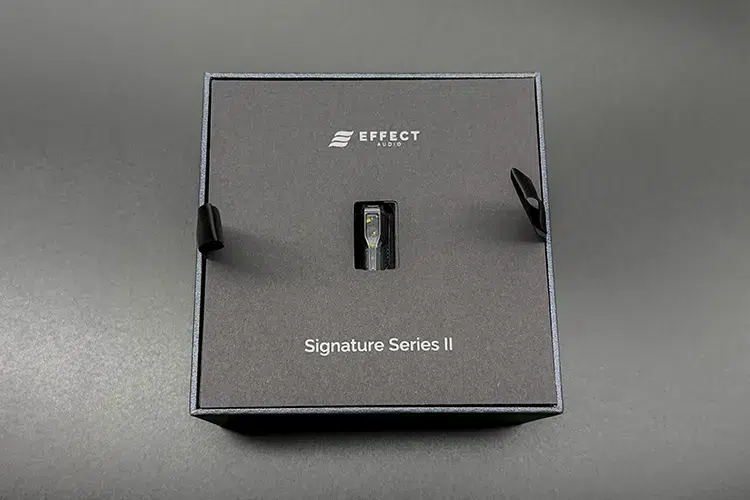
For me, the packaging is a bit of a disappointment, as it is the same as the cheaper cables in the series.
At this price point, it deserves better. It arrives in a small black box with similar engraved artwork as its siblings, keeping consistency, with only the front logo different.
Inside, the cable is neatly packed, coiled around a cutout with the run along the center. The Y-split is displayed in the middle, facing up, and the cable sits vertically from top to bottom.
Beyond the cable, there are no accessories, which feels like a miss. They should have included a small carry case. Even at this higher price point, DIONYSUS does not get any different treatment.
Performance & Impressions
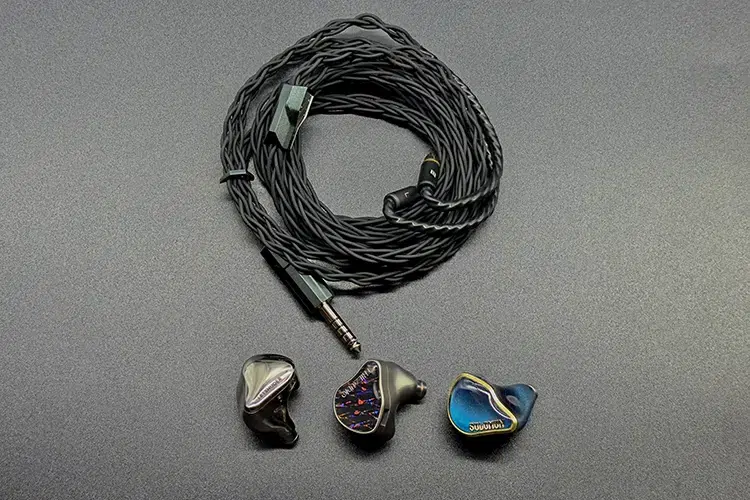
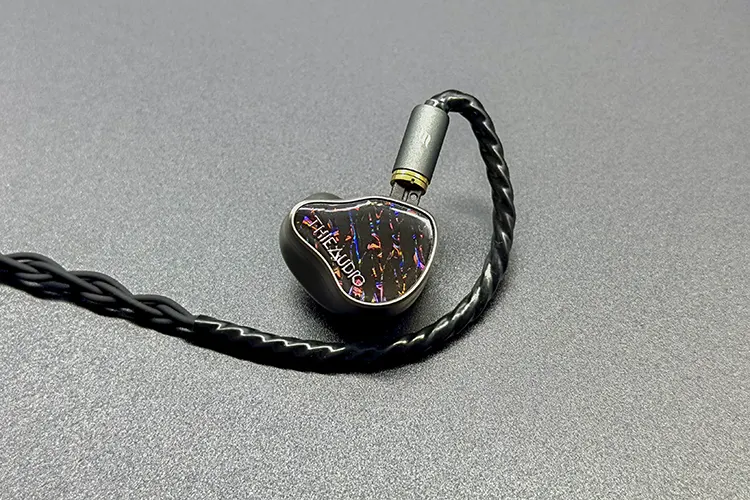
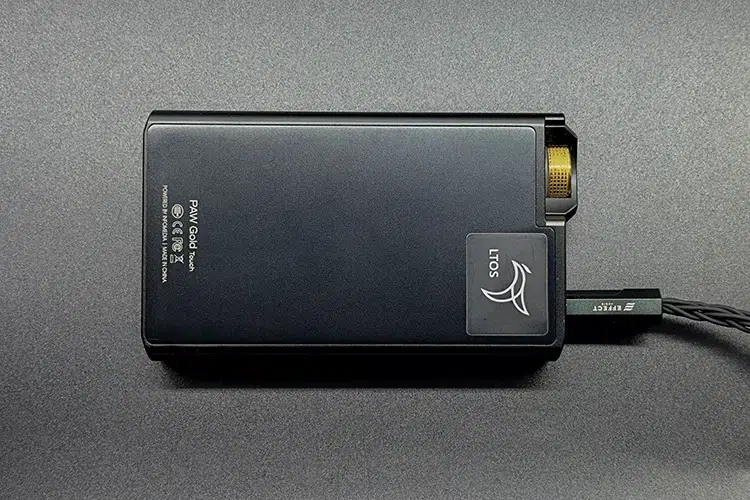
The following sound impressions of the Effect Audio DIONYSUS were completed using THIEAUDIO Valhalla, LETSHUOER Cadenza 12 2024, and the BGVP Solomon alongside my main source, Lotoo’s PAW Gold Touch.
Summary
Given how well the Signature Series II cables perform, a cable from the same bloodline with a premium price tag naturally raises expectations, and most of them are met in its performance.
DIONYSUS delivers a rich, lush, more musical tonality that is pleasing right off the bat. It touches most of the spectrum, trims the upper ranges for a smoother delivery, boosts the lower end for a bolder hit, and imparts a musical warmth to the midrange.
With some IEMs, it brought a lot of changes, mostly positive. It does not feel overly strict or picky, so it should benefit most IEMs.
Timbre
From the first note, the bass gains both weight and polish: it doesn’t boom, it blooms. The bass gets a richer profile. Do not expect it to lend a lot of heft; it goes for quality, delivering a more detailed, bigger, and bolder bass.
Sub-bass reaches lower, rumbles a touch longer, and stays tighter, so you feel the depth without the bloat. The mid-bass sheds a layer of grain and keeps the impact level intact. It stays controlled and a touch more refined, so you can use it with mid-bass-heavy IEMs without any bother.
In the midrange, I hear more musicality, with note trails carrying a hint of sweetness, so with this cable, the midrange springs to life. Even with a bit of warmth under the hood, the details are not eclipsed, and the energy stays intact.
Vocals gain some weight and nuance. Male vocals are a tad thicker and denser, while female vocals pick up a touch of syrup. The vocals sit a bit more forward, feel more nuanced, and step into the spotlight. Upper midrange energy does not change much; at most, it gets a little smoother.
In the treble, air and sparkle are not hit, which was my initial fear. The treble becomes more even in its presentation, so exaggerated peaks settle into a steadier line. Notes are a touch more resolving. It does not overhaul treble delivery, but it adds body to the notes, so detail comes through better.
Nothing jumps out of place, and the overall coherence stays intact even when the track gets dense. Timbre keeps a natural color, so instruments sound believable and vocals stay lifelike.
Staging & Imaging
All the different wire materials work in unison to lift the technical side quite well. The cable adds depth to the soundstage and a bit of extra height. I do not notice much lateral expansion, but the stage overall opens up, giving instruments more space around them.
I am confident this level of stage arrangement can match some more premium cables. Imaging is a bit more precise and accurate. It is not razor sharp, but the way the notes feel polished paints a more spatially accurate picture.
Layering gets special treatment. Instruments and vocals are neatly arranged, and complex tracks are presented in a more refined way. There is more breathing room among instruments, which helps a lot with fast, multi-instrument passages.
Micro-details sit on a darker background, so low-level cues are easier to pick out without turning up the volume. Transients feel a touch tidier, with a cleaner attack and a smoother, more natural decay. The tails of cymbals and reverbs hang a little longer, giving the mix a sense of ease.
All this translates to a more engaging and polished presentation, which justifies the price. The fullness in the sound, along with the breathiness of notes, is a big win here. It is all done without sacrificing other aspects.
At worst, it leaves a few attributes as they are without pulling them down. For me, that kind of balanced, easy uplift is exactly what a good cable should aim for.
Click on page 2 below for my recommended pairings and selected comparisons.
